Cosmetology Vs Esthetician License In Fairfax County: Which Path Fits You?
If you want to work in beauty and skin care in Fairfax County, a cosmetology license covers a broader range of services—hair, skin, and nails—while an esthetician license focuses specifically on skin care, making it the faster, more specialized route. Both are rewarding careers, and the right choice depends on your interests, timeline, and long-term goals. Let’s break down exactly what each path looks like so you can decide with confidence.
Key Takeaways
- Cosmetology training at AVI Career Training requires 1,000 program hours and prepares you for a full-service salon role covering hair, skin, and nails.
- Basic Esthetics requires 600 program hours and focuses on facials, waxing, and skin-care treatments.
- Master Esthetics (750 hours) goes deeper into advanced skin-care techniques for clients who want to specialize further.
- Both programs are offered at AVI Career Training, a COE-accredited school in Vienna, VA, serving students throughout Fairfax County.
- Title IV federal financial aid is available for qualifying programs, including Massage Therapy (625 hours).
- Your decision should be guided by whether you love working with hair and nails as much as skin, or whether skin care alone is your true passion.
Understanding the Licenses: What Virginia Requires
Virginia’s Board for Barbers and Cosmetology sets the training-hour requirements and licensing exams for both cosmetologists and estheticians. To sit for the state board exam, you must complete a state-approved program from an accredited school. That’s where AVI Career Training comes in.
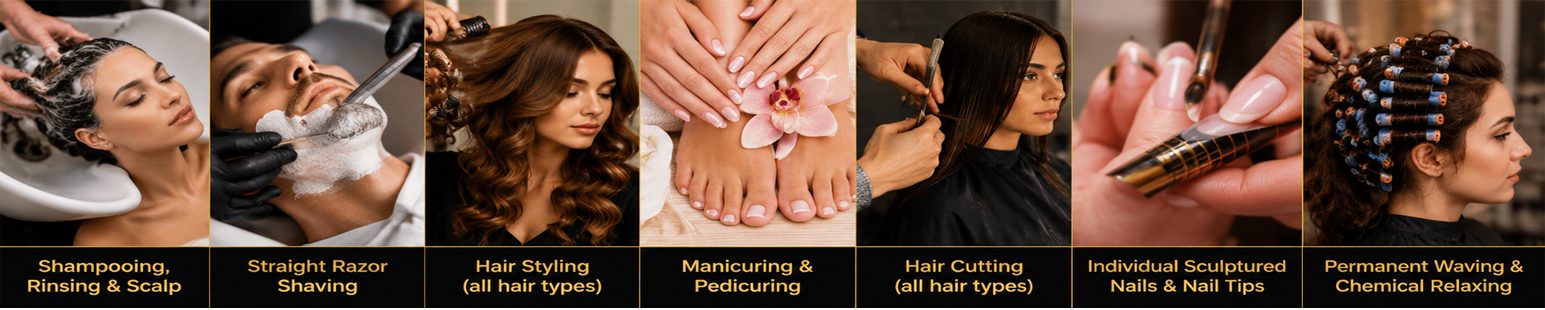
Cosmetology students complete 1,000 program hours, covering everything from haircuts, color, and chemical services to basic skin care and nail care. Esthetics students choose between the Basic Esthetics program (600 hours) or the Master Esthetics program (750 hours), both of which zero in on the science and artistry of skin care. After finishing either program, graduates take a written and practical state board exam to earn their Virginia license.
The Cosmetology Path: A Versatile, Full-Service Career
What You’ll Learn
A cosmetology program gives you the widest toolkit in the beauty industry. At AVI Career Training, students learn hair cutting, styling, coloring, and chemical services such as perms and relaxers. You also gain foundational training in skin care and nail services. This breadth means you can work in a traditional salon, a spa, a resort, or even launch your own suite business down the road.
Who Thrives in Cosmetology?
Cosmetology is ideal if you light up at the idea of transforming a client’s entire look—not just their skin. If you find yourself equally excited by a great haircut, a flawless color, and a relaxing facial, cosmetology gives you the flexibility to offer all of those services under one license. It’s also a smart choice if you want maximum versatility when job hunting across Fairfax County’s competitive salon market.
Time Commitment
At 1,000 program hours, cosmetology takes longer than esthetics to complete. For students eager to enter the workforce quickly, that timeline matters. However, many students find that the broader scope of services they can legally offer makes the additional time worthwhile in terms of long-term earning potential and career flexibility.
The Esthetician Path: Skin-Care Expertise From Day One
Basic Esthetics vs. Master Esthetics
AVI Career Training offers two esthetics options, and understanding the difference helps you plan your career trajectory from the start.
The Basic Esthetics program at 600 hours is the entry-level license that qualifies you to perform facials, exfoliation treatments, waxing, and other core skin-care services in Virginia. It’s the most direct route to a licensed esthetician career and is popular with students who want to enter the workforce relatively quickly.
The Master Esthetics program at 750 hours builds on the basic curriculum and opens doors to more advanced services and settings. Master estheticians often work in medical spas, dermatology offices, and high-end resort spas where clients expect sophisticated treatment protocols. If you’re drawn to the clinical or wellness side of skin care, Master Esthetics is worth the additional hours.
Who Thrives in Esthetics?
Esthetics is a natural fit if skin science genuinely fascinates you—if you want to understand skin conditions, ingredient chemistry, and the relationship between lifestyle and complexion. It’s also a great path if you prefer a focused, niche expertise over a wide-ranging skill set. Estheticians often build deeply loyal client bases because their work addresses personal wellness, confidence, and long-term skin health.
Growing Demand in Northern Virginia
The greater Washington, D.C. metro area, including Fairfax County, has a robust market for skin-care professionals. Medical spas have expanded significantly in recent years, and many employers specifically seek licensed estheticians for their clinical teams. Getting licensed sooner through the Basic Esthetics program means you can start building real-world experience—and a real-world client list—while the demand is strong.
Side-by-Side Comparison
Program Hours
Cosmetology requires 1,000 hours. Basic Esthetics requires 600 hours. Master Esthetics requires 750 hours. Fewer hours does not mean less rigor—it means a tighter focus on one specialty.
Scope of Practice
A cosmetology license in Virginia allows you to perform hair, nail, and skin services. An esthetics license—whether basic or master—is limited to skin-care services. If you ever want to add nail services to your esthetics career, you could add AVI’s Nail Technology program (150 hours) separately.
Career Settings
Both licenses open doors across salons, spas, and independent studios. However, estheticians—especially Master Estheticians—have stronger access to medical spa and clinical environments where their specialized skin knowledge is highly valued. Cosmetologists have broader access to traditional salons and full-service day spas.
Why Train at AVI Career Training in Vienna, VA?
AVI Career Training is a COE-accredited beauty and wellness career school located at 112 Lawyers Rd NW Suite 3, Vienna, VA 22180—conveniently accessible from throughout Fairfax County. COE accreditation signals that our programs meet nationally recognized standards for quality and student outcomes. That matters when you’re investing your time, energy, and money in a career education.
Our instructors bring real-world experience into every classroom session, connecting theory to the kind of practical situations you’ll encounter in your career. Small class environments mean you get personalized attention, hands-on practice, and genuine mentorship—not just a textbook education.
If you’re ready to explore which program is right for you, apply today at AVI Career Training and speak with one of our admissions team members who can walk you through program details, schedules, and next steps.
Financial Aid and Other Programs
Cost is a real consideration for any career training decision. AVI Career Training offers Title IV federal financial aid for qualifying programs, including Massage Therapy (625 hours). We encourage prospective students to speak with our team about which programs are eligible and how to get started with the financial aid process. We never publish tuition figures in our marketing materials without direct verification, so please contact us directly at (571) 520-4417 for current pricing.
Beyond cosmetology and esthetics, AVI also offers Nail Technology (150 hours), Laser Technician (120 hours), Medical Assistant (600 hours), and ESL (1,200 hours)—giving students in the Fairfax County area a genuinely comprehensive menu of career options under one accredited roof.
How to Make Your Final Decision
Still unsure which license makes more sense for you? Ask yourself these questions:
- Do I want to work with hair as much as I want to work with skin? If yes, cosmetology is likely your fit.
- Am I drawn to the science of skin, ingredients, and wellness? If yes, esthetics—especially Master Esthetics—may be your calling.
- Do I want to enter the workforce as quickly as possible? The Basic Esthetics program’s 600 hours may appeal to you.
- Am I interested in clinical or medical spa work? Master Esthetics positions you well for those settings.
- Do I want maximum flexibility to offer a wide variety of services in one role? Cosmetology gives you that breadth.
There is no wrong answer. Both paths lead to meaningful, client-centered careers with real earning potential in Northern Virginia’s thriving beauty and wellness market.
Frequently Asked Questions
Can I get both a cosmetology license and an esthetician license in Virginia?
Yes, Virginia does allow licensed professionals to hold multiple licenses. Some professionals start with one license and add another later in their career. However, most students find it more practical to choose one specialty to start with and build a career before pursuing additional credentials.
How long does it take to complete the Basic Esthetics program at AVI Career Training?
The Basic Esthetics program requires 600 program hours. The actual calendar time to complete those hours depends on your schedule—whether you attend full-time or part-time. Contact AVI Career Training directly at (571) 520-4417 for current schedule options and estimated completion timelines.
Is federal financial aid available for the cosmetology or esthetics programs at AVI?
Title IV federal financial aid is available for qualifying programs at AVI Career Training. We encourage you to reach out to our admissions team to learn which programs are eligible and how to begin the application process. You can also get started by submitting an application online.
What is the difference between Basic Esthetics and Master Esthetics?
Basic Esthetics (600 hours) provides the foundational training needed for a Virginia esthetics license and covers core skin-care services like facials, waxing, and exfoliation. Master Esthetics (750 hours) builds on that foundation with advanced techniques and broader knowledge that opens doors to medical spa and clinical environments. If you want to work in specialized or medical settings, Master Esthetics is the stronger choice.
Where is AVI Career Training located and does it serve students from all of Fairfax County?
AVI Career Training is located at 112 Lawyers Rd NW Suite 3, Vienna, VA 22180. Vienna is centrally situated within Fairfax County, making AVI accessible to students from Reston, McLean, Falls Church, Herndon, Centreville, and throughout the region. Call us at (571) 520-4417 or apply online to learn more about attending.