Cosmetology School in Northern Virginia
Virginia State Board–aligned training at AVI Career Training in Vienna, VA — COE accredited, hands-on, and built for every skin tone and hair texture.
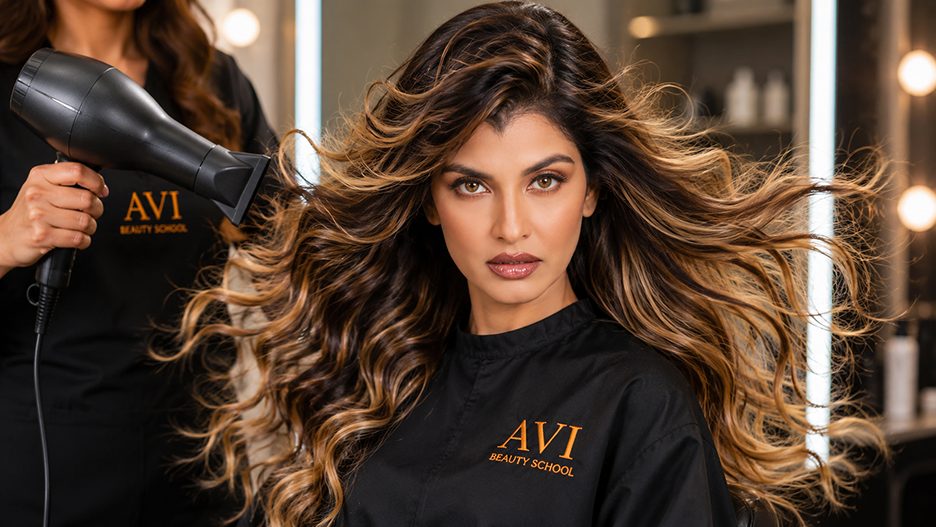
AVI Career Training in Vienna, VA is a state board–aligned, COE-accredited cosmetology school in Northern Virginia built to launch real careers — not just hand you a certificate.
The Northern Virginia and DC metro area has one of the most active beauty markets on the East Coast. Demand for skilled, licensed cosmetologists is consistent, client expectations are high, and the opportunity to build an independent career — whether in a salon, a private suite, or your own business — is very real. The question isn’t whether cosmetology is worth pursuing here. The question is where you train.
This guide covers everything you need to make that decision: Virginia’s licensing requirements, what 1,500 hours of training actually looks like, what you can earn, and why students across the DMV area choose AVI Career Training to start.
Explore AVI’s Cosmetology Program →
Key Takeaways
- Virginia requires 1,500 clock hours of cosmetology training to sit for the state board exam
- AVI Career Training is COE accredited and SCHEV certified — meaning federal financial aid (FAFSA/Pell Grant) and GI Bill® benefits are available
- Graduates can pursue employment in salons, booth rental, suite entrepreneurship, or further specialization
- Virginia cosmetologists earn a median annual wage that is competitive with national figures, with strong upside in the high-income NoVA market
- AVI’s curriculum covers all hair textures and all skin tones — a deliberate differentiator in an inclusive beauty landscape
—
What to Expect from a Cosmetology Program in Virginia
A Virginia cosmetology program prepares you for licensure by combining classroom theory, hands-on skills practice, and real-client clinic hours — all structured around the Virginia State Board’s 1,500-hour requirement.
Before you enroll anywhere, it helps to understand what those hours actually look like in practice. Cosmetology training isn’t one long class on how to cut hair. It’s a comprehensive curriculum that moves through multiple disciplines in a structured sequence.
Theory: The Foundation You’ll Use Every Day
The first phase of any quality cosmetology program covers the science behind the craft. You’ll study trichology (the science of hair and scalp), skin anatomy, chemistry as it applies to color and chemical services, sanitation and infection control, and the Virginia State Board’s rules and regulations.
This isn’t just test prep. Understanding why a color formula lifts a certain way, or why proper sanitation protocols exist, makes you a safer and more skilled professional from day one.
Practical Training: Skills Built Through Repetition
Once foundational concepts are established, the focus shifts to hands-on technique — on mannequins first, then on real clients in a supervised clinic setting. You’ll practice cuts across multiple hair textures, application techniques for color and chemical services, and client communication skills that don’t come from a textbook.
Clinic Hours: The Bridge to the Real World
Clinic hours are where training becomes professional experience. You work with actual clients under licensed instructor supervision, managing appointments, performing services, and handling the full flow of a real salon environment. By the time you complete your 1,500 hours, you’ve logged meaningful, supervised professional practice — not just classroom time.
A typical week at a structured cosmetology program balances all three: theory instruction in the morning, practical labs in the afternoon, and scheduled clinic days built in as you advance.
—
Virginia Cosmetology Licensing Requirements
To earn a cosmetology license in Virginia, you must complete 1,000 clock hours of training at a state-approved school, then pass both the written and practical components of the Virginia State Board exam.
Here’s what that process looks like, step by step — written plainly, because first-generation students and career-changers deserve clarity, not bureaucratic language.
Step 1: Enroll in a Virginia State Board–Approved Program
Your school must be approved by the Virginia Department of Professional and Occupational Regulation (DPOR), which oversees the Virginia State Board of Cosmetology. AVI Career Training meets this requirement. Not every school does — this is one of the first things to verify before you enroll anywhere.
Step 2: Complete 1,500 Clock Hours
Virginia requires 1,500 clock hours of cosmetology instruction. This is a fixed state requirement — every licensed cosmetologist in Virginia has met this bar. The hours must be completed at an approved institution; hours from an unaccredited program do not count toward licensure.
Step 3: Apply to the Virginia State Board
Once you’ve completed your program hours, your school submits documentation to DPOR confirming your eligibility. You then submit a license application, including required fees. DPOR processes your application and, once approved, authorizes you to sit for the exam.
Step 4: Pass the Written Exam
The written exam is administered by PSI (Virginia’s designated testing provider). It covers theory, sanitation and safety, anatomy, and Virginia-specific laws and regulations. Your theory coursework directly prepares you for this component.
Step 5: Pass the Practical Exam
The practical exam evaluates your hands-on skills in a live, observed setting. Examiners assess technique, safety practices, and professional standards. The clinic hours you complete during school are precisely what prepare you for this.
Once you pass both components, DPOR issues your Virginia Cosmetology License — and you’re authorized to practice professionally in the state.
> For the most current requirements and fee schedules, visit the Virginia DPOR Cosmetology Board page directly.
—
What You’ll Learn: Skills That Translate Directly to the Salon Floor
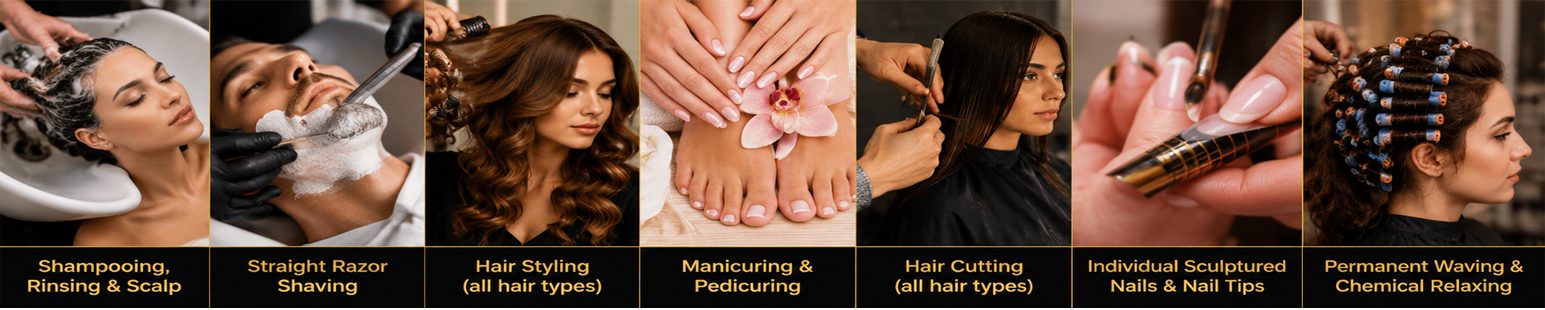
AVI Career Training’s Cosmetology program covers the full range of technical services a working cosmetologist performs — and does so with an explicit commitment to training on all hair textures and all skin tones.
That last point matters more than it might seem. Many programs still default to a narrow range of hair types and complexions in their practical training. That creates graduates who are technically certified but not actually prepared to serve the full diversity of clients they’ll encounter — especially in a metro area as culturally rich as Northern Virginia and the greater DMV.
Here’s what AVI’s curriculum covers:
Hair Cutting and Styling
You’ll develop precision cutting skills across multiple hair textures — straight, wavy, curly, and coily — using a range of techniques including scissor cuts, clipper work, razor techniques, and structured layering. Styling instruction includes blowouts, thermal styling, protective styles, and finishing techniques.
Hair Coloring and Chemical Services
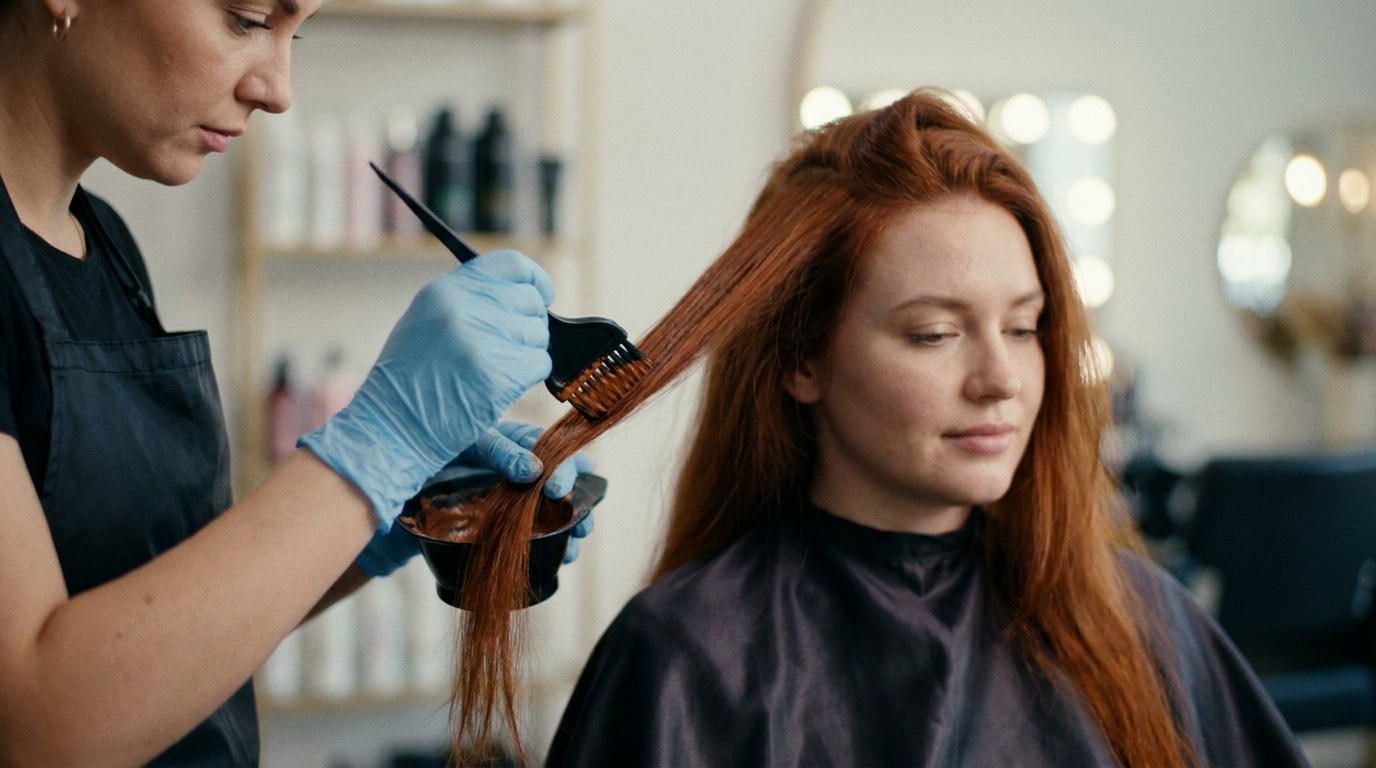
Color theory, application methods (foiling, balayage, single-process, corrective color), and lift chemistry are covered in depth. Chemical services — relaxers, perms, and keratin treatments — are taught with attention to both technique and the chemistry behind how each service interacts with different hair structures. Understanding hair porosity and damage prevention is built into this section.
Skin Care Fundamentals
The cosmetology curriculum includes basic esthetics: skin anatomy, facial massage, cleansing and treatment protocols, and an introduction to skin conditions. This foundation is valuable whether you stay in cosmetology or later decide to pursue AVI’s Esthetics program for advanced specialization.
Sanitation, Safety, and State Board Compliance
Virginia’s state board takes sanitation standards seriously — and so do professional salons. You’ll learn infection control protocols, proper tool disinfection, and OSHA guidelines as a core part of your training, not an afterthought.
Business and Client Relations
Technical skills alone don’t build a career. AVI’s curriculum includes salon business fundamentals: client consultation, appointment management, retail sales, tipping and payment handling, and the basics of building a loyal clientele. These soft skills are what separate a technician from a professional.
—
Cosmetology Career Paths and Salary in Virginia
A Virginia cosmetology license opens multiple career paths — from traditional salon employment to independent booth rental, private suite ownership, and beyond.

What Do Cosmetologists Earn in Virginia?
According to the U.S. Bureau of Labor Statistics, the median annual wage for hairdressers, hairstylists, and cosmetologists nationally is approximately $33,000–$38,000. Virginia figures trend competitive with national data, though individual earnings vary significantly based on employment model, location, specialization, and clientele development.
(BLS, cosmetologists)
for VA licensure
booth rental / suite owners
These figures represent a baseline. Cosmetologists who build strong clientele, add specialty services (color correction, extensions, bridal styling), or move into booth rental and suite ownership often earn well above median figures. In Northern Virginia — where household incomes are among the highest in the country — the market supports premium service pricing.
Employment Paths After Licensure
Salon employment is the most common entry point. You work as an employee or commission-based stylist, typically with a built-in client base, a set schedule, and a mentor environment. It’s a strong way to build skills and confidence after graduation.
Booth rental means you rent a station inside an existing salon and operate as an independent contractor. You set your own hours, keep most of your revenue, and manage your own client relationships. It requires more business discipline but offers significantly more earning potential and autonomy.
Suite rental is an increasingly popular model in the Northern Virginia market, particularly around Tysons Corner and the broader NoVA corridor. You lease a private studio space — think a single-room salon that’s entirely yours — and operate your own small business. Overhead is higher than booth rental, but so is pricing power and the client experience you can deliver.
Education and training is a path some experienced cosmetologists pursue after years in the industry. Licensed instructors, platform artists, and brand educators can extend their careers while sharing expertise with the next generation.
—
A student story: Marcus came to AVI after five years working in restaurant management. He liked working with people but wanted something he could eventually own. He completed AVI’s Cosmetology program, passed his Virginia State Board exam, and spent two years at a salon in Tysons building his clientele. He’s now renting a suite independently and describes his income as “more than I ever made managing a restaurant — and I set my own schedule.” His story isn’t unusual in the NoVA market. It’s what happens when trained skill meets a high-demand area.
—
Why Northern Virginia Students Choose AVI Career Training
AVI Career Training is a COE-accredited, SCHEV-certified cosmetology school in Vienna, Virginia — serving students across the Northern Virginia and DC metro area from a campus near Tysons Corner.
Here’s what makes AVI a specific, verifiable choice — not just a generic “great school” claim.
COE Accreditation — What It Actually Means for You
COE stands for the Council on Occupational Education — one of the most respected accrediting bodies for career and technical education in the country. COE accreditation isn’t cosmetic. It means AVI’s program has been evaluated against rigorous educational standards and found to meet them.
More practically: COE accreditation is what makes federal financial aid available. If you’re planning to use FAFSA, Pell Grant funding, or any Title IV federal student aid to fund your training, you can only do so at an accredited institution. AVI qualifies.
SCHEV Certification
AVI is also certified by the State Council of Higher Education for Virginia (SCHEV), which is the state’s oversight body for postsecondary education. SCHEV certification confirms that AVI meets Virginia’s standards for operating a career training school — another layer of accountability that protects you as a student.
GI Bill® Acceptance
AVI accepts the GI Bill®, including the Post-9/11 GI Bill, for eligible veterans and military-connected students. This is particularly meaningful in Northern Virginia, where one of the highest concentrations of active-duty military, veterans, and military families in the country lives within commuting distance of the Tysons Corner area.
If you or someone in your family has earned GI Bill® benefits, those benefits can apply to AVI’s Cosmetology program. Contact AVI’s admissions team at (703) 943-9841 to confirm your eligibility and how to apply those benefits.
Financial Aid and Payment Options
Beyond the GI Bill®, AVI offers access to federal financial aid through FAFSA for eligible students. The admissions team walks every prospective student through the financial aid process — including what you may qualify for and what your out-of-pocket cost might realistically look like after aid is applied. Asking about cost before you enroll is smart, and AVI makes that conversation easy.
Inclusive Curriculum — Not a Talking Point, a Practice
AVI’s commitment to training on all skin tones and all hair textures isn’t a tagline. It’s a curriculum decision. In a diverse metro area like Northern Virginia — where clients represent every background, heritage, and hair type — graduating without that range of experience puts you at a real professional disadvantage.
AVI builds inclusive technique into every part of the program, so you leave prepared to serve any client who walks through your door, confidently and competently.
Location: Vienna, VA — Central to the Entire NoVA/DC Metro
AVI’s campus at 1595 Spring Hill Rd #720, Vienna, VA 22182 sits in the Tysons Corner area, one of Northern Virginia’s most accessible hubs. Whether you’re coming from Arlington, Fairfax, Reston, Herndon, Falls Church, or across the river from DC, the location is designed to be reachable — not a commute obstacle.
—
A student story: Priya had been working as a dental hygienist for eight years. She was technically skilled, financially stable, and completely unfulfilled. She’d always been the person friends called when they needed a color recommendation or a style opinion, and she eventually decided to stop ignoring what came naturally to her. She enrolled at AVI, used FAFSA aid to offset her tuition, and found that her background in sanitation and client care translated directly. She graduated, passed her boards on the first attempt, and now works at a high-volume color salon in Reston with a full clientele. “I wish I’d done it sooner,” she says. “The skills transfer. The confidence transfers. I just needed the credential.”
—
—
Frequently Asked Questions
Q: How many hours do you need for a cosmetology license in Virginia?
A: Virginia requires 1,000 clock hours of cosmetology training at a state board–approved school. After completing those hours, you must pass both the written and practical components of the Virginia State Board exam through DPOR to receive your license.
—
Q: How long does cosmetology school take in Virginia?
A: The timeline depends on your schedule and program structure. A full-time student completing 1,500 hours typically finishes in approximately 12–14 months. Part-time schedules extend the timeline. Contact AVI Career Training directly at (703) 943-9841 to discuss the current program schedule.
—
Q: How much does cosmetology school cost in Northern Virginia?
A: Tuition varies by school and program structure. At AVI Career Training, financial aid is available for eligible students through FAFSA, and the GI Bill® is accepted for veterans and military-connected students. The best way to get an accurate cost picture — including what aid you may qualify for — is to speak with AVI’s admissions team before enrolling.
—
Q: What can you do with a cosmetology license in Virginia?
A: A Virginia cosmetology license authorizes you to work as a cosmetologist in salons, spas, and similar settings. Career paths include employed stylist, commission-based salon work, booth rental as an independent contractor, private suite ownership, bridal and event styling, and cosmetology education (with additional licensure as an instructor).
—
Q: Is cosmetology school worth it in 2025?
A: For students in the Northern Virginia and DC metro market, the answer is yes — with realistic expectations. Licensing requires 1,500 hours of accredited training and passing state board exams. Earnings vary based on employment model and clientele. But for students who complete their training, build their skills, and commit to the work, the Northern Virginia market offers consistent demand, strong earning potential, and genuine flexibility in how you structure your career.