
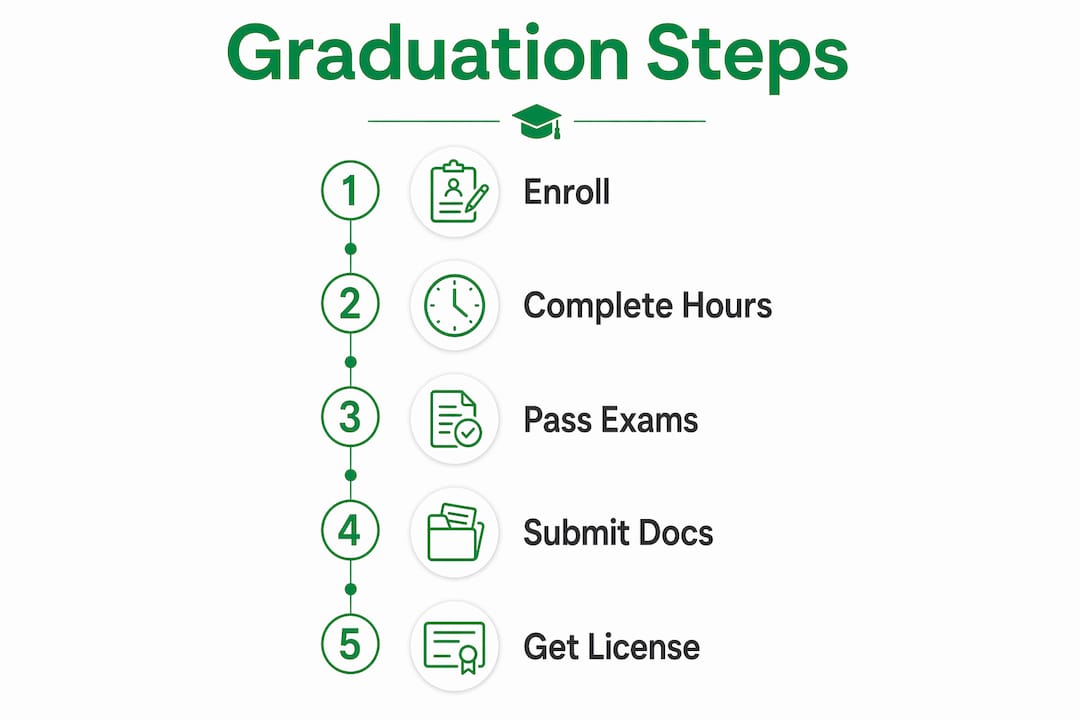
Cosmetology graduation requirements are the mandatory criteria every student must fulfill before a state board will grant a professional license. These requirements cover three core areas: training hours, state board examinations, and official documentation. Meeting all three is what separates a student from a licensed beauty professional. This guide breaks down each requirement clearly, explains how they vary by state, and gives you practical steps to complete your cosmetology program without unnecessary delays.
What are the cosmetology graduation requirements complete checklist?
Every accredited cosmetology program is built around a set of graduation criteria defined by your state board. Schools like Avi track your progress against these criteria from day one, but the state board makes the final call on licensure. Understanding that distinction early saves you from surprises at the finish line.
The core requirements fall into three categories:
- Training hours: A minimum number of supervised, hands-on hours completed at an accredited school or through an approved apprenticeship
- Examinations: A written theory test and, in most states, a practical skills exam
- Documentation: Verified service logs, official transcripts, and a completed state board application
Accreditation matters here. Programs accredited by bodies like NACCAS are designed to meet or exceed state minimums, which means graduates are better prepared for both the exam and real salon work.
What are the common prerequisites to enroll and graduate?
Before you log a single training hour, you need to meet basic eligibility requirements. These prerequisites apply both at enrollment and at graduation, so clearing them upfront keeps your path clean.
The standard requirements across most states include:
- Age: Most states require students to be at least 16 to 18 years old
- Education: A high school diploma or GED is the standard baseline
- Alternative pathways: Some states accept completion of 8th or 10th grade under specific circumstances
State-specific enrollment rules vary more than most students expect. States like Florida, Texas, and California have alternative licensing pathways that do not require a strict diploma if other criteria, such as age or grade completion, are met. That flexibility opens the door for students who left traditional school early.
Pro Tip: Check your specific state board’s current requirements before enrolling. Rules change, and your school’s admissions team can confirm the latest standards directly from official board publications.
Why does this matter for graduation? Because if your documentation does not match state eligibility rules at the time you apply for your exam, your application gets rejected. Catching a gap before you start is far easier than fixing it after 1,500 hours of training.
How many training hours do cosmetology programs require?
Training hours are the backbone of any cosmetology program. The number you need depends entirely on your state, and the range is wider than most students realize.
| State | Required Hours |
|---|---|
| California | ~1,000 hours |
| New York | ~1,000 hours |
| Texas | ~1,000 hours |
| Massachusetts | ~1,000 hours |
| Iowa | ~2,100 hours |
| Nebraska | ~2,100 hours |
| Most states (approx. 25) | 1,500 hours |
Training hours range from 1,000 to 2,100 depending on the state, with 1,500 hours being the most common requirement. That gap between 1,000 and 2,100 hours translates directly into months of additional training and tuition costs. Virginia recently made headlines by cutting cosmetology hours significantly, showing that these benchmarks are not fixed forever.
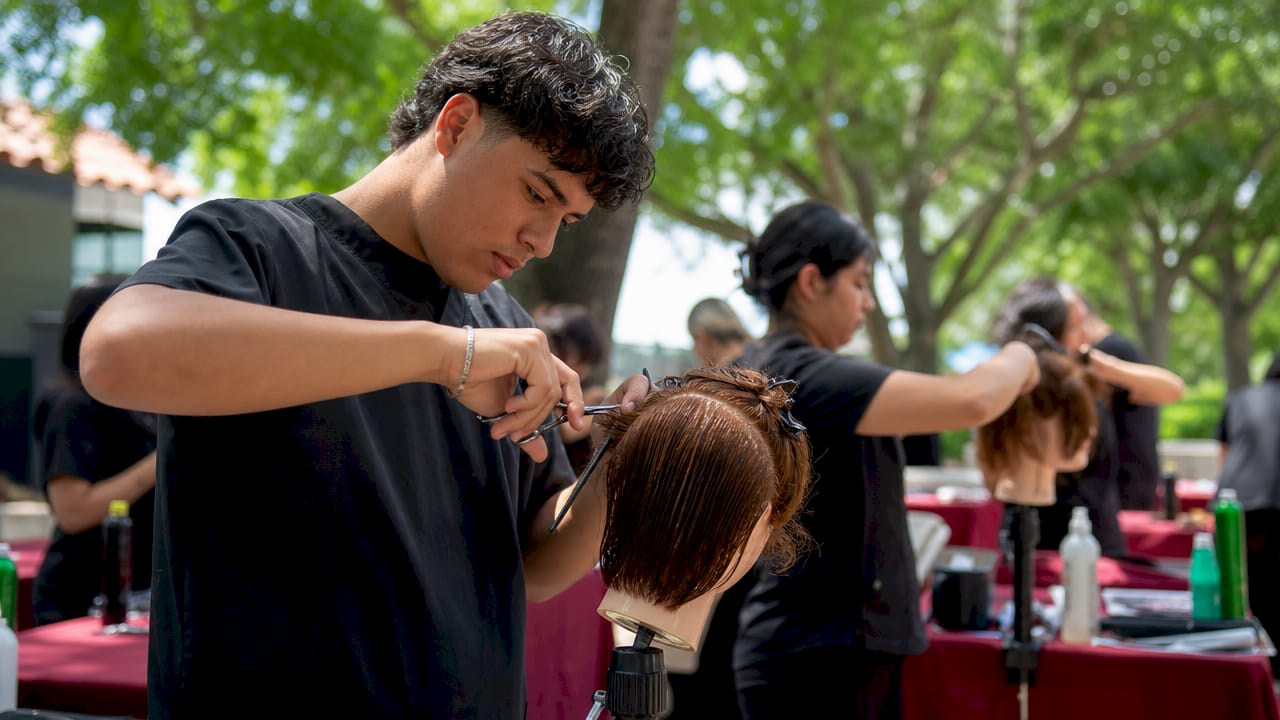
Hours are not just time in a chair. Programs require documented hands-on practice across specific service categories: haircuts, chemical services, skin care, nail care, and sanitation procedures. Some states also allow apprenticeship programs as an alternative to school-based training, though apprenticeship hour requirements often differ from classroom programs.
Pro Tip: Track your own hours alongside your school’s records. Keep a personal log with dates and service types. If a discrepancy appears in your official records, your personal log gives you a clear reference point to resolve it quickly.
The duration of your program depends on whether you attend full-time or part-time. Full-time students at a 1,500-hour program typically finish in 12–14 months. Part-time students can take 18–24 months. That timeline directly affects your financial planning and career start date.
What are the examination requirements for graduation and licensure?
Completing your training hours earns you the right to apply for the state board exam. The exam itself is the final gate between graduation and your license.
Most states require two exam components:
- Written theory exam: Typically 90–110 multiple-choice questions covering topics like safety, sanitation, anatomy, chemistry, and state law
- Practical skills exam: A hands-on evaluation lasting 3–4 hours where you demonstrate real techniques on a mannequin or live model
- Scoring: Both components must meet the state’s minimum passing score, which varies but is commonly set around 70–75%
- Timeline: Licenses are generally issued within 30–60 days after passing both components
Not every state follows the same format. California and Massachusetts have eliminated the practical exam recently, moving to written-only testing. Florida administers its own state-specific written exam rather than the National Interstate Council (NIC) exam used in most other states. Knowing which exam format your state uses shapes how you prepare.
The NIC exam is the most widely used written test in the country. If your state uses it, you can find official study materials through the NIC directly. If your state uses its own exam, your school’s curriculum should align with that format.
Taking the exam in your training state is strongly recommended. Your curriculum was built around that state’s requirements, so the exam content matches what you studied. Testing in a different state can complicate results acceptance and may require reapplication. If you plan to relocate after licensing, reciprocity agreements between states make transferring your license far simpler than retesting.
What documentation is required to confirm graduation and exam eligibility?
Documentation is where many students lose time. Your school manages your records, but you are responsible for making sure everything is submitted correctly and on time.
The standard documentation process works like this:
- Service logs: Your school tracks every procedure you complete throughout the program. State boards audit these logs before granting exam eligibility. Documented service minimums like 100 chemical services must appear in your records before graduation.
- Official transcripts: Your school issues a transcript confirming your completed hours and program status. This goes directly to the state board as part of your exam application.
- State board application: You complete and submit this form along with your transcript, proof of age, proof of education, and the required application fee.
- Verification period: The state board reviews your application and confirms eligibility before scheduling your exam date.
Schools act as facilitators and record keepers for graduation, but they do not grant professional licensure. Final authority rests entirely with the state cosmetology board. That means a school can confirm you finished your hours, but only the board can issue your license.
Common documentation mistakes include missing signatures on service logs, incomplete application forms, and sending documents to the wrong state board address. Each mistake adds weeks to your timeline.
What are the common challenges in completing cosmetology graduation requirements?
Most students who struggle near graduation face the same small set of problems. Knowing them in advance puts you ahead.
- Delayed applications: Waiting weeks after finishing your final training hour pushes your exam date back proportionally. Apply the same week you complete your hours.
- Incomplete service logs: Missing documented procedures can disqualify your application entirely. Review your logs monthly, not just at the end.
- Exam anxiety: Skills fade when you stop practicing. Students who wait too long between graduation and their exam often feel less confident during the practical component.
- Outdated information: Licensing regulations and fees change unexpectedly. Rely on current official documentation from your school and state board, not social media or community forums.
- State board communication gaps: Schools send critical updates about application deadlines and fee changes. Read every email from your program coordinator.
Pro Tip: Set a personal deadline to submit your state board application within five business days of completing your final training hour. That one habit eliminates the most common cause of exam delays.
The students who finish fastest are the ones who treat graduation as a project with a deadline, not a milestone to celebrate before acting. Staying organized through the final phase of your program is the single biggest factor in how quickly you get licensed.
Key Takeaways
Completing cosmetology graduation requirements means fulfilling state-mandated training hours, passing written and practical board exams, and submitting verified documentation to your state cosmetology board before a license is issued.
| Point | Details |
|---|---|
| Training hours vary by state | Requirements range from 1,000 to 2,100 hours; most states require 1,500 hours. |
| Prerequisites matter at graduation | Age, education proof, and state eligibility must be confirmed before your exam application is accepted. |
| Two-part exam is standard | Most states require a written theory test and a practical skills exam to earn licensure. |
| Documentation drives the timeline | Accurate service logs and prompt application submission directly control how fast you get licensed. |
| Schools record, boards license | Your school tracks your progress, but only the state board has authority to issue your cosmetology license. |
Why I think students underestimate the documentation phase
Most students focus almost entirely on training hours and the state board exam. That focus makes sense. Hours are visible, and the exam feels like the final boss. But in my experience, the documentation phase is where the real delays happen, and almost no one talks about it clearly.
The distinction between school completion and state licensing is not just a technicality. It is a real gap where weeks or months can disappear. I have seen students finish every hour, pass their exams with strong scores, and still wait two months for a license because their application had a missing form or an unsigned service log. That wait is painful when you have a job offer sitting on the table.
My strongest advice: treat your service log like a legal document from day one. Review it every month. Flag any missing entries immediately. Do not assume your school’s system caught everything automatically. And the moment you finish your final training hour, start your state board application. Not next week. That day.
Testing in the state where you trained is another point I feel strongly about. Your curriculum was built around that state’s exam content. Taking the exam in your training state gives you the best possible alignment between what you studied and what you are tested on. If you move later, reciprocity agreements handle the transfer far more smoothly than retesting in a new state.
Graduation is not the finish line. It is the starting block for your licensing application. Students who understand that distinction move through the process faster and with far less stress.
— krishna
Avi Career Training and your path to licensure
Avi Career Training in Fairfax County, VA, structures its cosmetology program to align directly with state board requirements, so students graduate with the hours, service logs, and exam preparation they need.
Avi combines accredited hands-on training with personalized mentorship, guiding each student from enrollment through the licensure application process. The program includes documented service tracking, exam readiness preparation, and direct support with application paperwork. Students also benefit from externship connections with leading spas and salons across Northern Virginia. Financial aid options are available for eligible students. If you are ready to take the first step toward a licensed career in beauty, explore Avi’s cosmetology school and see how the program is built to get you licensed.
FAQ
How many hours does cosmetology school require?
Training hours range from 1,000 to 2,100 depending on your state, with 1,500 hours being the most common requirement across approximately 25 states.
What exams do you need to pass to get a cosmetology license?
Most states require a written theory exam with 90–110 multiple-choice questions and a practical skills exam lasting 3–4 hours, though some states like California have moved to written-only testing.
Can you get a cosmetology license without a high school diploma?
Yes. States like Florida, Texas, and California offer alternative licensing pathways that do not require a diploma if other criteria such as age or grade completion are met.
How long does it take to get a cosmetology license after graduation?
Licenses are typically issued within 30–60 days after passing both exam components, provided your application and documentation were submitted correctly and promptly.
Who issues a cosmetology license, the school or the state board?
The state cosmetology board issues all licenses. Your school tracks and documents your training hours, but final licensing authority rests entirely with the state board.