CNA Career Guide for the DMV Area (2025)
A CNA nurse aide career in the DMV area offers stable employment, genuine human connection, and a pathway into nursing — but it also comes with demanding physical work, a lower pay ceiling without further education, and one of the highest burnout rates in healthcare. If you’re researching whether the CNA path is right for you in Northern Virginia, Maryland, or DC, this guide gives you the full picture: requirements, salary data, honest trade-offs, and other hands-on career options worth comparing before you commit.
—
⚡ Key Takeaways
—
What Does a CNA Actually Do Day-to-Day?
A Certified Nurse Aide provides direct, hands-on care to patients — the kind of care that happens at the bedside, not behind a computer screen.
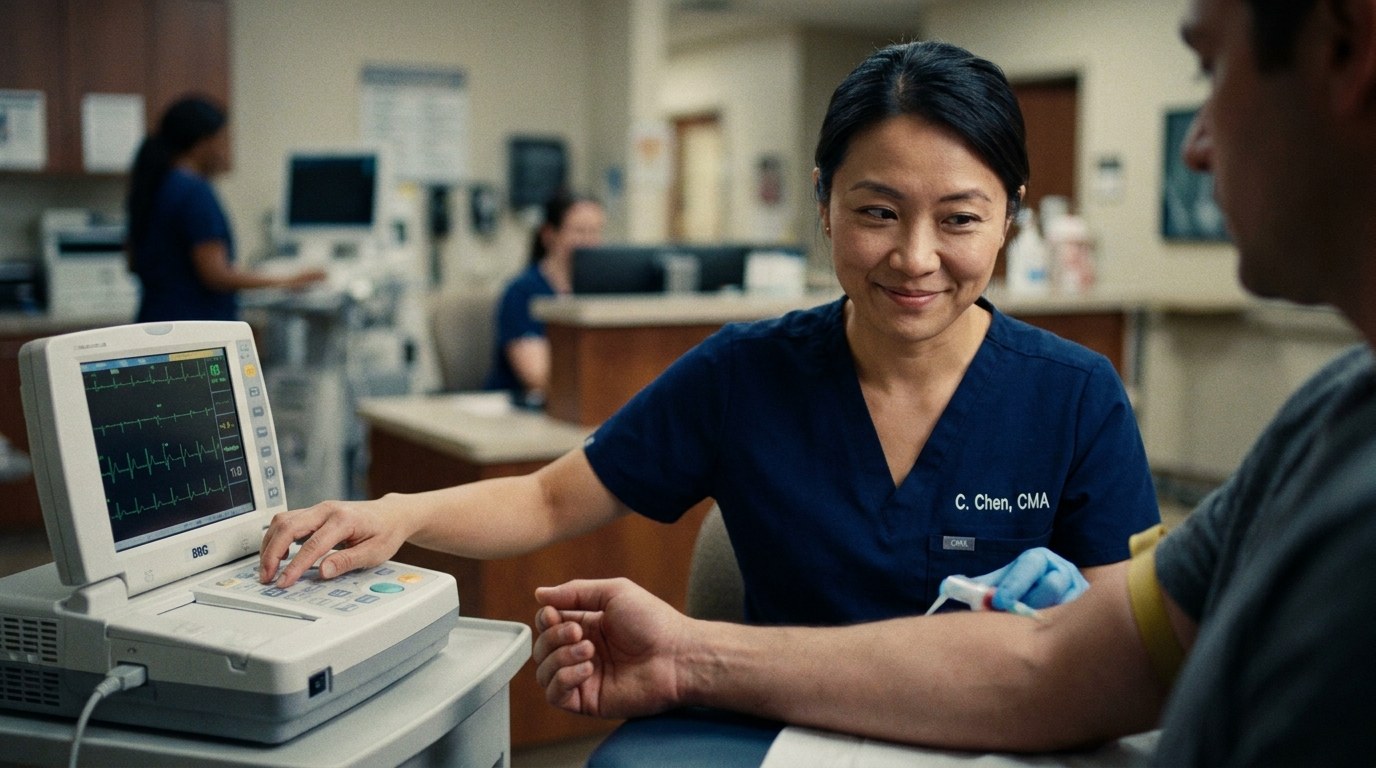
On a typical shift, a CNA assists patients with bathing, dressing, eating, and moving safely from bed to wheelchair. They monitor and record vital signs — blood pressure, pulse, temperature — and report any changes to the supervising nurse. They help patients with toileting and hygiene, reposition immobile patients to prevent pressure sores, and provide emotional support to people who are scared, in pain, or simply lonely.
This is essential, irreplaceable work. But it is also physically and emotionally demanding in ways that job descriptions often understate.
The Physical Reality
CNA work involves frequent lifting, bending, and standing for 8–12 hours at a stretch. Musculoskeletal injuries — particularly back injuries — are common in the profession. Long-term care settings like nursing homes and assisted living facilities are the most typical work environments, though CNAs also work in hospitals, rehabilitation centers, and home health settings.
The Emotional Reality
CNAs build close relationships with patients, many of whom are elderly, chronically ill, or at end of life. Compassion fatigue and burnout are real challenges. Research consistently shows that CNAs have some of the highest turnover rates of any healthcare occupation.
If you thrive on human connection and can pace yourself emotionally, the work is deeply meaningful. If you’re still exploring which kind of hands-on career fits your temperament, keep reading — this guide covers some compelling alternatives.
—
CNA Certification Requirements in Virginia
Becoming a CNA in Virginia follows a clear, regulated process overseen by the Virginia Board of Nursing.
Here is what the path looks like step by step:
Step 1 — Complete a State-Approved Training Program
Virginia requires candidates to complete a nurse aide training program approved by the Virginia Board of Nursing. Under federal CMS (Centers for Medicare & Medicaid Services) guidelines, programs must include a minimum of 75 training hours, with at least 16 of those hours in a supervised clinical setting. Many programs exceed this floor — running 120 to 150 hours — to give students stronger preparation.
Step 2 — Pass the Prometric Virginia Nurse Aide Competency Evaluation
After completing your training program, you must pass the Prometric Virginia Nurse Aide Competency Evaluation — a two-part exam that includes a written (or oral) knowledge test and a hands-on clinical skills demonstration. Both components must be passed to achieve certification.
Step 3 — Get Listed on the Virginia Nurse Aide Registry
Once you pass the exam, your name is added to the Virginia Nurse Aide Registry, maintained by Credentia on behalf of the Virginia Board of Nursing. You cannot legally work as a nurse aide in Virginia without appearing on this registry.
How Long Does It Take to Become a CNA in Virginia?
Most people complete CNA training in 4 to 12 weeks, depending on whether they attend full-time or part-time. Add exam scheduling time, and most candidates are registry-listed and job-ready within 2 to 3 months of starting.
—
CNA Salary and Job Outlook in Northern Virginia and DC
CNAs in the DMV area earn more than the national average, largely because of the region’s high cost of living and strong healthcare infrastructure.
Where CNAs Earn the Most
Pay varies significantly by work setting. In the DMV area:
Entry-level CNAs in Northern Virginia often start around $18–$21 per hour. With a few years of experience or specialty certifications (like dementia care), that figure can move toward $23–$25 per hour in competitive settings.
Job Outlook: Strong But With a Ceiling
Demand for CNAs is genuinely strong. The aging U.S. population is driving sustained need for direct care workers, and the Northern Virginia–DC corridor has a dense concentration of healthcare facilities — hospitals, senior living communities, and VA medical centers — that consistently hire.
The limitation is earnings growth. Without additional education (LPN, RN), CNA salaries plateau relatively quickly. Many CNAs use the role as a first step into nursing — but that requires significant additional training and credentialing investment.
Source: U.S. Bureau of Labor Statistics, Occupational Outlook Handbook; Virginia Employment Commission regional data. Verify current figures at BLS.gov.
—
The Real Pros and Cons of a CNA Career
Here is an honest look at what the CNA path actually involves — because you deserve a clear picture before enrolling in anything.
The Genuine Advantages
Meaningful daily work. Few jobs offer the kind of direct human impact a CNA has. You are with patients during some of the most vulnerable moments of their lives. That matters.
Job availability. Healthcare facilities in Northern Virginia, DC, and Maryland are consistently hiring CNAs. If you complete your certification, you will have real options.
Entry point into healthcare. If nursing is your long-term goal, working as a CNA gives you clinical exposure, professional references, and a foot in the door — while you earn.
Relatively short training timeline. Compared to a 4-year degree, 2 to 3 months to your first healthcare paycheck is genuinely fast.
The Honest Challenges
Physical demands are significant. This is not a desk job. Back strain, on-the-job injuries, and physical exhaustion are real occupational hazards that compound over time.
Burnout rates are high. The CNA profession has documented issues with emotional fatigue, particularly in long-term care. Staffing shortages mean remaining CNAs often carry heavier loads than is sustainable.
Pay ceiling without further education. A CNA salary of $38,000–$48,000 in Northern Virginia is a decent starting point — but it is not a finishing point for most people who want financial growth. Advancing requires becoming an LPN or RN, which means years of additional schooling.
Irregular scheduling. Healthcare runs 24/7. Many CNA positions involve evenings, weekends, and holidays, especially in nursing homes and hospitals.
—
Other People-Centered Career Paths to Consider in the DMV
If what draws you to the CNA path is working with people, using your hands, and building a career that feels meaningful — you have more options than you might think.
Beauty and wellness careers share a lot of the same appeal as healthcare: direct client interaction, tactile skill-building, and work that genuinely helps people feel better. But the training timelines are competitive, the entrepreneurial ceiling is higher, and in many cases the path to working independently is much shorter.
A Closer Look at the Parallel
| | CNA | Beauty & Wellness Career |
|—|—|—|
| Client contact | Daily, hands-on | Daily, hands-on |
| Emotional component | High | High |
| Physical skill requirement | High | High |
| Training timeline | 2–3 months | 2–12 months depending on program |
| Independent practice / self-employment | Very limited | Strong — suite rental, freelance, ownership |
| Licensing body (Virginia) | Virginia Board of Nursing / Credentia | Virginia DPOR |
| Income ceiling | Modest without RN degree | Scalable with clientele and specialization |
Programs Worth Exploring at AVI Career Training
AVI Career Training, a COE-accredited and SCHEV-certified career school in Vienna, Virginia, trains students for licensure in beauty and wellness fields that serve the same human need for care — just through a different kind of touch.
Here are some of the programs that career-changers and first-time students find most compelling:
Basic Esthetics / Master Esthetics
Estheticians assess and treat skin — facials, chemical exfoliants, waxing, dermaplaning. The work requires clinical knowledge of skin conditions, strong client communication, and careful hands. Many estheticians work in medical spas, dermatology clinics, or run their own practices. This is people-centered, detail-oriented work that translates directly to the DMV’s thriving med-spa market.
Massage Therapy
Massage therapists provide therapeutic bodywork that reduces pain, manages stress, and supports recovery. Like CNA work, it involves hands-on physical skill and requires genuine care for the client’s wellbeing. Virginia requires licensure through the Virginia Department of Professional and Occupational Regulation (DPOR). AVI’s Massage Therapy program prepares students for that licensure path.
Nail Technician
Nail technology is a faster-entry option that still delivers genuine client connection and creative satisfaction. Virginia state board licensing opens doors to salon employment, suite rental, or building your own brand.
Cosmetology
Full cosmetology training covers hair, skin, and nails — producing the most versatile credential in the beauty industry. It takes longer than some other programs, but it also opens the widest range of career and entrepreneurial options.
Real Student Story: Marcelina had worked two years as a home health aide in Fairfax County when she started researching CNA certification. She loved the client relationship side of her work — but the overnight shifts and physical toll on her body were unsustainable. After discovering AVI’s Basic Esthetics program, she enrolled, completed her training in Vienna, Virginia, passed her Virginia State Board exam, and is now working at a medical spa in the Tysons Corner area — building a clientele and setting her own schedule.
Her skills transfer looked different than she expected. The knowledge of skin conditions, the calm with clients in discomfort, the attention to detail — it all carried over.
Why the DMV Market Makes This a Smart Move
Northern Virginia, DC, and Maryland represent one of the most lucrative beauty and wellness markets in the United States. The region’s high median household income, dense professional population, and strong spa and wellness culture create consistent demand for skilled, licensed beauty professionals.
Estheticians, massage therapists, and cosmetologists in the Northern Virginia area frequently earn hourly rates — when factoring in tips and service upgrades — that compete with or exceed entry-level CNA wages, with significantly more control over their schedules and long-term earning potential.
—
Frequently Asked Questions
Q: How long does it take to become a CNA in Virginia?
A: Most candidates complete CNA training in 4 to 12 weeks, then schedule and pass the Prometric Virginia Nurse Aide Competency Evaluation. Total time from starting a program to being listed on the Virginia Nurse Aide Registry is typically 2 to 3 months.
Q: How much do CNAs make in Northern Virginia?
A: CNAs in the Northern Virginia and DC metro area typically earn between $38,000 and $48,000 per year — higher than the national median of $36,000–$38,000, reflecting the region’s cost of living. Entry-level hourly rates often range from $18 to $21.
Q: What is the difference between a CNA and a medical assistant?
A: A CNA (Certified Nurse Aide) provides direct patient care — bathing, feeding, mobility, and vitals monitoring — primarily in nursing homes, hospitals, and home health settings. A medical assistant works in clinical or administrative roles in physician offices, handling tasks like scheduling, charting, and basic clinical procedures. The training requirements and work environments differ significantly.
Q: Is CNA training worth it in 2025?
A: For people who want to enter healthcare quickly and are genuinely drawn to direct patient care, CNA training can be a solid entry point — especially in a high-demand market like Northern Virginia. However, it is worth understanding the physical demands, burnout risk, and limited salary growth before committing. If your goal is people-centered work with more schedule flexibility and entrepreneurial potential, beauty and wellness careers are worth serious comparison.
Q: What other healthcare or wellness careers can I train for in the DMV area?
A: The DMV area has strong demand for licensed estheticians, massage therapists, cosmetologists, nail technicians, and cosmetic laser technicians. AVI Career Training in Vienna, Virginia offers COE-accredited programs in all of these fields, with financial aid available for qualifying programs and GI Bill® acceptance for veterans. These careers offer hands-on client work, shorter training timelines for some programs, and real entrepreneurial upside in the Northern Virginia market.
Q: What accreditation should I look for in a career training school in Virginia?
A: Look for schools accredited by the Council on Occupational Education (COE) and certified by SCHEV (State Council of Higher Education for Virginia). Both credentials signal that the program meets rigorous educational and regulatory standards. AVI Career Training holds both designations.
Q: Do I need a college degree to become a CNA or an esthetician in Virginia?
A: No. Neither a CNA certification nor a Virginia esthetics license requires a college degree. Both paths are accessible through shorter, focused career training programs — making them strong options for people entering the workforce, changing careers, or building skills without taking on years of student debt.
—
—
A Note on Financial Aid for Career Training Programs in Virginia
If cost is part of your decision-making process — and it should be — here is what you need to know.
For programs that meet minimum hour thresholds, federal financial aid (Pell Grants, FAFSA-based aid) may be available. This depends entirely on program length. Programs under 600 hours do not qualify for federal Title IV financial aid. If you are comparing programs, always ask the school directly about financial aid eligibility for the specific program you are considering — not the school in general.
At AVI Career Training, financial aid is available for qualifying programs. AVI also accepts the GI Bill® for veterans and eligible dependents — a significant benefit for the large military-connected community in Northern Virginia and the greater DMV area. For programs that do not qualify for federal aid, AVI works with students on payment plans and alternative financing options.
Questions about program cost and aid eligibility? Contact AVI admissions or call (703) 943-9841 to get specifics for the program you’re interested in.
—
About AVI Career Training
AVI Career Training is a COE-accredited, SCHEV-certified beauty and wellness career school located in Vienna, Virginia, near the Tysons Corner area and the broader Northern Virginia / DC metro region.
AVI offers hands-on career training programs in Cosmetology, Basic Esthetics, Master Esthetics, Massage Therapy, Nail Technician, Cosmetic Laser Technician, and Electrolysis. AVI’s curriculum is built around inclusive techniques that work on every skin tone and hair texture — preparing graduates to serve the full diversity of the DMV’s population.
AVI Career Training prepares career-minded individuals in the DMV area to earn their Virginia state license and build a lasting career in beauty and wellness.