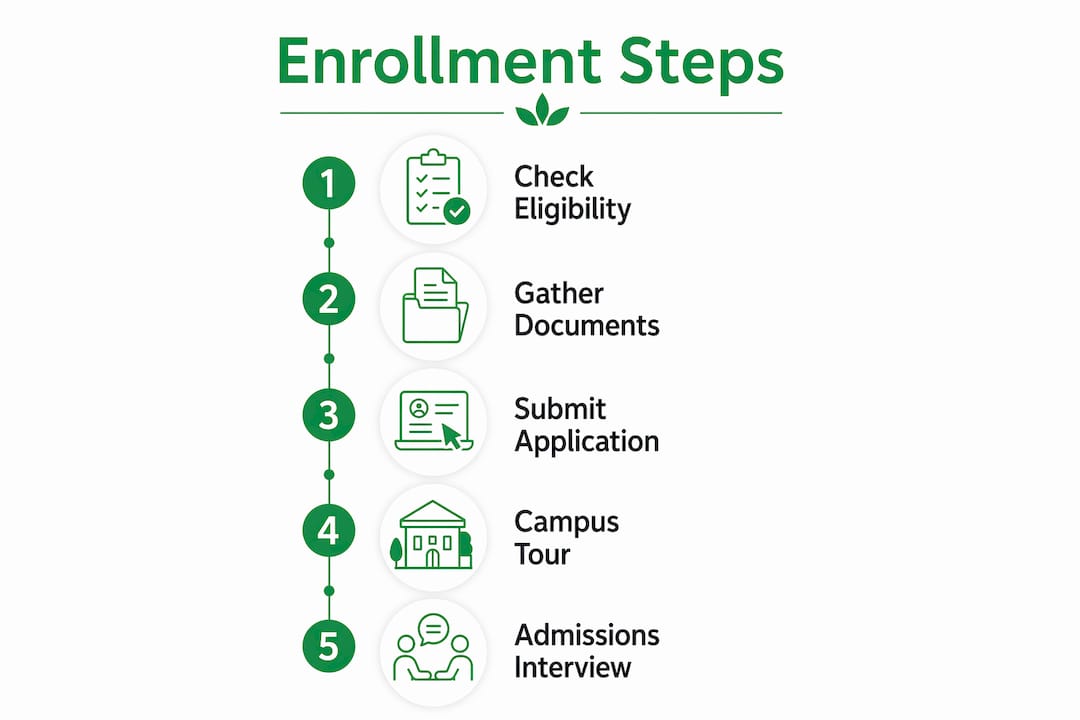
Beauty school enrollment steps follow a defined sequence: verify eligibility, gather documents, complete an application, build a financial aid plan, and attend orientation. Most prospective students in cosmetology or esthetics underestimate how much preparation happens before the first class. State boards set the rules, accreditation bodies set the standards, and schools like Avi translate both into a process you can follow. This guide walks you through every stage, including what international certifications mean for your career and how to fund your training without guessing.
What are the basic eligibility requirements for beauty school enrollment?
Eligibility is the starting point for every enrollment process. Most states require applicants to be 16 or 17 years old, with proof of high school completion such as a diploma, GED, or HiSET certificate. That age floor is set by state law, not individual schools, so it applies regardless of which program you choose.
The documents you need fall into two categories: proof of age and proof of education. Acceptable items typically include:
- A government-issued photo ID or birth certificate for age verification
- A high school diploma, GED certificate, or HiSET transcript for education verification
- Immunization records and, in some states, a physician’s statement
- A background check, required in states like Ohio, Texas, and Florida
Homeschool graduates and international applicants face an extra layer of review. Homeschool students usually need a notarized affidavit or official transcript from their program. International applicants may need a credential evaluation from a recognized agency to confirm their foreign diploma meets U.S. equivalency standards. Avi’s ESL and international student resources address exactly these situations, including age and academic prerequisites tailored for non-native English speakers.
One detail most guides skip: schools can lose state board approval mid-year, which voids the hours you have already earned. Always check the most recent accreditation date directly with your state board before signing anything.
Pro Tip: Verify both state board approval and school accreditation status before submitting your application. A school’s website may not reflect a recent lapse.
What are the key steps in the beauty school application process?
The full enrollment process typically runs through five to seven stages, and classes at many schools start as often as every five weeks. That frequency means missing one intake date rarely costs you months. Still, each step requires attention.
- Schedule a campus tour or virtual visit. This is your first real look at the learning environment, equipment, and culture. Treat it as a two-way interview, not a formality.
- Gather your documents. Collect your ID, education proof, immunization records, and any state-specific requirements before you sit down with an admissions counselor.
- Complete the application and enrollment agreement. Read the enrollment agreement carefully. It outlines tuition, refund policies, and program length.
- Build your financial aid plan. File the FAFSA, research scholarships, and confirm whether the school participates in federal Title IV funding. This step often takes the longest.
- Attend orientation. Orientation covers your schedule, attendance policies, kit requirements, and instructor introductions. Missing it puts you behind before day one.
Admissions staff view campus tours and interviews as checkpoints to confirm that the school’s culture and program structure match your goals. They are not gatekeeping exercises. Use that conversation to ask about instructor experience, student-to-teacher ratios, and externship placement rates.
Preparing for your admissions interview is a skill in itself. Avi’s guide on the beauty school interview breaks down what admissions teams actually look for and how to present yourself with confidence.

Pro Tip: Bring a written list of questions to your campus tour. Schools that struggle to answer basic questions about licensure pass rates or externship placements are telling you something important.
How do international certifications affect your enrollment and career?
Not all beauty credentials carry the same weight across borders. The CIDESCO international diploma, for example, is recognized in over 40 countries, while most national certificates are valid only within the state or country where they were issued. That distinction matters if you plan to work in global hospitality, luxury spas, or aboard cruise lines.
International accreditations often reflect skill-based development rather than formal licensure. That means they complement your state license rather than replace it. Employers in senior roles at international hotels and destination spas increasingly value internationally recognized qualifications precisely because those credentials signal a broader technical foundation.
Here is how national and international certifications compare for practical purposes:
- National certificates (state cosmetology or esthetics licenses): required to practice legally in your state, recognized by domestic employers, and tied to state board exam passage
- International diplomas (such as CIDESCO): recognized across 40+ countries, valued in global luxury markets, and focused on advanced skin science and technique
- Combined pathways: some schools offer programs that satisfy both state licensure requirements and international certification standards simultaneously
For international students enrolling in U.S. programs, the process adds steps. You will need to confirm visa eligibility, verify that your program qualifies under your visa type, and plan for housing. Beauty school location matters for international enrollees because proximity to public transit, affordable housing, and support services directly affects whether you can complete your program. Avi, located in Fairfax County, VA, sits within a well-connected region with access to Metro lines and established international student communities.
How to build an effective financial aid plan for beauty school
Financial planning is the step most students underestimate, and it is the one most likely to derail enrollment if handled late. Federal Title IV funding requires schools to collect FAFSA data, transcripts, and citizenship verification from applicants. Only accredited schools that participate in federal programs can offer Pell Grants and federal student loans.
Your funding options typically include:
- FAFSA-based aid: Pell Grants, subsidized and unsubsidized federal loans, and work-study programs
- Institutional scholarships: offered directly by the school, often based on financial need or academic merit
- VA benefits: eligible veterans and dependents can apply GI Bill benefits toward accredited beauty programs
- State grants: some states offer workforce development grants specifically for vocational training
One enrollment barrier that rarely gets discussed: students with defaulted student loans often cannot enroll until their debt is resolved or they have made nine consecutive on-time payments within a 10-month window. If you have prior loan issues, address them before you apply. Waiting until the admissions stage creates delays that push your start date back by months.
Beyond tuition, budget for your kit, which can run several hundred dollars, a uniform, and any state-required exam fees. Avi’s financial aid resources for Virginia students cover grants, loans, and scholarship options specific to the Northern Virginia region.
Pro Tip: Ask the financial aid office directly whether the school participates in Title IV federal funding. If it does not, your FAFSA data will not generate any aid for that program.
What to expect on your first day and during orientation
Orientation is not administrative busywork. It sets the tone for how you will perform throughout your program. Most schools use orientation to cover attendance policies, grading standards, kit distribution, and introductions to lead instructors. Missing even part of it creates gaps that are hard to fill later.
Prepare for your first day by doing the following:
- Review your enrollment agreement one more time so you know your schedule and any probationary policies
- Confirm your kit contents against the school’s published list and flag any missing items immediately
- Bring a notebook. Orientation moves fast, and instructors often share practical tips that are not in the handbook
- Introduce yourself to at least two classmates. Your cohort becomes your study group, your practice partner, and your professional network
The mindset you bring to orientation matters as much as the paperwork you complete. Cosmetology and esthetics programs are demanding. State boards require hundreds of clock hours, and attendance policies are strict because those hours count toward your licensure eligibility. Students who treat orientation as optional often struggle with the pace of the program from week two onward.
Pro Tip: Use orientation to ask your instructor specifically how the school tracks and reports your hours to the state board. Knowing the process early prevents disputes at graduation.
Key Takeaways
Completing beauty school enrollment requires meeting state eligibility standards, submitting the right documents, planning finances early, and showing up fully prepared for orientation.
| Point | Details |
|---|---|
| Eligibility comes first | Most states require applicants to be 16 or 17 with a diploma, GED, or HiSET certificate. |
| Accreditation must be verified | Schools can lose state board approval mid-year, voiding hours already earned. |
| Financial aid needs early action | FAFSA, Title IV participation, and loan default status all affect enrollment eligibility. |
| International certifications expand careers | CIDESCO diplomas are recognized in 40+ countries, unlike most state-only licenses. |
| Orientation is not optional | Attendance policies and hour tracking begin at orientation and directly affect licensure eligibility. |
What I have learned about enrolling in beauty school
The students who struggle most with enrollment are not the ones who lack talent. They are the ones who treat the process as a formality and skip the research phase entirely. I have seen prospective students sign enrollment agreements without checking whether the school held current state board approval. That mistake costs them months of work and thousands of dollars when the program loses accreditation mid-cycle.
The campus tour and admissions interview deserve more credit than they get. Most people walk in hoping to make a good impression. The smarter move is to walk in with a list of hard questions: What is the licensure exam pass rate? How does the school track clock hours? What externship placements have graduates secured in the last 12 months? The answers tell you more about a school’s quality than any brochure.
Financial planning is where I see the most avoidable pain. Students who file FAFSA late, discover their school does not participate in Title IV funding, or find out mid-enrollment that a prior loan default blocks their aid are dealing with problems that a single phone call in week one would have prevented. Build your financial plan before you fall in love with a program.
For international students, the enrollment process is genuinely more complex. Visa eligibility, credential evaluation, housing proximity to the school, and access to English-language support services all require planning that domestic students never have to think about. That complexity is manageable, but only if you start early and choose a school that has real infrastructure for international enrollees.
The beauty industry rewards people who are prepared. Enrollment is your first test of that.
— krishna
Avi Career Training and your path to cosmetology
Avi Career Training in Fairfax County, VA, offers accredited cosmetology and esthetics programs built around hands-on training and personalized mentorship from enrollment through graduation.
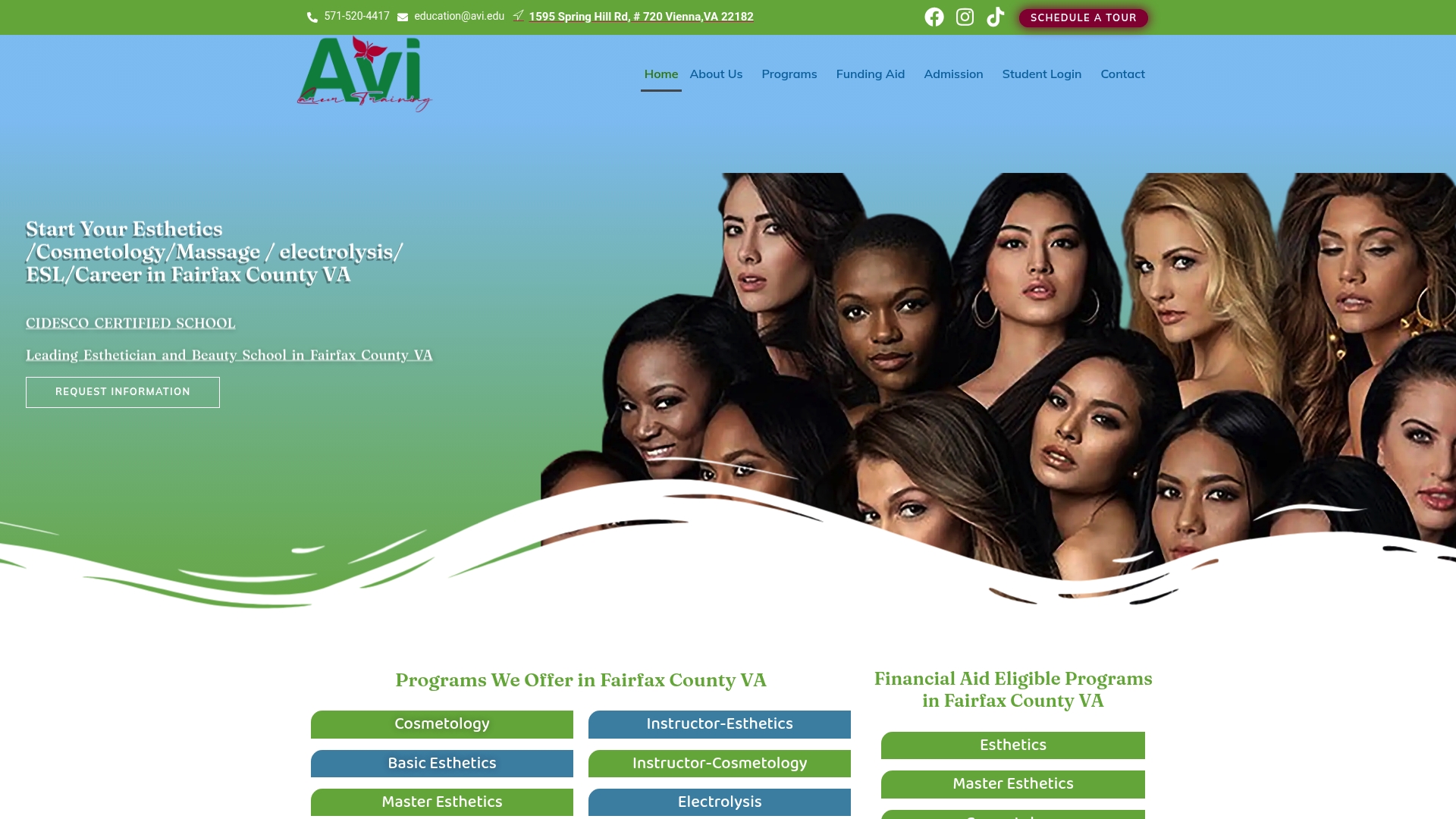
Avi’s admissions team guides students through every stage of the process, from campus tours and document review to financial aid planning and orientation. The school’s cosmetology program connects graduates with externship and career placement opportunities through partnerships with leading spas and salons across Northern Virginia. Financial aid options, including federal funding for eligible students, make the program accessible regardless of your starting budget. If you are ready to take the first concrete step, Avi’s admissions counselors are available to walk you through what the process looks like for your specific situation.
FAQ
What are the minimum age requirements for beauty school?
Most states set the minimum age at 16 or 17, depending on state law. Students who start before 18 may need to wait until they reach majority age before sitting for licensure exams.
What documents do I need to enroll in beauty school?
You typically need a government-issued photo ID, proof of high school completion such as a diploma or GED, and immunization records. Some states also require a background check or physician’s statement.
Can international students enroll in U.S. beauty schools?
Yes, but the process includes additional steps such as visa verification, credential evaluation of foreign diplomas, and confirmation that the program qualifies under your visa type. Schools with dedicated ESL and international student support make this process significantly more manageable.
How does FAFSA affect beauty school enrollment?
FAFSA determines your eligibility for federal grants and loans, but only at schools that participate in Title IV federal funding. Filing early and confirming your school’s participation status prevents delays in your financial aid package.
What is the difference between a national license and an international beauty certification?
A national cosmetology or esthetics license authorizes you to practice legally within your state. An international certification like the CIDESCO diploma is recognized in over 40 countries and opens doors in global luxury spa and hospitality markets.