Barber School in Northern Virginia: Licensing, Career & Training Guide
A barbering school in Northern Virginia can take you from zero experience to a licensed, working barber in as little as 12 to 14 months — and the DC metro area is one of the strongest markets in the country to build that career.
If you’re weighing your options, this guide covers everything you need to make a clear decision: Virginia’s exact licensing requirements, how barbering compares to cosmetology, what separates a quality barber program from a mediocre one, and what you report earning once you’re licensed.
Key Takeaways
- Virginia requires 1,500 clock hours to qualify for the Barber License
- Full-time students typically complete training in 12–14 months
- The Virginia State Board exam includes both a written (theory) and practical (hands-on) component
- Barbers in the DC–Arlington–Alexandria metro area earn 10–15% above the national median, with top earners exceeding $60,000–$70,000+
- COE accreditation is required for Title IV federal financial aid eligibility — always verify before enrolling
What Does a Barber Actually Do? (And Why the Career Is Thriving)
Barbering is one of the oldest skilled trades in history — and right now, it’s in the middle of a serious resurgence.
The modern barber’s scope of practice goes well beyond a basic haircut. Licensed barbers in Virginia are trained to perform haircuts, straight-razor shaves, beard design and grooming, scalp treatments, and hair styling for men and boys. Many skilled barbers also specialize in fades, tapers, lineups, and texture work across all hair types — services that require real technical precision and consistent practice to master.
The industry is growing to match that demand. The U.S. Bureau of Labor Statistics projects steady employment growth for barbers over the coming decade, driven by a cultural shift toward barbershop culture, the rise of grooming as self-care, and a growing client base that values skilled, personalized service. In dense metro markets like Northern Virginia and the broader DC area, that demand is even sharper — high population density, diverse clientele, and above-average disposable incomes all fuel a strong local market for skilled barbers.
If you’ve been thinking about a hands-on career that rewards skill, builds loyal client relationships, and opens the door to business ownership, barbering is a legitimate path worth taking seriously.
Ready to take the first step? Apply to AVI Career Training and connect with our admissions team about program availability.
Virginia Barber License Requirements: Hours, Exams & the State Board
Virginia’s barber licensing requirements are set by the Virginia Board of Barbers and Cosmetology, which operates under the Virginia Department of Professional and Occupational Regulation (DPOR). Before you can sit for the State Board exam, you need to meet one of two training pathways.
The School Route: 1,500 Clock Hours
The most common path is completing a Board-approved barber program at an accredited school. Virginia requires 1,500 clock hours of training to qualify for licensure through this route.
Those hours cover:
– Barbering theory and sanitation
– Haircutting and styling techniques
– Shaving and facial hair design
– Scalp and hair treatments
– Virginia state law and professional ethics
– Hands-on clinic practice with real clients
This is where a strong school separates itself from a mediocre one. Classroom theory matters — but the clock hours you spend in a working student clinic, behind the chair with actual clients, are what build the speed, precision, and confidence that employers and clients notice on day one.
The Apprenticeship Alternative: 2,250 Hours
Virginia also allows an apprenticeship route, where you complete 2,250 hours of supervised work under a licensed master barber instead of attending school. The hour requirement is significantly higher (2,250 vs. 1,500), and finding a qualified master barber willing to take on an apprentice can be difficult. For most people in the Northern Virginia area, the school route is faster, more structured, and more accessible.
The Virginia State Board Exam
Once you complete your required hours, you’ll apply to sit for the Virginia State Board exam, which has two components:
- Written (Theory) Exam — Tests your knowledge of barbering principles, sanitation, safety, and Virginia state law
- Practical (Hands-On) Exam — Demonstrates your technical skills on a live model or mannequin under examiner observation
After passing both components and submitting your application, most students receive their license within 4 to 8 weeks, depending on exam scheduling and processing times.
For the most current licensing requirements and exam application instructions, visit the Virginia DPOR official website.
Barbering vs. Cosmetology in Virginia — Which License Is Right for You?
This is one of the most common questions prospective students ask — and it’s worth answering honestly, because the two licenses are genuinely different in scope, training requirements, and career direction.
Scope of Practice
A Virginia Barber License authorizes you to perform haircuts, shaves, beard and facial hair services, scalp treatments, and hair styling — primarily for male clients, though barbers serve all genders in practice.
A Virginia Cosmetology License covers a broader range of services: haircuts, chemical services (relaxers, perms, keratin treatments), hair coloring, waxing, basic skin care, and nail services. Cosmetologists work with all clients and all service categories.
Can Barbers Do Hair Coloring in Virginia?
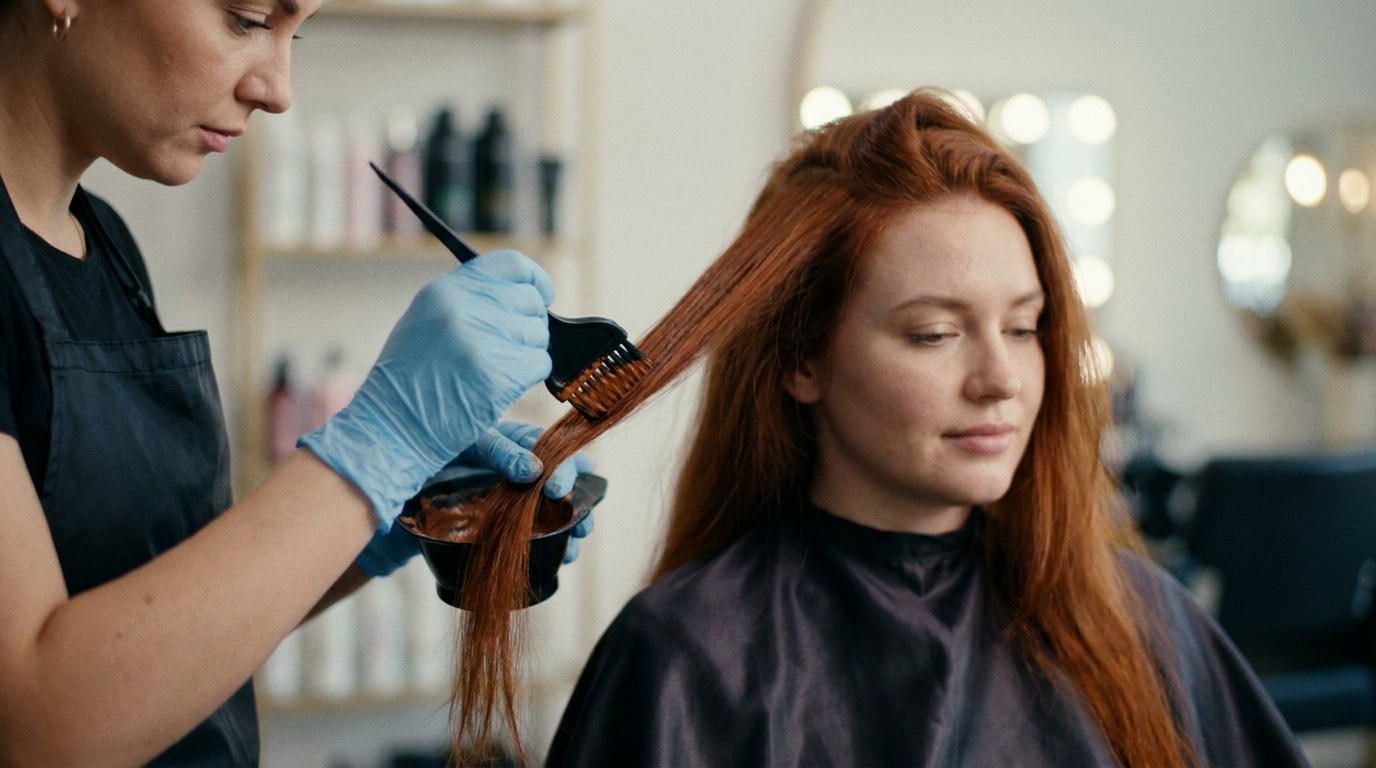
This is a question that comes up constantly, so here’s the direct answer: under a standard Virginia Barber License, barbers are not authorized to perform chemical hair coloring services. Hair coloring falls within the cosmetology scope of practice in Virginia.
If you want to offer both barbering and coloring services, you would need to obtain both a Barber License and a Cosmetology License — or pursue cosmetology training, which includes color theory and application.
Hour Requirements Compared
| License | School Route | Apprenticeship Route |
|---|---|---|
| Barber License | 1,500 hours | 2,250 hours |
| Cosmetology License | 1,500 hours | 3,000 hours |
Both licenses require the same 1,500 hours through the school route in Virginia. The practical difference lies in what those hours cover and what the resulting license lets you do.
Which One Should You Choose?
Choose Barbering if you’re drawn to the barbershop environment, men’s grooming culture, precision cuts, shaves, and building a loyal chair-side clientele. Barbering has a distinct culture and community — one that many practitioners describe as deeply satisfying.
Choose Cosmetology if you want broader service capabilities, including hair color, chemical services, and the flexibility to work across salon environments.
Some students pursue both over time. Either way, the first step is completing an accredited program and earning your Virginia license.
What to Look for in a Northern Virginia Barber School
Not all barber programs are equal — and in a field where your technical skills are your livelihood, the quality of your training matters enormously. Here’s what to evaluate before you enroll anywhere.
COE Accreditation and SCHEV Certification
COE accreditation (Council on Occupational Education) is a federal quality standard that also determines your eligibility for Title IV federal financial aid, including Pell Grants. If a school isn’t COE accredited, you likely can’t use federal financial aid there. That’s a significant financial consideration.
SCHEV certification is Virginia’s state-level authorization for postsecondary schools. A school operating in Virginia without SCHEV certification is not properly authorized to offer programs in this state.
Always verify both credentials before you enroll. Ask the school directly, and check the DPOR database and COE’s website for confirmation.
Hands-On Clinic Hours
The 1,500-hour requirement isn’t just seat time — it should include substantial hours in a working student clinic where you practice on real clients. Ask any prospective school specifically: How many of those hours are spent in the clinic vs. the classroom? What’s the client volume like? Do students perform a full range of services on diverse clientele?
A strong program puts you behind the chair early and often.
Inclusive Curriculum: All Hair Textures, All Clients
This matters more than many schools are willing to acknowledge directly. The Northern Virginia and DC metro area is one of the most racially and ethnically diverse regions in the country. Your future clients will have straight hair, wavy hair, coily hair, kinky hair, fine hair, thick hair, and everything in between.
A barber who can only execute one hair texture well is not prepared for this market. Look for a school that explicitly trains students on all hair types and textures — not just the ones that show up in standard textbook photos. An inclusive curriculum isn’t just an ethical stance; it’s a professional and competitive advantage.
Financial Aid and Flexible Scheduling
A quality school should be transparent about what financial aid options are available. COE-accredited schools are eligible to participate in federal Title IV programs. Many schools also accept the GI Bill® for eligible veterans and military-connected students — a meaningful benefit if that applies to you.
Ask about scheduling options too. Full-time programs typically run 12 to 14 months. Part-time or flexible schedules may extend to 18 to 24 months. The right pace depends on your work, family, and financial situation.
Instructor Credentials
Your instructors should be licensed professionals with real industry experience — not just people who passed a teaching test. Ask about instructor backgrounds, how long they’ve been practicing, and what specializations they bring to the curriculum.
Meet Two Students Who Made the Leap
From Construction to the Barbershop Chair
Marcus had spent eight years in construction when a slow season pushed him to reconsider his options. He’d always cut hair on the side — friends, family, neighbors in his Alexandria neighborhood — but had never thought of it as a real career path. After researching barber programs in Northern Virginia and running the numbers on tuition, financial aid, and projected earnings, he enrolled in a full-time program. Fourteen months later, he passed both parts of the Virginia State Board exam on his first attempt. Within three months of licensing, he had a booth at a busy Tysons-area barbershop and a client list that kept him fully booked on Fridays and Saturdays.
The technical skills mattered. But so did the clinic hours — the reps behind the chair, working on clients with all different hair types, that made him genuinely confident walking into an interview.
A Career Change That Made Sense on Both Sides of the Ledger
Priya had been working retail management for six years when she started calculating what a career change could actually look like financially. She was drawn to barbering specifically — the precision, the culture, the path toward owning her own space eventually. She enrolled part-time while keeping her job, completing her 1,500 hours over 20 months. She’s now licensed, building her clientele, and on track to reach her booth rental income goals within her first year post-licensing.
Her biggest advice to prospective students: don’t just ask about the program length. Ask what the clinic experience actually looks like, and ask specifically whether the curriculum covers all hair textures. For her clients in the DC area, that range was non-negotiable.
Barber Career Outlook: What Can You Earn in the DC Metro Area?
Let’s be direct about the numbers — because salary is a real factor in any career decision, and you deserve honest information rather than inflated promises.
National Baseline
According to the U.S. Bureau of Labor Statistics, the median annual wage for barbers nationally falls in the $35,000–$40,000 range. That’s the midpoint — meaning half of all barbers earn more, half earn less.
DC Metro Premium
The DC–Arlington–Alexandria metropolitan area consistently ranks among the higher-paying markets for personal appearance workers. The BLS data for this MSA shows wages running roughly 10–15% above the national median, reflecting the area’s higher cost of living, population density, and steady work for skilled grooming services. That puts the regional median in the $40,000–$46,000 range for established barbers.
Top Earners: Booth Rental and Business Ownership
The ceiling in barbering is set by business model, not just skill level. Employed barbers — working on commission or hourly at an established shop — have predictable but capped income. Booth renters and shop owners who build strong clientele and manage their business effectively regularly exceed $60,000 to $70,000+ annually in competitive metro markets like Northern Virginia.
Getting there takes time, client development, and business sense. Most new graduates start employed or on commission, build their book over 12 to 24 months, then evaluate the move to booth rental when their schedule justifies the fixed cost.
What Affects Your Earning Potential
- Location: A shop in Tysons Corner or Arlington commands different rates than a suburban strip mall
- Clientele depth: A full book beats a half-empty one every time — client retention is a skill
- Service range: Barbers who can execute precision fades, straight-razor shaves, beard design, and scalp treatments on all hair types earn more per hour than those with a narrower menu
- Business model: Booth rental vs. employment vs. ownership each carries different income profiles and risk levels
For verified national and regional wage data, visit BLS.gov — Barbers.
Start Your Barbering Career in Northern Virginia
The path to a Virginia Barber License is concrete and achievable: complete 1,500 hours at an accredited school, pass the written and practical State Board exams, and you’re licensed to work in one of the strongest markets in the country.
The school you choose determines how prepared you actually are when you walk out. Look for COE accreditation, real clinic hours, inclusive training on all hair textures, and instructors who’ve actually built careers in the industry.
AVI Career Training is a COE-accredited, SCHEV-certified school in Vienna, Virginia — in the heart of the Northern Virginia market. Our programs are built around hands-on training, inclusive technique instruction, and real outcomes for our graduates. Financial aid is available, and we welcome GI Bill® recipients.
If you’re ready to find out whether AVI’s Barbering program is the right fit for you, start your application here or call us directly at (703) 943-9841. You can also reach out to our admissions team with any questions before you commit.
Your chair is waiting.
Licensing requirements are subject to change. Always verify current hour requirements, exam procedures, and application steps directly with the Virginia Department of Professional and Occupational Regulation (DPOR) before enrolling.