
Summary:
You’ve seen the before-and-after photos. The perfectly shaped brows that don’t smudge by midday. The defined lips that look natural, not overdone. The subtle eyeliner that actually stays put through workouts and long days. Permanent makeup isn’t just trending—it’s transforming how people approach their daily routines and how they feel when they look in the mirror.
If you’re considering permanent makeup training, you’re looking at one of the fastest-growing specialties in the beauty industry. It’s creative, it’s technical, and when done right, it can generate serious income with a schedule you actually control. But here’s what matters most: the training you choose determines whether you’re prepared to work safely, confidently, and legally in Virginia. Let’s talk about what quality permanent makeup training actually looks like and how it fits into your bigger career picture in the Northern Virginia market.
What Permanent Makeup Training Actually Covers
Permanent makeup training isn’t a weekend workshop. In Virginia, you’re looking at a minimum of 200 hours of education to meet state licensing requirements for a Permanent Cosmetic Tattooer license. That’s theory, hands-on practice, safety protocols, and client management all rolled into one comprehensive program designed to prepare you for real-world work.
You’ll learn the core techniques that clients request most: microblading for natural-looking hair strokes, machine powder brows for fuller coverage, eyeliner enhancement that defines without looking harsh, and lip blush that adds color and shape. But the technical work is only part of it. You’re also studying skin anatomy, color theory, pigment selection for different skin tones, sanitation practices, and bloodborne pathogen protocols. These aren’t just boxes to check for licensing—they’re what keep your clients safe and your work consistent across hundreds of procedures.
The business side matters just as much. How do you consult with a client who’s nervous about the process? What do you do when someone’s expectations don’t match what’s realistic for their skin type or lifestyle? How do you price your services competitively in the Fairfax County market, market your work effectively on social media, and build a client base that actually sustains you long-term? Quality permanent makeup training addresses all of it.
Permanent Makeup Training Requirements in Virginia
Virginia has specific requirements for anyone wanting to practice permanent makeup professionally. You need a Permanent Cosmetic Tattooer license issued by the Virginia Board for Barbers and Cosmetology, which means completing a state-approved 200-hour training program and passing the licensing exam. This isn’t optional—working without proper licensure puts you at legal risk and endangers clients.
The 200-hour requirement covers both theoretical knowledge and practical application. You’ll spend time in classroom settings learning about skin structure, infection control, color theory, and Virginia-specific regulations. You’ll also log supervised hands-on hours practicing techniques on models under instructor guidance. The combination ensures you understand not just how to perform procedures, but why certain techniques work better for specific skin types and client goals.
Bloodborne pathogen certification is mandatory before you can work on live models during training. This separate certification teaches you how to prevent disease transmission, handle contaminated materials, and respond to exposure incidents. It’s typically a 2-3 hour online course, and it’s required by both Virginia law and professional liability insurance carriers.
After completing your 200-hour program, you’ll apply for your license through the Virginia Department of Professional and Occupational Regulation. The application requires proof of your training completion, your bloodborne pathogen certification, and payment of licensing fees. Once approved, your license must be renewed every two years, which includes completing 5 hours of continuing education in safety and sanitation to stay current with evolving best practices.
Understanding these requirements upfront helps you choose the right training program. Not all permanent makeup courses meet Virginia’s standards—some are certification programs that don’t qualify you for state licensing. Before investing time and money, verify that your chosen school offers a state-approved program that actually leads to licensure. We offer programs specifically designed to meet Virginia State Board requirements, ensuring your education translates directly into legal practice.
What to Expect During Hands-On Permanent Makeup Training
Theory is essential, but you don’t learn permanent makeup from a textbook alone. You learn it by doing—first on practice skins, then on mannequins, and eventually on live models under close supervision. This progression matters because permanent makeup requires precision, consistent pressure control, and the ability to work calmly when someone’s face is inches from yours and they’re trusting you not to make permanent mistakes.
Early in your training with us, you’ll practice basic strokes and techniques on synthetic materials. You’ll get a feel for how different needles and machines behave, how pigment flows and saturates, and how to maintain consistent depth and angle throughout a procedure. It’s repetitive work, but it builds the muscle memory you need. When you move to live models, you want those fundamentals to be second nature so you can focus on the client’s comfort, facial symmetry, and the overall design rather than struggling with basic technique.
Working on live models is where everything clicks—or where you realize what still needs work. You’re managing a real person’s expectations and anxiety, dealing with their specific skin type and sensitivity, and making decisions in real time about pigment placement, saturation levels, and stroke patterns. Your instructors are there to guide you, correct mistakes before they become permanent, and help you develop the judgment that separates competent technicians from confident artists who can handle any client scenario.
In our accredited programs, hands-on practice isn’t an afterthought squeezed into the last week. It’s built into the curriculum with enough supervised hours to meet Virginia State Board requirements and enough variety to prepare you for different client scenarios. You’ll work on different skin tones, face shapes, age groups, and skin conditions. You’ll learn how to handle clients who are nervous, clients who have unrealistic expectations based on social media photos, and clients who’ve had bad experiences with other artists and need extra reassurance.
Safety protocols become automatic during this phase. You’ll follow strict sanitation procedures every single time—setting up your station, prepping the client’s skin, handling tools, disposing of contaminated materials, and cleaning up afterward. These habits need to be instinctive before you’re working independently in a Fairfax County spa or your own studio. One lapse in sterile technique can lead to infections, allergic reactions, or cross-contamination that ends careers and harms clients.
By the end of your hands-on training, you should feel ready to take clients on your own. Not fearless—permanent makeup always requires focus and respect for the process—but confident in your ability to deliver safe, professional results that clients will be happy with for years. That confidence comes from repetition, constructive feedback, and working through challenging situations with experienced instructors who’ve seen it all before and know how to help you improve.
Esthetician Training Program Options and Career Pathways
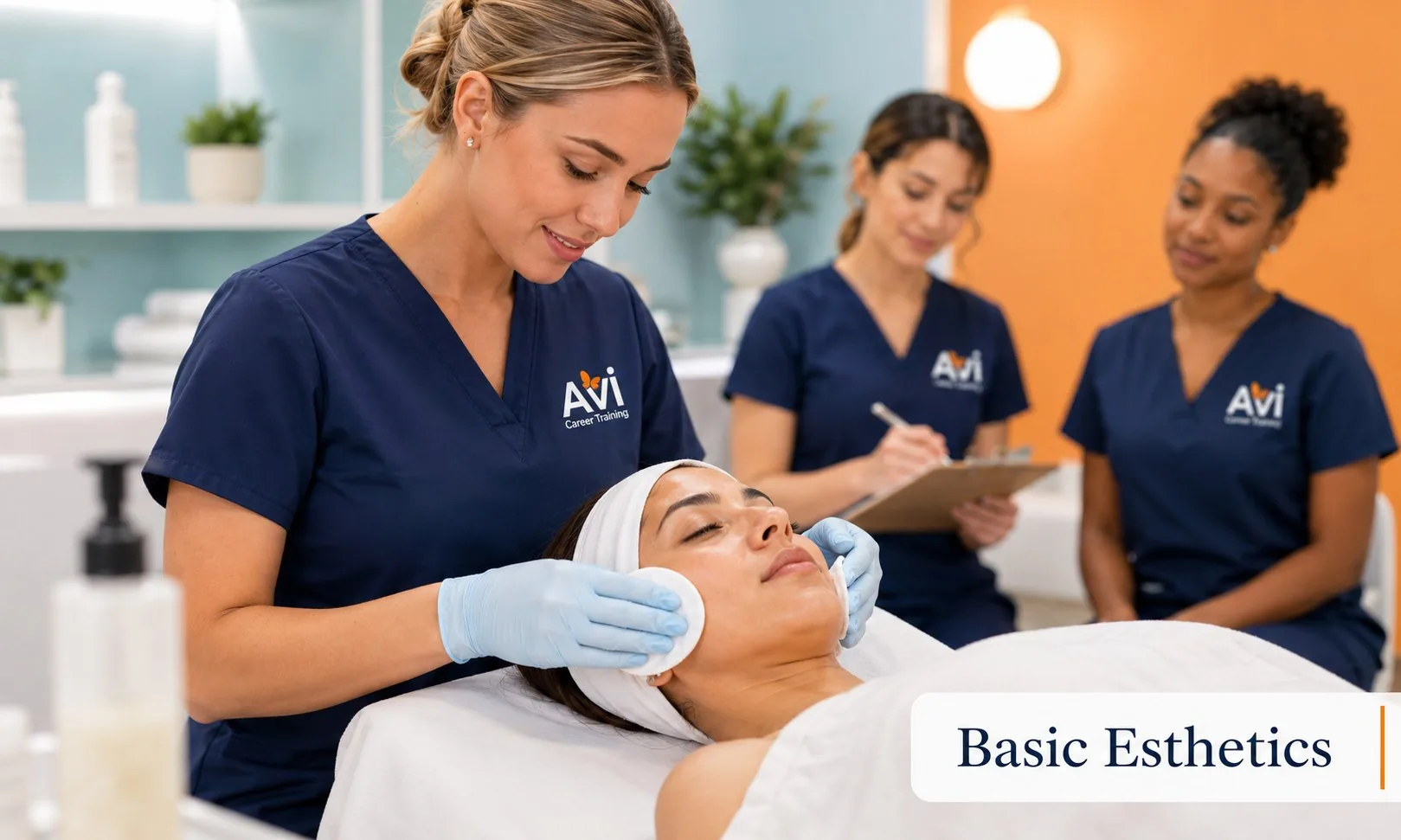
An esthetician training program is your entry point into professional skincare and beauty services in Virginia. Basic esthetics requires 600 hours of education covering everything from facials and waxing to makeup application and business practices. Master esthetics adds another 600 hours and qualifies you to perform more advanced procedures like microdermabrasion, chemical peels, and LED light therapy.
Permanent makeup training can fit into this pathway at different stages depending on your goals and timeline. Some students complete their basic esthetics license first, start working in a Northern Virginia spa or salon to build client skills, and then pursue permanent makeup training as a way to expand their service menu and significantly increase their income. Others jump straight into specialized permanent cosmetic programs if they already know that’s their primary career focus and don’t want to spend time on broader esthetics education.
We offer both routes with programs designed for the Fairfax County and Tysons Corner markets. Our comprehensive esthetics programs provide the broad foundation in skincare science and client services, while our permanent cosmetic tattooing training gives you the specialized skills to stand out and command premium pricing in one of the country’s most affluent regions.
How Aesthetician Training Prepares You for Permanent Makeup Work
Aesthetician training and permanent makeup work share more common ground than you might initially think. Both require deep understanding of skin—how it heals, how it reacts to different treatments and products, how factors like age, sun damage, and lifestyle affect its texture and tone. When you complete aesthetician training, you’re not just learning to perform facials. You’re learning to analyze skin conditions, identify contraindications for treatment, and communicate professionally with clients about realistic outcomes.
This foundation becomes invaluable when you move into permanent makeup. Before you can tattoo pigment into someone’s skin, you need to assess whether their skin is healthy enough for the procedure. Are they on medications that affect healing? Do they have active acne or infections in the treatment area? Are they realistic about how the pigment will look on their specific skin tone and texture? Aesthetician training teaches you to ask these questions and recognize red flags that could lead to poor results or complications.
The client consultation skills you develop during aesthetician training translate directly to permanent makeup consultations. You learn how to listen to what clients say they want, read between the lines to understand what they actually need, and guide them toward choices that will make them happy long-term rather than just in the moment. You get comfortable having difficult conversations—telling someone that the Instagram photo they brought in isn’t achievable on their face shape, or explaining why their desired eyebrow color won’t work with their skin’s undertones.
Working in close proximity to clients’ faces becomes second nature through aesthetician training. You spend hours performing facials, extractions, and facial massage, which builds your comfort level and steady hand control. By the time you’re holding a microblading tool or permanent makeup machine near someone’s eyes, you’ve already logged hundreds of hours working in that intimate space. The proximity doesn’t rattle you because it’s familiar territory.
Many Northern Virginia spas, medical aesthetics practices, and dermatology offices prefer to hire professionals who can offer multiple services rather than single-specialty technicians. If you’re licensed as an aesthetician and certified in permanent makeup, you can perform facials, chemical peels, dermaplaning, and permanent brow or lip procedures all under one roof. This versatility makes you more valuable to employers and gives you more revenue streams if you’re building your own practice in Fairfax County or surrounding areas.
The combination also creates natural upsell opportunities that benefit both you and your clients. Someone who comes in for regular facials and skincare treatments is a perfect candidate for permanent makeup services. You’ve already built trust, you understand their skin, and you can explain how permanent makeup will complement their existing skincare routine. These warm leads convert at much higher rates than cold marketing to strangers on social media.
From a business perspective, aesthetician training often includes modules on retail sales, client retention, and service marketing—skills that directly support a permanent makeup business. You learn how to recommend products, explain the value of treatments without being pushy, and create service packages that encourage repeat bookings. These fundamentals apply whether you’re selling skincare products or booking permanent makeup touch-up appointments.
Lash Tech Training and Expanding Your Service Menu
Lash tech training is another high-demand specialty that pairs naturally with permanent makeup and esthetics services in the Northern Virginia beauty market. Eyelash extensions require precision, steady hands, client consultation skills, and understanding of eye anatomy—all of which overlap significantly with permanent eyeliner work. Many beauty professionals pursue both certifications to offer a fuller menu of services that appeals to a wider client base.
Eyelash extensions are temporary enhancements requiring fill appointments every 2-4 weeks, which creates predictable recurring revenue for your business. Permanent eyeliner, on the other hand, lasts for years with only occasional touch-ups needed. Offering both gives Fairfax County clients options based on their lifestyle, budget, and commitment level. Some clients prefer the flexibility of lash extensions they can change or remove when they want a different look. Others want the convenience of waking up with defined eyes every single day without the maintenance appointments or daily application.
From a scheduling and income perspective, lash services can keep your calendar full between permanent makeup appointments. Lash fills typically take 60-90 minutes, while permanent makeup procedures can take 2-4 hours depending on the service. Mixing shorter and longer appointments throughout your week creates better time management, reduces downtime, and generates more consistent income flow rather than feast-or-famine booking patterns.
Training requirements for lash technicians vary significantly by state. Virginia requires that lash technicians hold either a cosmetology or esthetics license, which means if you’re already pursuing esthetics training with us or similar programs, adding lash certification is a straightforward next step that doesn’t require starting from scratch with a completely separate educational pathway.
The skill set translates remarkably well between lash extensions and permanent makeup. If you can isolate individual natural lashes and apply extensions with precision—working with tweezers millimeters from someone’s eyeball—you already have the steady hand control and attention to detail that permanent makeup demands. If you’re comfortable working in close proximity to a client’s eyes for 90 minutes at a time, maintaining focus and conversation, you’re already past one of the bigger mental hurdles of eyeliner tattooing.
Client communication skills overlap too. Lash clients need education about aftercare, realistic expectations about retention and natural lash health, and guidance on choosing curl types and lengths that flatter their eye shape. Permanent makeup clients need similar conversations about healing processes, color changes during the healing phase, and design choices that complement their facial features. If you can guide one conversation well, you can handle the other.
The Northern Virginia market particularly values professionals who can offer comprehensive beauty services rather than forcing clients to visit multiple providers. A client who can get lash extensions, a facial, and permanent makeup touch-ups all with the same trusted professional is far more likely to become a loyal, long-term client who refers friends and family. This convenience factor matters in Fairfax County, Tysons Corner, and surrounding areas where busy professionals and parents prioritize efficiency and don’t want to spend their limited free time driving to multiple appointments across the region.
Starting Your Permanent Makeup Training Journey in Fairfax County
Permanent makeup training is an investment in your future—in your technical skills, your earning potential, and your ability to do work that genuinely matters to people. It’s not a quick fix or a side hustle you can approach casually. It requires real training, ongoing practice, and a willingness to keep learning as techniques, pigments, and technologies continue to evolve in this rapidly growing industry.
What you’re getting in return is a career path with flexibility, creativity, and income potential that most traditional jobs simply can’t match. You’re learning a skill that’s in high demand, that can’t be automated or outsourced, and that gives you real options—work for an established spa, rent booth space, open your own studio in Tysons Corner, or combine permanent makeup with other beauty services to create exactly the business you want on your own terms.
If you’re in Fairfax County, VA or the surrounding Northern Virginia area, you’re positioned in one of the strongest markets in the country for permanent makeup services. The affluent client base is here. The earning potential is proven. What you need now is the right training to meet Virginia’s licensing requirements and prepare you to deliver professional, safe results from day one. We’ve been preparing beauty professionals for over 30 years with accredited programs, hands-on instruction, financial aid options, and the industry connections that help graduates transition smoothly into successful careers. If you’re ready to build your skillset and explore what permanent makeup training can do for your future, reach out to us and start the conversation today.