Virginia Esthetician License Requirements Guide
To become a licensed esthetician in Virginia, you must complete a state-approved esthetics program, pass both the written and practical portions of the Virginia Board of Barbering and Cosmetology exam, submit a license application, and pay the required fees. Whether you are brand new to the beauty industry or looking to upgrade your credentials, understanding each step of the process makes your path to licensure straightforward and stress-free.
Key Takeaways
- Virginia offers two esthetics license tiers: Basic Esthetics (600 hours) and Master Esthetics (750 hours).
- All training must be completed at a state-approved school, such as AVI Career Training in Vienna, VA.
- You must pass both a written (theory) exam and a practical (hands-on) exam administered through the Virginia Board of Barbering and Cosmetology.
- A high school diploma or GED is not required by the state to enter an esthetics program, but individual schools may have their own admission requirements.
- Licenses must be renewed every two years, and continuing education may be required.
- Federal financial aid (Title IV) is available for qualifying programs at accredited schools like AVI Career Training.
- Once licensed in Virginia, you can work in spas, salons, medical offices, or launch your own esthetics business.
Why Become a Licensed Esthetician in Virginia?
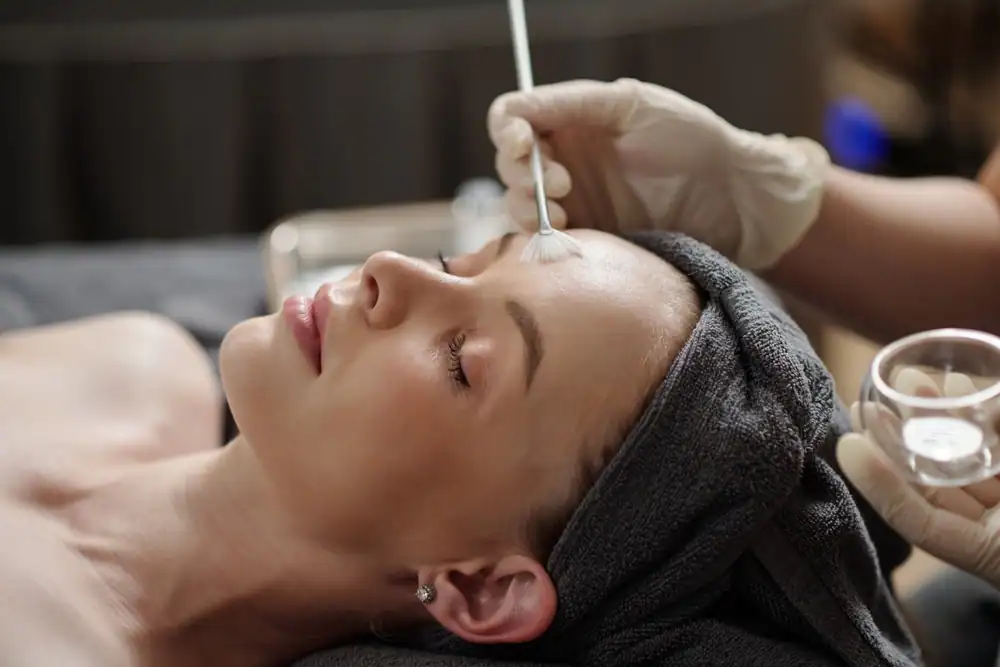
The demand for skilled skin care professionals continues to grow across Northern Virginia and the greater Washington, D.C. metro area. Clients are more educated about skin health than ever before, and they seek licensed professionals who can deliver results-driven facials, chemical peels, waxing, and advanced skin treatments. Earning your esthetics license is not just a legal requirement — it is your professional credential that signals trust, competence, and commitment to your clients.
Virginia recognizes two distinct license levels in esthetics: the Basic Esthetics license and the Master Esthetics license. Knowing the difference between them helps you choose the right program from day one.
Basic Esthetics vs. Master Esthetics in Virginia
Basic Esthetics (600 Hours)
The Basic Esthetics license is the entry-level credential for skin care professionals in Virginia. The state requires a minimum of 600 clock hours of training at a licensed esthetics school. The curriculum typically covers skin anatomy and physiology, facial treatments, hair removal techniques, product knowledge, sanitation and infection control, and client consultation skills. Upon completing your 600 hours, you are eligible to sit for the Virginia licensure exams.
At AVI Career Training in Vienna, VA, our Basic Esthetics program is designed to prepare you thoroughly for both the theory exam and the practical exam. Our instructors bring real-world experience into every class, so you graduate not just exam-ready, but career-ready.
Master Esthetics (750 Hours)
The Master Esthetics license requires a minimum of 750 clock hours of training and covers a broader and more advanced scope of practice. In addition to everything included in a Basic Esthetics program, Master Esthetics training may include advanced chemical exfoliation, microdermabrasion, microneedling, and other skin care modalities that are beyond the scope of a basic license. If you want to work in a medical spa or advance into a clinical skin care environment, the Master Esthetics license opens significantly more doors.
AVI Career Training offers both the Basic Esthetics and Master Esthetics programs, giving you the flexibility to start where you are and advance when you are ready.
Step-by-Step: How to Get Your Virginia Esthetics License
Step 1 – Enroll in a State-Approved Program
Your first step is choosing a school that is approved by the Virginia Board of Barbering and Cosmetology. AVI Career Training is a COE-accredited beauty and wellness career school located at 112 Lawyers Rd NW Suite 3, Vienna, VA 22180. COE (Council on Occupational Education) accreditation means our programs meet rigorous academic and professional standards. You can reach our admissions team at (571) 520-4417 or apply online today to get started.
Step 2 – Complete Your Required Training Hours
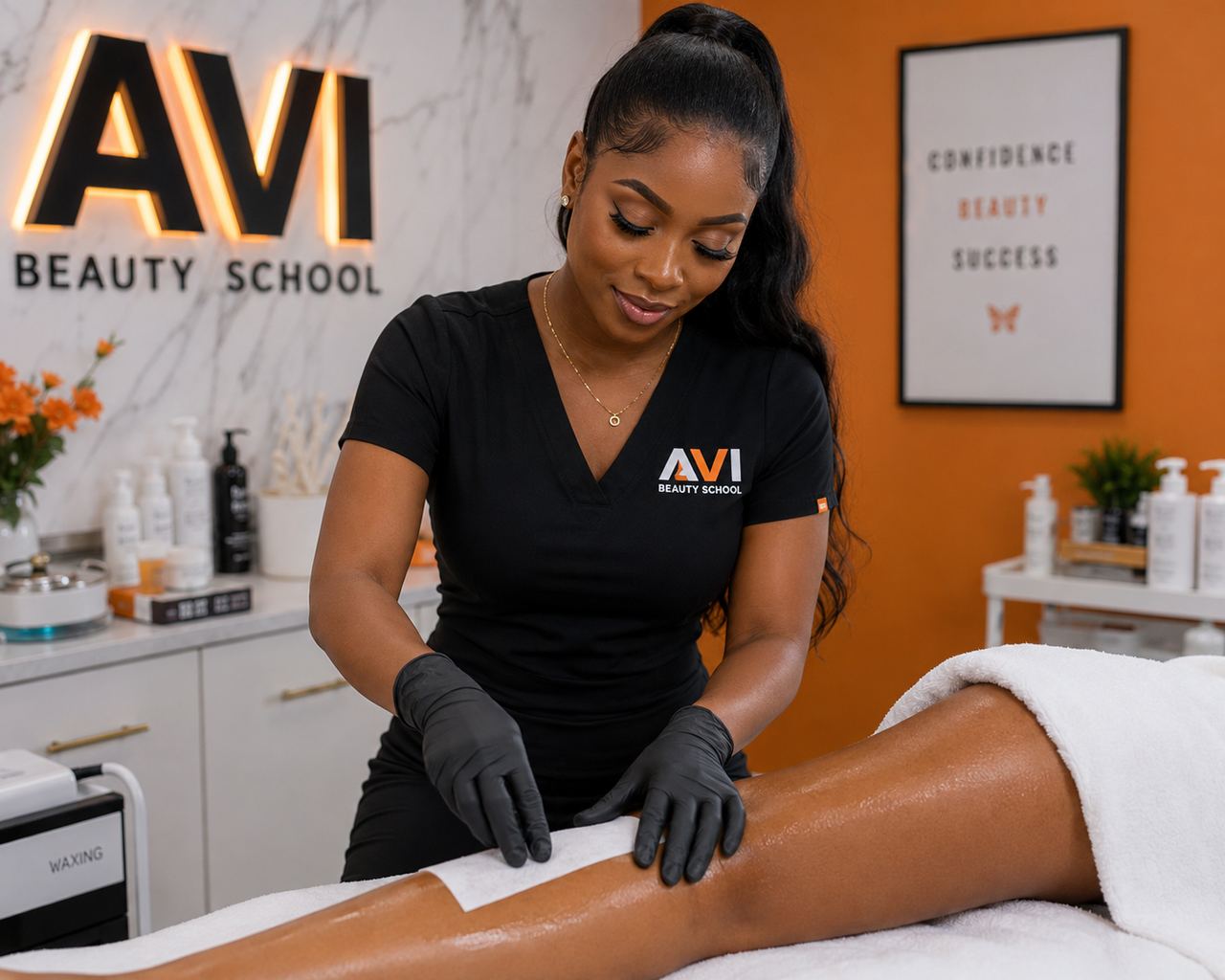
Attend and successfully complete all required clock hours for your chosen program — 600 hours for Basic Esthetics or 750 hours for Master Esthetics. During training, you will work on real clients in a supervised clinic setting, build your technical skills, and develop the professional habits that employers value.
Step 3 – Obtain Your Graduation Documentation
Once you finish your program, your school will provide documentation confirming that you have completed the required hours. You will need this when submitting your license application to the Virginia Department of Professional and Occupational Regulation (DPOR).
Step 4 – Pass the Virginia Licensure Exams
Virginia uses a two-part examination process for esthetics licensure:
- Written (Theory) Exam: This exam tests your knowledge of skin anatomy, product chemistry, sanitation protocols, safety practices, and applicable Virginia laws and regulations.
- Practical (Hands-On) Exam: This exam evaluates your ability to perform actual esthetics services under observation. You will be graded on technique, safety, client communication, and professionalism.
Both exams are administered through the Virginia Board of Barbering and Cosmetology’s approved testing provider. Your school will help you understand the registration process and what to expect on exam day.
Step 5 – Submit Your License Application
After passing both exams, submit your esthetics license application through the Virginia DPOR along with the required application fee. Once approved, you will receive your Virginia esthetics license, and you can begin working legally in the state.
Step 6 – Renew Your License Every Two Years
Virginia esthetics licenses must be renewed on a two-year cycle. Stay current with any continuing education requirements and renewal fee deadlines to keep your license in good standing throughout your career.
Financial Aid and Program Costs
The cost of esthetics training is an important consideration, and AVI Career Training is committed to helping students access the resources they need. Our Basic Esthetics and Master Esthetics programs are eligible for Title IV federal financial aid for qualifying students. This can include federal grants and loans that significantly reduce your out-of-pocket costs.
We encourage you to speak directly with our admissions team about financial aid options and any scholarship opportunities that may be available to you. We never want cost to be the barrier between you and a rewarding career in esthetics. Contact us or start your application here to learn more about funding your education.
What Can You Do With a Virginia Esthetics License?
A Virginia esthetics license unlocks a wide variety of career opportunities, including:
- Day spas and resort spas
- High-end salons and beauty studios
- Medical spas and dermatology offices (especially with a Master Esthetics license)
- Plastic surgery and aesthetic medicine practices
- Cruise ship and destination resort positions
- Self-employment and independent booth rental
- Product education and brand representation
- Film, television, and editorial beauty teams
Northern Virginia’s proximity to Washington, D.C. gives licensed estheticians access to one of the most affluent and diverse client markets in the country. The right license, paired with the right training, positions you for a long and successful career.
Other Programs at AVI Career Training
AVI Career Training is a full-service beauty and wellness career school. In addition to our Basic Esthetics and Master Esthetics programs, we offer:
- Cosmetology – 1,000 hours (Title IV eligible)
- Massage Therapy – 625 hours (Title IV eligible)
- Nail Technology – 150 hours
- Laser Technician – 120 hours
- Medical Assistant – 600 hours
- ESL (English as a Second Language) – 1,200 hours
If you are exploring your options or considering combining credentials — for example, earning both an esthetics license and a laser technician certification — our admissions advisors can help you build a plan that aligns with your career goals.
Frequently Asked Questions About Virginia Esthetics Licensing
Do I need a high school diploma to enroll in an esthetics program in Virginia?
Virginia state law does not require a high school diploma or GED as a prerequisite for esthetics licensure itself. However, individual schools may have their own admission requirements. At AVI Career Training, we encourage you to call us at (571) 520-4417 or visit our website to discuss your specific situation and find the best path forward for you.
How long does it take to complete an esthetics program and get licensed?
The timeline depends on the program you choose and whether you attend full-time or part-time. A Basic Esthetics program (600 hours) can typically be completed in several months on a full-time schedule. After graduating, you will need additional time to schedule and sit for your written and practical exams and for DPOR to process your license application. Most students complete the entire process within six months to a year from their first day of class.
Can I transfer esthetics hours I completed in another state to Virginia?
Virginia does have provisions for out-of-state applicants and may accept hours completed in other states under certain conditions. The Virginia DPOR evaluates these situations on a case-by-case basis. If you trained in another state and want to practice in Virginia, you should contact the Virginia DPOR directly for current reciprocity and hour-transfer guidelines.
What is the difference between a Basic Esthetics license and a Master Esthetics license in terms of what services I can perform?
A Basic Esthetics license allows you to perform foundational skin care services such as facials, basic chemical exfoliation, waxing, and other standard esthetics treatments. A Master Esthetics license expands your scope of practice to include more advanced modalities that require additional training, such as advanced peels, microdermabrasion, and certain clinical treatments. If you plan to work in a medical spa or clinical environment, the Master Esthetics license is generally the better choice.
Is financial aid available for esthetics programs at AVI Career Training?
Yes. AVI Career Training’s Basic Esthetics and Master Esthetics programs are eligible for Title IV federal financial aid for students who qualify. This includes both federal grants and federal student loans. Our team can walk you through the Free Application for Federal Student Aid (FAFSA) process and help you understand all available funding options so you can make an informed decision about your education investment.
Ready to Start Your Esthetics Career?
Earning your Virginia esthetics license is one of the most rewarding professional decisions you can make. The beauty and wellness industry offers flexibility, creativity, and the genuine satisfaction of helping clients look and feel their best every single day. AVI Career Training is here to give you the skills, credentials, and confidence to succeed.
Our campus is conveniently located at 112 Lawyers Rd NW Suite 3, Vienna, VA 22180, and our friendly admissions team is available by phone at (571) 520-4417 to answer your questions. Take the first step today — apply to AVI Career Training and begin your journey to becoming a licensed Virginia esthetician.