
Laser training in esthetics is the specialized education that qualifies beauty professionals to operate cosmetic laser devices safely and deliver results-driven skin treatments. The industry term for this field is “laser esthetics,” and it sits at the intersection of traditional skincare and clinical medicine. The role of laser training in esthetics goes far beyond learning to press a button on a machine. It covers laser physics, the Fitzpatrick skin typing scale, patient assessment, safety protocols, and device calibration. Avi Career Training in Fairfax County, VA, prepares estheticians for this shift by combining accredited coursework with hands-on mentorship that builds real clinical confidence.
What procedures require laser certification for estheticians?
Laser certification is legally required for any procedure that uses a Class IV medical-grade laser or intense pulsed light (IPL) device on a client. These are not cosmetic tools in the traditional sense. They deliver targeted energy into skin tissue, which means an untrained operator can cause burns, hyperpigmentation, or permanent scarring.
The most common procedures that require documented laser training include:
- Laser hair removal: Targets melanin in the hair follicle to inhibit regrowth. Requires knowledge of skin tone, hair color, and pulse settings.
- Skin rejuvenation and resurfacing: Uses fractional or ablative lasers to stimulate collagen and reduce fine lines, sun damage, and uneven texture.
- Tattoo removal: Requires Q-switched or picosecond lasers and precise understanding of ink depth and skin response.
- Vascular and pigment treatments: Addresses redness, rosacea, and hyperpigmentation using targeted wavelengths.
- IPL photorejuvenation: Broad-spectrum light therapy for tone correction and hair reduction.
Laser training programs educate estheticians on laser physics, patient safety, and device operation, enabling safe and effective treatment customization. That foundation is what separates a certified laser esthetician from someone guessing at settings.
Pro Tip: Always verify that your certification covers the specific device type used in your workplace. Certification on an IPL system does not automatically qualify you to operate a fractional CO2 laser.
Patient safety is the core reason certification exists. Skin tone assessment using the Fitzpatrick scale directly determines laser settings. A client with a Fitzpatrick Type V or VI skin tone faces a much higher risk of post-inflammatory hyperpigmentation if the wrong wavelength or fluence is used. Training teaches you to read that risk before you ever pick up a handpiece.
How does laser training improve your skills and service offerings?
Laser training transitions estheticians from maintenance skincare providers to clinical practitioners capable of delivering corrective treatments with objective, measurable outcomes. That is a fundamental shift in what you can offer a client.
Here is what a quality laser esthetics certification program teaches you:
- Laser physics and tissue interaction: You learn how different wavelengths interact with chromophores like melanin, hemoglobin, and water. This knowledge lets you select the right device for each skin concern.
- Fitzpatrick scale assessment: Proper skin typing before every treatment is non-negotiable. Training builds the habit of thorough consultation before any device touches a client.
- Equipment calibration and test spots: You learn to run test spots, read skin reactions, and adjust fluence and pulse duration accordingly.
- Safety protocols and OSHA compliance: Paramedical esthetics programs incorporate OSHA compliance and medical-focused treatment planning as core curriculum components.
- Treatment planning for series outcomes: Laser results are cumulative. Training teaches you to set realistic client expectations and build multi-session treatment plans.
Pro Tip: Ask any program you are considering whether it includes live model hours. Reading about laser physics in a textbook is useful. Performing a test spot on a real client under supervision is what builds actual competence.
Advanced training in laser technology connects traditional skincare and clinical treatments, enabling estheticians to address underlying skin concerns like collagen remodeling. That means you can offer clients something a standard facial simply cannot deliver. Collagen induction, permanent hair reduction, and pigment correction are clinical outcomes. Clients pay more for them, return more consistently, and refer more actively.
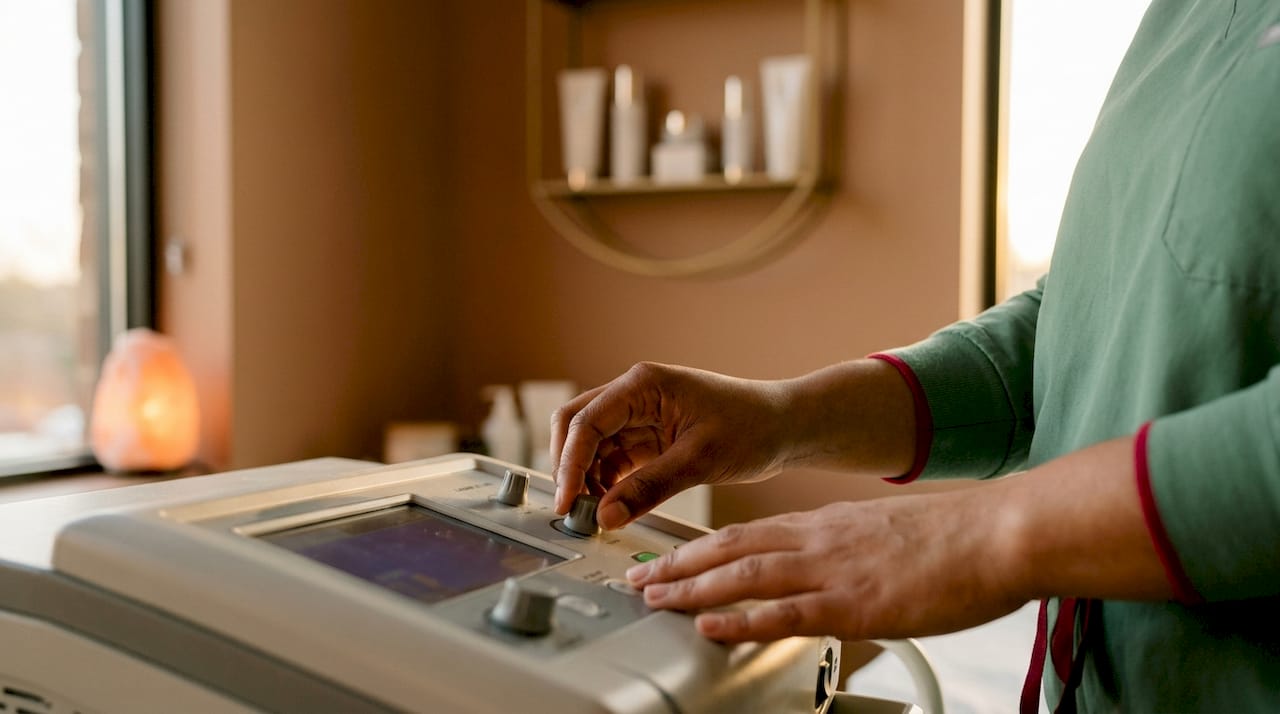
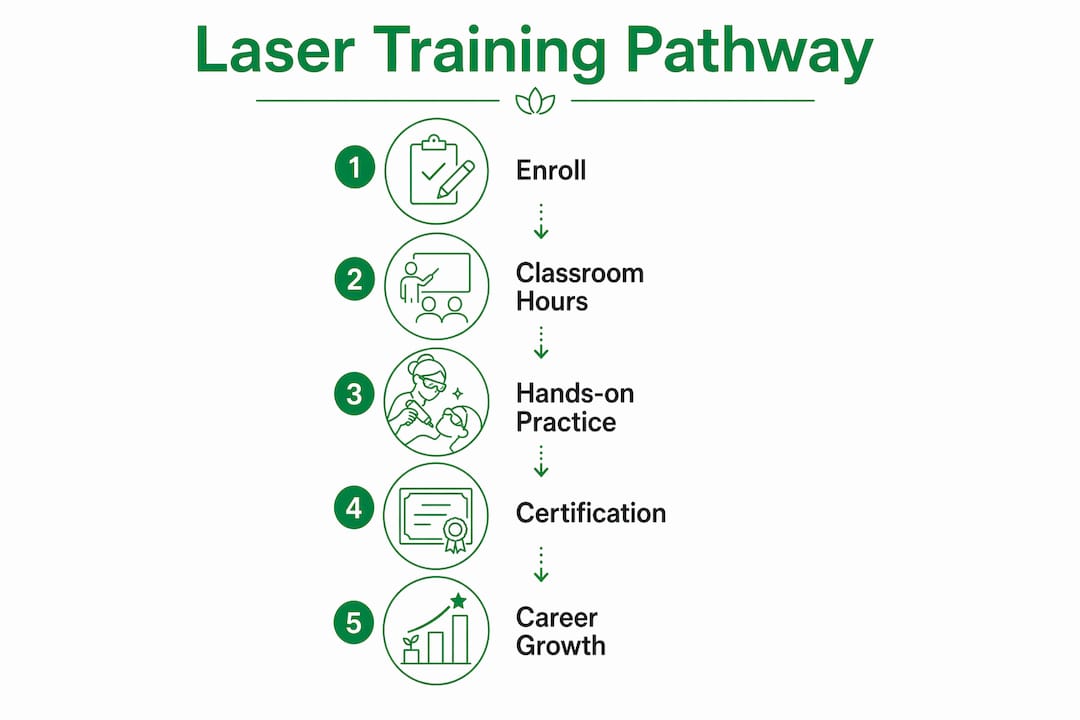
Laser certification courses typically range from 16 to 40 hours of combined didactic and hands-on training, with program costs generally between $3,000 and $5,000. That investment pays back quickly when you can charge clinical-level service fees.
What are the state regulations for laser esthetics certification?
State regulations vary widely. Some states allow estheticians to perform laser treatments under physician supervision, while others restrict laser procedures entirely to licensed medical professionals. There is no single national standard that applies across all 50 states.
The table below outlines the general regulatory categories you will encounter:
| Regulatory category | What it means for estheticians |
|---|---|
| Esthetician-permitted with supervision | You can perform laser treatments under a supervising physician, NP, or RN on site or via delegation protocol. |
| Esthetician-permitted independently | Some states allow certified estheticians to operate laser devices without direct medical supervision. |
| Medical professionals only | Operating a medical-grade laser without an RN, NP, or physician license is illegal, regardless of your esthetics certification. |
| Employer or manufacturer training required | Certain states defer to device manufacturers or employer-set standards rather than a state board exam. |
State-mandated laser programs can include manufacturer courses and independent laser safety certification, and no national standard currently exists. That means your first step before enrolling in any laser training course is to check your state board’s current scope of practice definition.
The practical advice here is direct: contact your state board of cosmetology or barbering, request the current written scope of practice for estheticians, and ask specifically about Class IV laser and IPL devices. Do not rely on a training school’s marketing materials to confirm what you are legally permitted to do. Verify it yourself.
Consulting skin type before treatment is a safety standard that applies regardless of state. Even in states with permissive regulations, a thorough pre-treatment consultation is your professional and legal protection.
For estheticians in states with medical supervision requirements, the path forward is to seek employment in a medical spa or dermatology clinic where a supervising physician is already on staff. That structure satisfies the legal requirement and gives you access to clinical-grade equipment and a built-in referral network.
Career advantages of laser esthetics training
Laser certification opens doors that a standard esthetics license simply does not. Certified laser technicians work in medical spas and advanced skincare clinics, performing corrective treatments that generate recurring client visits. That recurring model is what makes laser esthetics financially different from traditional spa work.
The career advantages are concrete:
- Higher earning potential: Laser services command significantly higher fees than standard facials or waxing. A single laser hair removal session typically costs several times more than a traditional hair removal appointment.
- Medical spa employment: Medical spas actively recruit certified laser estheticians. These settings offer structured pay, benefits, and access to advanced devices you would not find in a day spa.
- Recurring treatment revenue: Hair removal requires a series of 6–8 sessions. Skin rejuvenation protocols run 3–6 treatments. That structure builds a predictable client schedule and steady income.
- Dual certification paths: Many estheticians add laser certification on top of their existing license, creating a dual credential that makes them competitive for both spa and clinical roles.
- Paramedical esthetics specialization: With additional training in advanced anatomy, infection control, and medical treatment planning, you can move into post-surgical care, oncology esthetics, or corrective work for clients with medical skin conditions.
Laser technician certification offers a quicker pathway into medical aesthetics compared to traditional esthetics licensing, making it attractive for career changers. For working estheticians, adding laser skills to an existing license is one of the most direct routes to a pay increase without starting over.
The career paths from esthetics school expand significantly once you hold a laser credential. You are no longer competing only for spa positions. You are qualified for clinical roles, medical aesthetics practices, and independent service provider positions in states that allow it.
Understanding continuing beauty education requirements also matters here. Laser technology evolves quickly. New devices, updated safety protocols, and revised state regulations mean that a certification earned in 2022 may need refreshing by 2026. Staying current is not optional if you want to remain competitive.
Key Takeaways
Laser training in esthetics is the most direct path from traditional skincare to clinical, results-driven treatments that command higher fees and build loyal, recurring client relationships.
| Point | Details |
|---|---|
| Certification is legally required | Laser procedures require documented training; operating without it is illegal in many states. |
| Training covers clinical fundamentals | Programs teach laser physics, Fitzpatrick assessment, device calibration, and OSHA safety protocols. |
| State regulations vary significantly | Always verify your state board’s current scope of practice before enrolling in a laser program. |
| Career opportunities expand substantially | Laser credentials open medical spa, clinical, and corrective treatment roles beyond standard spa work. |
| Recurring treatment models build income | Series-based laser services create predictable client schedules and steady revenue. |
Why laser training is the clearest investment I see estheticians make
I have watched a lot of estheticians wrestle with the question of whether laser training is worth the cost and time. My honest answer is that it is the clearest return on investment I see in this industry.
The clients who come in for laser hair removal or skin rejuvenation are not coming once. They are coming back six, eight, ten times. That is a fundamentally different client relationship than a monthly facial. The estheticians I have seen build the most stable practices are the ones who combined their foundational esthetics license with a laser credential early. They did not wait until they felt “ready.” They got trained, got supervised hours, and built confidence through repetition.
The one thing I would tell anyone evaluating laser training courses is to prioritize programs that include live model hours and supervised clinical practice. Reading about the Fitzpatrick scale is useful. Adjusting settings on a real client while a qualified instructor watches is what actually prepares you. Choose programs that treat hands-on time as non-negotiable, not as an optional add-on.
The esthetics program benefits that matter most are the ones that connect classroom learning to real client outcomes. That is the standard I would hold any laser training program to.
— krishna
Avi Career Training: where laser esthetics education starts
Avi Career Training in Fairfax County, VA, builds estheticians who are ready for the clinical side of the beauty industry from day one.
Avi’s esthetics and cosmetology programs combine accredited coursework with personalized mentorship and externship placements at leading spas and clinics across Northern Virginia. Students graduate with the technical foundation and hands-on hours that laser esthetics employers actually look for. Financial aid options are available, making the program accessible regardless of your starting point. If you are serious about moving into advanced laser esthetics, Avi gives you the structured path to get there.
FAQ
What is the role of laser training in esthetics?
Laser training in esthetics equips professionals with the clinical knowledge and hands-on skills to safely operate cosmetic laser devices and deliver corrective skin treatments. It covers laser physics, patient assessment, safety protocols, and device calibration.
Do estheticians need certification to perform laser treatments?
Yes. Most states require documented laser training before an esthetician can legally perform laser procedures, and some states restrict laser treatments to licensed medical professionals entirely.
How long does a laser esthetics certification program take?
Laser certification courses typically range from 16 to 40 hours of combined classroom and hands-on training, depending on the program and state requirements.
What career settings hire certified laser estheticians?
Certified laser estheticians work in medical spas, dermatology clinics, plastic surgery practices, and advanced skincare centers. These settings offer higher pay and access to clinical-grade equipment.
How do I know if my state allows estheticians to perform laser treatments?
Contact your state board of cosmetology directly and request the current written scope of practice for estheticians, specifically asking about Class IV laser and IPL devices. State regulations vary widely and change periodically, so always verify with the official board rather than relying on third-party sources.