
Employers hiring cosmetology graduates in 2026 look for a specific blend of technical proficiency, interpersonal ability, and business awareness. The skills employers look for in cosmetology graduates go well beyond knowing how to cut or color hair. Salon owners want graduates who can retain clients, adapt to a fast-paced floor, and contribute to revenue from day one. This article breaks down the exact competencies that get graduates hired and keep them growing.
1. What technical skills do employers expect from cosmetology graduates?
Technical proficiency is the baseline. Every salon owner expects graduates to arrive with solid command of cutting, coloring, chemical treatments, and styling. These are the core hard skills that form the foundation of any cosmetology career.
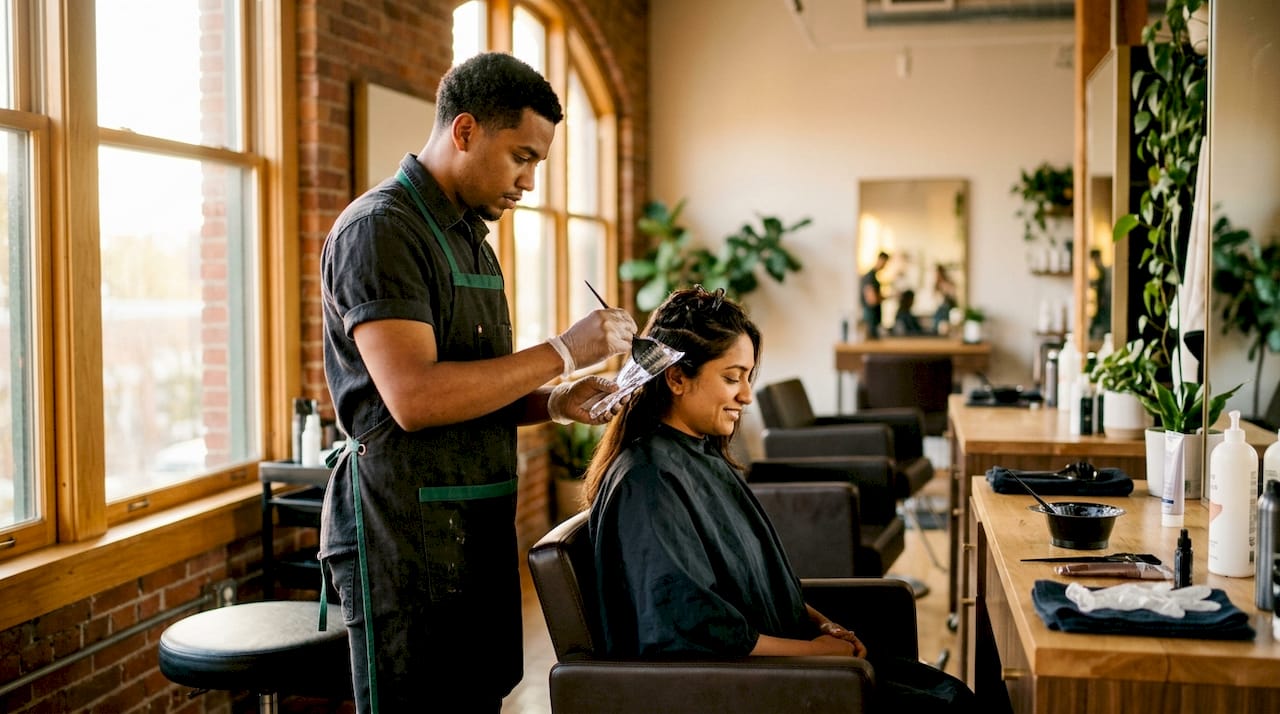
Sanitation and infection control matter just as much as technique. State boards set minimum standards, but top salons hold their staff to a higher bar. Graduates who can explain their sanitation protocol during an interview signal professionalism before they pick up a single tool.
The working interview is where technical skills get tested in real time. Salons evaluate sanitation habits, consultation approach, timing, and product knowledge during live services, not just on paper. Candidates who freeze during a freestyle service often fail this stage, even when their portfolio looks strong.
- Precision cutting and blowout techniques
- Color theory and application (balayage, highlights, single-process)
- Chemical services: perms, relaxers, keratin treatments
- Skin and nail services where applicable to the role
- Sanitation compliance with state board and OSHA standards
Pro Tip: Practice your working interview by timing yourself on full services. Salon owners watch the clock as closely as they watch your technique.
2. Which soft skills do salon owners value most in new hires?
Soft skills are the deciding factor when two candidates have equal technical ability. Employers rate empathy and communication as more critical than raw technical skill on day one. A graduate who listens well and reads a client’s mood builds loyalty faster than one who simply executes a perfect cut.
Active listening during consultations is the single most underrated skill in the beauty industry. Clients rarely describe what they want in technical terms. The graduate who translates “I want something fresh but not too different” into the right service wins repeat business.
“Salon owners prioritize active listening, emotional intelligence, and conflict resolution above almost everything else. These are the skills that keep clients coming back and keep the salon floor running smoothly.” — Cosmetology hiring priorities, 2026
Coachability ranks just as high as communication. Employers value reliability and willingness to learn over raw talent because retraining a resistant new hire is expensive. Showing up on time, taking feedback without defensiveness, and asking good questions signals that you are worth the investment.
Key soft skills salon owners screen for:
- Active listening and client consultation
- Emotional intelligence and empathy
- Conflict resolution with clients and coworkers
- Adaptability to shifting client flow and last-minute bookings
- Coachability and a genuine desire to improve
3. How business and professional skills influence your career growth
Business awareness separates graduates who plateau from those who advance. Treating your role as a micro-business and tracking personal performance metrics correlates directly with higher earnings and faster career advancement. Salon owners notice graduates who understand how their work affects the bottom line.
The specific metrics that matter most are client retention rate and retail-to-service ratio. A target of one retail product sold per four services is a common benchmark in performance-driven salons. Graduates who track these numbers and discuss them in reviews demonstrate a level of professionalism that most new hires never reach.
Business and professional skills worth building now:
- Time management: Book and complete services on schedule without rushing clients.
- Retail sales: Recommend products naturally as part of the service, not as an afterthought.
- Social media portfolio: Post before-and-after photos consistently on Instagram and TikTok to build visibility.
- Appointment scheduling: Understand how to fill your column and reduce no-shows.
- Negotiation: Know what to ask for beyond commission percentage.
Negotiation is a skill most graduates overlook entirely. Structured compensation packages that include education stipends, paid assistant time during the first months, and clear timelines for commission increases improve both retention and financial stability. Asking for these things in an interview signals maturity, not arrogance.
Pro Tip: Before your first salary conversation, research the business side of cosmetology so you can speak to revenue contribution, not just service counts.
4. Why specialization boosts hiring prospects and income potential
Specialization gives recent graduates a way to bypass the entry-level bottleneck. Salons actively seek graduates trained in niche services like sugaring, brow lamination, and dermaplaning because fewer professionals offer them. A graduate who brings one of these skills to the table adds a new revenue stream to the salon immediately.
High-value specializations worth pursuing:
- Sugaring: A natural hair removal alternative with a growing client base
- Brow lamination: One of the fastest-growing services in the past three years
- Dermaplaning: A skin treatment that pairs well with facial services
- Keratin smoothing systems: High-ticket services with strong client demand
- Scalp treatments and trichology basics: An emerging area as clients focus on hair health
The income impact of specialization is real. A graduate who can perform brow lamination commands a higher service price and a stronger negotiating position on commission. Starting a certification while still in school, or immediately after graduation, is the fastest path to this advantage.
5. How to demonstrate your skills during the job search
Your portfolio is your first impression before you walk through the door. Instagram and TikTok are now the primary platforms for portfolio visibility, and before-and-after photos with client testimonials are the content that performs best. A clean, consistent feed signals professionalism to any salon owner who looks you up.
The working interview is your most important audition. Arrive prepared to perform a full service from consultation to finish, including cleanup and product recommendation. Candidates who treat the working interview like a real client appointment, not a test, consistently outperform those who approach it nervously.
Steps to stand out during your job search:
- Build a portfolio with at least 10–15 strong before-and-after photos
- Prepare a short client consultation script and practice it out loud
- Offer to shadow or assist at a salon before applying formally
- Ask specific questions about the salon’s performance review process and education budget
- Keep your social media presence professional and updated weekly
Asking informed questions in an interview is a skill in itself. Graduates who ask about education stipends and career paths signal long-term thinking. Salon owners want to hire people who plan to stay, not just pass through.
6. How to adapt from school to the salon floor
The transition from cosmetology school to a working salon is the hardest adjustment most graduates face. Pace, client flow, and upselling on a busy salon floor demand a level of speed and multitasking that classroom training rarely replicates. Most new graduates start slow, building their client base through walk-ins and referrals before reaching full productivity.
The graduates who adapt fastest share one trait: they ask for feedback constantly. They check in with senior stylists, request post-service debriefs, and treat every client interaction as a learning opportunity. This mindset, combined with the essential skills built in training, creates a foundation for rapid growth.
Mentorship accelerates this transition more than any other factor. Schools that connect students with working professionals before graduation give their graduates a measurable head start. Avi Career Training in Fairfax County builds this mentorship into its program structure, pairing students with industry professionals and facilitating externships at partner salons in Northern Virginia.
Key Takeaways
The top skills employers look for in cosmetology graduates combine technical mastery, strong interpersonal ability, and basic business awareness, and graduates who develop all three advance significantly faster than those who focus on technique alone.
| Point | Details |
|---|---|
| Technical skills are the baseline | Cutting, coloring, sanitation, and chemical services must be solid before the working interview. |
| Soft skills drive client retention | Active listening, empathy, and coachability matter more than raw talent on day one. |
| Business awareness accelerates growth | Tracking retail ratios and client retention rates signals professionalism to salon owners. |
| Specialization bypasses entry-level barriers | Niche certifications like brow lamination or sugaring add immediate value and strengthen salary negotiations. |
| Portfolio and social media win interviews | Consistent before-and-after content on Instagram and TikTok builds visibility before you apply. |
What I’ve learned about what really gets cosmetology graduates hired
The hiring conversation in cosmetology has shifted. Salon owners used to screen primarily for technical skill. Now, the first question many ask is: “Can this person hold a client?” That shift reflects a real business reality. A technically perfect stylist who cannot connect with clients costs the salon money. A warm, coachable graduate who is still refining their technique builds a loyal book within a year.
The graduates I see struggle most are the ones who arrive with confidence in their hands but not in their conversations. They can execute a balayage but stumble through a consultation. The fix is not more practice at the mirror. It is more practice talking to people, asking questions, and listening without interrupting.
The other thing I would tell every graduate: do not wait until you are hired to start building your brand. Post your work now. Document your school projects. Get comfortable being visible. The graduates who walk into interviews with an active Instagram portfolio and a clear sense of their specialty are the ones who get called back. Humility combined with a clear professional identity is the combination that salon owners find irresistible.
— krishna
How Avi prepares you for what employers actually want
Avi Career Training in Fairfax County, VA, builds its cosmetology program around exactly the skills that get graduates hired and keep them growing.
Students train in a real salon environment with working clients, not just mannequins. The program includes business mentorship, specialization options, and direct support for portfolio building. Avi’s partnerships with leading spas and salons in Northern Virginia create externship and career placement opportunities that most schools cannot match. If you want to graduate with the full skill set employers expect in 2026, from technical precision to client communication to salary negotiation, Avi is built for that outcome. Financial aid options are available to make the program accessible.
FAQ
What skills do employers look for most in cosmetology graduates?
Employers prioritize a combination of technical proficiency, active listening, coachability, and basic business awareness. Soft skills like empathy and communication are often rated more critical than raw technique on the first day of work.
How important is a working interview for cosmetology jobs?
The working interview is a standard hiring stage where candidates perform live services so salon owners can evaluate sanitation habits, timing, and consultation skills. Candidates who treat it like a real client appointment consistently outperform those who approach it as a test.
Can specialization help a new graduate get hired faster?
Yes. Niche skills like brow lamination, sugaring, or dermaplaning are in high demand and help recent graduates bypass entry-level competition. Salons actively seek these skills because fewer trained professionals offer them.
What business skills should cosmetology graduates develop?
Graduates benefit from understanding retail sales, appointment scheduling, social media portfolio building, and performance tracking. Knowing how to negotiate compensation, including education stipends and commission timelines, also signals professional maturity to employers.
How does social media help cosmetology graduates find jobs?
A consistent portfolio on Instagram or TikTok with before-and-after photos and client testimonials builds visibility before a graduate applies anywhere. Salon owners regularly review candidates’ social profiles as part of the hiring process.