Nail Technician School in Virginia: Your Career Starts Here
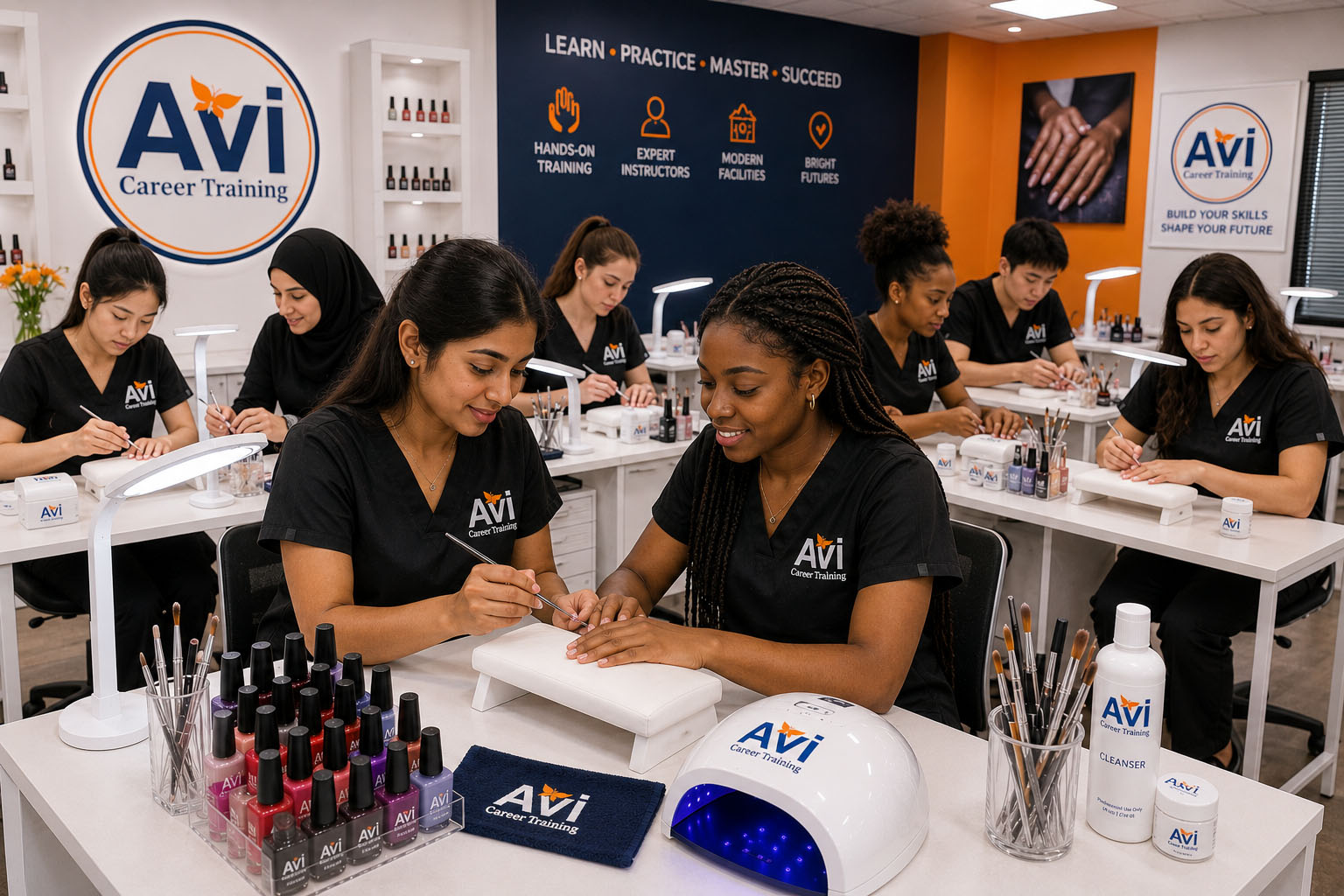
AVI Career Training’s Nail Technology program (⚠️ NO FINANCIAL AID FOR THIS PROGRAM) in Vienna, Virginia is one of the fastest paths to a licensed nail tech career in Northern Virginia — completable in approximately 8 weeks and designed to prepare you for the Virginia State Board exam from day one.
If you’ve been wondering how to break into the beauty industry without spending years in school, nail technology is worth a serious look. Northern Virginia’s salon and spa market is competitive, clientele-rich, and growing — from the upscale studios near Tysons Corner to the hotel spas and nail bars that serve the DMV area’s diverse, high-earning population.
This guide walks you through everything: what a nail technician actually does, what Virginia requires for licensure, what separates a quality training program from a shortcut, and what you can realistically earn once you’re licensed in this market.
Ready to take the first step? Apply now at AVI Career Training or call us at (703) 943-9841 to ask about upcoming start dates.
—
⚡ Key Takeaways
- Virginia requires 150 clock hours of nail technology training to sit for the State Board exam
- AVI’s Nail Technology program can be completed in approximately 8 weeks
- The Virginia State Board exam includes both a written (theory) and practical component
- Manicurists and pedicurists in the Northern Virginia / DC metro area often earn above the national median due to tips, upscale clientele, and self-employment opportunities
- AVI Career Training is COE-accredited and SCHEV-certified — located in Vienna, VA, steps from the Tysons Corner market
- ⚠️ Federal financial aid is NOT available for this program — payment plan and private financing options are available
—
What Does a Nail Technician Actually Do?
A nail technician is a licensed beauty professional who specializes in the care, maintenance, and artistic enhancement of fingernails and toenails — and the scope of the work goes far beyond a simple polish change.
The Full Scope of the Profession
At its core, nail technology covers:
This last point matters more than many new students expect. A skilled nail technician can spot early signs of nail disorders or fungal conditions and refer clients to the appropriate professional. That kind of knowledge builds trust — and a loyal client base.
Who Is This Career Right For?
Nail technology attracts people from all kinds of backgrounds — career changers in their 30s and 40s who want a skill they can take anywhere, recent high school graduates who want to start earning without a four-year degree, and military spouses who need a portable, licensable profession.
The common thread? A genuine interest in working with people, an eye for detail, and the patience to perfect a craft. If that sounds like you, keep reading.
—
Virginia Nail Tech Licensing Requirements Explained
To work legally as a nail technician in Virginia, you must be licensed by the Virginia Board of Cosmetology, which operates under the Virginia Department of Professional and Occupational Regulation (DPOR).
Here’s what that process looks like, step by step.
Step 1: Complete Your Training Hours
Virginia requires 150 clock hours of nail technology training from a state-approved school. This is one of the shorter training requirements nationally — which is why the nail tech path appeals to people who want to enter the workforce quickly. AVI’s program is designed around this 150-hour requirement and delivered in a structured, hands-on format.
Step 2: Meet the Basic Eligibility Requirements
You must be at least 16 years old to apply for a Virginia nail technician license. There is no college degree requirement.
Step 3: Pass the Virginia State Board Exam
After completing your training hours and graduating from an approved program, you’ll apply to take the Virginia State Board exam. The exam has two components:
Both exams are administered through PSI Exams Online, the testing provider contracted by the Virginia Board of Cosmetology. Application and exam fees apply — visit the DPOR Cosmetology Board page for current fee schedules, as amounts are subject to change.
Step 4: Apply for Your License
Once you pass both exam components, you submit your license application through DPOR. Upon approval, you’re a licensed nail technician in the Commonwealth of Virginia — and you’re ready to work.
What About Reciprocity?
If you’re already licensed in another state, Virginia offers a reciprocity pathway. Requirements vary based on your home state’s training hours and exam history. Contact DPOR directly to determine your eligibility — AVI’s admissions team can also point you in the right direction.
—
—
What to Look for in a Nail Tech School — and Why Accreditation Matters
Not all nail tech schools in Virginia are created equal — and the differences matter more than most prospective students realize before they enroll.
Accreditation Protects Your Investment
When a school is accredited by the Council on Occupational Education (COE) — as AVI Career Training is — it means the program has been reviewed against rigorous national standards for curriculum quality, instructor qualifications, student support, and operational integrity.
For a nail technology student, that translates to three concrete benefits:
1. Employer recognition: Many salons, spas, and hotel properties in the Northern Virginia and DC metro area recognize COE-accredited credentials. Your training has a stamp of legitimacy that non-accredited programs cannot match.
2. Program quality assurance: COE accreditation means the curriculum was built to meet — and maintain — documented educational standards, not just minimum state-hour thresholds.
3. Peace of mind: You’re investing real time and money. Accreditation means there’s an external body verifying that the school is delivering on what it promises.
Questions to Ask Any Nail Tech School
Before you commit to any program, ask these directly:
AVI Career Training answers “yes” to each of these. We encourage you to ask the same questions of any school you’re evaluating.
—
by Virginia State Board
at AVI Career Training
Apply for VA License
State Board Exam
—
AVI’s Nail Technology Program: Skills, Schedule, and What’s Included
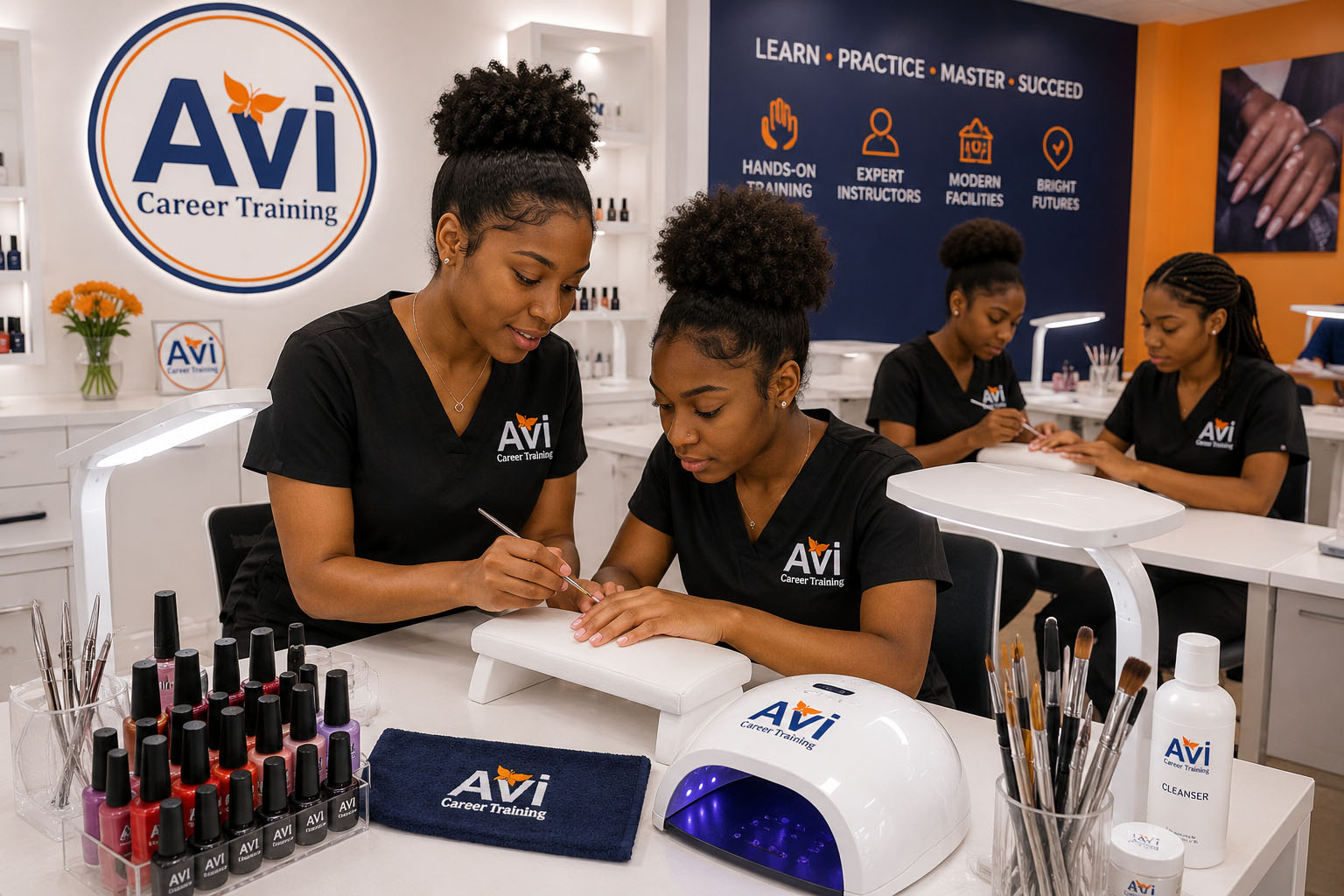
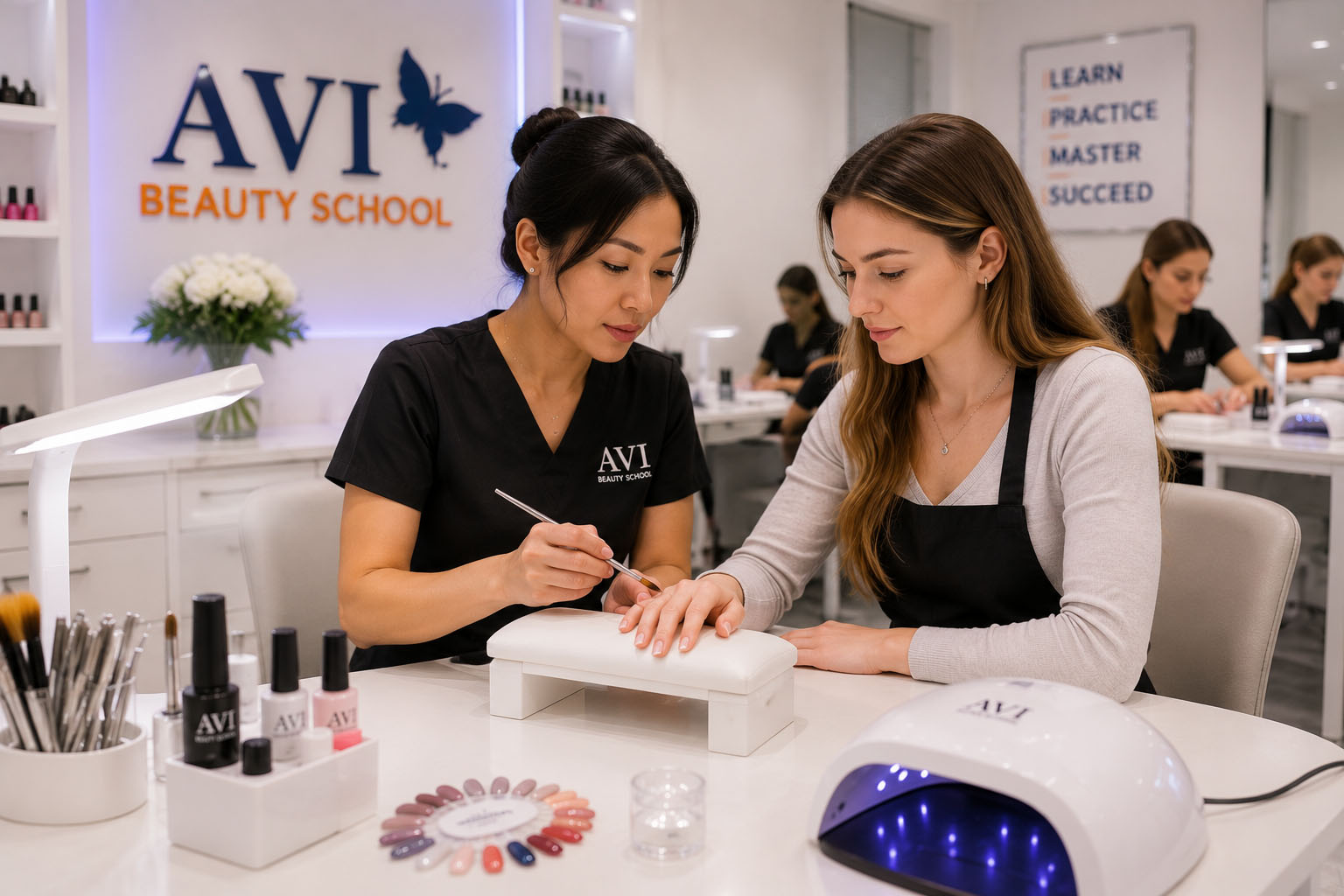
AVI Career Training’s Nail Technology program (⚠️ NO FINANCIAL AID FOR THIS PROGRAM) is built on one core belief: that confident, skilled nail technicians are made through hands-on practice, guided by licensed professionals, using real clients and real tools.
What You’ll Learn
The AVI curriculum covers the full range of skills you’ll need to pass the Virginia State Board exam and build a real client book on day one of your career:
Inclusive Technique Training — for Every Client
Here’s something many nail tech schools in Northern Virginia don’t address head-on: not all nail training is inclusive.
AVI’s program specifically trains students to work beautifully across all skin tones and nail types. That matters in a market as diverse as the DMV area. For example:
This isn’t just a values statement. In Northern Virginia’s salon market, the ability to serve every client with skill and confidence is a direct competitive advantage.
A Real-World Student Story
Consider someone like Marisol — a 34-year-old who spent years working in retail management before deciding she wanted a career where her work was creative, personal, and hers. She enrolled in AVI’s Nail Technology program while her kids were in school, completed her 150 hours in eight weeks, passed the Virginia State Board exam on her first attempt, and landed a position at an upscale Tysons Corner nail studio within a month of getting licensed.
What made the difference? She told us it was the clinic floor hours — working on real clients during training, not just practicing on mannequin hands. By the time she sat for her practical exam, she had already done the work hundreds of times.
Program Schedule and Timeline
The Nail Technology program at AVI is structured to fit realistic student schedules. The program runs approximately 8 weeks and delivers all 150 state-required clock hours in a structured, full-program format. Upon graduation and completion of DPOR’s licensing verification process, you’re eligible to sit for the Virginia State Board exam.
Explore the Program — Apply Today
Tuition and Payment Options
⚠️ Important: Federal financial aid (Title IV / FAFSA) is not available for the Nail Technology program because it is under 600 hours — the federal minimum threshold for Title IV eligibility. The GI Bill® is also not applicable to this program for the same reason.
AVI does offer payment plan options and can connect you with private financing resources. Contact our admissions team at (703) 943-9841 or visit avi.edu/apply to discuss tuition and payment arrangements directly.
—
—
Nail Tech Career Outlook: Earning Potential in Northern Virginia
The Northern Virginia nail tech market rewards skilled, licensed professionals — and the local earning environment is meaningfully stronger than national averages suggest.
What Do Nail Technicians Earn?
According to the U.S. Bureau of Labor Statistics (BLS), the national median annual wage for manicurists and pedicurists is approximately $30,000–$38,000 in base pay. But that number tells only part of the story for Northern Virginia nail technicians.
Here’s what pushes real take-home higher in this market:
A Second Real-World Example
Marcus, a former logistics coordinator, was skeptical that nail technology was a serious income option. After completing AVI’s program and getting licensed, he rented a nail suite in Fairfax County and built his client list through Instagram. Within his first year, his income had matched what he’d earned at his previous job — with far more schedule flexibility. “I didn’t think people would pay what they pay,” he said. “But in this area, if your work is good, they absolutely do.”
Where Can You Work?
Licensed nail technicians in Northern Virginia work in a range of settings:
Job Growth Outlook
The BLS projects continued demand for manicurists and pedicurists nationally, driven by consistent consumer spending on personal care services. The Northern Virginia market — with its dense population of high-income households, proximity to Washington DC, and robust hotel and hospitality sector — reflects a particularly favorable local environment for this career.
Nail technology also offers geographic portability. Your Virginia license, once earned, can be the foundation for reciprocity in other states — a meaningful benefit in a region where people move frequently.
—
Frequently Asked Questions: Nail Tech School in Virginia
Q: How many hours do you need to become a nail technician in Virginia?
A: Virginia requires 150 clock hours of nail technology training from a state-approved school before you can sit for the State Board exam. This is one of the shorter requirements in the country, which is why Virginia is considered an accessible state for nail tech licensure.
Q: How long does nail tech school take in Virginia?
A: At AVI Career Training in Vienna, VA, the Nail Technology program takes approximately 8 weeks to complete. Since Virginia only requires 150 training hours, the program is designed to move efficiently while covering all state-required content and hands-on clinic experience.
Q: What is the Virginia State Board exam for nail technicians?
A: The Virginia State Board exam for nail technicians consists of two parts: a written (theory) exam and a practical hands-on exam. Both are administered through PSI Exams Online, the testing provider contracted by the Virginia Board of Cosmetology under the Virginia Department of Professional and Occupational Regulation (DPOR). You must pass both components to receive your nail technician license.
Q: How much do nail technicians make in Northern Virginia?
A: The national median for manicurists and pedicurists is approximately $30,000–$38,000 per year in base wages, according to the BLS. In Northern Virginia and the broader DC metro area, real take-home is typically higher due to tip income, premium service pricing, self-employment opportunities, and upscale salon and spa markets near Tysons Corner, Arlington, and McLean.