
Nail Tech School Near Me: Fall Enrollment in Fairfax County, VA
If you’re searching for a nail tech school near you in Fairfax County, Virginia, AVI Career Training in Vienna, VA is enrolling students for fall in its 150-hour Nail Technology program — and it may be closer than you think.
Whether you’re ready for a career change or just starting out, nail technology is one of the fastest paths into the beauty industry. At AVI Career Training, you can complete your program in a fraction of the time it takes to finish many other vocational credentials, all while training in a supportive, COE-accredited environment right here in Northern Virginia.
Key Takeaways
- AVI Career Training offers a 150-hour Nail Technology program at 112 Lawyers Rd NW Suite 3, Vienna, VA 22180 — in the heart of Fairfax County.
- Fall enrollment is open now; spots fill quickly, so applying early is strongly encouraged.
- AVI is COE-accredited (Council on Occupational Education), which speaks to the school’s commitment to quality career training.
- Nail Technology is one of several beauty and wellness programs available, giving you options if your interests expand.
- You can reach the admissions team by phone at (571) 520-4417 or apply online today.
- No invented tuition numbers here — contact AVI directly for current program costs and any available payment options.
- AVI’s broader program menu includes Cosmetology, Esthetics, Massage Therapy, Laser Technician training, Medical Assistant, and ESL courses.
Why Nail Technology Is Worth Your Attention This Fall
The nail care industry has seen remarkable growth over the past decade, and that momentum shows no signs of slowing down. Nail technicians work in day spas, nail salons, resort spas, cruise lines, and even as self-employed entrepreneurs running their own mobile businesses. The flexibility of this career path is a big part of why so many people are drawn to it.
What makes fall a particularly smart time to enroll? Simply put, starting in autumn means you could be licensed and job-ready by late winter or early spring — just in time for the busy bridal season, prom season, and the general spring surge in salon bookings. Timing your education strategically can give you a real competitive edge when you hit the job market.
About AVI Career Training: Your Local Beauty School in Fairfax County
AVI Career Training has built a reputation as a dedicated beauty and wellness career school serving the Northern Virginia community. Located at 112 Lawyers Rd NW Suite 3, Vienna, VA 22180, the school is conveniently accessible for residents throughout Fairfax County, including Vienna, Tysons, Reston, Herndon, Oakton, and surrounding communities.
Accreditation matters when you’re choosing a school, and AVI holds accreditation from the Council on Occupational Education (COE) — a nationally recognized accrediting body that evaluates schools on academic quality, student services, and institutional integrity. This accreditation is something you’ll want to look for when comparing schools, because it can affect everything from how employers view your credential to your eligibility for certain types of financial assistance.
Programs Available at AVI Career Training
While this post focuses on Nail Technology, AVI offers a well-rounded lineup of programs so you can explore related fields or continue your education later:
- Cosmetology — 1,000 hours
- Basic Esthetics — 600 hours
- Master Esthetics — 750 hours
- Massage Therapy — 625 hours (Title IV federal financial aid available)
- Nail Technology — 150 hours
- Laser Technician — 120 hours
- Medical Assistant — 600 hours
- ESL (English as a Second Language) — 1,200 hours
Having this variety under one roof means that if you complete your Nail Technology certification and later decide you’d like to add esthetics or laser services to your skill set, AVI is already a school you know and trust.
What to Expect from the AVI Nail Technology Program
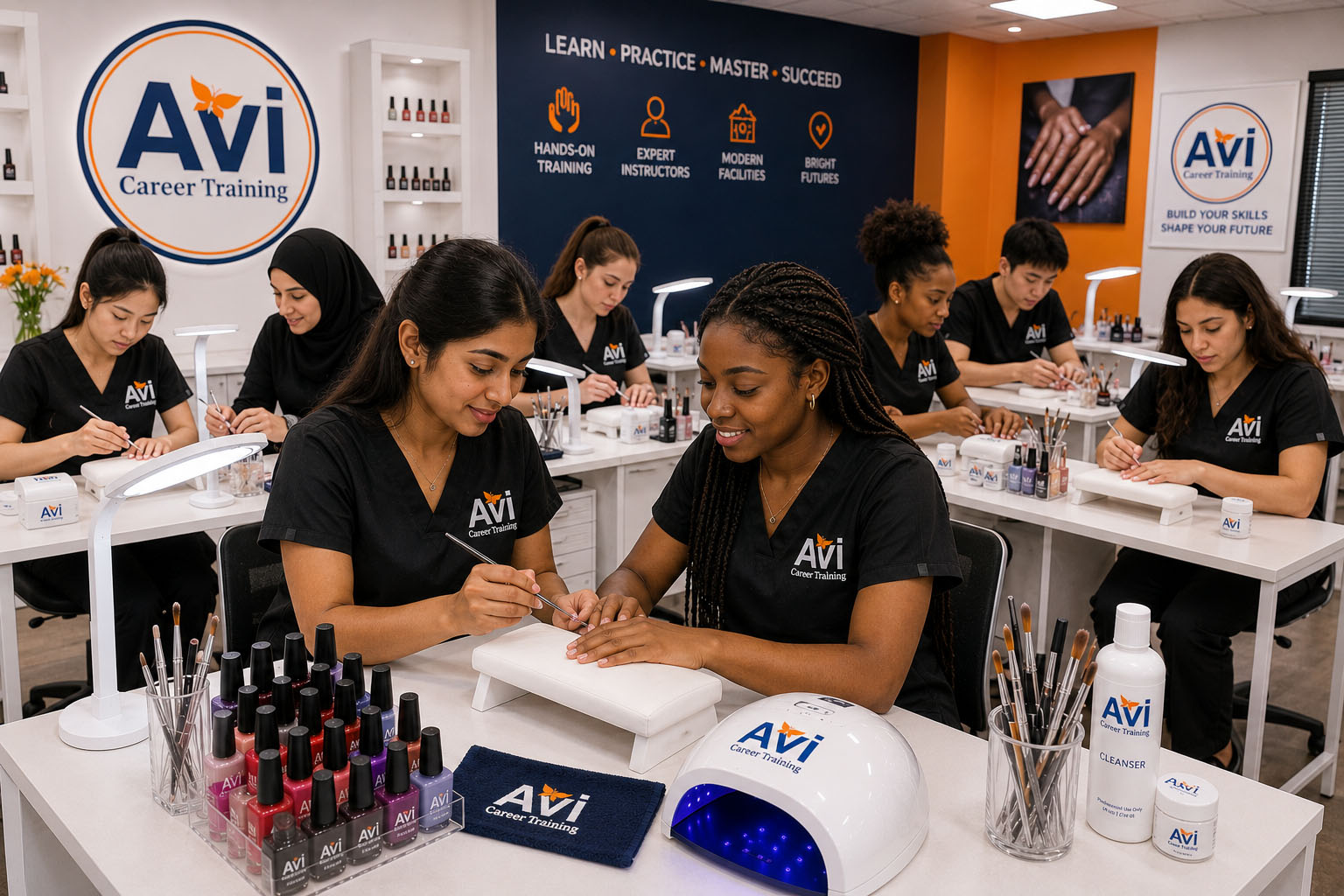
AVI’s Nail Technology program is structured to give students both the theoretical knowledge and the hands-on practice needed to pass the Virginia Board of Cosmetology licensing exam and succeed on the salon floor from day one.
Over 150 program hours, students typically cover core areas such as:
- Nail anatomy, physiology, and disorders
- Sanitation, disinfection, and safety protocols
- Manicuring and pedicuring techniques
- Nail enhancement systems (including acrylics and gels)
- Nail art and finishing techniques
- Client consultation and salon professionalism
- Virginia state laws and regulations governing nail services
For the most current and detailed curriculum information, we encourage you to contact the admissions team directly at (571) 520-4417 or visit the apply page to get started.
Ready to Take the First Step?
Apply for fall enrollment at AVI Career Training today and speak with an advisor about how the Nail Technology program fits your schedule and goals.
Living in Fairfax County and Choosing a Local School: Why It Matters
When you train locally, the benefits extend well beyond the commute. Instructors and staff at a locally rooted school often have connections with area salon owners, spa managers, and industry professionals — the very people who may hire you after graduation. Networking starts the moment you walk through the door, and that’s an advantage that distance learning or out-of-area schools simply can’t replicate.
Fairfax County is also one of the most economically vibrant regions in the entire Mid-Atlantic, with a large and diverse population that creates steady, year-round demand for quality nail care services. Building your career here means you’re entering a robust local market from a position of strength.
Financial Considerations: What You Should Ask
We want to be straightforward with you: this post does not publish tuition figures, because tuition and fee information changes and should always come directly from the school. What we encourage you to do is ask the admissions team the following when you make contact:
- What is the current tuition and fee schedule for the Nail Technology program?
- Are payment plans available?
- What scholarship or grant opportunities does AVI offer or recommend?
- Are there any employer tuition reimbursement programs that might apply?
For programs that qualify, AVI does participate in Title IV federal financial aid — specifically for its Massage Therapy program. For Nail Technology and other programs, the admissions team can walk you through every available option for making your education affordable.
How to Apply for Fall Nail Technology Enrollment
The application process at AVI is designed to be straightforward. Here’s a general overview of the steps most prospective students follow:
- Submit an application — Start online or call (571) 520-4417 to get the process rolling.
- Meet with an admissions advisor — This is your opportunity to ask every question you have about the program, schedule, cost, and career outcomes.
- Complete enrollment paperwork — Once you’re ready to commit, the team will guide you through the required documents.
- Confirm your start date — Fall seats are limited, so confirming your spot early is the best way to guarantee your place in the cohort.
Click here to begin your AVI Career Training application now — fall enrollment is open and seats are filling up.
Frequently Asked Questions
1. How long does it take to complete the Nail Technology program at AVI Career Training?
AVI’s Nail Technology program is 150 hours in total. The exact calendar length depends on your schedule and whether you attend full-time or part-time. Contact admissions at (571) 520-4417 for current schedule options so you can plan around your existing commitments.
2. Is AVI Career Training accredited, and does that matter for nail tech students?
Yes — AVI Career Training is accredited by the Council on Occupational Education (COE). Accreditation matters because it signals that the school meets established standards for educational quality and student outcomes. For nail tech students specifically, graduating from an accredited school can strengthen your resume and may be relevant if you ever pursue additional credentials or continuing education down the road.
3. Will I be eligible for financial aid if I enroll in Nail Technology?
Title IV federal financial aid is available at AVI for qualifying programs, including the Massage Therapy program. For Nail Technology, you’ll want to speak directly with an AVI admissions advisor to explore all funding options, including any school-specific payment plans or outside scholarship opportunities. Never assume — always ask, and AVI’s team is ready to help.
4. What do I need to do after I finish the program to work as a nail technician in Virginia?
After completing your 150 program hours, you’ll need to pass the Virginia Board of Cosmetology licensing examination, which typically includes both a written (theory) component and a practical component. AVI’s curriculum is designed to prepare you for this exam. For the most up-to-date licensing requirements, you can also check the Virginia Department of Professional and Occupational Regulation (DPOR) website directly.
5. I’m already interested in esthetics or cosmetology — can I talk to AVI about combining programs or upgrading later?
Absolutely. AVI offers Cosmetology (1,000 hours), Basic Esthetics (600 hours), Master Esthetics (750 hours), and several other programs. Many students start with Nail Technology and later return to pursue additional credentials. An AVI admissions advisor can map out a multi-program pathway that aligns with your long-term career vision. Reach out through the apply page or call (571) 520-4417 to start that conversation today.
Take the Next Step Toward Your Nail Tech Career in Fairfax County
If you’ve been searching “nail tech school near me” and wondering where to start, the answer is right here in Northern Virginia. AVI Career Training combines COE accreditation, an experienced instructional team, and a convenient Vienna location to give Fairfax County residents a genuinely strong option for launching a beauty career.
Fall enrollment is open, seats are limited, and the sooner you apply, the sooner you can secure your spot. Don’t let another semester pass you by while you’re still thinking about it — your future career in nail technology is ready to begin.
AVI Career Training
112 Lawyers Rd NW Suite 3
Vienna, VA 22180
Phone: (571) 520-4417