Medical Assistant vs. Medical Aesthetician: Which Career Is Right for You?
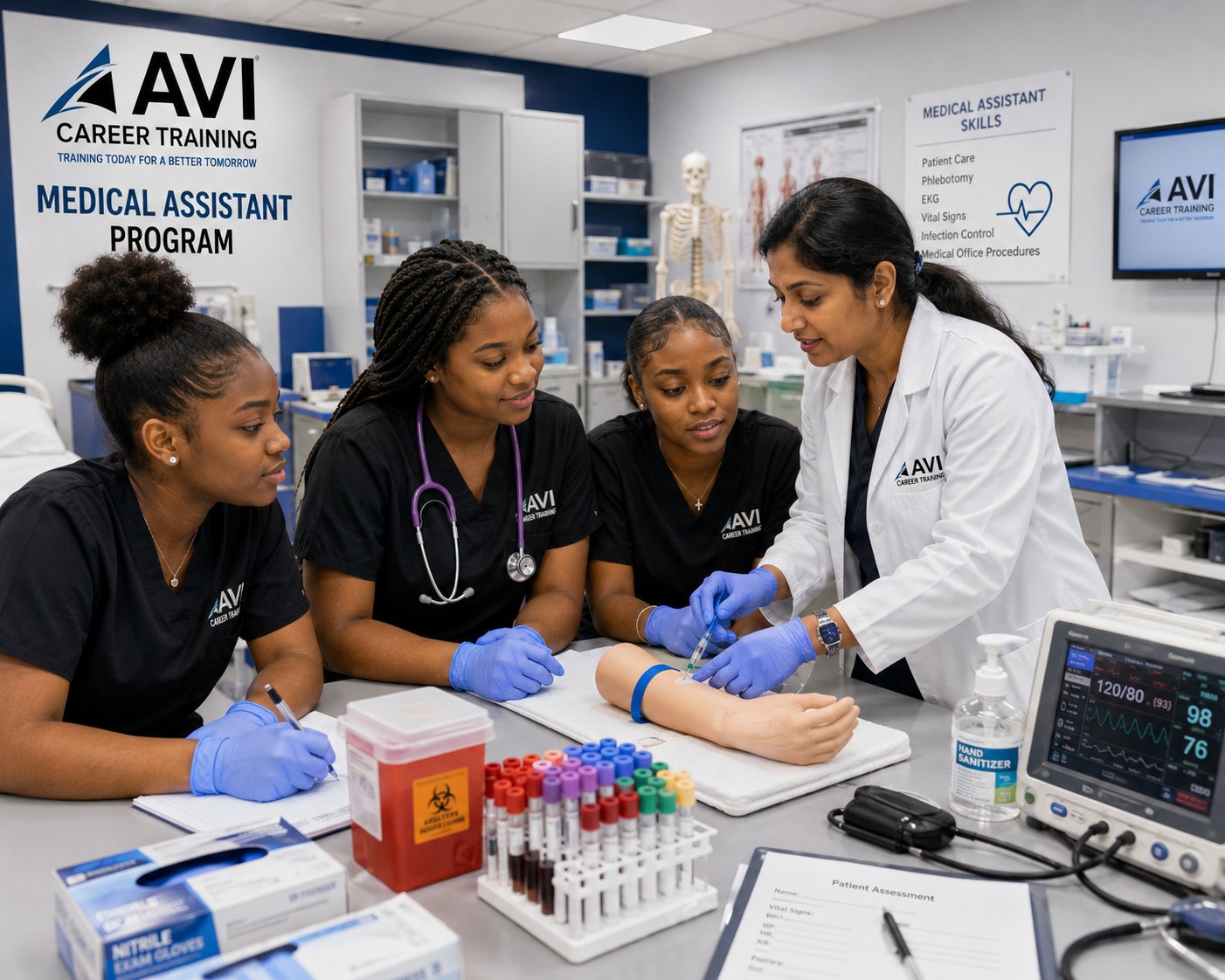
A medical assistant supports physicians in clinical settings — a medical aesthetician performs skincare treatments, chemical peels, laser procedures, and body contouring inside a medical spa or dermatology practice. These two roles sound similar but lead to very different days on the job, different licensing requirements in Virginia, and different earning environments. Both are legitimate, rewarding paths. But only one puts you directly in the treatment room delivering aesthetic results clients can see and feel.
If Northern Virginia’s medical spa market appeals to you, apply to AVI Career Training’s Esthetics or Cosmetic Laser Technology programs and start building that career today.
—
- Medical assistants handle clinical and administrative support in physician offices — they typically do not perform skincare or laser treatments.
- Medical aestheticians are licensed beauty and wellness professionals performing facials, chemical peels, laser hair removal, and skin rejuvenation.
- Virginia requires a minimum of 600 clock hours of esthetics training to sit for the state licensure exam (Virginia Board of Cosmetology).
- Median esthetician wages nationally range from approximately $37,000–$47,000, with medical spa and laser roles in Northern Virginia’s DC metro market trending higher (BLS.gov).
- AVI Career Training in Vienna, Virginia offers COE-accredited Esthetics and Cosmetic Laser Technology programs with hands-on training in one of the country’s highest-demand aesthetic markets.
—
What Does a Medical Assistant Actually Do?
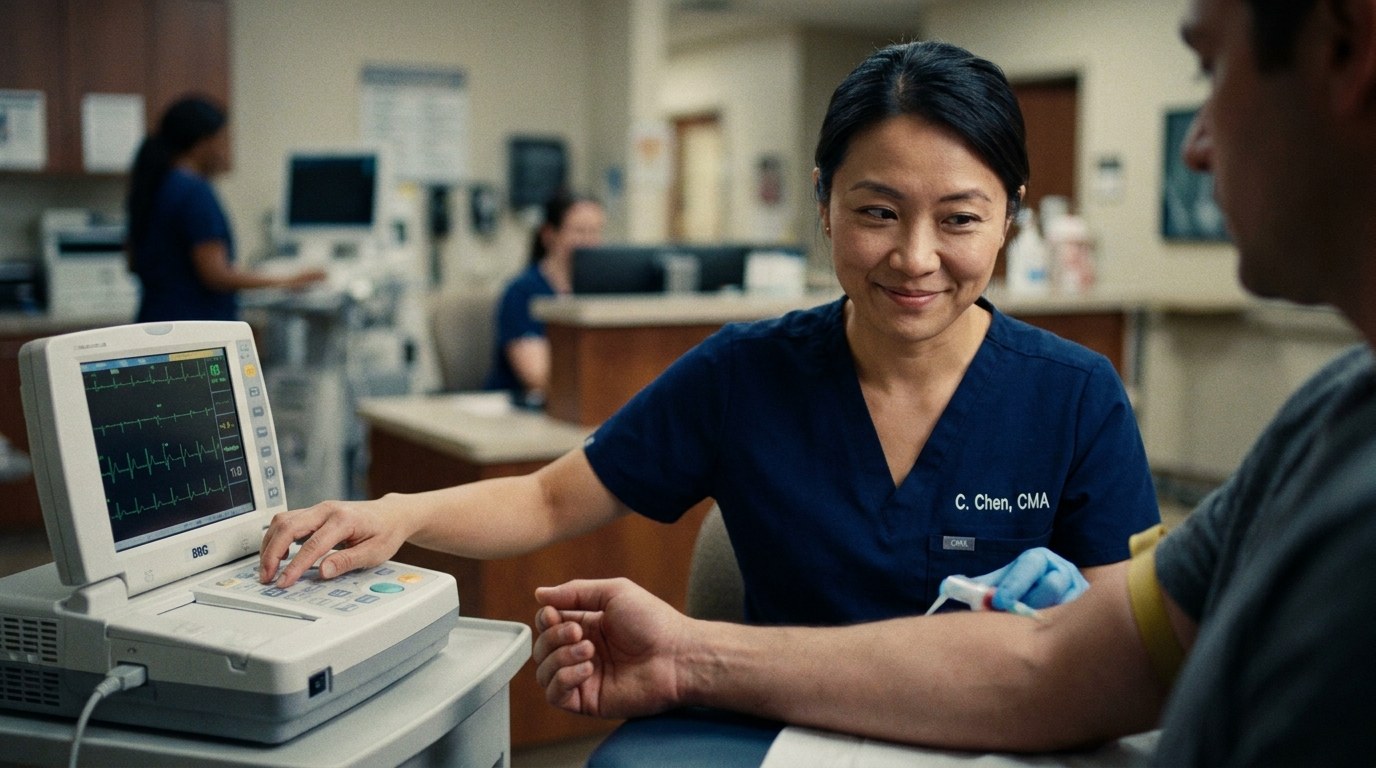
A medical assistant is a clinical and administrative support professional who works under the supervision of a licensed physician or healthcare provider. They are not licensed to diagnose, prescribe, or provide independent patient care — and they almost never perform aesthetic treatments.
Day-to-day, a medical assistant might:
Where do medical assistants work? Primarily in physician offices, urgent care clinics, hospital outpatient departments, and multi-specialty medical practices. If you picture yourself in scrubs, moving efficiently through a busy clinical environment — that’s the medical assistant world.
Here’s what medical assisting is not: it is not a path to performing laser treatments, facials, chemical peels, microneedling, or body contouring. Those services fall under a completely different licensing category — one governed by the Virginia Board of Cosmetology and focused on aesthetic outcomes, not clinical support.
Virginia’s Medical Assistant Landscape
Virginia does not require a state license to work as a medical assistant. The role is regulated at the employer and physician-practice level. Voluntary national certifications — like the Certified Medical Assistant (CMA) credential offered by the American Association of Medical Assistants (AAMA) or the Registered Medical Assistant (RMA) through the American Medical Technologists (AMT) — can boost your resume and pay. But there is no Virginia state board exam and no state-issued license for medical assistants.
This is a meaningful distinction for career planners: if you want a state-recognized, independently portable credential that opens doors across employers, Virginia’s esthetics license is actually the stronger credential.
—
What Is a Medical Aesthetician — and Why It’s Not the Same Thing
A medical aesthetician (also called a clinical esthetician or medical esthetician) is a licensed esthetics professional who performs advanced skincare and aesthetic treatments, often in a medical or clinical setting. This is the path AVI Career Training prepares students for.
Medical aestheticians work directly with clients to deliver visible, measurable skin results. Services in this category include:
This is hands-on, client-facing, results-driven work. You’re not filing charts — you’re transforming skin. And in a market like Northern Virginia, where high-income clients expect premium results, skilled aesthetic professionals are in serious demand.
The Cosmetic Laser Technician Path
Cosmetic laser technology is one step further along the clinical aesthetics spectrum. A cosmetic laser technician operates energy-based devices — lasers, IPL systems, radiofrequency equipment — to deliver treatments like laser hair removal, skin resurfacing, and body contouring.
In Virginia, cosmetic laser operation falls under scope-of-practice guidelines that require appropriate training and, in many settings, physician supervision or delegation. AVI Career Training’s Cosmetic Laser Technology program (NO FINANCIAL AID FOR THIS PROGRAM) is specifically designed to prepare students for this environment — combining technical device knowledge with the esthetics foundation that medical spas require.
This is the aesthetics career without a nursing degree that many career-changers are searching for. You don’t need an RN, a medical degree, or years of clinical rotations. You need the right hands-on training and a Virginia esthetics license.
—
Virginia Licensing & Training Requirements: Side by Side
Understanding what each path requires in Virginia helps you make a smart, informed decision. Here’s a clear comparison:
| Factor | Medical Assistant | Medical Aesthetician / Laser Technician |
|---|---|---|
| Virginia State License? | No — Virginia does not license medical assistants | Yes — Virginia Esthetics License (Board of Cosmetology / DPOR) |
| Training Hours Required | Varies by employer; certification programs typically 6–12 months | Minimum 600 clock hours (Virginia Board of Cosmetology) |
| Certifying / Licensing Body | AAMA (CMA) or AMT (RMA) — voluntary national certifications | Virginia DPOR — state-issued, independently portable license |
| Aesthetic Treatments Performed? | Generally no — clinical and administrative duties only | Yes — facials, peels, laser, body contouring |
| School in Northern Virginia | Various — check community colleges and career schools | AVI Career Training — Vienna, VA (COE Accredited, SCHEV Certified) |
Virginia’s esthetics license is issued through the Virginia Department of Professional and Occupational Regulation (DPOR) — the same state agency that licenses cosmetologists, nail technicians, and other beauty and wellness professionals. It is a real, government-issued, independently portable credential. You own it. You carry it from employer to employer, from medical spa to dermatology office to your own studio.
Medical assistants in Virginia, by contrast, work without a state license. Their employability depends heavily on the specific employer’s training requirements and any voluntary national certifications they pursue.
For career-minded people who want a credential that belongs to them — not just to the employer who trained them — the esthetics license is the smarter long-term investment.
—
Salary, Job Outlook, and Where You’ll Work
Both career paths offer solid earning potential — but the work environments and ceiling for growth are meaningfully different.
Medical Assistant Salary
According to the U.S. Bureau of Labor Statistics (BLS.gov), the median annual wage for medical assistants nationally is approximately $37,000–$42,000. In the Northern Virginia / DC metro area, wages typically run higher than the national median due to the region’s elevated cost of living and concentration of large healthcare systems and specialty practices.
Job growth for medical assistants is projected to be strong — the BLS projects faster-than-average growth driven by an expanding healthcare sector. However, advancement within the medical assistant role itself is relatively limited without additional education (such as pursuing nursing, physician assistant, or healthcare management paths).
Medical Aesthetician & Laser Technician Salary
The BLS reports that skincare specialists — the category that includes estheticians and medical aestheticians — earn a national median of approximately $37,000–$47,000 annually. But that median understates what’s possible in clinical and laser roles.
Medical spa positions, laser technician roles, and aestheticians working in dermatology or plastic surgery practices often earn meaningfully above the median — through higher base pay, commission structures, and gratuities. In the Northern Virginia / DC metro market, where medical spas cater to a high-income, aesthetics-focused clientele, experienced clinical estheticians and laser technicians regularly earn above national averages.
National Median (BLS)
National Median — Medical Spa Roles Often Higher (BLS)
Both categories trend higher in the DC metro market
Where Medical Aestheticians and Laser Technicians Work
This is where the medical aesthetician path genuinely shines compared to the standard medical assistant environment. Clinical estheticians and laser technicians work in:
Northern Virginia and the greater DMV area is one of the country’s most fertile markets for these careers. The region hosts a dense concentration of medical spas, dermatology practices, and plastic surgery centers serving a high-income, appearance-conscious population.
—
Renata spent four years working the front desk at an urgent care clinic in Fairfax County. She liked healthcare — but not from the sidelines. She wanted to be the one actually doing something for people. A friend suggested she look into esthetics. Renata enrolled in AVI Career Training’s Esthetics program in Vienna, Virginia, earned her Virginia esthetics license, and landed a position at a medical spa in Tysons Corner within two months of graduating. Today she performs chemical peels, microneedling prep, and laser-assisted treatments for a full client roster — and she’s working toward adding cosmetic laser certifications. “I didn’t know this career existed,” she says. “I thought medical aesthetics meant nursing school.”
—
How to Start Your Aesthetics Career in Northern Virginia
Starting your medical aesthetician or cosmetic laser technician career in Northern Virginia begins with one clear step: getting your Virginia esthetics license. And the most direct path to that license is hands-on training at an accredited school.
AVI Career Training in Vienna, Virginia is COE-accredited by the Council on Occupational Education (COE) and SCHEV-certified by the State Council of Higher Education for Virginia. AVI offers both an Esthetics program and a Cosmetic Laser Technology program (NO FINANCIAL AID FOR THIS PROGRAM) — each designed to prepare students for the real clinical aesthetics environment employers in Northern Virginia’s medical spa market expect.
What Makes AVI Different
AVI’s curriculum is built around inclusive techniques — training students to work beautifully on every skin tone and skin type. In a diverse market like Northern Virginia and the DC metro area, this isn’t a nice-to-have. It’s a professional requirement. Clients of every background walk through the doors of Northern Virginia’s medical spas, and they deserve providers who trained for that diversity from day one.
AVI’s Esthetics Program
AVI’s Esthetics program meets Virginia’s 600-clock-hour requirement for the state licensure exam. Students graduate prepared to sit for the Virginia State Board exam administered through DPOR and to work across a full range of professional skincare settings — from luxury day spas to medical spas to dermatology-adjacent clinics.
Financial Aid Note: The Esthetics program at AVI may qualify for federal financial aid (Title IV / FAFSA) — contact AVI’s admissions team for current eligibility details.
AVI’s Cosmetic Laser Technology Program
AVI’s Cosmetic Laser Technology program (NO FINANCIAL AID FOR THIS PROGRAM) prepares students to operate energy-based aesthetic devices in a supervised clinical environment. This includes laser hair removal, laser skin rejuvenation, IPL, and related technologies. Federal financial aid is not available for this program because it falls under 600 hours. Private financing options and payment plans are available — contact AVI admissions to discuss options.
GI Bill® Acceptance
AVI Career Training accepts the GI Bill®, making it possible for veterans and active-duty service members to pursue an esthetics career with their earned education benefits. If you’ve served and you’re exploring your next career chapter, the Northern Virginia aesthetics market is worth a serious look.
Dominique worked as a medical billing specialist for a group practice in Arlington for three years. She understood the healthcare environment — the pace, the professionalism, the patient focus — but she wanted a role with more creative and personal impact. She found AVI Career Training through an Instagram search for laser technician certification Virginia. After completing AVI’s training in Vienna, she transitioned into a cosmetic laser technician role at a medical spa near Tysons Corner. Her healthcare background made her a standout candidate — she understood clinical language, HIPAA expectations, and patient communication. Her AVI training gave her the hands-on aesthetic skills. Together, those two things made her exactly what medical spas in Northern Virginia are hiring.
—
Frequently Asked Questions
Q: What is the difference between a medical assistant and a medical aesthetician?
A: A medical assistant supports physicians with clinical and administrative tasks — taking vitals, managing records, preparing exam rooms — but does not perform aesthetic treatments. A medical aesthetician is a licensed esthetics professional who performs skincare treatments like facials, chemical peels, laser hair removal, and skin rejuvenation procedures, typically in a medical spa or dermatology setting. The two roles have very different training paths, licensing requirements, and day-to-day responsibilities.
—
Q: Can you work in a medical spa without a nursing degree?
A: Yes. Medical spas hire licensed estheticians and cosmetic laser technicians who hold a Virginia esthetics license — not a nursing degree. You do not need to be a registered nurse (RN), nurse practitioner (NP), or physician assistant (PA) to perform esthetics-scope treatments. Some advanced procedures (injectables, for example) do require medical licensure, but the core aesthetic treatment menu at most medical spas falls squarely within the licensed esthetician’s scope of practice.