Medical Assistant vs. Medical Esthetician: Which Career Fits You?
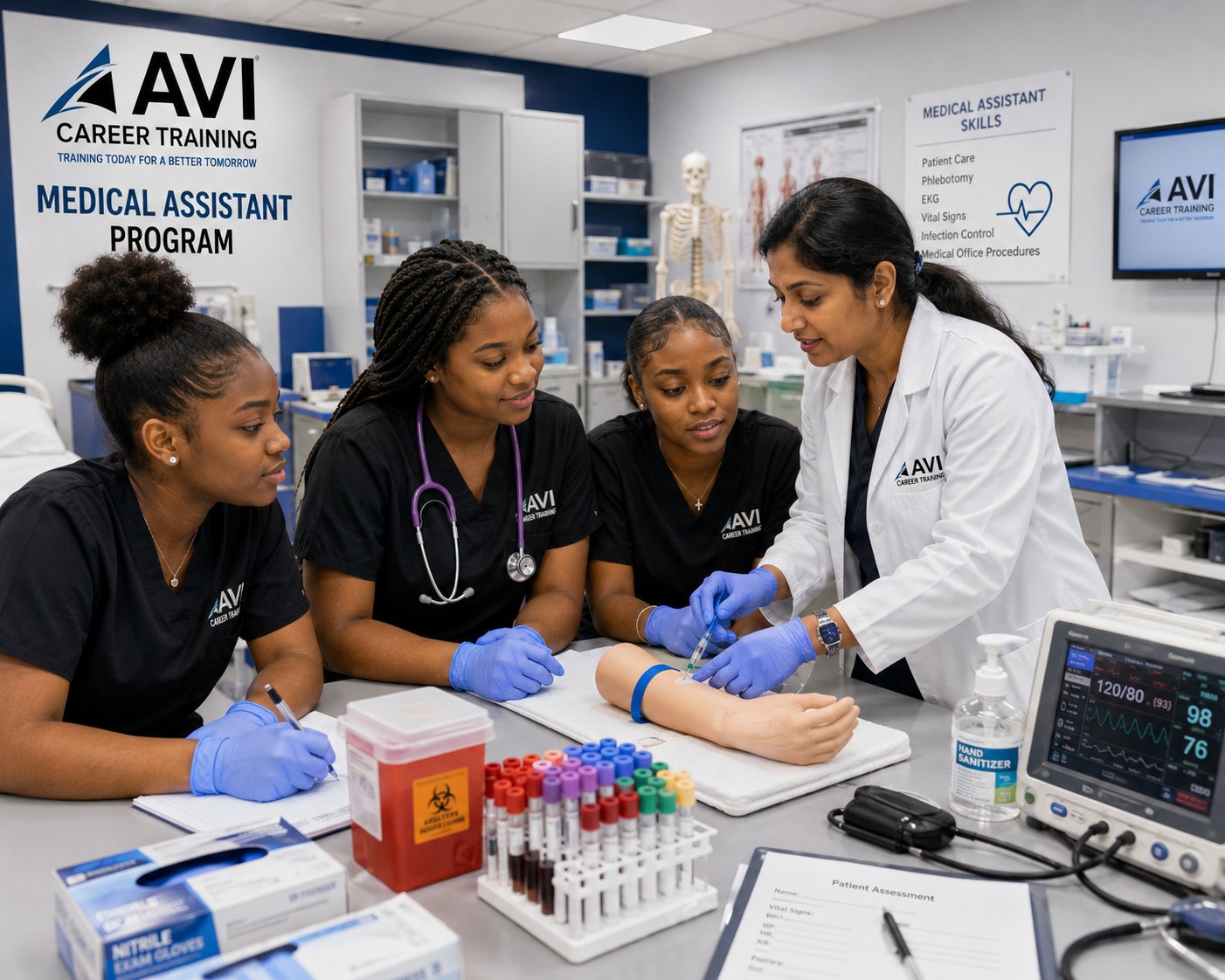
If you’re weighing a medical assistant vs. esthetics career, here’s the direct answer: both put you in a clinical environment — but only one lets you specialize in skin, lasers, and high-demand medspa treatments that are growing fast in the Northern Virginia and DC metro market.
Medical assistants handle patient intake, vitals, and administrative support. Medical estheticians perform clinical skin treatments — chemical peels, laser procedures, pre- and post-surgical skin care — inside the same dermatology offices and medspas. Different day-to-day reality. Different training path. Comparable — or better — earning potential on the esthetics side, especially in a high-cost metro like NoVA.
If you’re leaning toward the clinical beauty side of healthcare, AVI Career Training in Vienna, Virginia offers COE-accredited Esthetics and Cosmetic Laser Technician programs designed specifically to get you licensed and working in this market.
Ready to explore your options? Apply at AVI Career Training today.
—
⚡ Key Takeaways
—
What Does a Medical Assistant Actually Do?
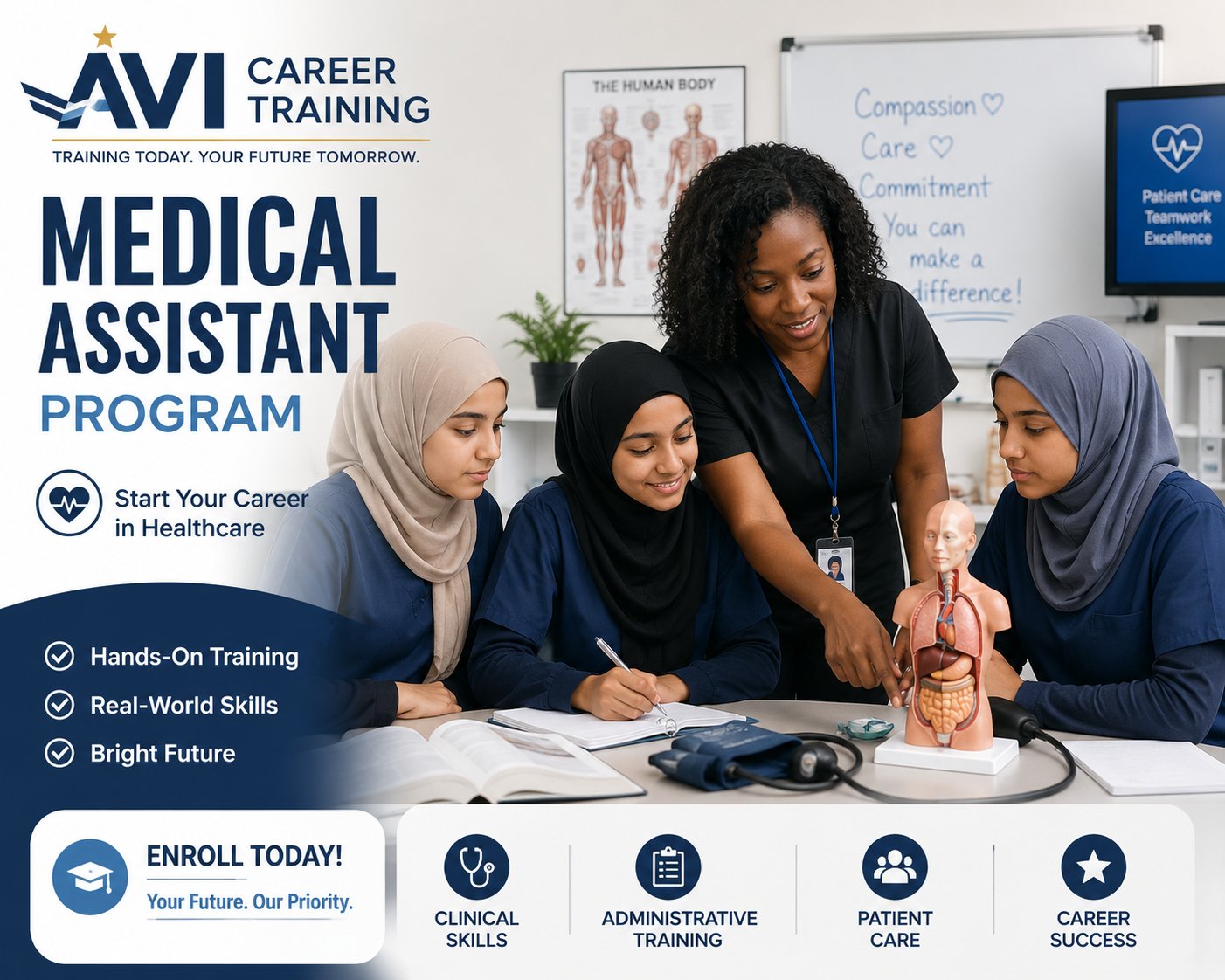
A medical assistant supports physicians and clinical staff with both administrative and basic clinical tasks. The role is the connective tissue of a busy clinic or physician’s office.
On any given day, a medical assistant might take patient vitals, update electronic health records, schedule appointments, prepare exam rooms, draw blood, administer injections, or handle insurance paperwork. The job requires solid organizational skills and the ability to stay calm in fast-paced environments.
What a medical assistant is not: a licensed clinician with independent scope of practice. Medical assistants work under direct physician supervision. They do not diagnose, prescribe, or perform aesthetic or cosmetic procedures — that work belongs to licensed estheticians, laser technicians, nurses, and physicians.
Training typically takes 9 to 24 months, depending on whether you pursue a certificate program at a vocational school or an associate degree at a community college. In Virginia, medical assistants are not required to hold a state license, though national certifications like the CMA (AAMA) or RMA are common employer requirements.
Median salary for medical assistants in Virginia: approximately $42,000–$48,000 annually, according to 2023 Bureau of Labor Statistics data.
It’s a stable, reliable career path. But if your interest is in skin care, aesthetics, or working in the growing medspa industry — rather than general clinical support — there’s a more direct path worth knowing about.
—
What Is a Medical Esthetician — and How Is It Different?
A medical esthetician is a licensed skin care professional who performs clinical aesthetic treatments in medical settings — medspa clinics, dermatology practices, plastic surgery offices, and cosmetic surgery centers.
This is not a traditional day spa job. Medical estheticians work alongside physicians and nurse practitioners to deliver treatments like:
The difference between a medical esthetician and a traditional esthetician is largely about environment, scope of practice, and specialized training. A medical esthetician operates in a clinical setting, often with access to stronger treatment modalities, and works within a physician-supervised framework.
The difference between a medical esthetician and a medical assistant is even more distinct. Medical estheticians are licensed specialists in skin and aesthetic treatments. Medical assistants are generalist clinical support professionals. The two roles rarely overlap.
Why does this matter for career-changers? If you’re drawn to the healthcare environment but your real passion is skin care, lasers, or aesthetic treatments — not patient intake and administrative support — medical esthetics is the more targeted, more fulfilling path.
—
Training Time, Cost, and Licensing — Side by Side
Here’s where the comparison gets concrete. The table below breaks down what each career path actually requires in terms of time, cost, and credentials.
| Factor | Medical Assistant | Medical Esthetician (Virginia) |
|---|---|---|
| Training Length | 9–24 months | Varies by program; esthetics licensure requires SCHEV-approved program (contact AVI for exact hours) |
| State License Required? | No Virginia state license required (national cert optional) | Yes — Virginia esthetics license via DPOR; requires SCHEV-approved program completion + board exam |
| Licensing Body | AAMA or AMT (national certifications) | Virginia DPOR (Board for Barbers and Cosmetologists) |
| Median Salary (NoVA/DC) | ~$42,000–$48,000/year (BLS 2023) | ~$40,000–$70,000+ with medspa/laser specialization in high-cost markets |
| Work Environments | Physician offices, urgent care, hospital outpatient departments | Medspas, dermatology clinics, plastic surgery practices, luxury spas |
| Add-On Specializations | Phlebotomy, EKG, coding certifications | Cosmetic Laser Technician certification, advanced peel training, IPL |
| Financial Aid (at AVI) | N/A | GI Bill® accepted at AVI; contact admissions for payment plan options |
A Word on Virginia Licensing for Estheticians
In Virginia, esthetics licensure is regulated by the Virginia Department of Professional and Occupational Regulation (DPOR) through the Board for Barbers and Cosmetologists. To sit for the Virginia State Board exam, you must complete a SCHEV-approved esthetics program. AVI Career Training is SCHEV-certified, meaning graduates are eligible to pursue Virginia licensure upon program completion.
If you’re also interested in laser treatments, AVI’s Cosmetic Laser Technician program provides an additional credential that makes you competitive for medspa positions where laser services are the highest-revenue treatments.
Contact AVI admissions to get current program hours and tuition information.
—
Real Talk: Meet Denise
Denise was a dental office receptionist in Fairfax County for six years. She liked being in a healthcare environment, but her job had nothing to do with what she actually loved — skin care and helping clients feel confident. She looked into medical assistant programs at a local community college: 18 months, lots of general clinical coursework, and still no pathway to the medspa career she actually wanted.
She found AVI Career Training’s Basic Esthetics program in Vienna, Virginia. The program fit her schedule, the training was hands-on from week one, and the curriculum specifically covered the clinical skin treatments she’d need for medspa work. Six months after graduating and passing her Virginia State Board exam, Denise was working at a medspa in the Tysons Corner corridor doing chemical peels and advanced facials — exactly the career she’d been picturing.
—
Where Do Medical Estheticians Work in Northern Virginia?
The Northern Virginia and DC metro area is one of the strongest markets in the country for medical estheticians and cosmetic laser technicians.
The Tysons Corner corridor — minutes from AVI’s Vienna campus — is home to a dense concentration of luxury medspas, plastic surgery practices, and dermatology clinics. The same is true across Arlington, McLean, Reston, and into Bethesda and Chevy Chase on the Maryland side.
The demand is driven by demographics: the DC metro is one of the most affluent, highly educated metro areas in the United States. Disposable income is high. Demand for premium skin care, laser treatments, and non-surgical aesthetics has grown every year — and that growth didn’t pause during economic downturns the way other industries did.
Industry Numbers Worth Knowing
- The U.S. medical spa market is projected to exceed $27 billion by 2030 (Grand View Research)
- Medspa locations in the U.S. have more than doubled over the past decade
- Laser and energy-based treatments are among the fastest-growing service categories in aesthetic medicine
- NoVA/DC is consistently ranked among the top 5 metro markets for aesthetic industry employment
What Employers in This Market Are Looking For
Medspa owners and dermatology practice managers in this corridor are actively hiring licensed estheticians — especially those with additional laser certification. The ideal candidate holds:
This is exactly the combination AVI’s Esthetics and Cosmetic Laser Technician programs are designed to deliver.
—
Cosmetic Laser Technician vs. Medical Assistant: Another Comparison Worth Making
If you’re searching for cosmetic laser technician vs. medical assistant, here’s the direct answer: these are two very different roles, but they share one important characteristic — both work in clinical or medical environments.
A cosmetic laser technician specializes in energy-based aesthetic devices: laser hair removal machines, photofacial equipment, skin resurfacing lasers, and similar technology. This is a highly technical, client-facing role that requires specific training on laser safety and device operation.
Medical assistants, as described earlier, handle generalist clinical support tasks under physician supervision. They do not operate laser devices.
Why this matters: if your interest is in technology-driven aesthetic treatments — not patient intake or EHR data entry — the Cosmetic Laser Technician path is more aligned with your actual goals.
AVI’s Cosmetic Laser Technician program in Vienna, Virginia covers the hands-on device training, safety protocols, and clinical application skills you need to work in a medspa laser suite. It’s a credential that commands premium compensation in the NoVA market, where high-end laser treatments are among the highest-revenue services a medspa offers.
Real Talk: Meet Marcus
Marcus was a U.S. Army veteran who transitioned out after eight years and settled in Northern Virginia with his family. He used his GI Bill® to explore his options. He’d looked at medical assistant programs, but the administrative nature of the work didn’t appeal to him — he wanted something hands-on and technical. A friend mentioned AVI Career Training in Vienna.
Marcus enrolled in AVI’s Cosmetic Laser Technician program using his GI Bill® benefit. The program’s technical focus — learning to operate laser equipment, understanding skin science, working with real clients in a supervised setting — fit his skill set from years of working with precision equipment in the military. After graduating, he landed a position at a medspa in Arlington, where laser services represent the clinic’s highest-revenue appointment category.
—
How to Start a Medical Esthetics Career in Virginia
Starting a medical esthetics career in Virginia follows a clear, sequential path. Here’s what it looks like step by step.
Step 1: Choose a SCHEV-Approved Esthetics Program
Virginia requires that esthetics students complete a program at a SCHEV-certified school before sitting for the state board licensing exam. SCHEV — the State Council of Higher Education for Virginia — certifies career education programs to ensure they meet state quality standards.
AVI Career Training is SCHEV-certified and COE-accredited. COE — the Council on Occupational Education — is a nationally recognized accrediting body for career and technical schools. COE accreditation signals that a program meets rigorous quality benchmarks, not just state minimums.
Step 2: Complete Your Program and Log Required Hours
Program hours vary. Contact AVI admissions for current program hour requirements and schedule options — they can walk you through full-time and part-time tracks.
Step 3: Pass the Virginia State Board Exam
After completing your program, you’ll apply through DPOR (Virginia Department of Professional and Occupational Regulation) to sit for the Virginia State Board exam. This covers both written theory and practical skills components. Passing grants you your Virginia esthetics license.
Step 4: Add Laser Certification for Maximum Marketability
A Virginia esthetics license qualifies you to work in medspas and dermatology clinics. Adding a Cosmetic Laser Technician credential from AVI significantly expands your earning potential and opens doors to the most lucrative medspa positions in the NoVA market.
Step 5: Apply to Medspas, Dermatology Clinics, and Plastic Surgery Practices
With your Virginia esthetics license (and optional laser credential) in hand, you’re qualified to apply across the full spectrum of medical aesthetic employers in the NoVA/DC corridor — from independent medspas in Tysons Corner to multi-location dermatology groups serving the greater DC area.
A Note on Financial Aid
AVI’s Esthetics and Cosmetic Laser Technician programs are under 600 hours and do not qualify for federal financial aid (Title IV / FAFSA). Federal financial aid is not available for these programs. AVI does accept the GI Bill® for eligible veterans and service members — a meaningful benefit in the NoVA area where the veteran population is substantial. Payment plan and private financing options are also available. Contact AVI admissions at (703) 943-9841 to discuss your options.
Start your application now — it takes minutes.
—
Frequently Asked Questions
Q: What is the difference between a medical esthetician and a medical assistant?
A: A medical esthetician is a licensed skin care specialist who performs clinical aesthetic treatments — chemical peels, laser procedures, pre/post-surgical skin care — in medspa or dermatology settings. A medical assistant is a generalist clinical support professional who handles patient intake, vitals, and administrative tasks. The two roles work in overlapping environments (medical offices, clinics) but have completely different day-to-day responsibilities and require different training.
Q: Can you work in a medical spa without a nursing degree?
A: Yes. Many medspa positions — including esthetician, laser technician, and front-of-house roles — do not require a nursing degree. In Virginia, working as a licensed esthetician or cosmetic laser technician in a medspa requires a state esthetics license and/or relevant laser training certification, not a nursing credential. Nurses and nurse practitioners perform injectable and medical procedures; estheticians and laser technicians perform the skin care and device-based services.
Q: How long does it take to become a medical esthetician in Virginia?
A: Timeline depends on the program you choose and whether you attend full-time or part-time. Contact AVI Career Training at (703) 943-9841 for current program length and scheduling options. After completing your program, you’ll need to pass the Virginia State Board exam administered through DPOR before practicing.
Q: Is medical esthetics a good career in the DC area?
A: Yes — the DC and Northern Virginia market is one of the strongest in the country for medical esthetics. The area’s high median household income, dense concentration of medspas and dermatology practices, and strong demand for premium aesthetic services make it an excellent market for licensed estheticians and laser technicians. Earning potential is strong, especially for professionals who add laser certification to their esthetics license.
Q: What certifications do you need to work at a medical spa in Virginia?
A: At minimum, a Virginia esthetics license issued by DPOR (which requires completion of a SCHEV-approved program and passing the state board exam). For laser-specific positions, a Cosmetic Laser Technician credential is typically required or strongly preferred by medspa employers.