Medical Assistant vs. Beauty Careers in Northern Virginia
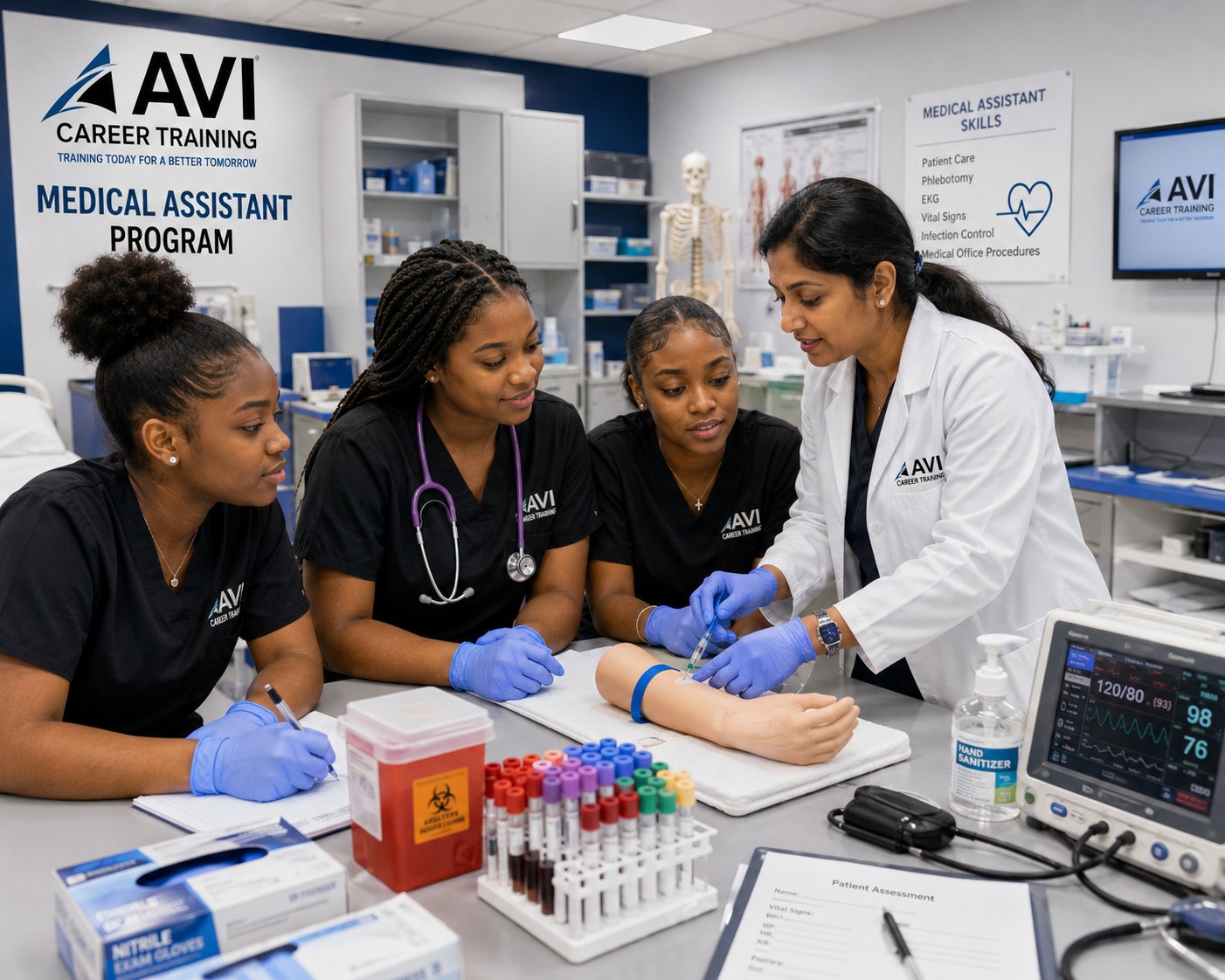
If you’re weighing a medical assistant vs. esthetics career in Northern Virginia, both paths lead to real, stable careers — but they differ significantly in training time, licensing requirements, cost, and the type of work environment you’ll spend your days in.
This guide breaks down both paths clearly and honestly, including a third option — Cosmetic Laser Technology — that many career explorers in the DC metro area overlook entirely.
Explore AVI’s Esthetics Program — Apply Now
—
Key Takeaways
- Medical assistant certificate programs in Virginia typically run 9–12 months and cost $8,000–$15,000 — with no state license required in Virginia, though national certification (CMA or RMA) is strongly preferred by employers.
- A Virginia esthetics license requires 600 training hours per the Virginia Department of Professional and Occupational Regulation (DPOR), followed by a state board exam.
- Licensed estheticians in Northern Virginia increasingly work in medical spas, dermatology offices, and cosmetic surgery centers — a growing, high-wage segment of the local market.
- The DC–Arlington–Alexandria metro area ranks among the highest-paying regions in the country for both medical assistants and skincare specialists, according to BLS data.
- AVI Career Training in Vienna, Virginia offers COE-accredited programs in Esthetics, Cosmetic Laser Technology, and Massage Therapy — all with faster timelines than a two-year medical program.
—
What Does a Medical Assistant Actually Do — and What’s the Training Path in Virginia?
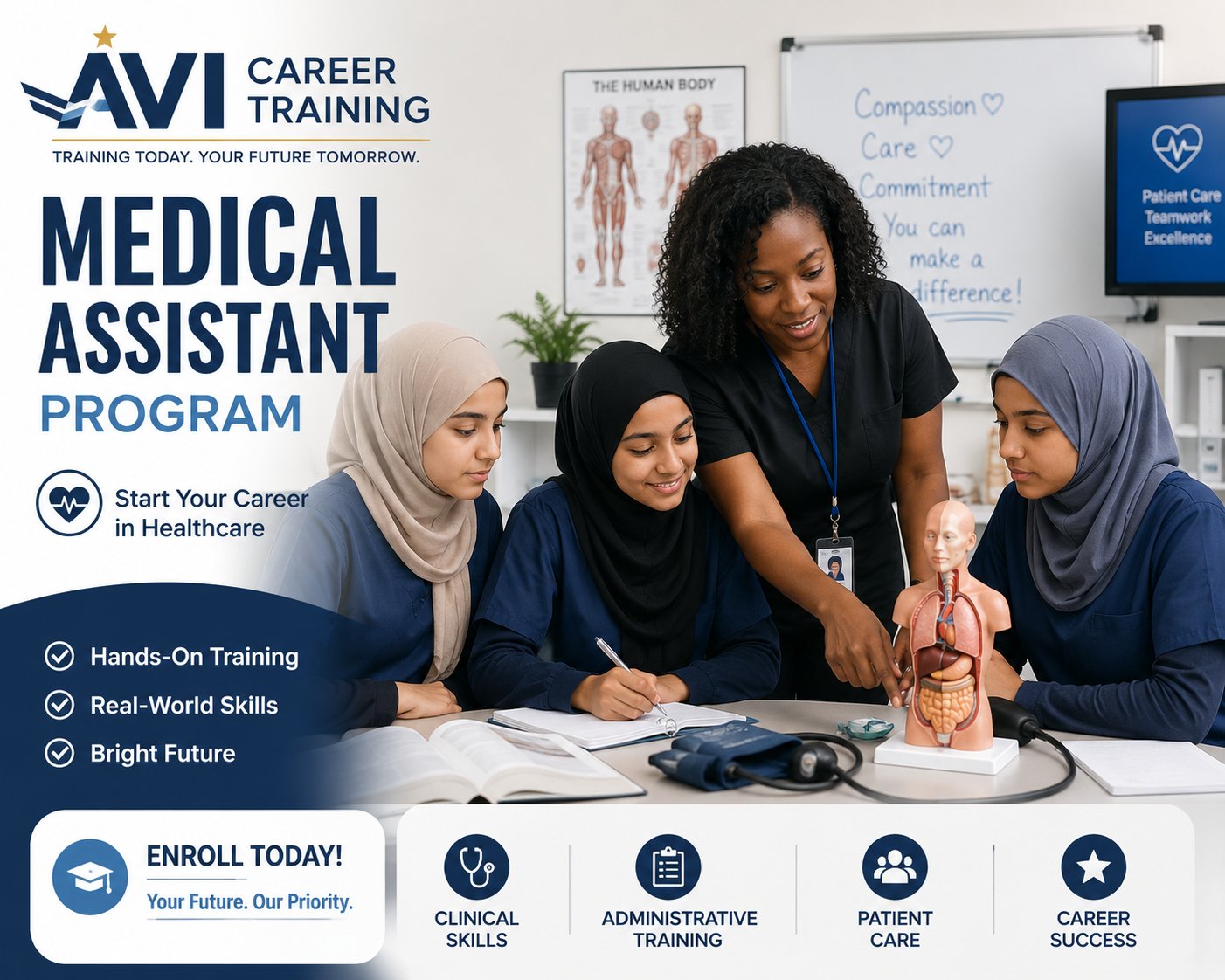
A medical assistant is a healthcare professional who supports physicians and clinical teams with both administrative and clinical tasks. Think: taking patient vitals, drawing blood, scheduling appointments, updating electronic health records, and assisting with minor procedures.
It’s a role that keeps clinics running. Medical assistants are in demand nationally, and the DC metro market — with its dense concentration of federal healthcare systems, private practices, and hospital networks — is no exception.
Training Requirements in Virginia
Virginia does not require a state license for medical assistants. That’s a meaningful distinction. You can work as a medical assistant in Virginia without sitting for a board exam — though most employers strongly prefer (and some require) national certification from organizations like:
Certificate programs through Northern Virginia Community College (NOVA) and similar institutions typically run 9 to 12 months and cost roughly $8,000 to $15,000 depending on prerequisites, fees, and whether you pursue certification prep.
What the Job Actually Looks Like
Medical assistants work in clinical environments — doctor’s offices, urgent care centers, hospital outpatient departments, and specialty clinics. The work is structured, team-based, and medically regulated. You will take direction from physicians and nurses. You will deal with clinical stress, including sick patients and strict protocols.
For people who want that environment, it’s a good fit. For people who want to work more independently, build client relationships, and operate in a creative or aesthetic setting — it may not be.
That distinction matters when comparing these two career paths.
—
The Rise of Medical Esthetics — Where Beauty Meets Clinical Practice
Licensed estheticians aren’t just working in day spas anymore. The fastest-growing segment of the esthetics industry is medical esthetics — and in Northern Virginia, it’s booming.
Across the Tysons Corner corridor, Reston, Alexandria, and Fairfax, medical spas and dermatology-adjacent practices are hiring licensed estheticians to perform services like:
These aren’t entry-level spa roles. Medical estheticians in high-end medspa environments in the DC metro area command competitive hourly rates and often earn commission on retail and upgrades.
Can You Work in a Medical Setting With an Esthetics License in Virginia?
Yes — and many estheticians in Northern Virginia do exactly that. Virginia DPOR issues a standard esthetics license at 600 training hours. Once licensed, you can work in any setting that performs esthetics services — including medical spas and dermatology offices operating under physician supervision.
The distinction between a medical esthetician and a medical assistant comes down to scope of practice. Estheticians are licensed to perform skin care services. Medical assistants support clinical procedures under a physician. These are different roles — and in many medspas, both exist on the same team.
What About Cosmetic Laser Technology?
If you’re drawn to the clinical/aesthetic overlap, Cosmetic Laser Technology is worth understanding. Laser technicians operate advanced devices for hair removal, skin resurfacing, and body contouring — typically in medical spas and cosmetic dermatology practices.
AVI Career Training offers a Cosmetic Laser Technician program at its Vienna, Virginia campus that trains students in device operation, safety protocols, and client care for laser-based treatments. This program (NO FINANCIAL AID FOR THIS PROGRAM — it is under 600 hours and does not qualify for federal Title IV/FAFSA aid) is designed for students who want to work in clinical-aesthetic settings without pursuing a medical assistant credential.
—
Comparing Training Time, Cost, and Licensing Requirements
Side-by-side comparison is the clearest way to evaluate these paths. Here’s how medical assistant training stacks up against Virginia esthetics licensure and cosmetic laser training:
| Factor | Medical Assistant (VA) | Esthetics License (VA) | Cosmetic Laser Technician |
|---|---|---|---|
| Training Duration | 9–12 months | 600 hours (approx. 4–6 months full-time) | Varies by program (typically weeks to a few months) |
| Estimated Cost | $8,000–$15,000 | Varies by school (financial aid may be available for qualifying programs) | Contact AVI for current tuition (NO FINANCIAL AID — under 600 hours, not Title IV eligible) |
| State License Required? | No (Virginia does not license MAs) | Yes — Virginia DPOR state board exam required | No Virginia-specific laser license; esthetics license or RN often required by employer |
| National Certification | Optional but preferred (CMA, RMA) | State board exam = licensure | Program certificate; esthetics license may be co-requisite |
| Work Setting | Clinics, hospitals, physician offices | Spas, salons, medspas, dermatology offices | Medspas, cosmetic surgery centers, dermatology |
| Financial Aid Eligible? | Depends on institution | Yes, if program qualifies (COE-accredited schools may offer federal aid) | No — federal aid NOT available (under 600 hours) |
If speed to employment matters — and for most career changers, it does — the esthetics path in Virginia is measurably faster than a 9-to-12-month medical assistant certificate program.
Explore AVI’s Esthetics Program — Apply Now
—
Career Outlook and Earning Potential in the DC Metro Market
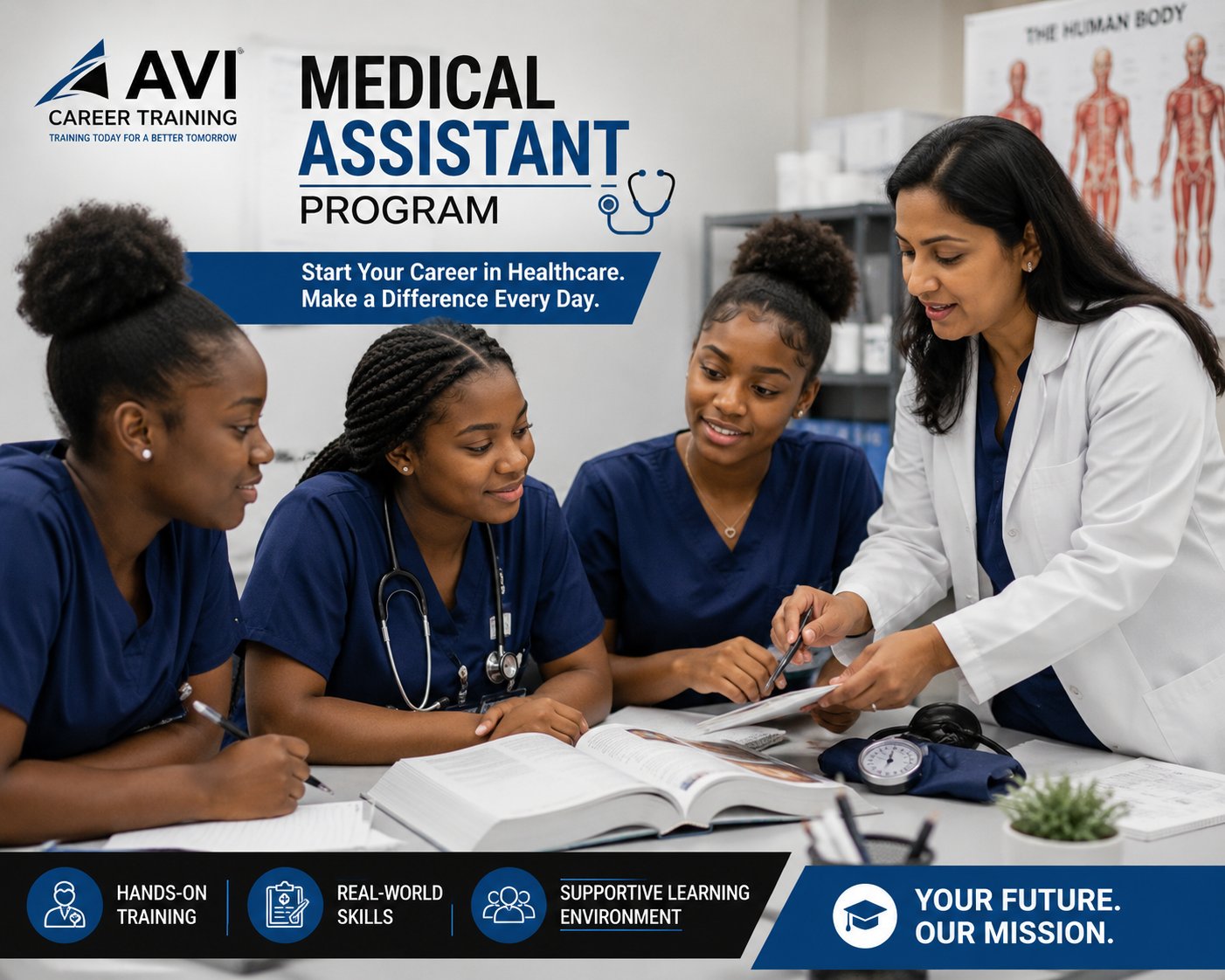
The DC–Arlington–Alexandria metropolitan division is one of the most favorable labor markets in the country for both of these career paths. Here’s why that matters for your decision.
Medical Assistants in the DC Metro
According to the U.S. Bureau of Labor Statistics (BLS), medical assistants nationally earn a median annual wage of approximately $42,000–$43,000 (2023 OES data). The DC metro area consistently outpaces the national median due to the region’s high cost of living and concentration of specialty medical practices. BLS metro-level data for the DC–Arlington–Alexandria division places local medical assistant wages noticeably above the national benchmark — confirm current figures at BLS.gov Occupational Employment Statistics.
Skincare Specialists (Estheticians) in the DC Metro
BLS data for skincare specialists in the DC metro division shows median annual wages that are competitive with — and in high-end medspa environments, can exceed — what entry-level medical assistants earn. Northern Virginia’s density of affluent clients and high-end aesthetic practices creates a strong commission and tips environment that base salary figures alone don’t capture.
Check current DC metro skincare specialist wage data directly at BLS.gov for the most accurate figures.
Massage Therapists in Northern Virginia
Massage Therapy is another strong healthcare-adjacent path for Northern Virginia career seekers. The DC metro is one of the higher-paying markets nationally for licensed massage therapists, with demand driven by corporate wellness programs, sports and physical therapy clinics, luxury spas, and private practice.
Two Career Stories From the Northern Virginia Market
Story 1 — Career Changer, Age 34, Herndon VA:
A former administrative coordinator spent 18 months researching healthcare careers. She initially enrolled in a medical assistant program, drawn by the clinical structure. Six weeks in, she realized she missed client-facing, relationship-based work. She withdrew, enrolled in an esthetics program, completed her 600 hours, passed the Virginia State Board exam, and landed a position at a medical spa in Tysons Corner within three weeks of licensure. Within her first year, she was performing chemical peels and earning commission on retail — clearing more than she made in her previous administrative role.
Story 2 — Recent High School Graduate, Age 19, Alexandria VA:
After graduating, he wanted to enter the workforce fast without committing to a four-year degree. He compared medical assistant programs (9–12 months, no license required) against esthetics training (600 hours, state board exam). He chose esthetics, enrolled at a COE-accredited school, and was working at a high-end spa in Old Town Alexandria before his peers completed their first semester of community college. He later added cosmetic laser training to his credentials, expanding into medspa work.
—
Which Path Is Right for You? How to Decide
The right path depends on four factors: your preferred work environment, your timeline, your financial situation, and whether you want a state license or a national certification.
Choose Medical Assistant If:
Choose Esthetics or Cosmetic Laser If:
Financial Aid Considerations
AVI Career Training is COE-accredited (Council on Occupational Education) and SCHEV-certified, which means qualifying programs may offer access to federal financial aid, Pell Grants, and the GI Bill® for eligible students.
Important note on Cosmetic Laser Technician: This specific program is under 600 hours and does not qualify for federal financial aid (Title IV/FAFSA). Federal aid is not available for this program. Students interested in Cosmetic Laser Technology should ask AVI’s admissions team about payment plan options and private financing.
For the esthetics program and other qualifying programs at AVI, financial aid options may be available — including the GI Bill® for eligible veterans and active-duty service members.
Talk to AVI Admissions — Start Your Application
—
Frequently Asked Questions
Q: How long does it take to become a medical assistant in Virginia?
A: Medical assistant certificate programs in Virginia typically take 9 to 12 months to complete. Virginia does not require a state license for medical assistants, though national certifications like the CMA (Certified Medical Assistant through AAMA) or RMA (Registered Medical Assistant through AMT) are preferred by most employers.
Q: What is the difference between a medical esthetician and a medical assistant?
A: A medical esthetician is a state-licensed skincare professional (licensed through Virginia DPOR after 600 training hours and a state board exam) who performs aesthetic skin care services in clinical settings like medspas and dermatology offices. A medical assistant is a healthcare professional who supports physicians with clinical and administrative tasks — taking vitals, drawing blood, updating records — and does not require a Virginia state license. These are distinct roles with different training, licensing structures, and daily responsibilities.
Q: What careers in beauty and wellness pay well in Northern Virginia?
A: Licensed estheticians, cosmetic laser technicians, and massage therapists in the DC–Arlington–Alexandria metro area all earn above-average wages compared to national benchmarks, driven by the region’s high cost of living and concentration of high-end medspas, dermatology practices, and luxury wellness facilities. Current wage data is available through BLS.gov Occupational Employment Statistics for the DC metro division.
**Q: Can you work in a medical setting with an