Medical Assistant or Esthetics Career: Which Fits You?
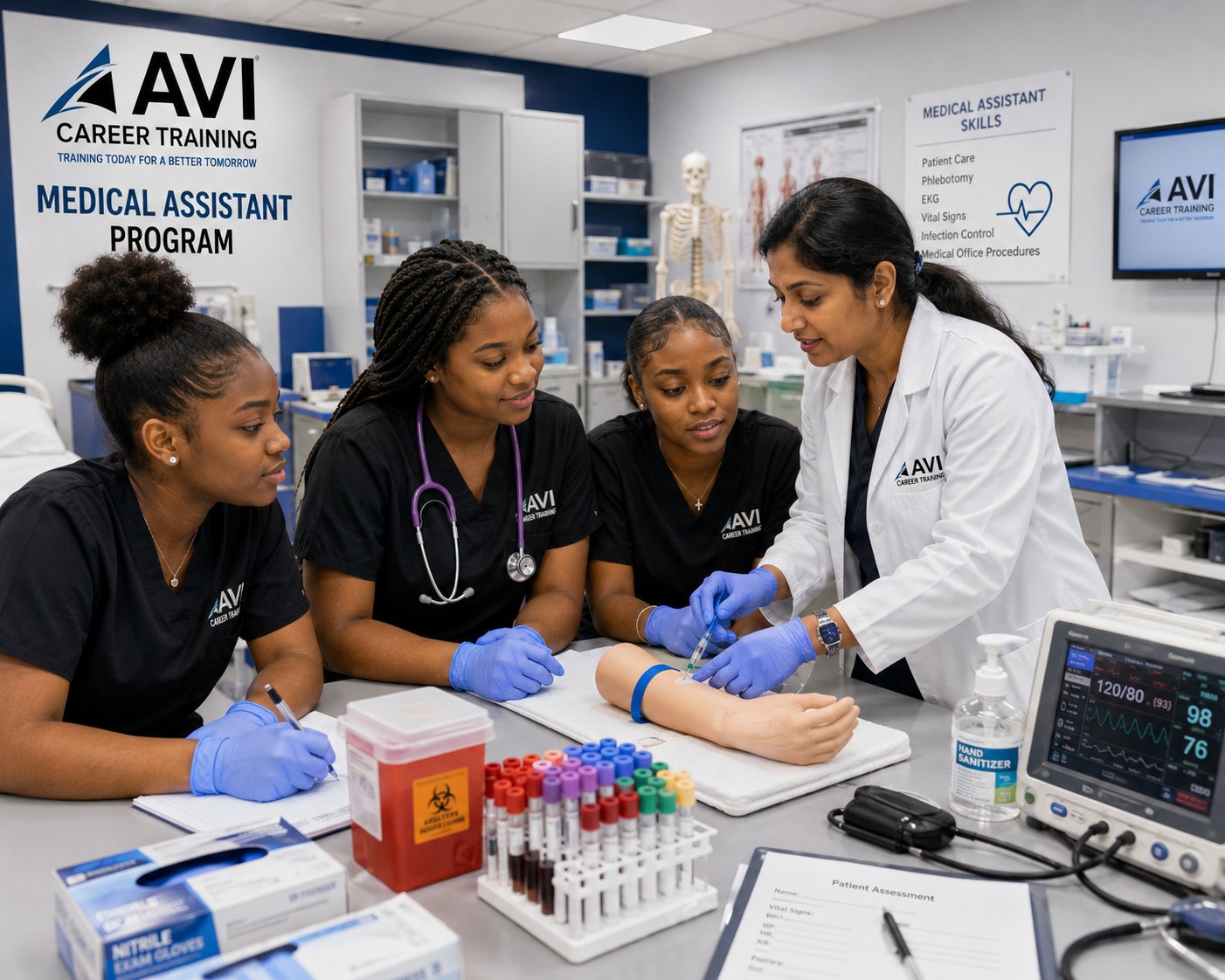
Medical assisting and esthetics both offer hands-on, people-centered careers without a four-year degree — but they lead to very different work environments, skill sets, and long-term opportunities. The right choice depends on whether you’re drawn to clinical procedures and physician-directed support, or whether you want creative autonomy, skin care expertise, and a career path that can take you straight into the booming medical spa industry.
This guide breaks down both paths honestly — training timelines, earning potential, licensing requirements, and day-to-day realities — so you can make the decision that fits your life and your goals.
Key Takeaways
- Medical assisting programs typically take 9–12 months and lead to clinical support roles in physician offices and hospitals.
- Virginia requires 600 clock hours of esthetics training to sit for state licensure — a faster track than most MA programs.
- Licensed estheticians working in med spa settings in Virginia can earn $60,000+ per year.
- Cosmetic laser technicians earn $45,000–$70,000+ depending on setting and certification level.
- BLS projects skin care specialist employment to grow 9% through 2032 — faster than average for all occupations.
Thinking about launching a beauty or wellness career in Northern Virginia? Apply to AVI Career Training today and talk to an admissions advisor about which program fits your goals.
—
What Does a Medical Assistant Actually Do?
A medical assistant is a clinical and administrative support professional who works under the direction of a licensed physician or healthcare provider. They handle a range of tasks that keep a medical office running — from taking patient vitals and drawing blood to scheduling appointments and managing medical records.
Typical Day-to-Day Responsibilities
Most MAs split their time between two types of work:
Clinical duties include taking blood pressure and temperature, preparing patients for exams, administering injections, collecting lab specimens, and assisting with minor procedures. These tasks require precision and the ability to stay calm under pressure.
Administrative duties include answering phones, coding insurance claims, scheduling follow-ups, and maintaining electronic health records. In smaller practices, one MA might handle both sides of the office.
Work Environment and Culture
Medical assistants typically work in physician offices, outpatient clinics, urgent care centers, or hospital departments. The pace can be fast, the hours are generally structured (often 8–5), and the work is rewarding in a support-focused, team-oriented way. You are helping people, but you are doing so in a highly directed environment — protocols, supervision, and compliance requirements shape nearly every interaction.
Training Pathway for Medical Assisting
Most MA certificate programs run 9 to 12 months at a community college or vocational school. Some associate degree programs stretch to two years. In Virginia, medical assisting is not state-licensed in the same way that cosmetology and esthetics are — certification (through bodies like the AAMA or AMT) is voluntary but strongly preferred by employers. Expect to pay $5,000–$15,000 for a certificate program, with costs varying by institution.
—
What Is Medical Esthetics — and How Is It Different?
Medical esthetics is a specialized branch of skin care focused on clinical and cosmetic treatments — and it is one of the fastest-growing career lanes in the beauty and wellness industry. Where a traditional esthetician might focus on facials, waxing, and relaxation services in a day spa, a medical esthetician performs more advanced treatments in clinical or med-spa settings.
What Medical Estheticians Actually Do
Medical estheticians provide services like:
These services happen in medical spas, plastic surgery offices, dermatology clinics, and wellness centers — environments that sit squarely at the intersection of beauty and healthcare.
How It Differs from Medical Assisting
The core difference is specialization vs. support. A medical assistant supports a physician across a wide range of clinical tasks. A medical esthetician is the specialist — the person clients come to specifically for skin treatments and cosmetic care. Medical estheticians work with a defined scope of services, build loyal client books, and in many settings have significant autonomy in treatment planning and product selection.
This distinction matters for your career satisfaction. If you love skin care, want to build client relationships, and see yourself as the expert in the room rather than the support staff, medical esthetics is a better fit.
Where AVI Career Training Fits
AVI Career Training in Vienna, Virginia offers COE-accredited Esthetics and Cosmetic Laser Technician programs that train students specifically for the medical esthetics lane. AVI’s curriculum covers advanced skin care techniques, inclusive treatment protocols for all skin tones, and the hands-on skills that med spas and dermatology practices in Northern Virginia are actively hiring for.
Mini-Story: From Healthcare Burnout to Med Spa Career
Imagine a 34-year-old from Fairfax County who spent six years working front desk and billing support at a busy family medicine practice. She loved the healthcare environment but felt invisible in her role — always supporting, never specializing. She started researching esthetics after noticing how many clients at the med spa next door to her office seemed genuinely transformed by their appointments. She enrolled in AVI’s Basic Esthetics program, completed her 600 hours, passed the Virginia State Board exam, and landed a position at a medical spa in Tysons Corner within two months of graduation. Her income in the first year matched what she made at the physician’s office — with room to grow as she builds her client base.
—
Training Time and Cost: A Side-by-Side Comparison
When you are comparing a medical assistant vs esthetics career, training time and cost are often the deciding factors — especially for career changers who cannot afford to be out of the workforce for two or three years.
Medical Assisting: Timeline and Investment
A typical MA certificate program runs 9 to 12 months full-time. Associate degree programs take 18 to 24 months. Costs vary significantly:
Federal financial aid (FAFSA) may be available depending on the institution and program structure.
Esthetics at AVI: Timeline and Investment
Virginia requires 600 clock hours to earn an Esthetics license through the Virginia State Board of Cosmetology. At AVI Career Training, students can complete the Basic Esthetics program on a schedule designed for working adults — making it a realistic option for people with jobs, families, and financial obligations.
AVI also offers a Master Esthetics program for students who want advanced credentials and a broader scope of services. Financial aid and the GI Bill® are available for qualifying programs at AVI — contact admissions at (703) 943-9841 to confirm current eligibility for specific programs.
Cosmetic Laser Technician: A Faster Entry to Higher Pay
AVI’s Cosmetic Laser Technician program is another path worth comparing directly to medical assisting. In Virginia, cosmetic laser procedures fall under the oversight of the Virginia Board of Medicine, and AVI’s program is designed to meet those regulatory requirements. Laser technician training can be completed in significantly less time than a full MA certificate, with earning potential that rivals — and in many cases exceeds — what MAs earn in the DC metro market.
Medical Assistant
Training: 9–12 months
Cost: $4,000–$15,000+
License: Voluntary certification
Setting: Clinical/physician offices
Esthetician (AVI)
Training: 600 clock hours
Cost: Contact AVI for current tuition
License: Required — Virginia State Board
Setting: Spa, med spa, dermatology
—
Salary and Job Outlook in Northern Virginia
Numbers matter when you are making a career decision. Here is what the data shows for the DC metro market.
Esthetician Salary vs. Medical Assistant Salary in Virginia
According to Bureau of Labor Statistics data, Virginia earnings for these roles break down as follows:
(Virginia, BLS)
(Med spa = higher end)
(Setting dependent)
(Self-employment upside)
A few things stand out when you compare these numbers. Medical assistants in Virginia earn a reliable income, but the ceiling is relatively defined — most MA roles are salaried positions with limited upside beyond annual raises. Estheticians, cosmetic laser technicians, and massage therapists all have performance-based earning potential. In med spa settings, commission structures, gratuities, and retail bonuses can push annual income well above the base figures above.
Job Growth: Who Is Hiring?
The Bureau of Labor Statistics (BLS.gov) projects 9% employment growth for skin care specialists through 2032 — faster than the national average for all occupations. Medical spas, in particular, are one of the fastest-growing segments of the healthcare and wellness industry, and Northern Virginia’s affluent, health-conscious population drives consistent demand.
Medical assistants have strong and stable demand as well, but the Northern Virginia market for esthetics and cosmetic laser services is exceptional. The Tysons Corner corridor, Arlington, McLean, and Reston are dense with med spas, dermatology clinics, and plastic surgery practices that actively recruit licensed estheticians and laser technicians.
Entrepreneurship and Flexibility
One advantage that the esthetics path holds firmly over medical assisting is entrepreneurship. Licensed estheticians in Virginia can open their own studios, rent booth space, or build private practices with relatively low startup costs. Medical assistants work within institutional healthcare settings by definition — the role does not lend itself to self-employment in the same way.
If owning your own business, setting your own hours, or building a personal brand in wellness is part of your long-term vision, esthetics and massage therapy offer those possibilities. Medical assisting does not.
—
How to Choose the Right Path — and Where to Start in Virginia
The best career is the one that fits your actual life — your preferred environment, your financial timeline, your personality, and your long-term ambitions. Here is a practical decision framework.
Choose Medical Assisting If…
Choose Esthetics or Cosmetic Laser If…
The Northern Virginia Advantage
The DMV area — Northern Virginia, DC, and Maryland — is one of the highest-demand markets in the country for medical spa services. The concentration of affluent, health-focused households in communities like McLean, Vienna, Reston, and Arlington creates consistent demand for skilled estheticians and laser technicians. AVI Career Training is located at the center of this market, in Vienna, Virginia — minutes from Tysons Corner and the broader NoVA wellness corridor.
Mini-Story: The Career Changer Who Skipped the Hospital Waiting Room
Consider a 28-year-old from Herndon who spent a year shadowing a relative who worked as a medical assistant , expecting to feel inspired. Instead, he found the work meaningful but the environment stifling — too much fluorescent lighting, too many insurance forms, not enough of the creative and client-facing interaction he craved. He started researching cosmetic laser technician vs medical assistant career paths online and landed on AVI’s website. He enrolled in the Cosmetic Laser Technician program, completed his training, and accepted a position at a medical spa in Tysons Corner. Within 18 months, he was the clinic’s lead laser technician — earning more than the MA salary range and working with a client base he genuinely looked forward to seeing each week.
AVI’s Programs at a Glance
AVI Career Training offers the following programs relevant to this career comparison:
All programs are taught by licensed industry professionals at AVI’s Vienna, VA campus, accredited by the Council on Occupational Education (COE) and certified by SCHEV (State Council of Higher Education for Virginia). Financial aid and the GI Bill® are available for qualifying students and programs — call (703) 943-9841 or apply online to confirm eligibility.
—
Frequently Asked Questions
Q: Can an esthetician work in a medical setting?
A: Yes. Licensed estheticians regularly work in medical spas, dermatology offices, and plastic surgery practices. In Virginia, a Basic or Master Esthetics license — earned after completing 600 clock hours and passing the Virginia State Board exam — qualifies you for med-spa employment. Advanced training in cosmetic laser and chemical peels makes you especially competitive for clinical positions.
Q: What is the difference between a medical assistant and a medical esthetician?
A: A medical assistant provides broad clinical and administrative support under physician supervision across a wide range of healthcare tasks. A medical esthetician is a licensed skin care specialist who focuses exclusively on cosmetic and therapeutic skin treatments — often in a med spa or dermatology setting — and typically builds a personal client base rather than supporting a physician’s general practice.
Q: How long does it take to become a medical esthetician in Virginia?
A: The licensing foundation is the Virginia State Board of Cosmetology’s Esthetics license, which requires 600 clock hours of training. At AVI Career Training in Vienna, Virginia, students complete this training on a schedule designed for working adults. After passing the state board exam, graduates can pursue positions in medical spa settings immediately and can layer on additional certifications in cosmetic laser and advanced treatments.
Q: Do medical spas in Virginia require a licensed esthetician?
A: Most medical spas in Virginia require or strongly prefer licensed estheticians for facial treatment services. Laser treatments are regulated separately under the Virginia Board of Medicine. Having both an Esthetics license and Cosmetic Laser Technician credentials — both available through AVI Career Training — makes you significantly more competitive in the Northern Virginia medical spa job market.
Q: What careers in beauty and wellness pay well without a 4-year degree?
A: Several beauty and wellness careers in Virginia offer strong earning potential without a bachelor’s degree. Cosmetic laser technicians earn $45,000–$70,000+ depending on setting. Licensed estheticians in med spa environments earn $35,000–$60,000+, with commission and tips adding meaningful upside. Massage therapists earn $45,000–$65,000+ with self-employment potential. All of these career paths require state licensure — but not a four-year degree — and AVI Career Training’s accredited programs in Northern Virginia are a direct pathway to each of them.
**Q: Is esth