Medical Assistant or Esthetician: Which Career Fits You?
A medical assistant vs esthetician career differs most in daily work, training length, and earning structure — and the right choice depends on whether you want clinical support work or hands-on skin treatment as your core job. Both paths lead to stable, careers — but they’re more different than most people realize, and one of them has a third option most career explorers never even consider.
If you’re weighing these two paths, you’re likely drawn to people-focused work, hands-on skills, and a career that doesn’t require a four-year degree. That instinct is right for both options. But the day-to-day experience, the work environment, and the training timeline are distinctly different — and the right choice depends entirely on what you actually want to do with your hands and your time.
This guide breaks down both careers honestly, puts the numbers side by side, and introduces a third path that sits right at the intersection of clinical and beauty: cosmetic laser technology and medical esthetics.
> Thinking about a career in medical esthetics or cosmetic laser? Start your application at AVI Career Training in Vienna, VA — or call us at (703) 943-9841.
—
Key Takeaways
—
What Does a Medical Assistant Actually Do?
A medical assistant is a dual-role healthcare worker — part clinical, part administrative. On the clinical side, that means taking patient vitals, drawing blood, administering injections, preparing exam rooms, and assisting physicians during procedures. On the administrative side, it means scheduling appointments, managing patient records, handling billing codes, and navigating electronic health systems.
Medical assistants typically work in physician offices, hospitals, outpatient clinics, urgent care centers, and specialty practices. The environment is structured, fast-paced, and governed by strict healthcare protocols. You’ll work closely with doctors, nurses, and other clinical staff — often in a supporting role.
What it takes to become one:
Most accredited medical assistant programs run 9 to 24 months, depending on whether you pursue a certificate or an associate degree. Programs are offered at community colleges and vocational schools. Most states don’t require licensure (Virginia included), but national certifications like the CMA (Certified Medical Assistant ) through the AAMA or the RMA through AMT are strongly preferred by employers.
The work is meaningful and the demand is real. But if the clinical setting feels more like a constraint than an appeal — if you’re drawn to the aesthetic side of healthcare rather than the diagnostic side — it’s worth understanding what your alternative actually looks like.
—
What Does an Esthetician Do — and Where Do They Work?
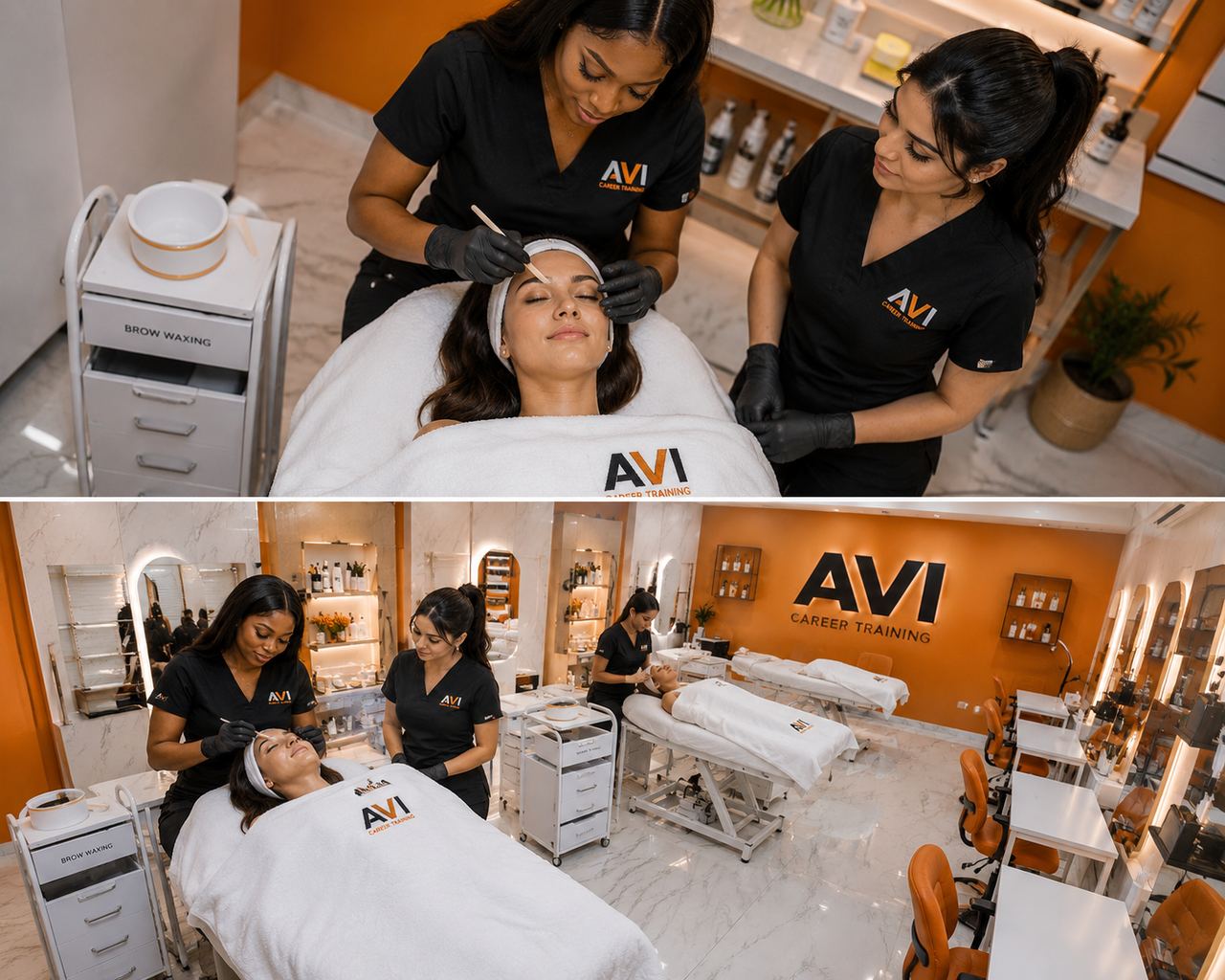
An esthetician is a licensed skin care specialist. The job is hands-on and client-focused: facials, chemical peels, extractions, waxing, dermaplaning, microdermabrasion, and advanced skin treatments. Estheticians assess skin conditions, build customized treatment plans, and educate clients on at-home care.
Here’s where most people’s mental image needs updating: estheticians don’t just work in day spas. The full range of work settings includes:
The medical spa esthetician career path, in particular, has grown significantly over the last decade. As non-invasive cosmetic treatments have become mainstream — think laser facials, microneedling, LED therapy, and advanced chemical peels — the demand for trained, licensed estheticians in clinical settings has increased sharply.
A quick story: Marisol had worked in a dermatologist’s office as a receptionist for two years. She loved the environment and was endlessly curious about the treatments her clients were receiving. She didn’t want to become a nurse or physician assistant — the clinical medicine side wasn’t her interest. What she wanted was to perform skin treatments. She enrolled in AVI Career Training’s Basic Esthetics program, completed her 600 hours, passed her Virginia State Board exam, and returned to a medical spa environment — this time as the one providing the services. Her training took under nine months. She never needed a nursing degree.
—
Training Time, Cost, and Licensing — Side by Side
This is where the practical differences become very concrete. Here’s an honest, apples-to-apples comparison:
Medical Assistant Training
| Factor | Details |
|—|—|
| Program Length | 9–24 months (certificate to associate degree) |
| Typical Cost | $6,000–$20,000+ depending on institution |
| Virginia Licensure | Not required by the state |
| National Certification | CMA or RMA preferred; requires passing an exam |
| Clinical Hours | Varies by program; externship typically required |
Virginia Esthetics Licensure
| Factor | Details |
|—|—|
| Required Training Hours | 600 clock hours |
| Program Length at AVI | Approximately 6–9 months |
| Licensing Exam | Virginia Board of Barbers and Cosmetologists written and practical exam |
| Who Administers It | Virginia Department of Professional and Occupational Regulation (VA DPOR) |
| Cost at AVI | Contact AVI for current program tuition — financial aid is available |
The most significant practical difference: esthetics licensure in Virginia has a clear, defined finish line. 600 hours. One state board exam. Licensed. For many career changers and first-time students, the speed and clarity of that path is a major factor.
AVI Career Training is COE Accredited and SCHEV Certified, which means students may be eligible for financial aid — including Pell Grants and the GI Bill® for qualifying veterans. That’s a meaningful cost offset that many students don’t initially realize is available for a beauty and wellness program.
> Want to talk through the financials? Reach out to AVI’s admissions team here — we’ll walk you through your options.
—
Salary and Job Outlook in Northern Virginia
The DC metro area — including Northern Virginia — is one of the strongest markets in the country for both healthcare support roles and aesthetic services. Here’s how the two career paths compare on earnings:
Medical Assistant Salary — Northern Virginia
According to the U.S. Bureau of Labor Statistics, medical assistants in the Washington-Arlington-Alexandria metro area earn a median annual wage of approximately $42,000–$48,000. The national median is around $40,700. Entry-level roles in the area typically start between $35,000 and $38,000.
Job growth for medical assistants is projected at 14% through 2032 nationally — faster than average — driven largely by an aging population and expanded outpatient care.
Esthetician Salary — Northern Virginia
Esthetician earnings vary more widely than medical assistant pay, because the role has more earning structures: hourly wages, commission, tips, and in some cases, product sales bonuses.
In the DC metro area, licensed estheticians working in established spas or salons typically earn $38,000–$55,000 annually, with tips often adding meaningfully to that figure. Estheticians working in medical spa settings — particularly those with advanced certifications or cosmetic laser skills — frequently reach the higher end of that range and beyond.
Cosmetic laser technicians, specifically, can command higher rates due to the specialized nature of the treatments and the equipment involved. This is where the cosmetic laser technician vs medical assistant salary comparison gets interesting: a licensed esthetician with laser certification working at a Northern Virginia medspa may earn as much as or more than a medical assistant in a physician’s office — with a shorter training timeline.
Employment of skincare specialists nationally is projected to grow 8% through 2032, and the Northern Virginia market — with its high-income demographics, dense medical spa corridor, and steady work for premium aesthetic services — consistently outperforms national averages.
—
If You’re Drawn to Clinical Aesthetics, There’s a Third Path
Here’s the honest truth: if what draws you to a medical assistant career is the clinical environment and the aesthetic side of medicine — not the administrative tasks or the diagnostic support work — then you may be looking at the wrong career entirely.
A medical spa esthetician or cosmetic laser technician works in a supervised clinical environment, uses professional-grade technology, treats skin conditions and concerns, and partners with medical directors and dermatologists to deliver outcomes-based treatments. That’s genuinely clinical work. And it’s accessible through an esthetics or cosmetic laser program — not a medical assistant program .
AVI Career Training offers two direct pathways into this space:
Basic Esthetics
AVI’s Basic Esthetics program covers 600 clock hours and prepares students for the Virginia State Board exam. The curriculum includes skin analysis, facial treatments, chemical exfoliation, waxing, body treatments, and professional client consultation. Graduates are eligible to work in medical spas, dermatology offices, and cosmetic clinics — in addition to traditional spa and salon settings.
Cosmetic Laser Technician
AVI’s Cosmetic Laser Technician program is designed specifically for students who want to work with laser and light-based technology in clinical aesthetic settings. The program covers laser physics, skin science, safety protocols, and hands-on treatment techniques. For students interested in cosmetic laser technician training in Virginia, this is one of the few dedicated programs in the Northern Virginia area.
In Virginia, cosmetic laser services must be performed under physician supervision — which means laser technicians typically work within medical spa environments or clinical practices. That’s the clinical setting many “medical assistant ” searchers are actually picturing when they imagine their career.
Another story: Darius was a 30-year-old logistics coordinator who wanted a career change. He’d researched medical assistant programs but felt uncertain — the administrative work didn’t appeal, and the clinical tasks he was drawn to (skin treatments, non-invasive cosmetic procedures) weren’t really part of the MA role. A friend mentioned AVI’s Cosmetic Laser Technician program. Within a year of enrolling, Darius had completed his training, secured a position at a medical spa in Tysons Corner, and was performing laser hair removal and skin rejuvenation treatments daily. The path he’d been searching for had a name — and it wasn’t medical assistant .
—
Making Your Decision: The Questions That Matter
Before you invest time and money in any program, ask yourself these four questions:
1. Do you want to work directly with patients’ skin — performing visible, cosmetic treatments?
If yes, esthetics or cosmetic laser is the more direct path.
2. Do you want to work in a clinical/administrative support role alongside physicians and nurses?
If yes, medical assistant training is likely the right fit.
3. How quickly do you need to complete training and start earning?
Virginia esthetics licensure requires 600 hours — a faster finish line than most medical assistant programs.
4. Are you specifically interested in medical spa or laser clinic environments?
If yes, a medical esthetics school in Northern Virginia like AVI — with a dedicated Cosmetic Laser Technician program — is worth a very close look.
—
Take the Next Step at AVI Career Training
AVI Career Training is a COE Accredited, SCHEV Certified beauty and wellness school located at 1595 Spring Hill Rd #720, Vienna, VA 22182 — in the heart of Northern Virginia’s Tysons area. We offer hands-on training in Basic Esthetics, Cosmetic Laser Technology, Cosmetology, Massage Therapy, Nail Technology, and Electrolysis.
Our programs are built for real careers — with flexible scheduling options, experienced licensed instructors, and curriculum that prepares you to work on every skin tone and every client. Financial aid is available, and we proudly accept the GI Bill® for qualifying veterans and service members.
If you’re exploring a career in esthetics, medical esthetics, or cosmetic laser technology in Northern Virginia, we’d love to walk you through your options.
Apply now at AVI Career Training — or call us directly at (703) 943-9841) to speak with an admissions advisor.
Your career in clinical aesthetics is closer than you think.