Medical Assistant vs. Esthetician: Which Career Is Right for You?
If you’re weighing a medical assistant vs. esthetician career, esthetics gets you licensed, earning, and building a business faster — especially in Northern Virginia’s expanding medspa market.
This comparison breaks down training time, licensing requirements, salary potential, and long-term career outlook so you can make a confident, informed choice. And if you’re exploring healthcare-adjacent beauty careers near Tysons Corner or the broader DMV area, you’ll want to read all the way through.
⚡ Key Takeaways
- Virginia’s Esthetics license requires 600 clock hours of training and a Virginia State Board exam — making it a portable, state-recognized credential
- Virginia does not require a state license for medical assistants — MA certification is voluntary and employer-dependent
- Medical estheticians and cosmetic laser technicians in the DC metro area frequently earn $50,000–$75,000+, often outpacing general MA salaries through commission structures
- AVI Career Training’s Esthetics program in Vienna, VA can be completed in a fraction of the time of a 12–24 month MA certificate or associate degree
- Fairfax County has one of the highest concentrations of medical spas in the Mid-Atlantic — demand for licensed estheticians is strong and growing
—
What Does a Medical Assistant Actually Do?
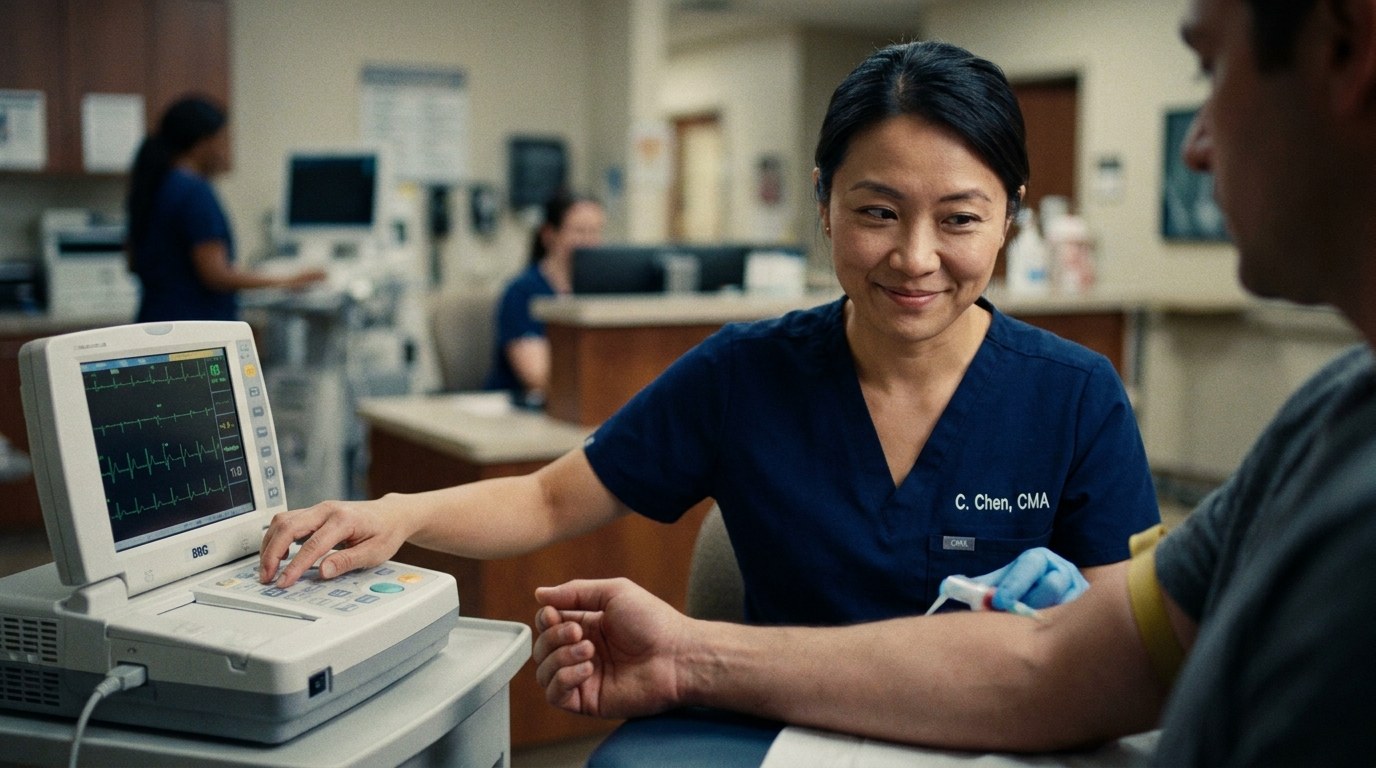
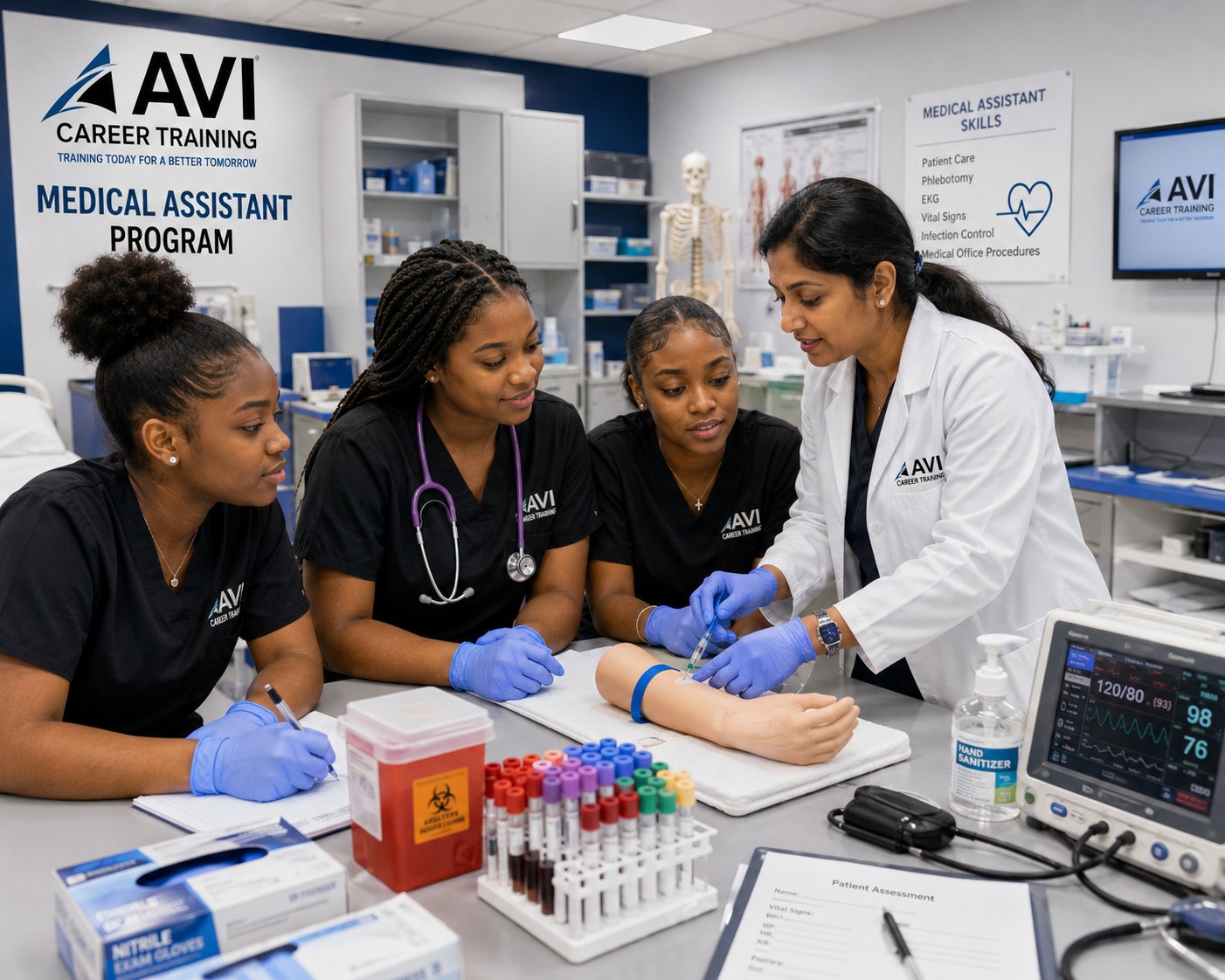
A medical assistant (MA) works in physician offices, clinics, or outpatient care facilities — handling a mix of administrative tasks and basic clinical duties under direct physician supervision.
On the administrative side, MAs schedule appointments, manage patient records, handle billing codes, and process insurance paperwork. On the clinical side, they may take vital signs, prep patients for exams, draw blood, or administer injections — always operating within a physician’s scope and direction.
It’s meaningful work, but the autonomy is limited by design. MAs function as support staff within a physician-led care model. Every clinical decision flows through the doctor.
Training and Credentialing for MAs in Virginia
Here’s something most career comparison articles skip: Virginia does not require medical assistants to hold a state license. There is no Virginia State Board exam for MAs. Certification programs from organizations like the American Association of Medical Assistants (AAMA) or the National Healthcareer Association (NHA) exist, but they are voluntary — and whether an employer requires them varies widely.
That means the credential you earn as an MA is largely employer-dependent, not state-recognized in the same formal way as a beauty or wellness license.
A typical MA program runs 12–24 months — either a certificate program at a community college or a full associate degree. Tuition varies, but community college programs commonly range from $8,000–$20,000 before financial aid.
—
What Does an Esthetician Do — And Where Do They Work?
An esthetician is a licensed skin care professional — and in 2025, that title covers far more than facials and waxing.
Licensed estheticians analyze skin conditions, perform chemical exfoliants and enzyme treatments, administer laser and light-based therapies (with advanced training), and provide pre- and post-surgical skin care in clinical settings. In Virginia, estheticians work in day spas, medical spas, plastic surgery offices, dermatology clinics, and luxury hotels — many of the same environments where you’d find a medical assistant .
The clinical overlap is real. A licensed esthetician in a Fairfax County medspa may spend her day consulting with patients on skin rejuvenation treatments, performing laser hair removal, and coordinating care with supervising physicians. The setting looks and feels very similar to a medical office — but she built her career through a beauty and wellness training program, not an allied health degree.
What Makes Esthetics a Healthcare-Adjacent Career?
The phrase “healthcare-adjacent beauty careers” captures this perfectly. Esthetics sits at the intersection of wellness, appearance medicine, and skin science. Advanced programs — like those covering cosmetic laser technology or electrolysis — push even further into clinical territory, working alongside dermatologists and cosmetic surgeons as part of an integrated care team.
Ready to explore what a skin care career could look like for you? Start your application at AVI Career Training today.
—
Training Time, Cost, and Licensing Compared
This is where the paths diverge most sharply — and where esthetics often wins for career changers and new students who want to get moving fast.
📊 Side-by-Side Comparison
| Factor | Medical Assistant | Esthetician (Virginia) |
|---|---|---|
| Training Length | 12–24 months | ~5–8 months (600 hours) |
| State License Required? | No — Virginia has no MA licensure | Yes — Virginia State Board exam (DPOR) |
| Credential Portability | Employer-dependent; voluntary certification | State-issued license — portable and verifiable |
| Typical Tuition | $8,000–$20,000+ | Contact AVI for current tuition |
| Time to First Job | After program completion + optional certification | Immediately upon passing State Board |
Virginia’s Esthetics Licensing Path
To become a licensed esthetician in Virginia, you must complete 600 clock hours of approved training, then pass both the written and practical examinations administered by the Virginia Department of Professional and Occupational Regulation (DPOR). Once you pass, you hold a state-issued license — recognized across Virginia and transferable to most other states through reciprocity agreements.
That state license matters. It’s not just a certificate from a school. It’s a government-issued credential that tells every employer, spa, clinic, and client: this person met the standard.
The Faster Path to Income
For someone who needs to transition into a new career without spending two years back in school, esthetics offers a clear advantage. You can complete your training, sit for boards, and walk into your first licensed position — all within the same calendar year you enrolled. That’s a timeline most MA programs simply can’t match.
Note: Federal financial aid (Title IV/FAFSA) eligibility varies by program length and school approval. Contact AVI admissions directly for current tuition figures and payment options for specific programs.
—
Esthetician vs. Medical Assistant Salary in Northern Virginia
Salary is where this comparison gets genuinely interesting — especially if you’re looking at the DC metro market.
According to the U.S. Bureau of Labor Statistics, the national median salary for medical assistants sits around $42,000 per year. In the Washington–Arlington–Alexandria metro area, that figure typically runs $5,000–$8,000 higher than the national median — reflecting the region’s higher cost of living and competitive healthcare labor market.
Esthetician salaries nationally range from approximately $39,000–$47,000, but that spread hides the real story. Commission-based pay structures in medical spas, performance bonuses, and tips can push total compensation well above the base. Licensed estheticians and cosmetic laser technicians working in high-end Northern Virginia medspas — particularly in the Tysons Corner and Fairfax corridor — frequently report total earnings of $50,000–$75,000+, according to industry surveys and employer postings in the region.
National Median Salary
Northern Virginia Market
Training Requirement
Why the Earnings Gap Widens Over Time
A medical assistant ‘s compensation is largely fixed by the employer — hourly or salaried, with little upside tied to personal performance. An esthetician’s income, especially in a medspa or private clinic, often grows with her client base, service menu, and skill set. Add advanced certifications in laser technology or electrolysis, and you’re adding new revenue streams without starting over.
> “I thought I needed a healthcare degree to work in a clinical setting,” said one AVI graduate who now works at a Tysons-area medspa. “Getting my esthetics license opened the exact same door — and I was working within months of graduating, not years.”
—
Why Northern Virginia Is a Top Market for Skin and Laser Careers
Northern Virginia isn’t just a good market for esthetics — it’s one of the strongest medspa markets in the entire country.
Fairfax County consistently ranks among the wealthiest counties in the United States. The Tysons Corner corridor is home to a dense concentration of cosmetic dermatology practices, plastic surgery centers, and luxury medical spas — all actively hiring licensed estheticians and laser technicians. The proximity to Washington, D.C. adds a client base of federal professionals, diplomats, and business executives with discretionary income and high expectations for appearance medicine services.
Diversity Is a Career Advantage Here
Northern Virginia is also one of the most ethnically diverse regions in the Mid-Atlantic. Clients across the DMV area bring an extraordinary range of skin tones, textures, and care needs — and employers are actively seeking estheticians trained to work skillfully across all of them.
At AVI Career Training, inclusive technique is built into the curriculum from day one. Students learn to analyze and treat every skin tone — not as an afterthought, but as a core competency. That makes AVI graduates highly competitive in a market that demands it.
The Cosmetic Laser Technician Advantage
For students interested in the most clinical end of esthetics, the Cosmetic Laser Technician program at AVI opens doors to laser hair removal, skin resurfacing, and photofacial treatments — all in high demand at Northern Virginia’s medical spas and dermatology offices. This is a healthcare-adjacent beauty career in the truest sense: clinical environment, physician-adjacent team, science-based treatments.
The electrolysis specialty is another path worth considering — permanent hair reduction is a niche, credentialed service with strong demand and limited provider supply throughout the DMV area.
—
Two Career Changers Who Made the Shift
From Healthcare Administration to Medical Esthetics
Denise spent six years as a healthcare administrator at a Northern Virginia physician group. She knew the clinical world well — but she wanted something more hands-on, more personal, and more her own. She researched MA programs but couldn’t justify another 18 months of school and the limited upside on the back end.
She enrolled in an esthetics program instead. Within eight months, she had her Virginia State Board license. Within a year, she was working in a Tysons-area medspa — the same type of medical environment she’d always worked in, but now as a licensed professional building her own client relationships and earning commissions on top of her base.
From Retail to Laser Technology
Marcus had been working retail management for years when he started looking into healthcare careers. He initially searched “fastest healthcare careers without a degree” — which led him to compare MA and esthetics pathways. He was drawn to the clinical side of esthetics: the laser technology, the skin science, the opportunity to work alongside cosmetic dermatologists.
He completed his Esthetics training and added advanced laser certification. Today he works as a cosmetic laser technician at a medical spa near Fairfax, performing laser hair removal and skin rejuvenation treatments — and earning well above what he made in retail management, in a fraction of the time it would have taken to complete an associate degree.
—
Frequently Asked Questions
Q: Is a medical assistant similar to an esthetician?
A: They share some overlap in clinical work environments — both may work in medical offices, dermatology practices, or medspa settings — but their roles are very different. Medical assistants handle administrative and basic clinical support tasks under physician supervision. Estheticians are licensed skin care specialists who perform treatments directly with clients, often with greater autonomy in their day-to-day work.
Q: Which pays more — a medical assistant or an esthetician?
A: In the Northern Virginia market, medical estheticians and cosmetic laser technicians frequently out-earn general medical assistants. The national median MA salary is around $42,000; medical estheticians in the DC metro area often earn $50,000–$75,000+ due to commission-based pay structures and high demand at luxury medspas. Individual results vary based on employer, experience, and service mix.
Q: Can I work in a medical setting as an esthetician?
A: Yes. Licensed estheticians work regularly in medical spas, plastic surgery offices, dermatology clinics, and cosmetic medicine practices. With advanced training in laser technology or medical esthetics, you can become a core part of a physician-led aesthetic care team.
Q: How long does it take to become a medical esthetician in Virginia?
A: Virginia requires 600 clock hours of esthetics training plus passing the Virginia State Board written and practical exams administered by the DPOR. Depending on your schedule, this can be completed in approximately 5–8 months. Advanced specializations in laser technology may add additional training time.
Q: What beauty careers are similar to medical assisting?
A: The closest beauty and wellness career parallels to medical assisting include: licensed esthetician (especially in medical spa or dermatology settings), Cosmetic Laser Technician, and electrolysis specialist. All three involve clinical environments, science-based treatments, and client care — without requiring a two-year allied health degree.
Q: Does Virginia require a license for medical assistants?
A: No. Virginia does not require medical assistants to hold a state license. MA certification is voluntary and employer-dependent. By contrast, estheticians in Virginia must hold a state-issued license through the DPOR — making it a more formally recognized and portable professional credential.
Q: Where can I get esthetician training near Tysons Corner, Virginia?
A: AVI Career Training, located at 1595 Spring Hill Rd #720 in Vienna, VA (minutes from Tysons Corner), offers COE-accredited Esthetics training aligned with Virginia’s 600-hour licensing requirement. Call (703) 943-9841 or apply online to get started.
—