Medical Assistant vs. Esthetician: Which Career Is Right for You?
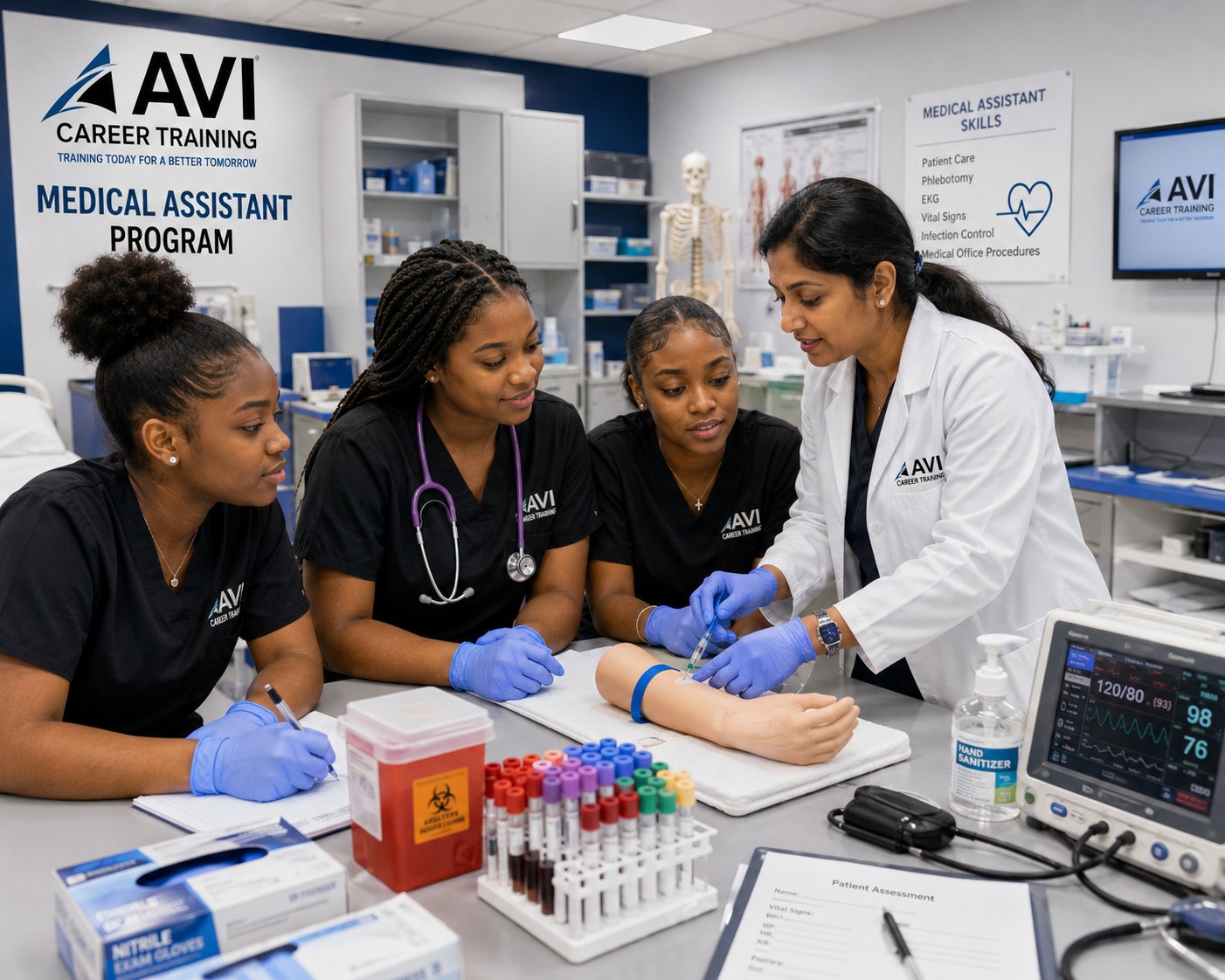
If you’re weighing a medical assistant vs. esthetician career, here’s the direct answer: both paths lead to fulfilling, client-facing work — but they differ significantly in training time, earning potential, and where your ceiling actually sits. For many prospective students in the Northern Virginia and DMV area, the medical esthetician route offers everything they’re drawn to about healthcare-adjacent work, with faster licensing, stronger income upside, and a career built around skilled, hands-on client care.
This guide breaks down both paths side by side — salary, training, licensing, and daily reality — so you can make a clear-eyed decision about where to invest your time and tuition. Apply to AVI Career Training today and take the first step toward licensure.
—
⚡ Key Takeaways
- Virginia esthetics licensure requires 600 clock hours of training — completable in as few as 5–7 months full-time
- Medical assistant programs typically take 9–24 months at a community college or vocational school
- Medical assistants earn a U.S. median of ~$38,270/year (BLS, May 2023); clinical and med spa estheticians in the DC metro market frequently exceed that with commission
- Cosmetic laser technicians in Virginia earn $45,000–$70,000+ depending on specialization and setting
- AVI Career Training in Vienna, VA is COE-accredited and SCHEV-certified — offering Esthetics and Cosmetic Laser Technology programs designed to get you to licensure efficiently
—
What Does a Medical Assistant Actually Do Day-to-Day?
A medical assistant performs a mix of administrative and basic clinical support tasks inside physician offices, urgent care clinics, and hospital outpatient departments. The role is genuinely useful and genuinely demanding — but its scope is more limited than many candidates expect when they first search the term.
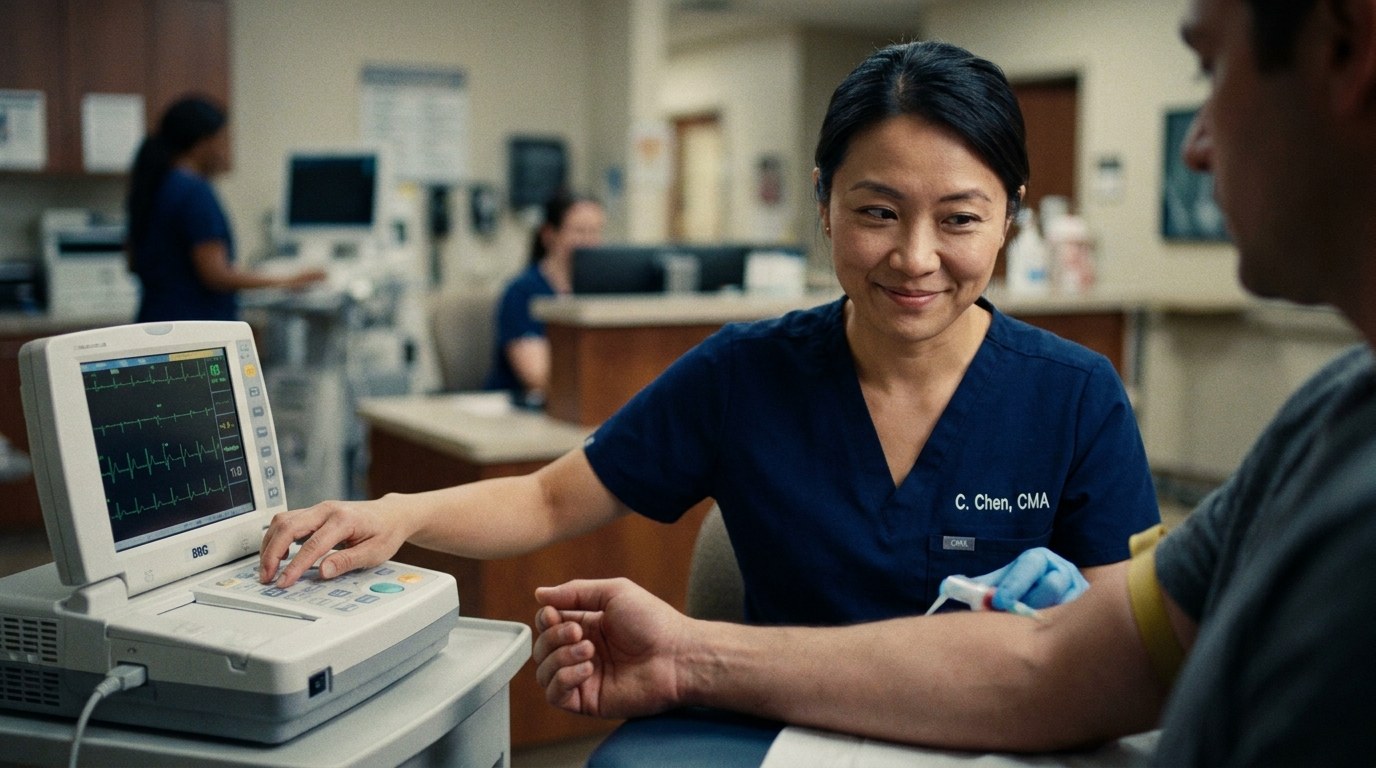
On the clinical side, medical assistants take vital signs, prepare exam rooms, draw blood, administer injections, and assist with minor procedures. On the administrative side, they schedule appointments, handle patient records, process insurance paperwork, and manage billing workflows. The ratio of administrative to clinical work varies widely by employer — some MAs spend more than half their shift behind a desk.
What the role is not: Medical assistants are not licensed practitioners. They work under the direct supervision of a licensed physician, nurse practitioner, or PA. They cannot independently diagnose, treat, or prescribe. Career advancement typically requires returning to school for a higher-level credential (Registered Nurse, LPN, or similar), which means additional years and tuition.
For students drawn to healthcare because they want hands-on, skilled, client-focused work — especially anything related to skin, aesthetics, or cosmetic procedures — the medical assistant role often falls short of that vision. That gap is exactly where the medical esthetician career sits.
—
What Is a Medical Esthetician — And How Is It Different?
A medical esthetician is a licensed esthetics professional who specializes in clinical skin care treatments, typically working in dermatology offices, plastic surgery practices, medical spas, and cosmetic laser clinics. This is the role many people are actually imagining when they search “medical assistant ” — they want proximity to healthcare, they want to work on skin, and they want their hands doing skilled, results-driven work.
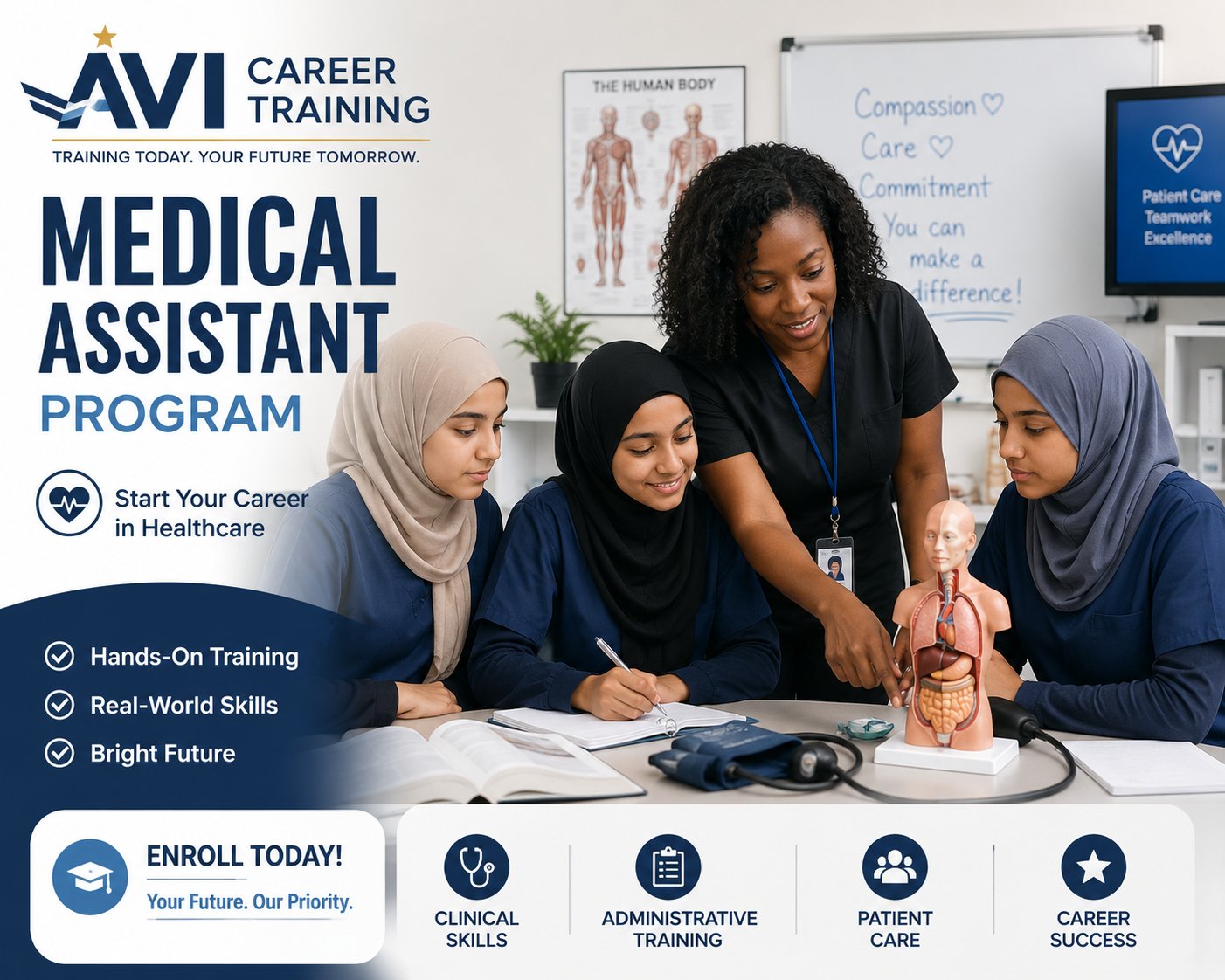
Medical estheticians perform advanced chemical peels, microdermabrasion, microneedling preparation, pre- and post-surgical skin care, and light-based therapies. In laser clinics and med spas, they may also operate IPL devices, laser hair removal equipment, and body contouring technology under physician oversight or within state-regulated scope. In Virginia, cosmetic laser and light therapy work falls under the esthetics licensing framework governed by the Virginia Department of Professional and Occupational Regulation (DPOR).
The distinction between a medical esthetician and a medical assistant is fundamental:
One role assists. The other performs. If you want to be the person clients book their appointments with — not the person who takes their blood pressure before they see someone else — the esthetics path is almost certainly the better fit.
Meet Jasmine. She came to AVI Career Training after two years as a front-desk coordinator at a dermatology practice in Tysons Corner. She watched the estheticians and laser techs every day — their income, their client relationships, their autonomy — and realized she wanted to be on that side of the door. After completing AVI’s Esthetics program in six months, she passed her Virginia State Board exam and was hired by the same practice — this time as a licensed esthetician delivering chemical peels and pre-procedure prep. Same building. Completely different career.
—
Salary, Job Outlook, and Earning Potential — Side by Side
Salary is where this comparison gets genuinely interesting — and where many assumptions about healthcare careers don’t hold up.
Medical Assistant
$38,270
U.S. Median Annual Salary
BLS, May 2023
Esthetician (Base)
~$37,000
U.S. Median Base
+ commission & tips in clinical/med spa settings
Cosmetic Laser Technician
$45K–$70K+
Varies by setting & specialization
Industry salary surveys (approximate)
On paper, base salaries for medical assistants and estheticians look nearly identical. But that comparison misses a critical structural difference: compensation architecture.
Medical assistants are almost always salaried employees with fixed pay scales. Raises are incremental and tied to institutional HR structures. Income growth typically requires additional credentials or a different job title entirely.
Estheticians — particularly those in clinical and med spa environments in the DC metro area — often earn a base wage plus commission on services and retail sales, plus gratuities from loyal clients. Northern Virginia wages skew meaningfully higher than national medians due to the DC metro cost of living. A clinical esthetician in a high-volume Tysons Corner or Arlington med spa can realistically earn $55,000–$70,000+ annually within a few years of licensure, especially with a Cosmetic Laser Technology specialization.
The laser technology specialization is worth highlighting. Cosmetic laser technicians in Virginia operate advanced light-based devices for hair removal, skin resurfacing, pigmentation treatment, and body contouring. This specialization commands the highest earning potential in the esthetics field — and AVI Career Training’s Cosmetic Laser Technology program is one of the few in Northern Virginia offering this training.
Job Outlook
The U.S. Bureau of Labor Statistics projects skin care specialist employment to grow 8% through 2033 — faster than average for all occupations. The med spa and clinical aesthetics sector is one of the fastest-growing segments of the beauty and wellness industry, driven by consumer demand for non-surgical cosmetic procedures and clinical-grade skin treatments.
Medical assistant employment is also growing, but the role remains largely tied to physician office settings with limited earning upside.
—
Training Time and Licensing Requirements in Virginia
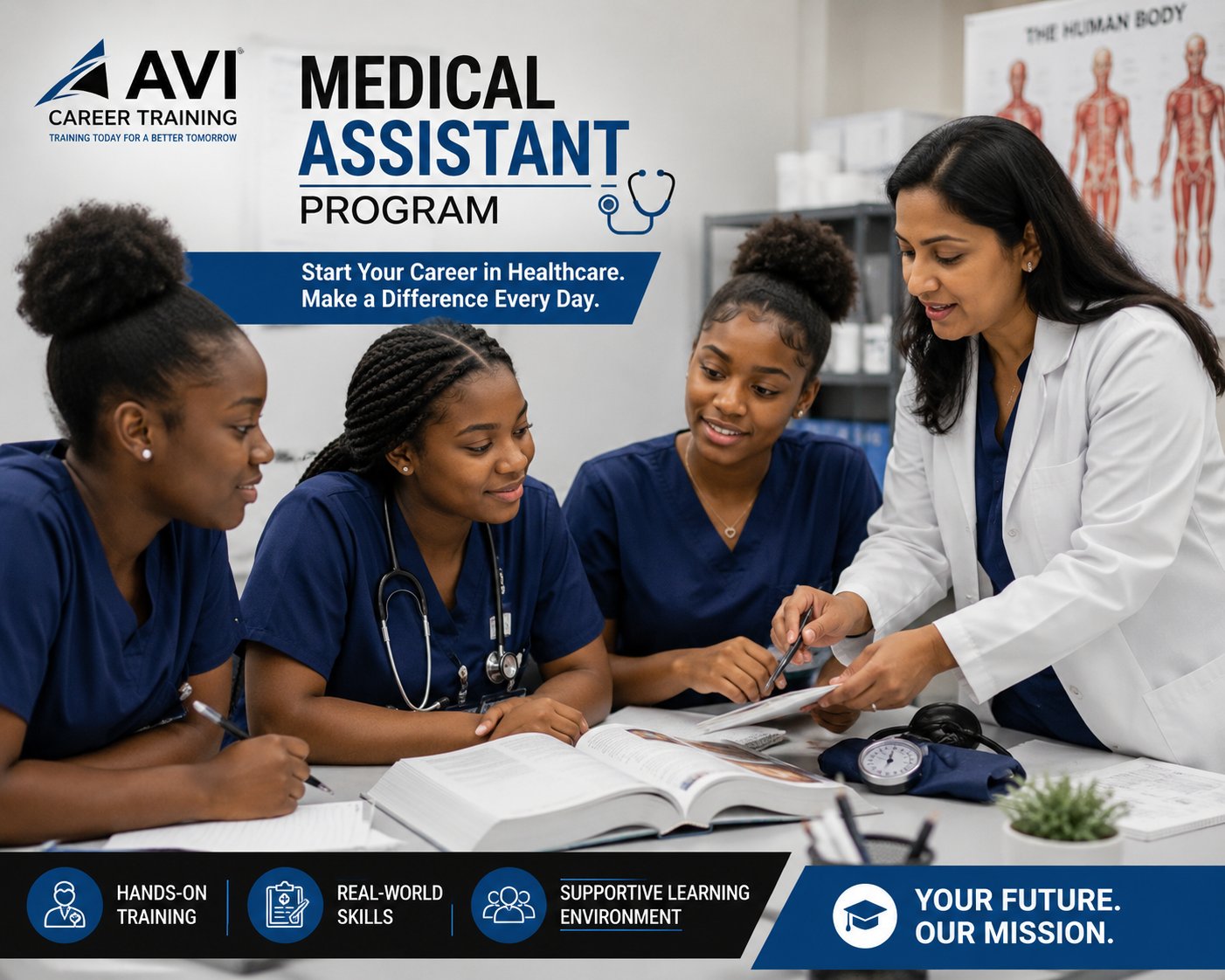
Training investment is one of the sharpest differences between these two paths — and it matters a lot when you’re weighing time out of the workforce against future earnings.
Medical Assistant Training
Medical assistant programs at community colleges and vocational schools typically run 9 to 24 months, depending on whether the program is a diploma, certificate, or associate degree format. Many programs require prerequisite courses in anatomy, medical terminology, or office administration before students can enter clinical modules. Externship requirements add additional months before graduation.
In Virginia, medical assistants are not state-licensed — they work under a physician’s license and credentials vary by employer preference. Many positions require or prefer certification from organizations like the American Association of Medical Assistants (CMA credential), which requires passing an additional national exam after graduation.
Esthetics Training and Virginia State Licensure
Virginia esthetics licensure is governed by the Virginia Board of Cosmetology under the Virginia Department of Professional and Occupational Regulation (DPOR). Requirements are straightforward:
At AVI Career Training’s Vienna, Virginia campus, the Basic Esthetics program is designed to complete those 600 hours efficiently — in approximately 5 to 7 months of full-time study. That’s potentially a full year faster than a medical assistant program , with direct, state-recognized licensure at the finish line.
AVI is SCHEV-certified, meaning its programs meet Virginia’s state approval standards for licensure-track training. AVI is also COE Accredited by the Council on Occupational Education (COE) — one of the most respected accrediting bodies in vocational education.
Meet Carlos. He spent three years researching medical assistant programs while working overnight shifts at a hotel in Fairfax County. Every program he found was 12 months minimum and expensive. A friend mentioned AVI’s esthetics program, and he was skeptical — he didn’t see himself as a “beauty school” person. Six months later, he had his Virginia esthetics license and a job offer from a dermatology-adjacent med spa in Arlington. He now earns more than most MA programs in his area promised, and he did it in half the time he expected.
Ready to start? Apply to AVI’s Esthetics program here.
Cosmetic Laser Technology: The Advanced Option
Students who want to specialize in the highest-earning clinical segment can pursue AVI’s Cosmetic Laser Technology program after completing esthetics training. This specialization covers laser physics, device operation, safety protocols, and client consultation for laser hair removal, photofacials, and related treatments. In Virginia, laser and light therapy technicians operate within the esthetics licensing framework — meaning your esthetics license is the foundation everything builds on.
—
Healthcare-Adjacent Beauty Careers: What They Look Like in the Real World
“Healthcare-adjacent beauty careers” is the honest label for what most people searching “medical assistant ” are actually trying to find. These are roles that live at the intersection of clinical skill and personal care — environments where your work has measurable results, where clients return because of you, and where expertise in skin, body, and wellness is genuinely valued.
Here’s what that landscape looks like in Northern Virginia and the broader DMV area:
Medical Spa Esthetician
Med spas are one of the fastest-growing employer categories for licensed estheticians in the DC metro area. Tysons Corner, McLean, Arlington, and Bethesda are all densely populated with high-end med spas serving an affluent, appearance-conscious clientele. These roles involve advanced chemical peels, microdermabrasion, dermaplaning, LED therapy, and often laser treatments. Compensation typically includes base pay plus commission.
Dermatology Clinic Esthetician
Dermatology practices increasingly employ licensed estheticians to handle clinical-grade skin care treatments that fall outside the physician’s core scope — pre- and post-procedure care, acne management programs, barrier repair protocols, and maintenance treatments for patients undergoing medical dermatology treatment. This is one of the most direct parallels to the “medical” environment many candidates seek.
Plastic Surgery Practice Esthetician
Pre- and post-surgical skin preparation and recovery support is a specialized niche within clinical esthetics. Estheticians in plastic surgery practices work closely with surgeons and nursing staff to optimize patient outcomes — a genuinely clinical role that commands strong compensation and professional respect.
Cosmetic Laser Technician
The most technical and highest-earning role in clinical esthetics. Laser technicians operate FDA-cleared devices for hair reduction, pigment correction, skin resurfacing, and vascular treatments. In Northern Virginia’s competitive cosmetic market, experienced laser technicians are in consistent demand.
All of these paths begin with the same foundation: a Virginia esthetics license and training at a SCHEV-certified school like AVI Career Training in Vienna, VA.
—
Which Path Leads to the Career You Actually Want?
Use this framework to make your decision clearly.
Choose Medical Assistant If You Want To:
- Work directly inside a physician’s office or hospital outpatient setting
- Focus on clinical support tasks (vitals, injections, patient prep) and administrative workflows
- Eventually pursue an RN, LPN, or PA credential and need a stepping stone
- Prefer a salaried, fixed-schedule role without commission-based income variability
Choose Esthetics / Clinical Beauty If You Want To:
- Be the practitioner clients book appointments with — not the support staff
- Specialize in skin, aesthetics, laser, and cosmetic treatments
- Reach licensure in 5–7 months and start earning faster
- Work in med spas, dermatology offices, or laser clinics in Northern Virginia
- Build a commission- and tip-driven income with strong upside potential
- Work on clients across all skin tones — AVI’s curriculum is built for inclusive, diverse practice
If the second list sounds more like you, AVI Career Training in Vienna, Virginia is where your path begins. COE-accredited, SCHEV-certified, and located in the heart of the Tysons Corner area, AVI offers the Esthetics and Cosmetic Laser Technology programs that put you on the fastest, most credible route to a clinical beauty career in the DMV.
—
Frequently Asked Questions
Q: What is the difference between a medical assistant and a medical esthetician?
A: A medical assistant provides clinical and administrative support inside a physician’s office — taking vitals, rooming patients, and handling paperwork. A medical esthetician is a licensed skin care professional who delivers aesthetic treatments — peels, microdermabrasion, laser services — directly to clients, typically in med spas, dermatology clinics, or plastic surgery practices. Medical estheticians are the practitioners; medical assistants support the practitioners.
Q: Can an esthetician work in a medical office or dermatology clinic?
A: Yes. Licensed estheticians are regularly employed in dermatology offices, plastic surgery practices, and medical spas throughout Northern Virginia and the DMV area. These clinical settings hire estheticians specifically for their skin care expertise — performing pre- and post-procedure treatments, acne management protocols, and maintenance skin care for medical dermatology patients.
Q: How long does it take to become a medical esthetician in Virginia?
A: Virginia requires 600 clock hours of esthetics training to qualify for the state licensure exam. At AVI Career Training in Vienna, VA, full-time students can complete those hours in approximately 5 to 7 months. After passing the Virginia State Board written and practical exams administered through DPOR, graduates are licensed estheticians eligible to work in clinical and med spa settings.
Q: Do medical assistants or estheticians make more money?
A: Base salaries are comparable — medical assistants earn a U.S. median of ~$38,270/year (BLS, May 2023), while estheticians earn a similar base nationally. The key difference is earning structure: estheticians in clinical and med spa settings in the DC metro area frequently earn commission on services and retail, plus gratuities, which pushes total compensation significantly higher. Cosmetic laser technicians — a specialization built on esthetics licensure — earn $45,000–$70,000+ depending on setting and experience.