Medical Assistant vs. Esthetician: Which Career Is Right for You?
The medical assistant vs. esthetician career decision comes down to three things: how fast you want to be working, what kind of work actually excites you, and what the job market looks like where you live. Both paths lead to real, careers — but they are built differently, licensed differently, and feel completely different day to day.
This guide breaks down both careers side by side, introduces a third path most comparison articles skip entirely (medical esthetics), and gives you the Virginia-specific numbers you need to make a smart decision.
> Key Takeaways
> – Virginia requires 600 clock hours to become a licensed esthetician — no college degree required
> – Medical assistant programs typically run 9–24 months; Virginia does not require state licensure for MAs
> – Medical estheticians work in med spas and dermatology clinics and can earn above the standard esthetics median
> – The Northern Virginia / DC metro market pays a premium for both careers compared to national medians
> – AVI Career Training’s Esthetics and Cosmetic Laser Technician programs are both COE-accredited and eligible for financial aid — apply now to get started
—
What Does a Medical Assistant Actually Do?
A medical assistant (MA) supports physicians and clinical staff in outpatient settings — think doctor’s offices, urgent care clinics, and specialty practices. The role blends administrative work with hands-on clinical tasks.
On any given day, a medical assistant might:
It is genuinely useful, patient-facing work. For people who want to be in a healthcare environment without committing to nursing school or a multi-year clinical degree, it can be a reasonable entry point.
Training and Certification Requirements in Virginia
Virginia does not require medical assistants to hold a state license. You can work as an MA in Virginia without any specific certification, though most employers strongly prefer — and increasingly require — candidates who hold a national credential.
The two most recognized national credentials are:
Neither is a Virginia state license. Both require passing a national exam, and the CMA requires graduation from an accredited program.
MA programs are typically offered at community colleges and vocational schools. Completion timelines range from 9 months for a certificate program to 24 months for an associate degree. That is a meaningful time investment — especially if you are a career-changer who needs to start generating income sooner rather than later.
What Medical Assistants Earn
According to the U.S. Bureau of Labor Statistics, the national median annual wage for medical assistants is approximately $42,000 as of recent data. The Northern Virginia and Washington, DC metro area consistently pays above national medians due to the high cost of living and concentration of federal healthcare infrastructure, major hospital systems, and specialty practices.
Job growth for MAs is solid — the BLS projects above-average growth driven by an aging population and expanded outpatient care. That said, the role has real ceiling limitations. Without additional clinical credentials (LPN, RN, physician assistant), most MAs reach an income plateau fairly quickly.
—
What Is a Medical Esthetician — and How Is It Different?
Most career comparison articles pit medical assistants against standard estheticians. That misses something important: the medical esthetician is a distinct specialty that belongs in this conversation.
A medical esthetician is a licensed esthetician who works in clinical environments — medical spas (med spas), dermatology offices, plastic surgery practices, and laser clinics. They perform skincare treatments that go deeper than what you find in a day spa, including:
The key distinction between a medical esthetician and a medical assistant is scope of practice and setting. MAs work under physician supervision to support clinical operations broadly — they do not specialize in skin. Medical estheticians are licensed skincare specialists who apply that expertise in a medical or clinical context.
Why This Matters for Your Career Decision
If you are drawn to healthcare because you want to help people feel better about their appearance — skin, aging, confidence — medical esthetics is often a more direct and more creatively satisfying path than medical assisting. You are not filing charts or drawing blood. You are doing hands-on skin treatments, building client relationships, and working with technology like lasers and advanced skincare systems.
And critically: you can get there faster.
—
Training Timeline and Licensing Requirements in Virginia
This is where the two paths diverge most sharply — and where the medical esthetics route often wins for career-changers who need to move quickly.
Becoming a Licensed Esthetician in Virginia
Virginia’s esthetics licensing requirements are set by the Virginia Board of Barbering and Cosmetology, which falls under the Virginia Department of Professional and Occupational Regulation (DPOR).
To become a licensed esthetician in Virginia, you must:
1. Complete 600 clock hours of esthetics training at a state-approved school
2. Pass the Virginia State Board written and practical exams
3. Submit your license application and fees to DPOR
That is it. No college degree. No prerequisite coursework. Just 600 hours of hands-on training followed by the board exam.
For context, Virginia’s full Cosmetology license requires 1,500 clock hours — more than double. Esthetics is one of the more accessible paths to a licensed, professional career in the state.
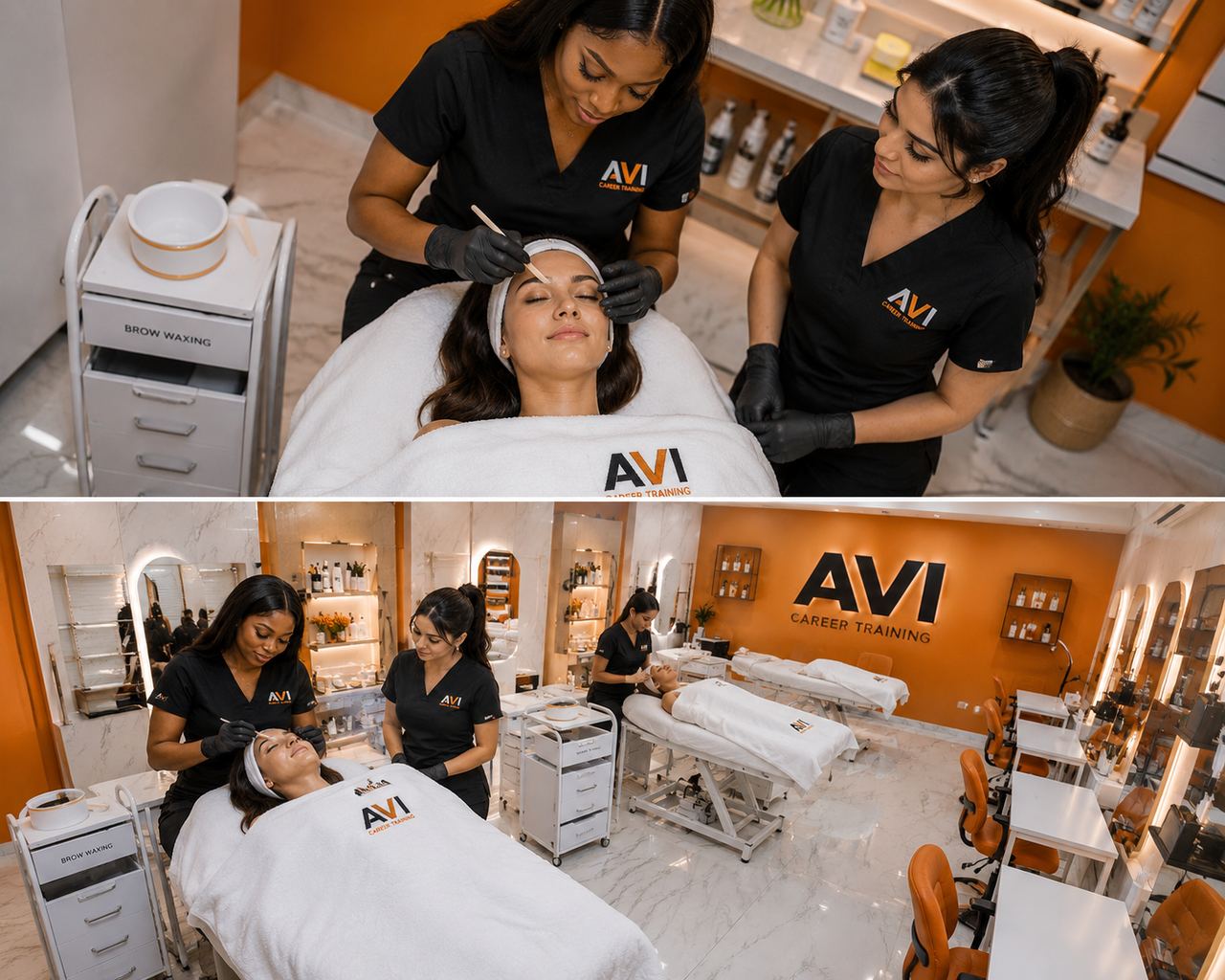
At AVI Career Training in Vienna, VA, esthetics students train in a real clinic environment under licensed instructors. AVI is COE-accredited and SCHEV-certified, which means the program meets rigorous educational standards and qualifies students for federal financial aid.
Adding Cosmetic Laser Technology
Virginia also regulates cosmetic laser procedures. If you want to perform laser treatments — one of the highest-demand services in med spas — you will need specific laser training beyond a basic esthetics license.
AVI’s Cosmetic Laser Technician program prepares students for exactly this work: laser hair removal, skin rejuvenation, and light-based treatments in clinical and med spa settings. This credential opens doors to some of the most competitive and well-compensated positions in the beauty and wellness industry.
Medical Assistant Training in Virginia (Side by Side)
| | Esthetician (Virginia) | Medical Assistant (Virginia) |
|—|—|—|
| State License Required? | Yes — Virginia Board of Barbering and Cosmetology | No — no Virginia state license required |
| Training Length | 600 clock hours (esthetics) | 9–24 months (certificate to associate degree) |
| National Credential? | Virginia State Board Exam | Optional: CMA (AAMA) or RMA (AMT) |
| Where You Train | COE-accredited beauty/wellness school | Community college or vocational school |
| Financial Aid Eligible? | Yes (at accredited schools like AVI) | Yes |
| GI Bill® Eligible? | Yes (at AVI) | Varies by institution |
The esthetics path is shorter, more focused, and leads directly to licensure. For a career-changer who wants to be working within months rather than two years, that timeline difference is significant.
—
Earning Potential and Job Settings in Northern Virginia
Esthetician Salary in Virginia
The national median salary for estheticians is approximately $37,000–$48,000 annually according to BLS data. The Northern Virginia / DC metro area is one of the highest-paying markets in the country for this profession, driven by:
Estheticians working in medical settings or holding laser certifications consistently earn at the higher end of the range. Tips, retail commissions, and booth rental income can push total compensation significantly above the base salary median.
Medical Esthetician Earning Potential
Medical estheticians — those working in med spas and dermatology settings — typically earn more than estheticians in traditional day spas. The combination of clinical skills, laser certifications, and medical-grade treatment knowledge commands premium compensation. Some med spa positions in the Northern Virginia market include structured bonuses tied to treatment volume and retail sales.
Medical Assistant Salary in Virginia
Medical assistants in the Virginia / DC metro area earn above the national median of approximately $42,000. Northern Virginia’s healthcare market — anchored by Inova Health System, George Washington University Hospital, and numerous specialty practices — creates consistent demand. That said, MA compensation can plateau without additional clinical credentials, and the role’s salary ceiling is generally lower than skilled esthetics professionals working in high-end clinical settings.
Where Each Role Works
| Setting | Medical Assistant | Esthetician / Medical Esthetician |
|—|—|—|
| Doctor’s office / clinic | ✓ | Limited |
| Med spa | Rare | ✓ ✓ |
| Dermatology practice | ✓ (administrative/clinical support) | ✓ (skin treatments) |
| Plastic surgery office | ✓ | ✓ |
| Day spa / resort spa | ✗ | ✓ |
| Laser clinic | ✗ | ✓ (with laser certification) |
| Self-employed / booth rental | ✗ | ✓ |
One of the biggest advantages of the esthetics path: flexibility. Licensed estheticians can work in med spas, traditional spas, salons, or run their own business. Medical assistants are almost exclusively employed by clinical practices or hospitals. For career-changers who value long-term flexibility or the option to be their own boss, that matters.
—
Two Career-Changers, Two Different Paths
From Retail Management to Med Spa
Marcus had managed a retail store for eight years when he started researching healthcare careers. He liked the idea of working with people and helping them feel good, but the idea of two more years in school before he could start earning felt overwhelming. A friend mentioned med spas, and Marcus started looking into what it actually took to work in one.
He found that Virginia only required 600 hours of esthetics training to sit for the state board exam. He enrolled in AVI’s esthetics program, completed his hours, passed the Virginia State Board exam, and within the same year had a position at a medical spa in Tysons Corner. He later added the Cosmetic Laser Technician credential and moved into laser treatments — the highest-revenue services the spa offered.
The Medical Assistant Who Wanted More
Priya had worked as a medical assistant for three years at a primary care practice. She was good at her job, but the clinical environment — the paperwork, the pace, the administrative load — had worn her down. She had always been interested in skincare, and a conversation with a dermatologist she worked alongside made her realize medical esthetics was a real career, not just a hobby path.
She enrolled in Master Esthetics training, built on the clinical context she already had, and found a role at a dermatology-affiliated med spa where her background was a genuine advantage. The work was more creative, the schedule was more predictable, and she was finally doing the part of healthcare she actually loved — helping people feel confident in their skin.
—
Which Path Fits Your Goals — and Where to Start in Northern Virginia
If you are honestly weighing the medical assistant vs. esthetician career question, here is a direct framework:
Choose medical assisting if:
Choose esthetics or medical esthetics if:
Add Cosmetic Laser Technician training if:
The Northern Virginia market is one of the strongest in the country for both paths — but the med spa and aesthetic clinic sector in the DMV is growing fast, and credentialed estheticians with laser skills are well established.
—
Start Your Esthetics Career at AVI Career Training in Vienna, VA
AVI Career Training is a COE-accredited, SCHEV-certified school in Vienna, Virginia, offering hands-on programs in Basic Esthetics, Master Esthetics, Cosmetic Laser Technician, Massage Therapy, and more. Our students train in a real clinic environment under licensed industry professionals — and graduate ready to sit for state board exams and walk into competitive job markets.
Financial aid is available for those who qualify, and AVI proudly accepts the GI Bill® for eligible veterans and military-connected students.
If you are ready to explore the esthetics path — or just want to talk through your options with someone who knows the Virginia licensing landscape — we would love to hear from you.
📍 1595 Spring Hill Rd #720, Vienna, VA 22182
📞 (703) 943-9841
Apply now and take the first step toward your esthetics career.
—
For Virginia licensing requirements, visit the Virginia Department of Professional and Occupational Regulation (DPOR). For national salary data, see the U.S. Bureau of Labor Statistics Occupational Outlook Handbook.