
Medical Assistant Vocational Training vs. a 4-Year Degree
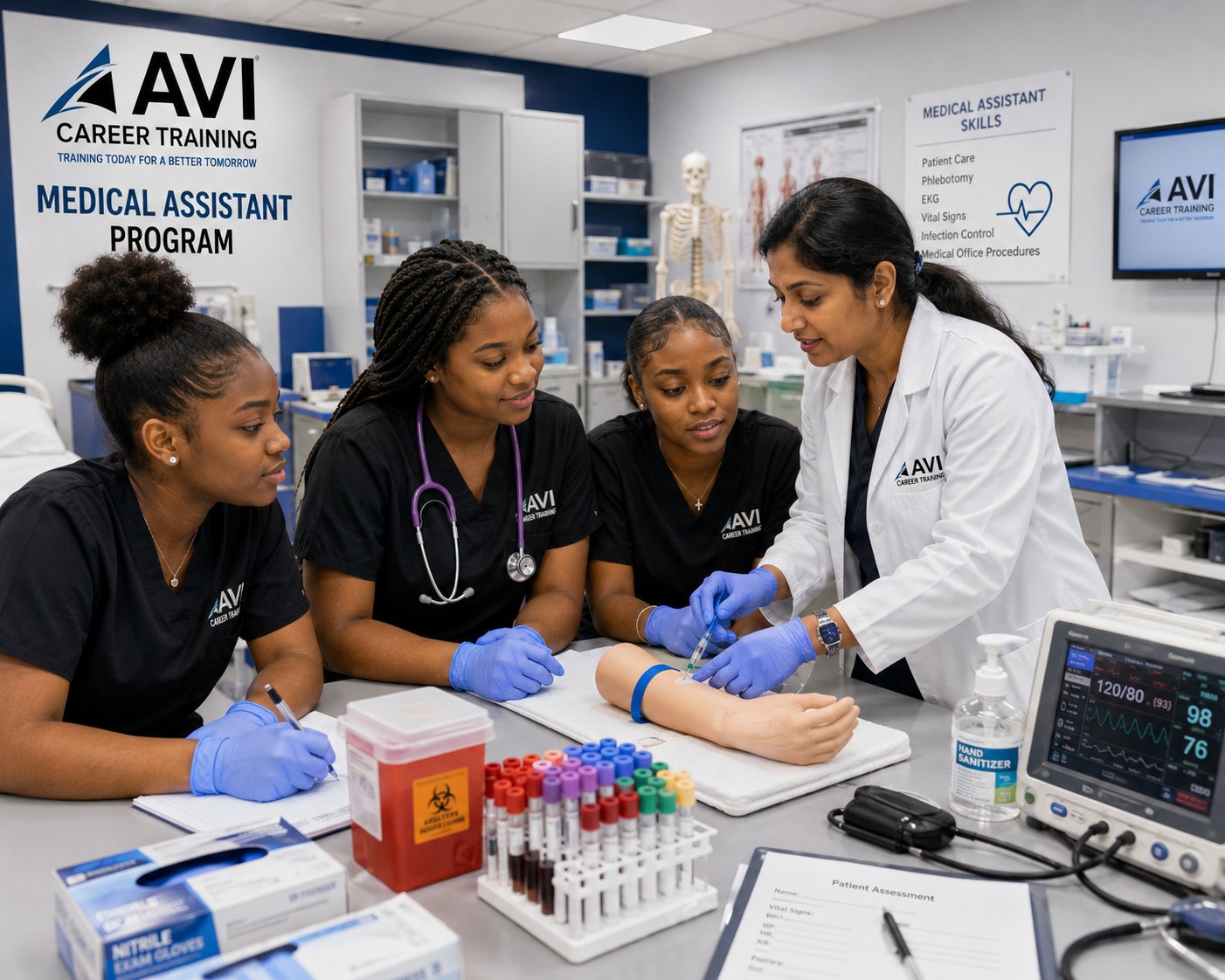
Medical assistant vocational training gets you into the workforce in 9–12 months — at a fraction of the cost of a 4-year degree — and in Virginia, no bachelor’s degree is required to work as a medical assistant . That’s the short answer. But the full picture involves salary data, opportunity cost, and a clear-eyed look at what each path actually delivers.
This guide breaks down both pathways side by side so you can make the decision that makes sense for your life, your timeline, and your finances.
Ready to take the faster path? Explore AVI’s programs and apply here.
—
- Medical assistant certificate programs typically take 9–12 months and cost $3,000–$15,000
- A 4-year bachelor’s degree can cost $40,000–$120,000+ — but does NOT significantly increase entry-level MA pay
- Virginia medical assistants earn a median wage of $39,680/year, largely regardless of degree level at entry
- A vocational graduate who starts working immediately can earn 3+ years of income while a 4-year student is still in class
- The same faster-smarter logic applies to licensed careers in esthetics, massage therapy, cosmetology, and nail technology
—
What Does Medical Assistant Training Actually Look Like?
There are three real paths into a medical assistant career, and they don’t all lead to the same place at the same speed.
Certificate or Diploma Programs
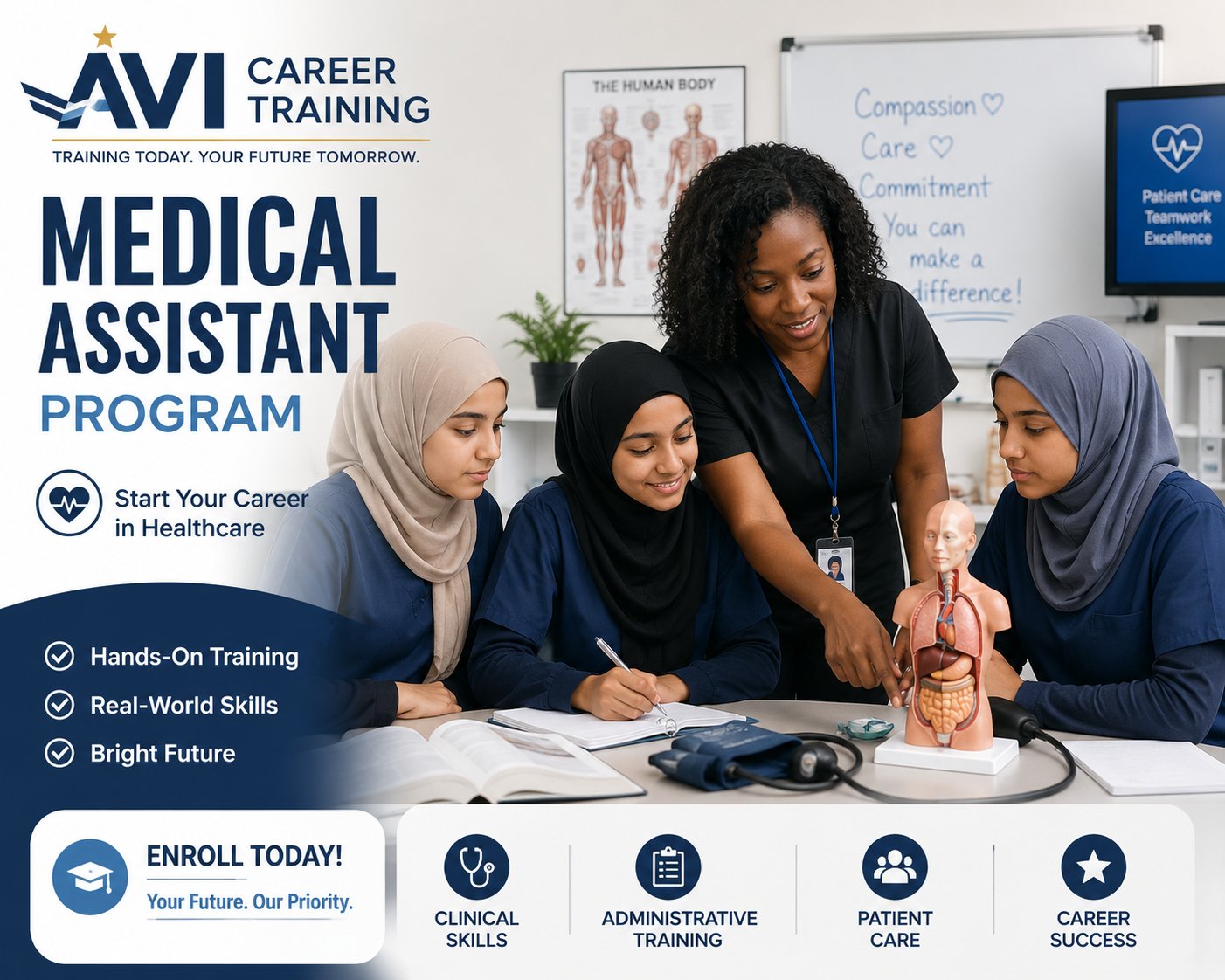
A medical assistant certificate program is the vocational route. These programs are offered at community colleges, technical schools, and accredited career training institutions. They run 9–12 months on average, cover clinical skills (phlebotomy, EKG, vital signs, injections) alongside administrative training (medical billing, scheduling, electronic health records), and prepare students for national certification exams like the CMA (AAMA) or RMA (AMT).
Cost range: $3,000–$15,000 depending on the school.
Associate’s Degree in Medical Assisting
A two-year associate’s degree from a community college or career college covers similar ground but adds general education requirements — English composition, math, psychology. It can strengthen your resume and may open doors in some clinical settings, but the core job duties remain the same as those performed by certificate holders.
Cost range: $8,000–$25,000.
Bachelor’s Degree (Health Sciences or Related Field)
Some students pursue a 4-year bachelor’s degree in health science, healthcare administration, or biology before entering clinical roles. A bachelor’s does not make you a more qualified medical assistant at the entry level — but it can position you for advancement into healthcare management, practice administration, or clinical coordination roles later in your career.
Cost range: $40,000–$120,000+ at public and private universities. (Source: NCES, 2023)
Here’s the central tension: all three pathways can qualify you for the same entry-level medical assistant position. Virginia does not require state licensure for medical assistants — certification is voluntary (though strongly preferred by employers) and achievable after either a certificate or associate’s program. A 4-year degree is not a requirement, and most employers don’t pay significantly more for one.
—
How Long Does Each Path Take — and What Does It Cost?
The timeline difference between vocational training and a 4-year degree is not a small gap. It’s years of your life and tens of thousands of dollars.
| Pathway | Program Length | Avg. Tuition Cost | Time to Employment | Typical Debt Load |
|---|---|---|---|---|
| Certificate / Diploma | 9–12 months | $3,000–$15,000 | 1–3 months post-graduation | Low–Moderate |
| Associate’s Degree | 2 years | $8,000–$25,000 | 2–4 months post-graduation | Moderate |
| Bachelor’s Degree | 4 years | $40,000–$120,000+ | 3–6 months post-graduation | High |
A medical assistant certificate program takes 9–12 months at a vocational school or community college. An associate’s degree takes 2 years. A bachelor’s degree takes 4 years. All three can qualify you for an entry-level MA role — but the certificate path gets you there 3+ years faster and costs dramatically less, with no meaningful difference in starting salary.
—
What Do Medical Assistants Earn in Virginia — and Does Your Degree Level Affect It?
Virginia medical assistant salaries are competitive — and largely credential-agnostic at the entry level. That’s an important distinction that many prospective students don’t realize until after they’ve enrolled in a 4-year program.
According to the U.S. Bureau of Labor Statistics (May 2023 Occupational Employment and Wage Statistics), medical assistants in Virginia earn:
Source: BLS Occupational Employment and Wage Statistics, May 2023
Does a 4-Year Degree Increase Your Starting Pay?
Honestly? Not significantly — at least not in an MA-specific role.
Unlike fields such as nursing (where an RN-BSN can unlock higher pay tiers) or healthcare administration (where a bachelor’s is often required), medical assistant pay scales are primarily driven by experience, certification status, and specialty area — not degree level. A newly graduated certificate holder with a Certified Medical Assistant (CMA) credential will typically earn the same starting wage as someone who spent 4 years and $80,000 earning a bachelor’s degree and then sat for the same exam.
Where a bachelor’s degree can matter: if you’re aiming for practice manager, healthcare administrator, or clinical coordinator roles down the road, a degree may become relevant. But that’s a career advancement decision — not an entry-level one.
According to the BLS (May 2023), the median annual wage for medical assistants in Virginia is $39,680, or about $19.08/hour. Earnings vary by specialty setting — MAs in cardiology, dermatology, or surgical practices often earn more. Starting pay is largely the same whether you completed a certificate program or a bachelor’s degree.
—
The Smarter Financial Argument — ROI, Not Just Salary
This is where the real math lives. Comparing salaries alone misses the bigger picture: when you start earning matters as much as how much you earn.
The Opportunity Cost Equation
Imagine two people — let’s call them Jordan and Alex — who both decide to become medical assistants in the same month.
Jordan enrolls in a 10-month certificate program at a community college. She pays $9,500 in tuition, graduates, passes her CMA exam, and lands a job earning $39,000/year. By month 14 from enrollment, Jordan is working full-time.
Alex enrolls in a 4-year bachelor’s program. He spends $72,000 over four years, graduates, and takes the same CMA exam. He starts the same job — also earning $39,000/year.
By the time Alex starts his first paycheck, Jordan has been earning for nearly 3 years. She’s collected roughly $110,000 in income that Alex hasn’t. She also carries $62,500 less in education debt.
That gap — the income Jordan earned while Alex was still in class — is called opportunity cost. It’s real money that a salary comparison alone will never show you.
Yes — specifically the vocational certificate route. A medical assistant certificate program costs $3,000–$15,000 and takes under a year. Given a median Virginia salary of ~$39,680 and 14% projected job growth, the return on investment is strong. The 4-year degree, by contrast, costs 4–8x more without a proportional salary increase at the entry level.
What About the Certificate vs. Associate’s Degree Question?
A certificate program (9–12 months) focuses entirely on clinical and administrative MA skills. An associate’s degree (2 years) adds general education coursework. Both prepare you for the same CMA or RMA certification exams, and both qualify you for entry-level MA positions. The certificate is faster and cheaper; the associate’s may provide a broader academic foundation if you’re considering future advancement.
Is a Vocational Certificate Enough to Get Hired?
Yes. Most employers — including physician practices, urgent care clinics, and hospital outpatient departments — hire medical assistants based on certification (CMA or RMA) and clinical competency, not degree level. A diploma or certificate from an accredited vocational program is sufficient for entry-level employment in Virginia and most other states.
The ROI argument for vocational training is especially powerful when you factor in student loan interest. A $72,000 degree financed over 10 years at a standard federal rate doesn’t cost $72,000 — it costs closer to $90,000–$95,000 by payoff. That’s a number worth writing down before you sign an enrollment agreement anywhere.
—
How This Same Logic Applies to Other Rewarding Healthcare-Adjacent Careers
The vocational-vs-degree debate in medical assisting isn’t unique to healthcare. It’s the exact same conversation playing out in esthetics, massage therapy, cosmetology, and nail technology — and the math runs the same way.
Here’s why: in these fields, the credential employers actually require is a state license — not a bachelor’s degree. In Virginia, that license comes from completing an approved training program and passing the state board exam administered through the Virginia Department of Professional and Occupational Regulation (DPOR). A 4-year degree has nothing to do with it.

The Vocational Model in Action: AVI Career Training
AVI Career Training, a COE-accredited beauty and wellness school in Vienna, Virginia, is a real-world example of this faster, smarter pathway in action. AVI doesn’t offer medical assistant training — but the school runs on the same philosophy: get licensed, get working, build your career without spending 4 years and six figures on a degree you don’t need.
AVI offers career programs in:
These programs are built for people who want to work — not spend years in general education courses that don’t apply to the job. They’re designed for career-changers, for people re-entering the workforce, and for students who want a clear, state-recognized credential without the debt of a university degree.
AVI is approved by SCHEV (the State Council of Higher Education for Virginia) and accredited by the Council on Occupational Education (COE) — one of the most respected accrediting bodies in vocational and career education. Students may be eligible for financial aid depending on the program and program length. GI Bill® benefits are accepted.
If you’re in Northern Virginia, the Tysons Corner area, or anywhere in the DC metro, AVI’s Vienna campus puts this kind of training within reach. You can explore AVI’s programs and apply here.
—
Frequently Asked Questions
Q: Does Virginia require medical assistants to be licensed?
A: No. Virginia does not require state licensure for medical assistants. However, voluntary national certification — such as the CMA (AAMA) or RMA (AMT) — is strongly preferred by most employers and can be earned after completing either a certificate program or associate’s degree.
Q: Can I become a medical assistant without going to college?
A: Yes. A vocational certificate or diploma program from an accredited school prepares you for the same national certification exams as a college degree program. You do not need a college degree to work as a medical assistant in Virginia.
Q: What is the fastest way to become a medical assistant ?
A: A certificate or diploma program through a vocational school or community college — typically 9–12 months — is the fastest route. Some accelerated programs can be completed in as few as 7–8 months.
Q: Do medical assistants need a 4-year degree to advance their careers?
A: Not necessarily. Advancement to senior MA, team lead, or clinical supervisor roles often comes with experience. A degree becomes more relevant if you want to move into healthcare administration, practice management, or clinical coordination — but that’s a separate career track, not a requirement for MA work itself.
Q: Are career training programs in Northern Virginia a good option for healthcare-adjacent careers?
A: Yes. Northern Virginia has a dense healthcare market — physician practices, urgent care clinics, medical spas, and hospital systems throughout Fairfax County and the DC metro. Vocational programs in the region, like those offered at AVI Career Training in Vienna, VA, are built to feed into this local job market.
Q: How does the vocational vs. degree debate apply to beauty and wellness careers?
A: Identically. Estheticians, cosmetologists, massage therapists, and nail technicians are licensed by the state — not degreed. A vocational program of 300–1,500 hours (depending on the field) is the required and sufficient pathway to licensure and employment. A 4-year degree is not required and would not increase your earning potential at the entry level.
Q: Where can I find accredited career training programs in Northern Virginia?
A: AVI Career Training, located in Vienna, VA, offers COE-accredited programs in esthetics, cosmetology, massage therapy, nail technology, cosmetic laser, and electrolysis. Learn more and apply at avi.edu.