Medical Assistant Schools Near Alexandria VA: What to Know
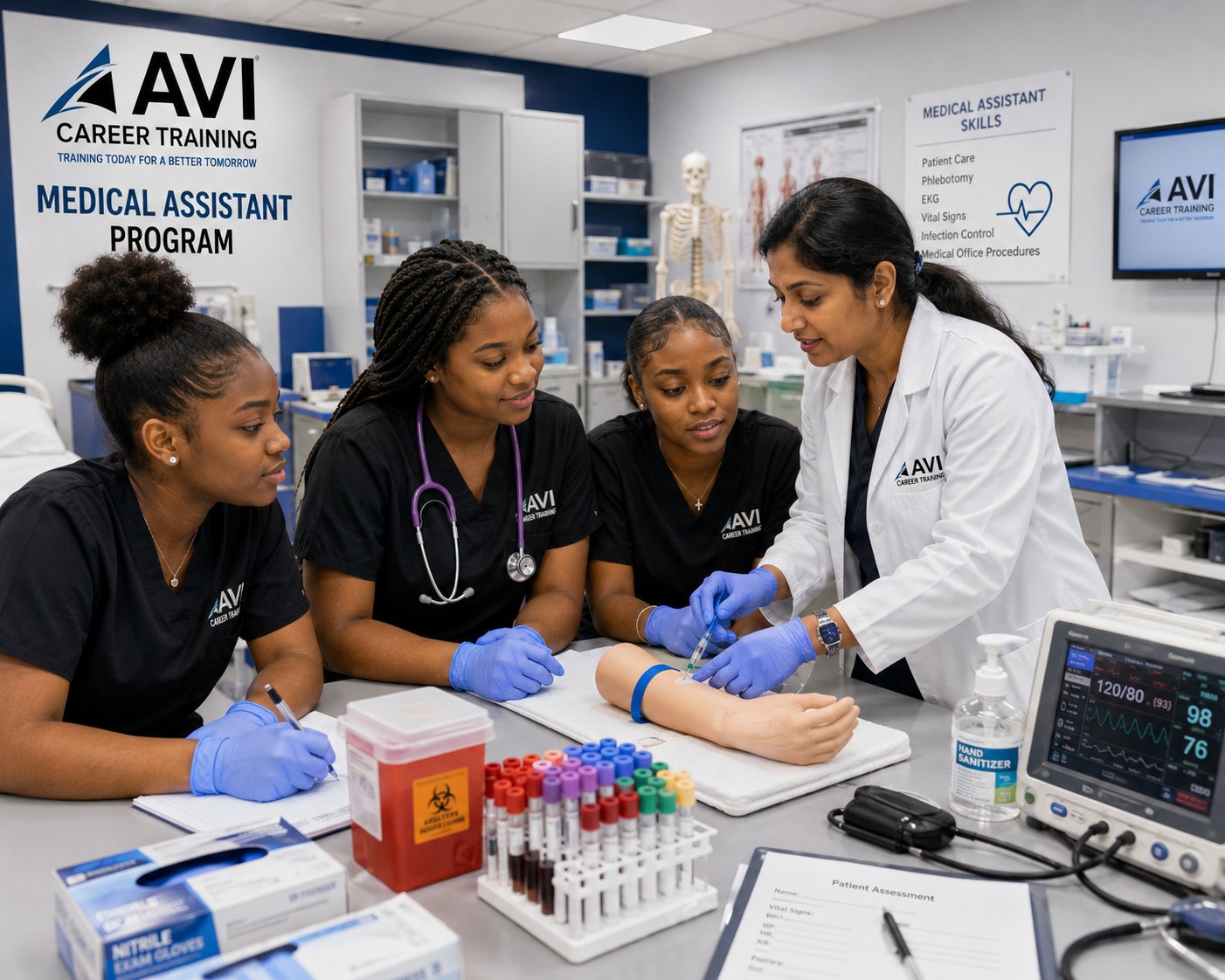
If you’re searching for a medical assistant school near Alexandria, VA, this guide gives you honest, practical answers before you commit to anything.
The Northern Virginia and DC metro area has several allied health training options, but not all programs are created equal. Before you enroll anywhere, you need to know what accreditation actually means, what Virginia requires (and what it doesn’t), how long the path really takes, and — crucially — whether a medical assistant program is the only route to a hands-on, healthcare-adjacent career you love.
Key Takeaways
- Medical assistant programs in Virginia typically run 9–24 months and cost between $6,000 and $17,000.
- Virginia does not require state licensure for medical assistants — national certifications (CMA, RMA) are employer-preferred but not mandated.
- Esthetics, Cosmetic Laser Technology, and Massage Therapy are COE-accredited, hands-on paths that can be completed in as few as a few months right here in Northern Virginia.
- COE (Council on Occupational Education) and SCHEV accreditation are the quality benchmarks to look for in any Virginia career school.
- Financial aid and GI Bill® eligibility vary by program and school — always confirm before enrolling.
—
What to Look for in a Medical Assistant Program Near Alexandria
The most important thing to evaluate in any career training program is accreditation — and for medical assistant programs specifically, there are two names you need to know: CAAHEP (Commission on Accreditation of Allied Health Education Programs) and ABHES (Accrediting Bureau of Health Education Schools). These are the two nationally recognized accrediting bodies for medical assistant programs in the United States.
Why does this matter? Because national certification exams — including the Certified Medical Assistant (CMA) exam through the American Association of Medical Assistants (AAMA) and the Registered Medical Assistant (RMA) exam through American Medical Technologists (AMT) — require graduation from a CAAHEP- or ABHES-accredited program. If a program doesn’t carry one of those accreditations, you may not be eligible to sit for the exam your future employer requires.
Accreditation at the School Level Also Matters
Beyond program-level accreditation, look at the school’s overall institutional credentials. In Virginia, career schools should be certified by SCHEV — the State Council of Higher Education for Virginia — which is the state agency that approves postsecondary schools to operate. Schools should also ideally carry COE (Council on Occupational Education) accreditation, which signals that the institution as a whole meets rigorous educational quality standards.
COE accreditation matters not just as a trust signal — it’s also a requirement for many financial aid programs and employer partnerships. When you see a school that is both COE-accredited and SCHEV-certified, you’re looking at a school that has been vetted at both the program and institutional level.
Format, Schedule, and Location
For Northern Virginia students near Alexandria, location is a real factor. A program that requires a long commute into DC or Maryland every day adds friction to an already demanding schedule. Look for programs with convenient Northern Virginia locations — ideally near major corridors like Route 7, I-495, or the Dulles Toll Road — and confirm whether the format is in-person, hybrid, or online. Hands-on health training almost always requires significant in-person clinical or lab hours, so be skeptical of fully online programs in this field.
—
Virginia Requirements and What the Path to Certification Looks Like
Virginia does not require a state license to work as a medical assistant — but that doesn’t mean certification is optional. Most employers in the Northern Virginia and DC metro market expect candidates to hold a national credential such as the CMA (AAMA) or RMA (AMT), especially in competitive healthcare settings like the hospitals and specialty clinics clustered throughout Fairfax County, Arlington, and Alexandria.
Realistic Timeline
Most accredited medical assistant programs in Virginia run between 9 and 24 months, depending on whether you enroll in a diploma/certificate program or an associate degree track. Certificate and diploma programs tend to be on the shorter end and are more common at career schools. Associate degree programs at community colleges typically take two years but include general education coursework beyond the clinical training itself.
On top of classroom hours, most programs require an externship — typically 160 to 200+ hours of supervised clinical experience at a healthcare facility. Factor this into your timeline planning, especially if you’re balancing work or family.
Tuition and Cost Range
Tuition for medical assistant programs in the Northern Virginia area typically falls between $6,000 and $17,000, not including books, uniforms, and exam fees. Community college programs tend to be on the lower end; private career schools vary widely. Always ask for the total cost of the program — including fees, supplies, and certification exam costs — before signing an enrollment agreement.
Job Outlook in Northern Virginia
The DC metro market is one of the strongest in the country for allied health employment, driven by the high density of hospitals, outpatient clinics, government health agencies, and private practices. According to the U.S. Bureau of Labor Statistics (BLS), the median annual wage for medical assistants in Virginia is approximately $38,000–$44,000, with the Northern Virginia market generally on the higher end due to cost of living and demand.
—
How Medical Assistant Training Compares to Other Allied Health & Wellness Careers
Medical assisting is one path to a hands-on, people-centered health career — but it’s not the only one. For many students, especially those who want faster entry into the workforce, lower tuition, or more entrepreneurial flexibility, allied health and wellness careers in esthetics, cosmetic laser technology, and massage therapy deserve a real look.
Here’s an honest side-by-side comparison:
| Career Path | Typical Program Length | Tuition Range | Virginia Licensing | Median Salary (VA) |
|---|---|---|---|---|
| Medical Assistant | 9–24 months | $6,000–$17,000 | No state license required; national cert preferred | ~$38,000–$44,000 |
| Esthetician | Months (600 hours) | Varies by school | State license required (DPOR) | ~$35,000–$55,000+ |
| Cosmetic Laser Technician | Weeks to months | Varies by school | Virginia-regulated; esthetician license often required | $50,000–$80,000+ |
| Massage Therapist | 500–650+ hours | Varies by school | State license required (DPOR) | ~$45,000–$60,000 |
The Case for Wellness-Focused Allied Health Careers
What these career paths share with medical assisting is the core appeal: working directly with people, using technical skills, and making a visible difference in how someone feels. What sets them apart is the entrepreneurial ceiling. A licensed esthetician or cosmetic laser technician in Northern Virginia can work in a medspa, open their own suite, or build a loyal client base that generates income well above the median salary ranges above.
Cosmetic laser technology in particular is one of the fastest-growing specialties in aesthetics, driven by demand for laser hair removal, skin resurfacing, and non-invasive body contouring. In Virginia, this work is regulated by the Virginia Department of Professional and Occupational Regulation (DPOR), and proper training and licensure are required — which is exactly why choosing a credentialed school matters.
—
> Real Student Story: Danielle was a medical billing specialist in her early 30s who wanted to get out from behind a desk and work directly with clients. She researched medical assistant programs but was put off by the 12-month timeline and the limited career ceiling. She enrolled in an esthetics program at a COE-accredited school in Northern Virginia instead. Within six months of graduating and passing her Virginia State Board exam, she was working at a high-end medspa in Tysons Corner — and within two years, she’d added laser certifications and tripled her original billing salary.
—
Questions to Ask Any Career School in the Northern Virginia Area
Before you enroll in any program — medical assistant , esthetics, massage therapy, or otherwise — here is the checklist every smart student should run through. These questions separate quality schools from ones that look good in a Google ad.
Your Pre-Enrollment Checklist
- ✅ Is the school COE-accredited and SCHEV-certified in Virginia?
- ✅ Is the specific program accredited by the appropriate body (CAAHEP/ABHES for MA; DPOR for esthetics/massage)?
- ✅ Does the school accept financial aid, Pell Grants, or the GI Bill® (Post-9/11 GI Bill)?
- ✅ What is the total cost — including fees, books, uniforms, and exam fees?
- ✅ What is the school’s job placement rate, and do they have employer partnerships in Northern Virginia?
- ✅ Does the curriculum include training on diverse skin tones and client populations?
- ✅ Are instructors currently licensed, practicing professionals — not just academics?
- ✅ What does the externship or clinical component look like, and is it local?
- ✅ Can you tour the facility and speak with current students before committing?
These questions don’t just help you find a good school. They protect you from enrolling in a program that doesn’t meet the requirements for the certification exam or career you’re targeting. A school that can’t answer these questions clearly is a school worth skipping.
> Real Student Story: Marcus was a Navy veteran transitioning to civilian life near Woodbridge, Virginia. He initially looked at medical assistant programs, but found that many schools in the area were slow to confirm their GI Bill® eligibility — or vague about total costs. After doing his homework, he found a COE-accredited school near Tysons Corner that accepted his Post-9/11 GI Bill benefits for a Massage Therapy program. He graduated in under a year, passed his Virginia State Board exam, and now works at a sports medicine clinic in Fairfax — a direct bridge between his military background and a healthcare-adjacent civilian career.
—
Explore Hands-On Health and Wellness Training Right Here in Northern Virginia
If you’re drawn to a career that puts you in the room with clients — using real skills to deliver real results — there’s a COE-accredited, SCHEV-certified option right in the Northern Virginia area worth exploring.
AVI Career Training is located in Vienna, VA, just minutes from Alexandria, Tysons Corner, and the broader DC metro area. AVI offers hands-on career training in programs that serve both the wellness and healthcare-adjacent markets, including:
Basic & Master Esthetics
Virginia State Board-eligible esthetics training focused on skin science, facial treatments, and inclusive techniques for all skin tones. A licensed esthetician in Northern Virginia can work in medspas, dermatology clinics, salons, or build their own client base.
Cosmetic Laser Technology
One of AVI’s highest-differentiating programs — training students in laser hair removal, skin rejuvenation, and non-invasive body contouring. Cosmetic laser technicians in Virginia can earn $50,000–$80,000+ in medspa and clinical settings.
Massage Therapy
A Virginia DPOR-licensed path with strong earning potential (~$45,000–$60,000 median in VA). AVI’s Massage Therapy program prepares students for the Virginia State Board exam and careers in wellness clinics, sports medicine, and spa settings.
AVI Career Training is proud to be COE Accredited by the Council on Occupational Education and SCHEV Certified by the State Council of Higher Education for Virginia. Financial aid is available for qualifying programs, and AVI accepts the GI Bill® for eligible veterans and military-connected students.
Every program at AVI is built around the belief that beauty and wellness education should serve everyone — which means the curriculum is designed to work on all skin tones and all client types. That’s not a marketing line; it’s built into how classes are taught.
AVI’s Vienna, VA campus is easily accessible from Alexandria, Arlington, Fairfax, Reston, and the broader DMV area — typically 20–35 minutes depending on your starting point.
📞 Call AVI admissions: (703) 943-9841
📍 Location: 1595 Spring Hill Rd #720, Vienna, VA 22182
—
Frequently Asked Questions
Q: How long does it take to become a medical assistant in Virginia?
A: Most accredited medical assistant programs in Virginia take between 9 and 24 months to complete, including classroom instruction and an externship component of 160–200+ hours. Certificate programs tend to be on the shorter end; associate degree programs at community colleges typically take two years. By comparison, esthetics programs can often be completed in a matter of months, and massage therapy programs typically require 500–650+ hours of training.
Q: Does Virginia require medical assistants to be licensed?
A: No — Virginia does not require a state license to work as a medical assistant . However, most employers in the Northern Virginia and DC metro area prefer or require national certification such as the CMA (AAMA) or RMA (AMT). Sitting for these exams requires graduation from a CAAHEP- or ABHES-accredited program.
Q: What is the difference between a medical assistant and an esthetician?
A: Medical assistants work primarily in clinical healthcare settings — taking vitals, assisting physicians, handling patient records, and performing basic clinical procedures. Estheticians are licensed skin care professionals who provide facials, chemical peels, waxing, and other skincare treatments, typically in salons, spas, or medspas. Some estheticians also work in clinical settings alongside dermatologists and plastic surgeons. Both careers involve hands-on client work, but esthetics offers more entrepreneurial flexibility and a faster path to licensure.
Q: Do medical assistant programs require accreditation in Virginia?
A: While Virginia doesn’t mandate accreditation by law, enrolling in a non-accredited program can disqualify you from sitting for the national CMA or RMA certification exams. For other career programs, look for COE (Council on Occupational Education) accreditation at the school level and SCHEV certification for Virginia state approval. These credentials ensure the school meets recognized quality standards.
**Q: What are the highest-paying