Medical Assistant Programs in Northern Virginia: What to Know
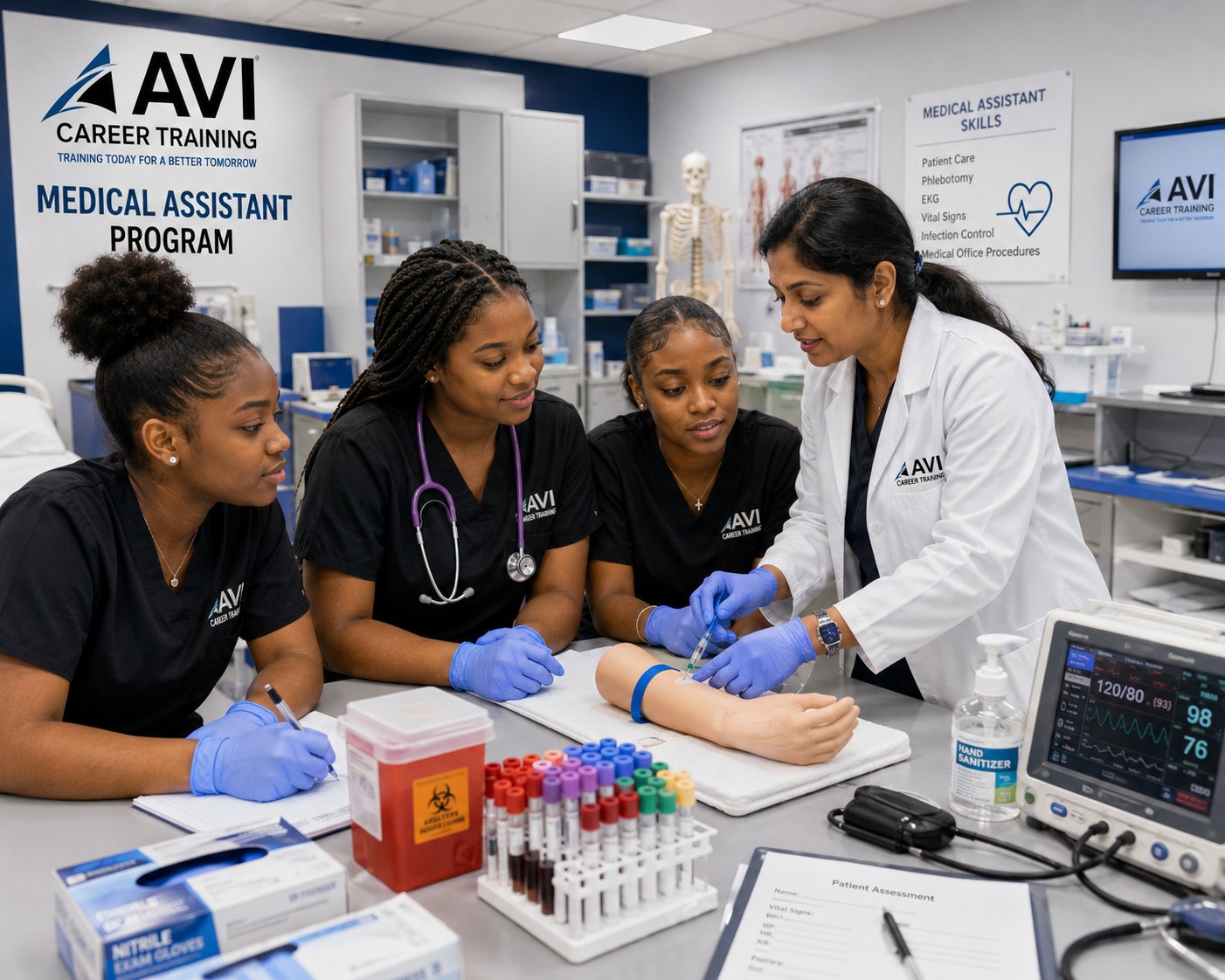
Medical assistant programs in Northern Virginia typically take 9–24 months to complete, require no state licensure, and prepare graduates for one of the most active healthcare job markets in the country. This guide covers training requirements, certifications, salaries, and how to decide if medical assisting is truly the right fit for your goals.
Key Takeaways
- Virginia does not require state licensure for medical assistants — but national certification (CMA or RMA) is strongly preferred by employers.
- Medical assistant programs in Virginia typically run 9–24 months, depending on whether you pursue a certificate or associate degree.
- The U.S. median annual wage for medical assistants is approximately $42,000 (BLS, 2023); Northern Virginia MAs typically earn above the national median.
- Esthetics, Cosmetic Laser Technician, and Massage Therapy programs at AVI Career Training in Vienna, VA can launch wellness careers in clinical-adjacent settings — often in less time and at lower cost than a 2-year MA degree.
- AVI Career Training is COE-accredited, SCHEV-certified, and accepts the GI Bill® — serving career changers across Northern Virginia and the greater DMV area.
—
What Does a Medical Assistant Actually Do?
A medical assistant is a multi-role healthcare professional who handles both clinical and administrative tasks in physician offices, urgent care centers, and specialty clinics.
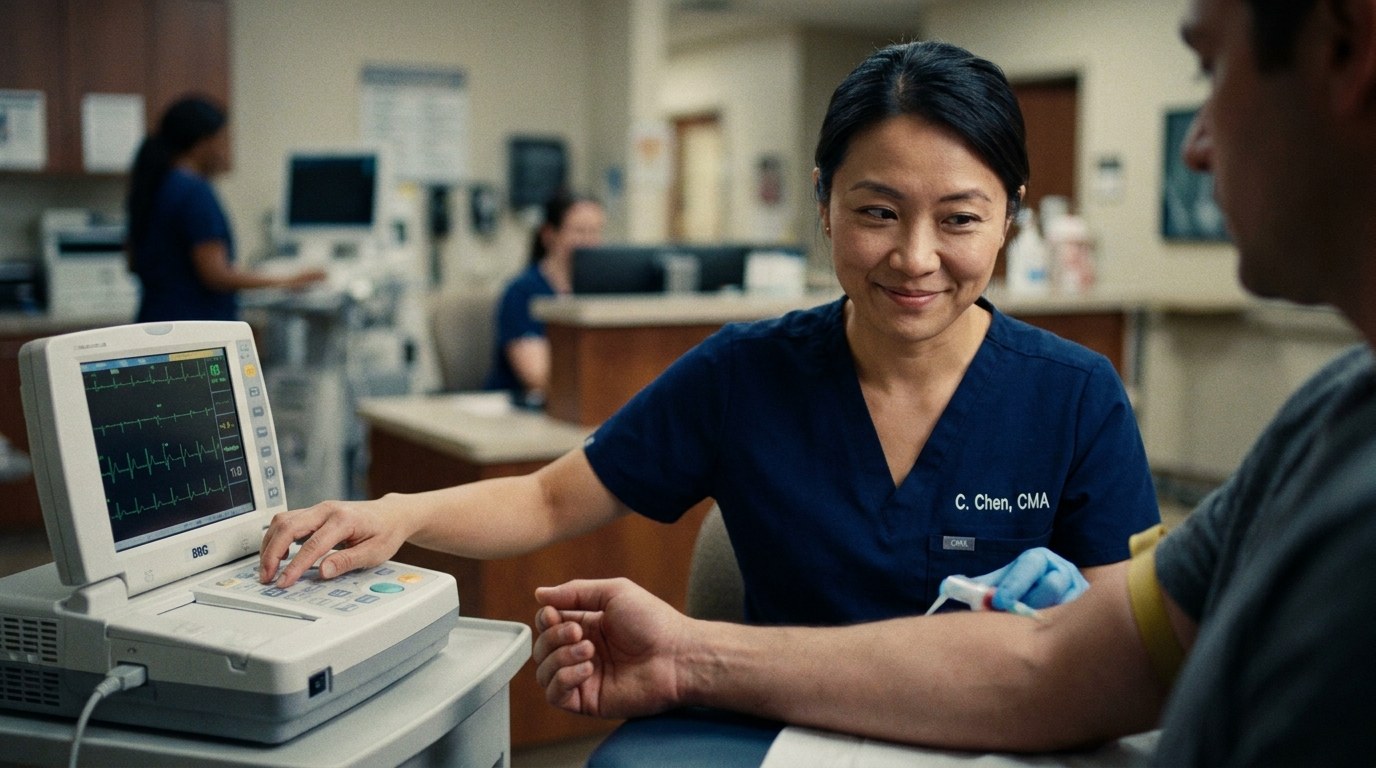
On the clinical side, medical assistants take patient vitals, administer injections, perform EKGs, draw blood, and prepare patients for examinations. On the administrative side, they manage scheduling, maintain electronic health records, handle billing inquiries, and coordinate referrals. It’s a role that requires strong people skills alongside solid technical training.
Where Do Medical Assistants Work?
Most medical assistants work in outpatient settings — physician group practices, internal medicine offices, and urgent care clinics make up the largest share of employers. But the role also shows up in:
It’s worth noting that in dermatology and med spa settings specifically, MAs often work side-by-side with licensed estheticians, cosmetic laser technicians, and massage therapists. If the aesthetic and wellness side of that environment appeals to you, that’s a detail worth holding onto — we’ll come back to it.
—
Medical Assistant Training in Virginia — Requirements, Timeline, and Credentials
Virginia does not require medical assistants to hold a state license — making it one of the more accessible entry points into healthcare compared to licensed roles like nursing or physical therapy.
That said, the absence of a state license requirement doesn’t mean credentials don’t matter. Employers in Northern Virginia — especially larger health systems and specialty clinics — strongly prefer nationally certified candidates.
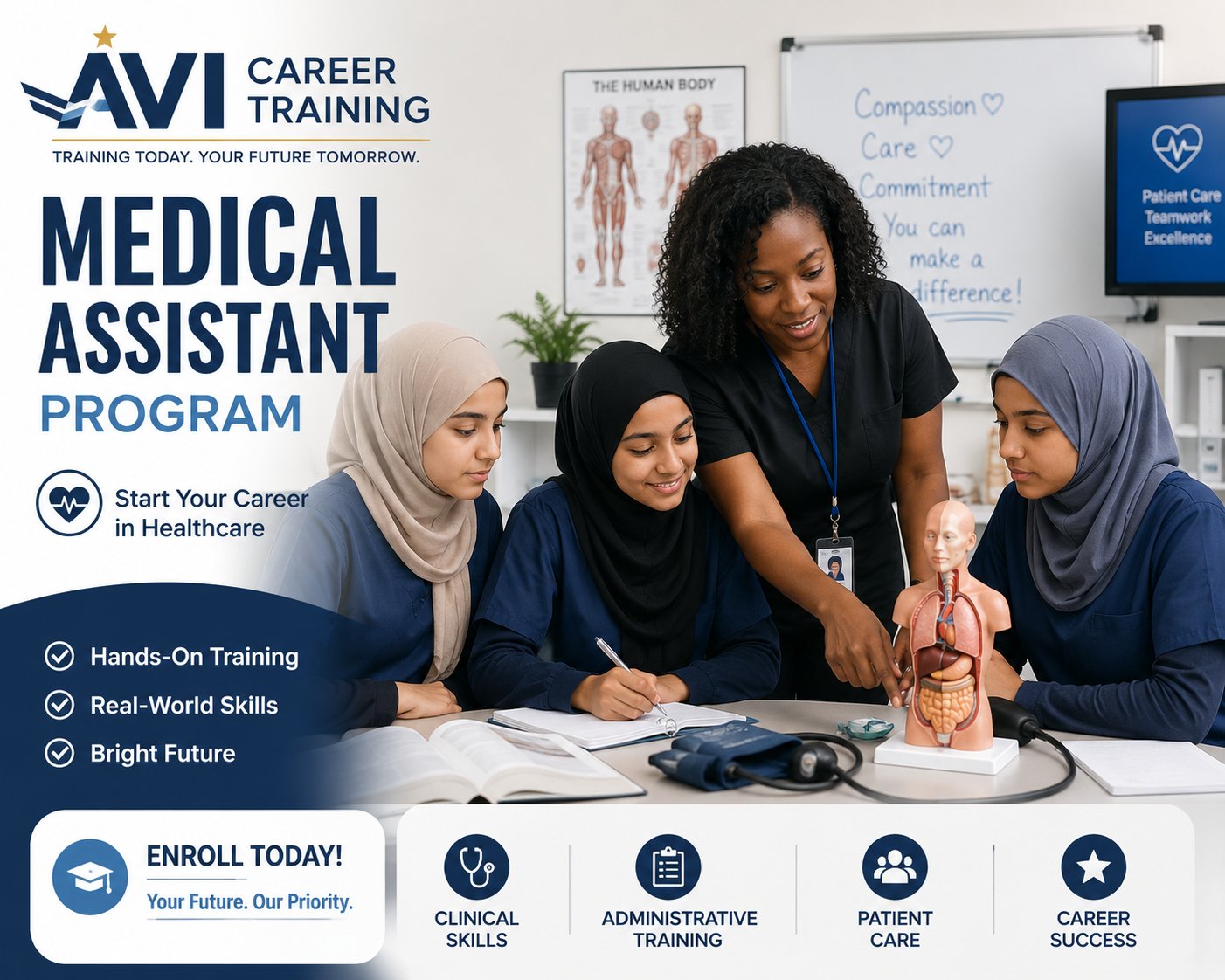
The Two Main National Certifications
Certified Medical Assistant (CMA) — Issued by the American Association of Medical Assistants (AAMA). To sit for the CMA exam, you must graduate from a program accredited by either CAAHEP (Commission on Accreditation of Allied Health Education Programs) or ABHES (Accrediting Bureau of Health Education Schools). This is the most recognized credential in the field.
Registered Medical Assistant (RMA) — Issued by the American Medical Technologists (AMT). Eligibility pathways are somewhat more flexible than the CMA, but the credential carries strong recognition, particularly in specialty settings.
How Long Does It Take to Become a Medical Assistant in Virginia?
Program length varies significantly based on the credential level you pursue:
If speed to employment is your priority, a well-accredited certificate program is usually the faster route. Many students in Northern Virginia choose programs at Northern Virginia Community College (NOVA) or private allied health schools to complete training within a year.
—
Medical Assistant Salary in Northern Virginia — What Can You Realistically Earn?
Salary is one of the most practical factors in any career decision — and the Northern Virginia market is consistently above the national average for medical assistant compensation.
According to the U.S. Bureau of Labor Statistics (BLS), the national median annual wage for medical assistants was approximately $42,000 in 2023. In the Washington, DC metro area — which includes Northern Virginia and the Maryland suburbs — median wages run notably higher, driven by the area’s elevated cost of living and the density of major health systems and specialty practices.
Earning Potential by Practice Setting
Where you work as a medical assistant affects your pay more than most people realize:
The Tysons Corner and Vienna, VA area specifically hosts a dense cluster of dermatology offices, plastic surgery practices, and medical spas — making it one of the stronger local markets for MAs interested in the aesthetic medicine space.
A Note on the Aesthetics Overlap
If dermatology and med spa environments appeal to you, it’s worth knowing that licensed estheticians and cosmetic laser technicians often perform many of the same client-facing services in those settings — sometimes with greater autonomy over certain treatments. We’ll get into that comparison shortly.
—
Is Medical Assisting the Right Career Path for You? Alternatives Worth Considering
Medical assisting is a solid, stable career — but it’s not the right fit for everyone, and understanding the alternatives can help you make a smarter decision before investing a year or more of your time and money.
Ask yourself a few honest questions:
Your answers matter more than you might think.
Mini-Story: From Uncertain to Licensed
Consider someone like Danielle — a 28-year-old former retail manager from Arlington who researched medical assistant programs for months before realizing what actually drew her to the field was the skin care and cosmetic treatment side of dermatology offices. She enrolled in an Esthetics program instead of a 2-year MA degree, completed her training in a fraction of the time, passed her Virginia State Board exam, and landed a position at a medical spa in Tysons Corner. The program cost less, took less time, and put her exactly where she wanted to be.
That’s not a knock on medical assisting — it’s a reminder that the path should match the actual destination.
Where AVI Career Training Programs Fit
AVI Career Training, located in Vienna, Virginia, is a COE-accredited beauty and wellness school serving students across Northern Virginia and the broader DMV area. AVI does not offer a medical assistant program — but for career-changers whose goals align with wellness, aesthetics, and clinical-adjacent environments, AVI’s programs are worth a serious look:
These programs are often shorter in duration and lower in total tuition than a 2-year medical assistant associate degree — and they lead to Virginia State Board licensure, which gives graduates a portable, legally recognized credential.
A medical assistant supports physicians across a range of clinical and administrative tasks — typically in a physician-directed setting. A clinical esthetician is a licensed skin care professional who performs advanced aesthetic treatments (chemical peels, microdermabrasion, medical-grade facials) often in med spas or dermatology offices. Estheticians require Virginia State Board licensure; MAs in Virginia do not require state licensure but benefit from national certification. In many med spa environments, both roles coexist — and some facilities prefer estheticians for client-facing skin treatment roles specifically.
Mini-Story: The Career-Changer Who Wanted Something Faster
Marcus was 35, working in IT support in Fairfax, and wanted a career that involved working with people in a health-forward environment without the 2-year commitment of a community college degree program. After comparing allied health career options across Northern Virginia, he enrolled in AVI’s Massage Therapy program. Within months, he was licensed, working at a wellness practice in the Tysons area, and building a client base on his own terms. The hands-on training, flexible scheduling, and proximity to home in Vienna, VA made the decision easy.
If speed to employment, lower tuition, and a clinical-adjacent career environment sound appealing, explore AVI’s programs and talk to an admissions advisor about what might be the right fit.
—
How to Choose the Right Healthcare or Wellness Training Program Near DC
Not all training programs are created equal — and in a market as competitive as Northern Virginia, the school you choose will affect your job prospects, credential recognition, and overall experience.
Here’s a practical checklist to evaluate any program you’re considering:
1. Accreditation
For medical assistant programs, look for CAAHEP or ABHES accreditation — these are required to sit for the CMA exam through AAMA.
For wellness and esthetics programs, COE accreditation (Council on Occupational Education) is a recognized mark of quality. AVI Career Training holds COE accreditation and is SCHEV-certified by the Virginia Department of Professional and Occupational Regulation (DPOR), ensuring the school meets state standards for private career education.
2. Program Length and Schedule Flexibility
Consider how quickly you need to complete training and whether daytime, evening, or weekend options are available. Accelerated programs can dramatically shorten your path to employment — a key factor in the Northern Virginia market where the cost of living makes time-to-income a real financial consideration.
3. Hands-On Training Hours
Clinical hours matter enormously in healthcare and wellness careers. Ask how many hands-on training hours the program includes and whether students practice on real clients or only peers. AVI’s programs include substantial practical training components built around real-world skill development.
4. Financial Aid and Veteran Benefits
If you’re considering a medical assistant program at a community college, federal financial aid (FAFSA/Pell Grants) may be available for qualifying students enrolled in degree programs. For career school programs, financial aid availability depends on program length and accreditation type.
AVI Career Training accepts the GI Bill® for qualifying veterans — a significant benefit for the large active-duty and veteran population in the Northern Virginia area. Financial aid is also available for qualifying AVI students. Speak with an AVI admissions advisor directly to understand what applies to the specific program you’re interested in.
5. Job Placement Support and Local Employer Connections
Ask every school you’re considering about graduate employment outcomes and whether they have relationships with local employers. In Northern Virginia, proximity to major health systems, med spas, and wellness facilities gives well-connected schools a real advantage in helping graduates find their first positions.
6. Licensing Outcomes
For regulated careers — cosmetology, esthetics, massage therapy, nail technology — Virginia State Board pass rates are a meaningful quality indicator. Ask schools for their licensure exam pass rates before enrolling.
—
Frequently Asked Questions
Q: How long does it take to complete a medical assistant program in Virginia?
A: Most medical assistant certificate programs in Virginia take 9–12 months to complete. Associate degree programs at community colleges typically run 18–24 months. If speed to employment is a priority, a certificate program from an accredited school is usually the faster path.
Q: Do medical assistants need to be licensed in Virginia?
A: No. Virginia does not require state licensure for medical assistants. However, national certification — either the CMA (Certified Medical Assistant) through the AAMA or the RMA (Registered Medical Assistant) through AMT — is strongly preferred by employers, particularly in larger health systems and specialty clinics.
Q: What is the average medical assistant salary in Northern Virginia?
A: The U.S. median annual wage for medical assistants is approximately $42,000 (BLS, 2023). In the Washington, DC metro area — which includes Northern Virginia — wages typically run above the national median. MAs working in dermatology, aesthetic medicine, or specialty practices often trend toward the higher end of local ranges.
Q: What’s the difference between a medical assistant and a clinical esthetician?
A: A medical assistant supports physicians across clinical and administrative functions in a physician-directed environment. A clinical esthetician is a licensed skin care professional who performs advanced aesthetic treatments — like chemical peels, medical-grade facials, and microdermabrasion — typically in med spas or dermatology offices. In Virginia, estheticians must be licensed through the Virginia State Board; MAs have no state licensure requirement. Both roles frequently coexist in med spa and aesthetic clinic environments.
Q: What healthcare or wellness careers can I train for quickly near DC?
A: Several wellness and clinical-adjacent careers offer accelerated training paths in Northern Virginia. AVI Career Training in Vienna, VA offers programs in Esthetics, Cosmetic Laser Technology, and Massage Therapy — all of which lead to Virginia State Board licensure and careers in med spas, wellness studios, and aesthetic clinics. These programs are often shorter and lower in cost than 2-year medical assistant associate degrees.
Q: What allied health careers are available in Northern Virginia that don’t require a 4-year degree?
A: Quite a few. Medical assisting, dental assisting, phlebotomy, and health information technology are common options at the certificate or associate degree level. For wellness and clinical aesthetics careers, esthetics licensure, massage therapy licensure, and cosmetic laser technician training are strong options — all available in the Northern Virginia area, including at AVI Career Training in Vienna, VA.
Q: Does AVI Career Training offer a medical assistant program?
A: No — AVI Career Training is a COE-accredited beauty and wellness school and does not offer a medical assistant program. AVI’s programs include Esthetics, Cosmetic Laser Technology, Massage Therapy, Cosmetology, Nail Technology, and Electrolysis. For career-changers interested in med spas, aesthetic clinics, and wellness environments, AVI’s programs offer a well-accredited, faster-to-complete alternative to traditional allied health training.
—
Explore Wellness Career Programs in Vienna, VA
AVI Career Training offers hands-on programs in esthetics, massage therapy, cosmetic laser technology, and more — all in the heart of Northern Virginia. COE-accredited. GI Bill® accepted. Financial aid available for qualifying programs.
—
About AVI Career Training
AVI Career Training is a Council on Occupational Education (COE)-accredited and SCHEV-certified beauty and wellness career school located in Vienna, Virginia, serving students across Northern Virginia and the DMV metro area. AVI offers hands-on career training programs in Cosmetology, Basic Esthetics, Master Esthetics, Massage Therapy, Cosmetic Laser Technology, Nail Technology, and Electrolysis. AVI’s curriculum is built around inclusive techniques designed to serve every skin tone and hair type.
- Address: 1595 Spring Hill Rd #720, Vienna, VA 22182
- Phone: (703) 943-9841
- Website: avicareertraining.com
- Accreditation: COE Accredited · SCHEV-Certified