Medical Assistant Programs in Northern Virginia
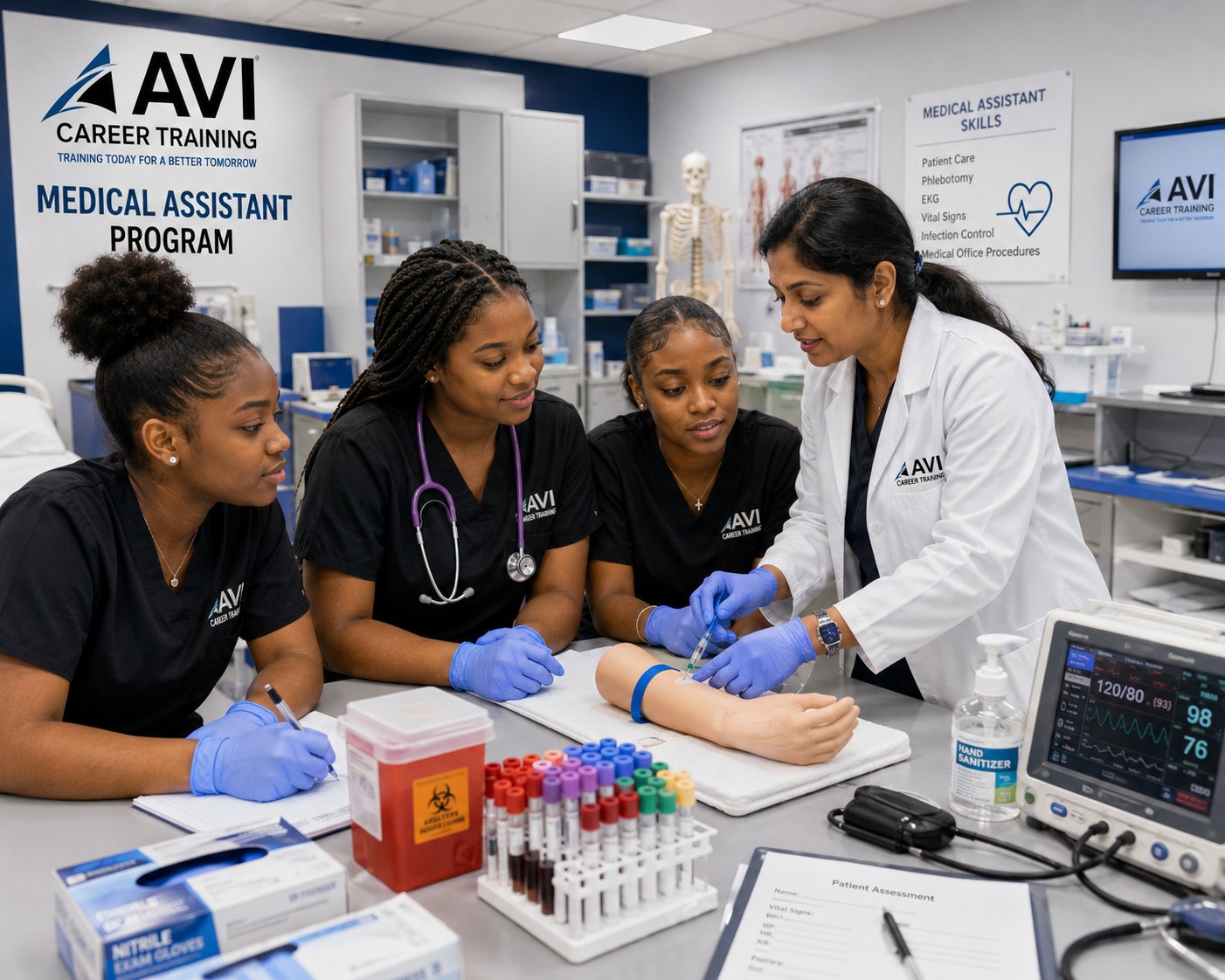
Medical assistant programs in Northern Virginia offer a direct, fast-moving path into one of the most active healthcare job markets on the East Coast. If you’re ready to launch a clinical healthcare career without spending four years in a classroom, a medical assistant program gives you the skills, the certification credentials, and the real-world training to get hired at major healthcare systems operating right here in the DMV area.
- Medical assistant certificate programs in Virginia typically take 9–12 months to complete.
- Virginia does not require state licensure for medical assistants — but national certification (CMA or RMA) is strongly preferred by employers.
- Northern Virginia MAs earn 15–20% above the national median salary due to regional healthcare density and cost-of-living adjustments.
- BLS projects ~14% job growth for medical assistants through 2032 — faster than average for all occupations.
- Top Northern Virginia employers include Inova Health System, Kaiser Permanente, MedStar Health, and Children’s National.
This guide covers everything you need to know: what medical assistants actually do, Virginia’s certification landscape, real salary numbers for the NoVA market, and how to choose a school that sets you up for long-term career success — not just a diploma. Explore your path at AVI Career Training →
—
What Does a Medical Assistant Do?
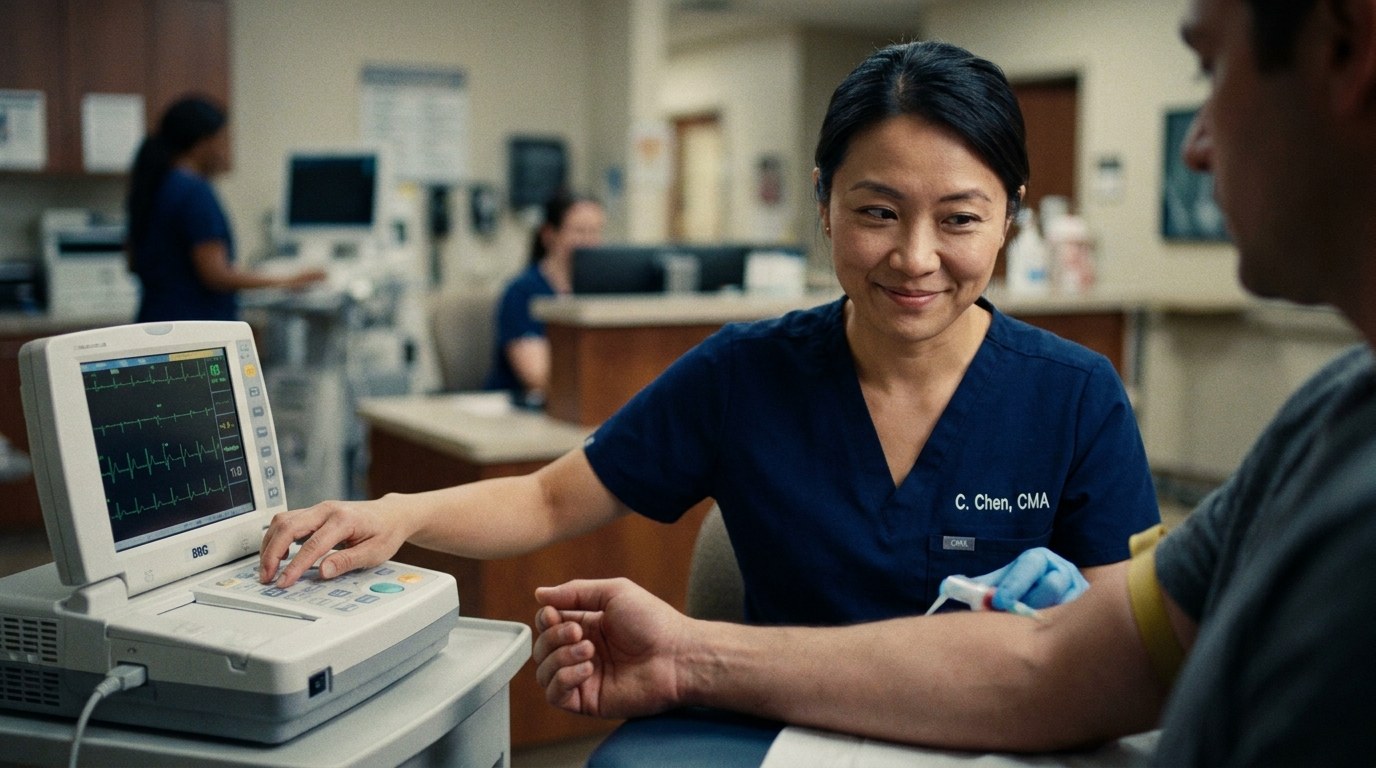
A medical assistant is a multi-skilled healthcare professional who performs both clinical and administrative duties in physicians’ offices, outpatient clinics, and specialty practices. This is not a single-task role — it’s one of the most versatile positions in modern healthcare.
On the clinical side, medical assistants:
On the administrative side, medical assistants:
This dual-role capacity is exactly why demand for medical assistants has grown so rapidly. Practices want staff who can move fluidly between exam rooms and front desks without skipping a beat.
Medical Aesthetics: Where Healthcare Meets Beauty
There’s a growing overlap between the medical assistant skill set and the medical aesthetics world — med spas, dermatology clinics, cosmetic surgery practices, and laser treatment centers. Many of these facilities in the Tysons Corner area and greater Northern Virginia actively hire staff who combine clinical knowledge with beauty and wellness training. Students interested in that intersection should also explore AVI Career Training’s Cosmetic Laser Technician and Master Esthetics programs, which are specifically designed for clinical aesthetics environments.
—
Virginia Medical Assistant Requirements: What You Need to Know
Virginia does not require medical assistants to hold a state license — and this is one of the most misunderstood facts in the field. Many prospective students search for “medical assistant certification vienna va” expecting a state-mandated licensing process similar to nursing or cosmetology. That process doesn’t exist here.
What does matter — significantly — is national certification. Employers across the Northern Virginia and DC metro healthcare market strongly prefer, and in many cases require, nationally credentialed candidates. Two primary credentials exist:
Issued by the American Association of Medical Assistants (AAMA). Requires graduation from a CAAHEP- or ABHES-accredited program. Widely recognized by large health systems and hospital-affiliated outpatient practices.
Issued by the American Medical Technologists (AMT). Broader eligibility pathways including work experience routes. Well-recognized in independent medical practices and specialty clinics.
Both credentials require passing a national exam and demonstrate to employers that you’ve met a defined competency standard. If you’re comparing certified medical assistant training in Northern Virginia programs, always ask whether the school’s curriculum is aligned to CMA or RMA exam preparation — that alignment is non-negotiable for career readiness.
CMA vs. RMA: Which Certification Is Right for You?
The CMA vs RMA certification virginia question comes up constantly — and the honest answer is: it depends on where you want to work.
Neither is “better.” The right choice depends on your target employer, your program’s accreditation pathway, and your timeline. A qualified admissions advisor at any reputable school should walk you through this decision before you enroll.
—
—
How Long Do Medical Assistant Programs Take in Northern Virginia?
Most accredited medical assistant programs in Northern Virginia follow one of two timelines — and the difference comes down to the credential level you’re pursuing.
9–12 months
Focused, career-entry format. Covers core clinical and administrative competencies. Designed for students who want to enter the workforce quickly without pursuing an associate degree.
20–24 months
Broader academic curriculum including general education requirements. Better suited for students considering future advancement into nursing or health administration pathways.
What about externship hours? Most accredited programs require 160–200 clinical externship hours. This is a critical quality signal when you’re evaluating schools. Externship hours aren’t just a graduation requirement — they’re your first real professional reference, your hands-on competency proof, and often your foot in the door at a hiring facility. Don’t skip over this detail when comparing programs.
Can You Become a Medical Assistant Without a Degree in Virginia?
Yes — and this is another common point of confusion. Virginia does not require a college degree to work as a medical assistant . A diploma or certificate from an accredited program, combined with national certification, is fully sufficient for most entry-level positions in the Northern Virginia and DC metro market. The associate degree route adds breadth, not a gating requirement.
—
Medical Assistant Salary Outlook: Northern Virginia & DC Metro
Medical assistant salary in Virginia runs notably higher than the national median — and Northern Virginia’s numbers are among the strongest in the state.
(BLS, 2024)
Above National Median
Through 2032 (BLS)
(Verify against current BLS Occupational Outlook Handbook data before making enrollment decisions.)
Why does Northern Virginia pay above national rates? Several structural reasons:
—
How to Choose the Right Medical Assistant School Near You
Not all programs are created equal — and in a competitive hiring market like Northern Virginia, your school choice matters. Here’s a practical decision framework:
1. Accreditation First
For medical assistant programs, look for CAAHEP (Commission on Accreditation of Allied Health Education Programs) or ABHES (Accrediting Bureau of Health Education Schools) accreditation. These are the two bodies whose graduates are eligible to sit for the CMA exam through the AAMA. A program without one of these accreditations may limit your certification pathway before you even graduate.
For beauty and wellness programs in Virginia, the relevant accreditation body is the Council on Occupational Education (COE) — which is AVI Career Training’s accreditation. COE accreditation signals rigorous program standards, financial stability, and career-outcome accountability for vocational and career training schools.
2. Externship Placement Record
Ask every school you evaluate: Where do your students complete their clinical externships? A school that places students at Inova-affiliated facilities or MedStar network clinics is giving you a genuine employment pipeline. A vague answer here is a red flag.
3. Certification Pass Rates
Reputable programs track and publish their CMA or RMA first-attempt pass rates. Ask for this number directly. National pass rates for the CMA exam hover around 60–70% — a school performing significantly below that benchmark should prompt follow-up questions.
4. Financial Transparency
⚠️ Important Note on Financial Aid: Medical assistant certificate programs under 600 hours do not qualify for federal financial aid (Title IV / FAFSA). If you’re evaluating a short-format program, confirm upfront whether federal aid is available. Many programs in this category are not Title IV eligible. Ask each school directly about payment plan options, private financing, and institutional scholarships.
5. Instructor Credentials & Industry Experience
Your instructors should be practicing or recently retired clinical professionals — not career academics. In allied health training, real-world clinical experience in the instructor role is the difference between theoretical knowledge and job-ready competency.
—
Two Students Who Made It Work in Northern Virginia
From Retail to a Clinic in Tysons Corner
Destiny spent seven years in retail management in the Tysons Corner area before deciding she wanted a career with more stability and more direct human impact. She enrolled in a nine-month medical assistant certificate program at a CAAHEP-accredited school in the NoVA area, completed her 180 externship hours at a family medicine practice in Vienna, and passed her CMA exam on the first attempt. Within three months of graduation, she was hired full-time at a primary care practice affiliated with Inova — earning more in her first year as an MA than she had in her final year in retail, with employer-sponsored benefits and a clear advancement path toward medical office management.
The Career Changer Who Wanted to Work at a Med Spa
Marcus had a background in personal training and fitness instruction. He was drawn to medical aesthetics — specifically, laser treatments, cosmetic injectables, and the clinical side of skincare. He combined a part-time medical assistant program with AVI Career Training’s Cosmetic Laser Technician program in Vienna, VA, building credentials on both the administrative/clinical side and the aesthetics equipment side simultaneously. Today he works at a dermatology-affiliated med spa in the DMV area performing laser treatments, with his MA credential handling the clinical documentation and patient intake side of his role. The combination made him a uniquely qualified candidate in a niche that very few applicants can fill.
—
Medical Aesthetics: The Bridge Between Beauty Training and Healthcare
One of the most important and underserved career paths in Northern Virginia sits at the intersection of beauty education and clinical healthcare: medical aesthetics.
Med spas, dermatology clinics, plastic surgery centers, and laser treatment facilities across the Vienna, Tysons Corner, and greater NoVA area are hiring professionals who carry both clinical knowledge and hands-on aesthetics training. These roles go beyond what a traditional medical assistant handles — they require equipment proficiency, skincare science, and the ability to safely perform procedures on patients with diverse skin tones and backgrounds.
This is where AVI Career Training in Vienna, Virginia comes in. AVI is a COE-accredited, SCHEV-certified beauty and wellness school offering programs specifically designed for clinical aesthetics careers:
AVI’s curriculum is built around inclusive techniques — training students to work confidently and skillfully on every skin tone and hair type. In a Northern Virginia market as diverse as ours, that’s not a nice-to-have. It’s a professional necessity.
⚠️ Financial Aid Note: AVI’s Cosmetic Laser Technician program (NO FINANCIAL AID FOR THIS PROGRAM) is under 600 hours and does not qualify for federal financial aid (Title IV / FAFSA). Federal financial aid is not available for this program. AVI offers payment plan options and can discuss private financing pathways — contact the admissions team directly at (703) 943-9841 to discuss your options.
—
—
Frequently Asked Questions: Medical Assistant Programs in Northern Virginia
Q: How long does it take to complete a medical assistant program in Virginia?
A: Most certificate and diploma programs take 9–12 months to complete. Associate degree programs run 20–24 months. The right timeline depends on how quickly you want to enter the workforce and whether you plan to pursue further education in healthcare.
Q: Do medical assistants need to be licensed in Virginia?
A: No. Virginia does not require state licensure for medical assistants. However, national certification — either the CMA (Certified Medical Assistant ) through the AAMA or the RMA (Registered Medical Assistant ) through AMT — is strongly preferred by employers across the Northern Virginia and DC metro healthcare market.
Q: What is the average salary for a medical assistant in Northern Virginia?
A: Northern Virginia medical assistants typically earn 15–20% above the national median of approximately $42,000/year (BLS, 2024), due to the region’s healthcare density and cost-of-living adjustments. Verify current figures at BLS.gov.
Q: What’s the difference between a CMA and an RMA certification?
A: The CMA (Certified Medical Assistant ) is issued by the AAMA and requires graduation from a CAAHEP- or ABHES-accredited program. The RMA (Registered Medical Assistant ) is issued by AMT with broader eligibility pathways. Both are nationally recognized. Large health systems like Inova often prefer the CMA; independent and specialty practices commonly accept both.
Q: Can I become a medical assistant without a college degree in Virginia?
A: Yes. A certificate or diploma from an accredited program, combined with national certification, meets employer requirements for most entry-level medical assistant positions in Virginia. A college degree is not required.
Q: Is there financial aid available for medical assistant programs?
A: It depends on the program. Certificate programs under 600 hours do not qualify for federal financial aid (Title IV / FAFSA). Associate degree programs at accredited institutions may be Title IV eligible. Always confirm financial aid eligibility directly with the school before enrolling.
Q: What healthcare employers hire medical assistants in Northern Virginia?
A: Major employers in the NoVA and DMV area include Inova Health System, Kaiser Permanente, MedStar Health, and Children’s National.