
Medical Assistant Jobs in Virginia: 2026 Outlook
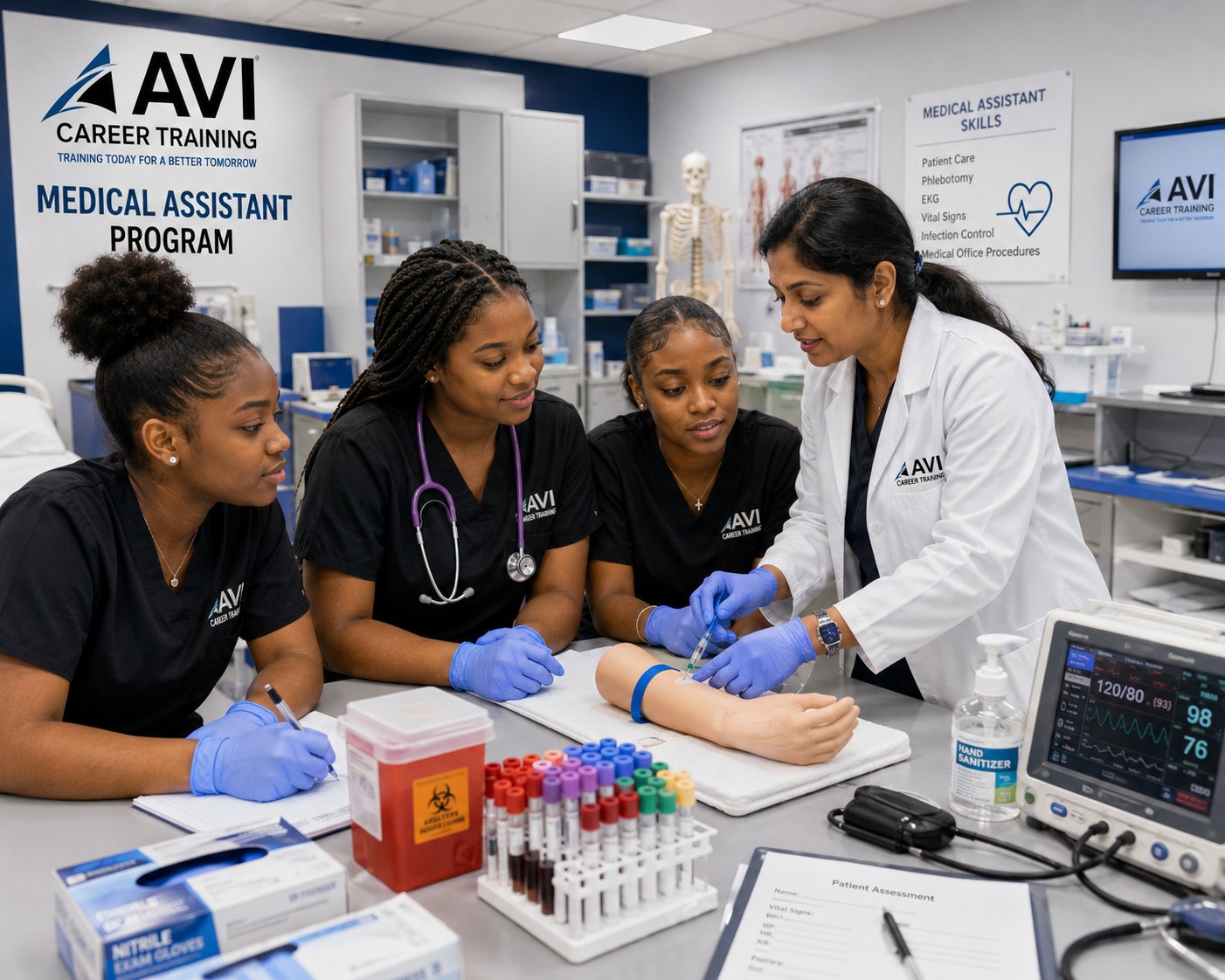
Medical assistant jobs in Virginia are growing faster than average, with the Bureau of Labor Statistics projecting a 14% increase in employment through 2032 — making this one of the most stable allied health career paths available in the DMV area right now.
If you’re researching medical assistant jobs in Virginia for 2026, you’re in the right place. This guide covers salary data, job demand, training timelines, certification requirements, and what the field actually looks like on the ground in Northern Virginia. It also explores fast-track wellness and clinical-adjacent careers you can train for right here in the DC metro area — in case medical assisting isn’t quite the right fit for your goals.
—
📋 Key Takeaways
- BLS projects 14%+ job growth for medical assistants nationally through 2032 — well above average for all occupations
- Virginia’s median annual wage for medical assistants is approximately $42,000–$48,000, with Northern Virginia rates trending higher due to cost of living
- Virginia does not require state licensure for MAs, but national certifications (CMA or RMA) are strongly preferred by DC metro employers
- Certificate programs typically take 4–12 months; associate degree programs run 9 months to 2 years
- Clinical-adjacent wellness careers — like Cosmetic Laser Technician and Esthetics — offer shorter training timelines and strong demand in Northern Virginia’s medical spa market
—
Is Demand for Medical Assistants Growing in Virginia?
Yes — demand for medical assistants in Virginia is growing steadily, and Northern Virginia in particular is one of the strongest regional markets in the country for this role.
Nationally, the BLS projects medical assistant employment to grow 14% through 2032. That’s more than double the average growth rate across all occupations. The primary driver? An aging U.S. population that requires more outpatient care, preventive screenings, and chronic disease management.
In the Northern Virginia / Fairfax County / DC metro corridor, those national trends are amplified by several local factors:
The Virginia Employment Commission (VEC) tracks regional labor data that reflects these trends at the state and metro level. For the most current Northern Virginia-specific projections, the VEC’s workforce data portal provides county-level occupational outlook reports.
The bottom line: if you’re considering medical assistant jobs in Virginia for 2026, the demand side of the equation is strong. The harder question — which we’ll get to — is whether you’re positioned competitively in this market.
—
Medical Assistant Salaries in Virginia for 2026
The medical assistant salary in Virginia for 2026 sits in the range of $42,000–$48,000 annually, based on BLS Occupational Employment and Wage Statistics data — though your actual earnings will depend heavily on your location, employer type, and whether you hold a national certification.
Here’s how the salary picture breaks down:
Northern Virginia rates run higher than the statewide average. The DC metro area has a higher cost of living than most of Virginia, and employers in Fairfax, Arlington, and Loudoun Counties typically adjust compensation accordingly. Certified MAs working in specialty practices — cardiology, dermatology, orthopedics — often earn at the top of the range.
Certification matters — a lot. Medical assistants who hold the Certified Medical Assistant (CMA) credential through the American Association of Medical Assistants (AAMA) or the Registered Medical Assistant (RMA) credential through American Medical Technologists (AMT) consistently earn more than non-certified peers. In a competitive market like Northern Virginia, certification isn’t just a resume booster — it’s increasingly a hiring filter.
Employer type also affects pay. Hospital-affiliated outpatient practices and specialty clinics tend to offer higher base pay than independent primary care offices. Medical spa and aesthetic medicine settings — a growing segment in Northern Virginia — often combine base pay with performance incentives.
—
What Training and Certification Do You Need in Virginia?
Virginia does not require medical assistants to hold a state license — but that doesn’t mean credentials are optional if you’re serious about building a career here.
Licensing: What Virginia Does (and Doesn’t) Require
Unlike nurses, dental hygienists, or massage therapists, medical assistants in Virginia are not regulated by the Virginia Department of Professional and Occupational Regulation (DPOR). There is no state-issued MA license, no state board exam, and no mandatory continuing education requirement at the state level.
That said, employers — especially in Northern Virginia’s competitive DC metro market — have set their own standards. Many practices in Fairfax County, Arlington, and Loudoun County now require or strongly prefer nationally certified candidates.
The Two Main National Certifications
CMA (Certified Medical Assistant ) — Awarded by the American Association of Medical Assistants (AAMA). Requires graduation from a CAAHEP- or ABHES-accredited MA program and passing a national exam. Recertification required every 60 months.
RMA (Registered Medical Assistant ) — Awarded by American Medical Technologists (AMT). Similar eligibility requirements with slightly different pathways for candidates with work experience. Also requires ongoing recertification.
Both credentials are recognized by employers throughout Virginia and carry comparable weight in hiring decisions.
Medical Assistant Training Timelines in Virginia
The time it takes to complete medical assistant training in Virginia depends on the program format you choose:
For anyone on an accelerated timeline — career changers, veterans, or adults returning to the workforce — certificate programs are the more practical entry point into the field.
> A quick note: If you’re exploring allied health careers in Virginia and medical assisting feels like it might take too long — or if the clinical setting isn’t quite what you had in mind — keep reading. There are faster paths into the healthcare and wellness economy, and some of them launch right here in Northern Virginia.
—
Key Trends Shaping the Medical Assistant Field in 2026
The medical assisting field isn’t static. These are the five most significant forces reshaping the role in 2026 — especially for those working or planning to work in Northern Virginia.
1. Growth of Outpatient and Urgent Care Settings
Hospital employment for medical assistants is declining as a percentage of total MA jobs. The growth is happening in outpatient clinics, urgent care centers, and specialty practices. In Northern Virginia, this means more MA jobs in standalone facilities than in hospital systems — and those settings often move faster, offer more patient variety, and pay competitively.
2. Expanded Scope of Practice in Integrated Care
Medical assistants are being asked to do more. In integrated care settings — where primary care, behavioral health, and preventive services coexist — MAs often coordinate between departments, conduct preliminary screenings, and serve as the primary point of contact for patients. This expanded scope is raising the value of the role and, gradually, the compensation floor.
3. EHR Proficiency and Telehealth Support Are Now Baseline
Electronic Health Record (EHR) systems like Epic, Athenahealth, and Cerner are used in virtually every modern clinical setting. Proficiency in at least one major EHR platform is now expected — not a differentiator. Telehealth support is also becoming a standard MA responsibility in many practices, adding a technology fluency component to a role that was once primarily hands-on.
4. Demand for Bilingual MAs in Northern Virginia
Northern Virginia is one of the most linguistically diverse regions in the United States. Fairfax County’s patient population includes significant Spanish, Vietnamese, Korean, Amharic, Arabic, and Farsi-speaking communities. Medical assistants who can communicate directly with patients in their primary language are genuinely in short supply — and practices are actively recruiting for this combination of clinical skill and language access.
5. Medical Aesthetics Is Blurring the Line Between MA and Wellness Roles
Perhaps the most interesting trend for 2026: the medical aesthetics industry is growing rapidly in the DC metro area, and it sits directly at the intersection of clinical care and wellness services. Medical spas, aesthetic medicine practices, and cosmetic dermatology offices increasingly employ MAs alongside cosmetic laser technicians, estheticians, and electrolysis specialists.
This crossover is real — and it opens up an interesting question for anyone exploring healthcare careers. What if the wellness and aesthetics track gets you to the same type of environment, faster?
—
Exploring Related Healthcare & Wellness Careers You Can Train for in Northern Virginia
Medical assisting is one legitimate path into Virginia’s healthcare economy — but it’s not the only one, and for some career-changers, it may not be the fastest or best fit.
If you’re drawn to client-facing healthcare work, clinical-adjacent environments, or the growing intersection of medicine and aesthetics, there are accelerated training options in Northern Virginia worth knowing about.
Here’s the reality of the Northern Virginia wellness market in 2026:
The DC metro area has one of the densest concentrations of medical spas, cosmetic dermatology practices, and aesthetic clinics in the country. Tysons Corner, McLean, Arlington, and the surrounding area are home to hundreds of facilities offering laser treatments, skin care, body contouring, and hair removal services — and they’re hiring trained, credentialed professionals.
Careers Worth Considering Alongside Medical Assisting
Cosmetic Laser Technician — Laser and light-based treatments are among the fastest-growing services in aesthetic medicine. Cosmetic laser technicians operate equipment used for hair removal, skin resurfacing, pigmentation correction, and more. Training programs are typically shorter than MA certificate programs, and the work environment — medical spas, cosmetic clinics, dermatology offices — overlaps directly with the aesthetic medicine world where many MAs also work.
Esthetician / Master Esthetician — Esthetics training covers skin analysis, advanced facial treatments, chemical peels, and clinical skin care. In Virginia, licensed estheticians work in spas, salons, dermatology practices, and plastic surgery offices. Master Esthetics programs go deeper into clinical applications. This is a licensed profession in Virginia, regulated by DPOR.
Electrolysis Specialist — Electrolysis is the only FDA-recognized permanent hair removal method. Electrologists in Virginia must be licensed by DPOR, and there is consistent demand in the Northern Virginia market — particularly in a diverse, client-facing region where permanent hair removal services are sought across a wide range of skin tones and hair textures.
Massage Therapy — Licensed massage therapists in Virginia work in medical offices, chiropractic practices, wellness spas, and sports medicine settings. The clinical applications of massage therapy — injury recovery, pain management, lymphatic drainage — position it clearly within the healthcare continuum.
—
One career-changer’s story: Maya had spent eight years in retail management and wanted to move into healthcare. She researched medical assisting programs and liked the idea of working in a clinical environment — but the 12-month timeline and the prospect of working with needles and EHR systems gave her pause. A friend suggested she look into cosmetic laser training. Within a few months of completing her program, Maya was working at a medical spa in Tysons Corner, doing laser hair removal and IPL treatments — surrounded by nurses, MAs, and cosmetic physicians. Same environment. Shorter path. Work she genuinely loves.
—
About AVI Career Training
AVI Career Training is a COE-accredited, SCHEV-certified beauty and wellness school located in Vienna, Virginia — in the heart of the Northern Virginia / Tysons Corner area. AVI offers hands-on career training in Esthetics, Cosmetic Laser Technology, Electrolysis, Massage Therapy, Cosmetology, and Nail Technology. Our instructors are licensed industry professionals, and our curriculum is built to serve every skin tone and background.
AVI is not a medical assistant school — but if you’re exploring clinical-adjacent wellness careers with faster training timelines, we’re worth a conversation. Financial aid is available for qualifying programs. GI Bill® accepted.
If any of these paths interest you, the best next step is a direct conversation with an admissions advisor who can match your goals, timeline, and budget to the right program.
—
Frequently Asked Questions: Medical Assistant Jobs in Virginia 2026
Q: How much do medical assistants make in Virginia in 2025–2026?
A: Medical assistants in Virginia earn approximately $42,000–$48,000 annually based on BLS data, with Northern Virginia rates trending higher due to cost of living. Certified MAs (CMA or RMA) consistently earn more than non-certified peers. Specialty practices in fields like dermatology or cardiology also tend to pay above the median.
—
Q: Is medical assisting a good career in Virginia?
A: Yes — particularly in Northern Virginia and the DC metro area. The BLS projects 14% job growth through 2032, demand is driven by outpatient care expansion, and the region’s dense healthcare infrastructure creates steady hiring. Competition for positions in Northern Virginia is real, which is why national certification (CMA or RMA) matters more here than in other markets.
—
Q: How long does it take to become a medical assistant in Virginia?
A: Certificate programs typically take 4–12 months. Associate degree programs at schools like NOVA (Northern Virginia Community College) run 9 months to 2 years. The right timeline depends on your prior education, career goals, and how quickly you want to enter the workforce.
—
Q: What certifications do medical assistants need in Virginia?
A: Virginia does not require state licensure for medical assistants. However, national certifications — the CMA (Certified Medical Assistant ) from AAMA or the RMA (Registered Medical Assistant ) from AMT — are strongly preferred by employers in Northern Virginia and often function as de facto hiring requirements in competitive markets like Fairfax County and Arlington.
—
Q: What are the fastest healthcare certifications you can train for in Northern Virginia?
A: Several clinical-adjacent wellness careers offer shorter training timelines than medical assisting. Cosmetic Laser Technician, Esthetics (Basic and Master), and Electrolysis programs are available in the Northern Virginia area and can be completed faster than most MA certificate programs. These careers work in similar environments — medical spas, cosmetic clinics, dermatology offices — and are in strong demand in the DC metro area. AVI Career Training in Vienna, Virginia offers accredited programs in all three areas.
—
Q: Do I need a college degree to work as a medical assistant in Virginia?
A: No. Most medical assistant positions in Virginia require a certificate or diploma from an accredited MA program, not a college degree. An associate degree in medical assisting can strengthen your resume and may open doors to supervisory or specialized roles, but it is not a universal requirement for entry-level positions.
—
Q: What’s the difference between a medical assistant and a cosmetic laser technician?
A: Medical assistants work in clinical settings performing both administrative and patient care tasks — scheduling, vital signs, phlebotomy, EHR management, and clinical prep. Cosmetic laser technicians focus specifically on operating laser and light-based equipment for aesthetic treatments like hair removal, skin resurfacing, and pigmentation correction. Both roles frequently work in medical spas and aesthetic clinics in Northern Virginia. Laser technician training is often shorter, and the work is client-facing and technique-driven rather than broadly clinical.
—
—
Your Next Step Starts Here
The demand for healthcare and wellness professionals in Virginia is real, documented, and growing. Whether you’re seriously researching medical assistant jobs in Virginia for 2026 or beginning to explore the broader allied health and wellness career landscape, you now have a clearer picture of what the market looks like, what employers expect, and what your options are — so you can move forward with confidence.