Medical Assistant Careers in the DMV: Complete Guide
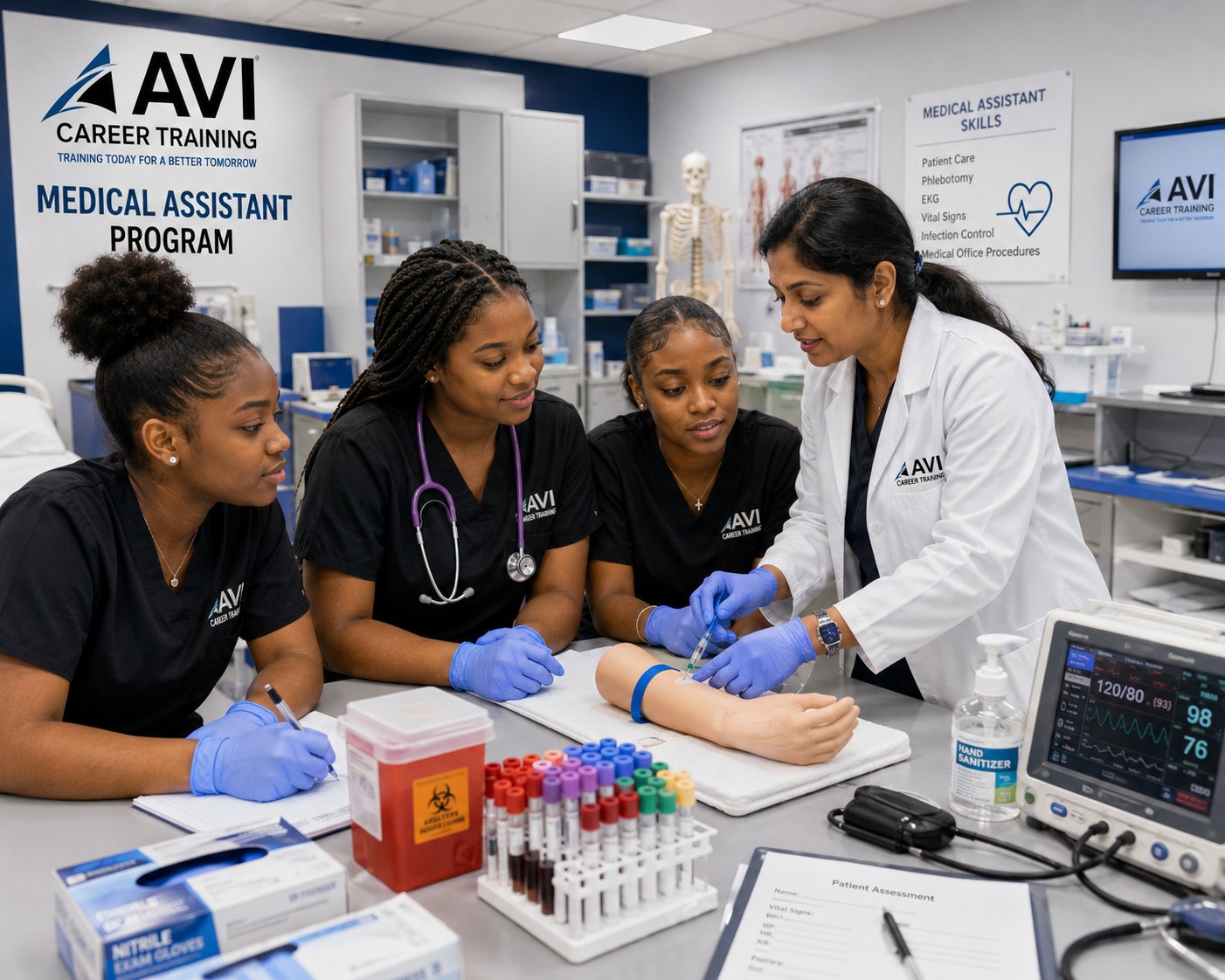
A medical assistant career in the DMV is one of the most accessible, stable, and well-compensated entry-level healthcare paths in the region — no four-year degree required.
The DC-Arlington-Alexandria metro consistently pays medical assistants above the national median, and with major health systems like Inova, MedStar, and Kaiser Permanente expanding across Northern Virginia, Maryland, and DC, demand for qualified MAs is not slowing down. If you’re a career changer, a recent high school graduate, or a working adult researching your options, this guide walks you through everything: what the job actually looks like day-to-day, what you’ll earn, how to get certified in Virginia, and how healthcare-adjacent wellness careers compare if you want a different kind of clinical path.
- Medical assistants in the DC metro area earn 10–18% above the national median, which sits around $42,000–$46,000/year nationally (BLS).
- BLS projects MA employment to grow approximately 14% through 2032 — faster than the average for all occupations.
- Virginia does not require state licensure for medical assistants, but national certification (CMA or RMA) is increasingly required by Northern Virginia employers.
- Most accredited MA programs take 9–12 months to complete; some accelerated programs finish in as few as 6 months.
- If clinical settings aren’t your goal, medical esthetics and cosmetic laser technology offer healthcare-adjacent careers with comparable or higher earning potential and faster training timelines.
—
What Does a Medical Assistant Actually Do?
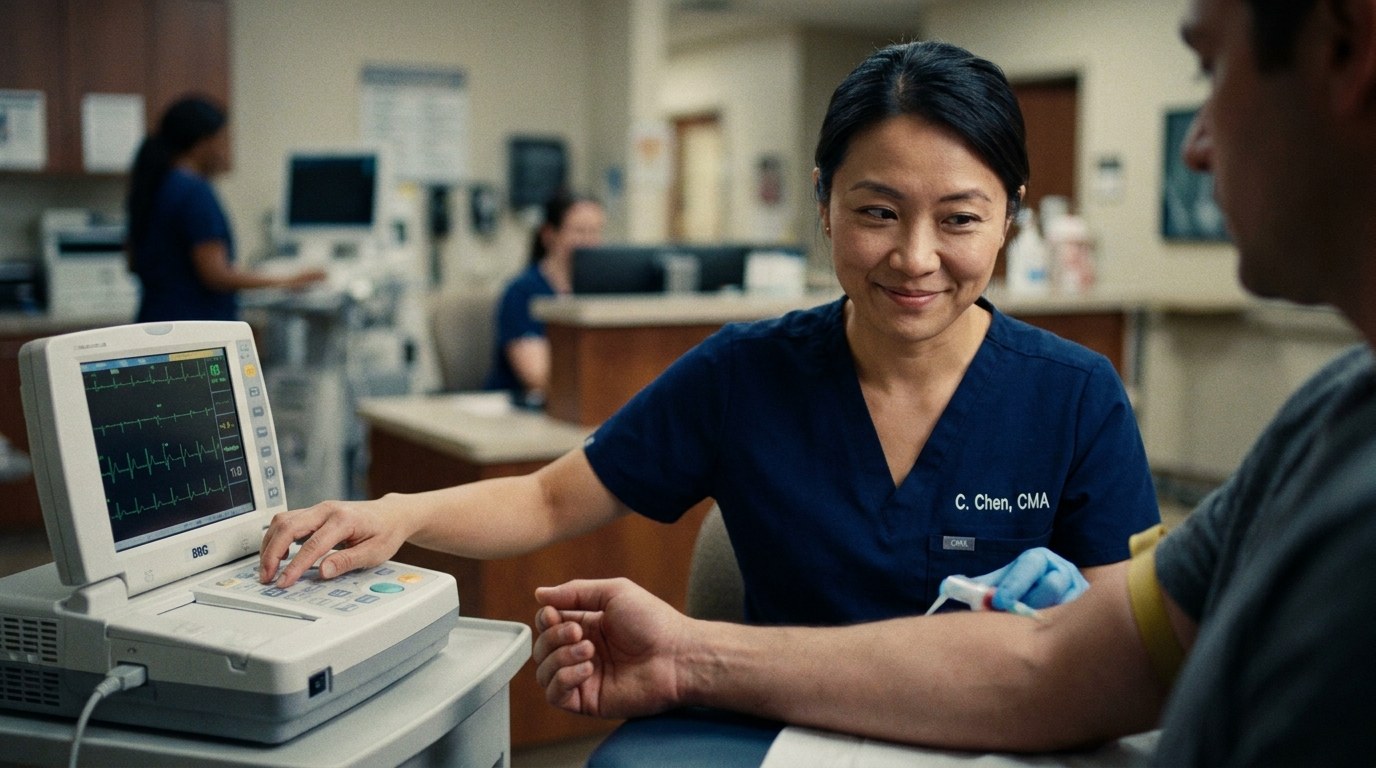
A medical assistant is the versatile backbone of a clinical practice — handling both patient-facing clinical tasks and behind-the-scenes administrative work within a single shift.
That versatility is exactly what makes the role so valuable to employers and so appealing to people who want to be in healthcare without spending four years (and $60,000+) earning a nursing degree.
Clinical Duties
On the clinical side, medical assistants are trained to:
Administrative Duties
MAs also keep practices running from the desk:
Where Do Medical Assistants Work?
The majority of MAs work in physician’s offices and outpatient clinics — not hospitals. In the DMV, that means a huge range of settings: primary care practices, dermatology clinics, OB/GYN offices, urgent care centers, pediatric practices, and specialty clinics (cardiology, orthopedics, oncology). Some MAs work in hospital-based outpatient departments at places like Inova Fairfax or MedStar Georgetown.
The role suits people who want human connection, a structured environment, and daily variety — without the 12-hour shift model common in hospital nursing.
—
Medical Assistant Salary and Job Outlook in the DMV Area
Medical assistants in the DC metro area earn measurably more than the national average — and the job market here is one of the strongest in the country.
What MAs Earn Nationally vs. in the DMV
According to the Bureau of Labor Statistics (BLS) Occupational Outlook Handbook, the national median annual wage for medical assistants is approximately $42,000–$46,000 (verify current figure at BLS.gov before publishing). However, wages in the DC-Arlington-Alexandria metropolitan statistical area (MSA) consistently run 10–18% above that national median, placing experienced MAs in the region well above the $50,000 threshold depending on specialty, certification, and employer.
Why the DMV Pays More
Several factors drive the regional wage premium:
Career Advancement and Earning Potential
Entry-level MAs typically start in the mid-$30,000s to low $40,000s, depending on certification status and specialty. With two to five years of experience — particularly in specialties like dermatology, cardiology, or surgical assisting — MAs can push into the $50,000–$58,000 range. Some MAs use the role as a launch pad into nursing (LPN or RN), physician assisting, or healthcare administration.
—
—
How to Become a Medical Assistant in Virginia — Step by Step
Becoming a medical assistant in Virginia is a straightforward process that most people complete in under a year.
Here’s the complete pathway:
Step 1: Complete an Accredited Medical Assistant Program
Enroll in a program accredited by the Commission on Accreditation of Allied Health Education Programs (CAAHEP) or the Accrediting Bureau of Health Education Schools (ABHES). Program length typically ranges from 9 to 12 months for certificate and diploma programs. Some associate degree programs run 18–24 months. In the DMV, you’ll find options at community colleges (NOVA, Montgomery College, Prince George’s Community College) and private career schools.
Step 2: Complete a Clinical Externship
Accredited programs require a hands-on externship — typically 160–200 hours in a real clinical setting. This is where you practice phlebotomy, vital signs, EKG prep, and patient interaction under supervision.
Step 3: Earn National Certification
Virginia does not require state licensure for medical assistants. However, national certification is now expected by most major Northern Virginia employers. Two primary credentials:
Both require passing a written exam. CMA requires recertification every 60 months. RMA offers points-based continuing education recertification.
Step 4: Apply and Start Working
With your certification in hand, you can begin applying to physician practices, urgent care clinics, and health systems across the DMV. Most entry-level positions do not require prior work experience beyond your externship.
Typical Timeline: 9–12 months from enrollment to first job, assuming you pass your certification exam within 60–90 days of graduation (most test prep timelines).
—
Medical Assistant vs. Other Healthcare-Adjacent Careers in the DMV
Medical assisting is one of several accessible healthcare-adjacent careers worth comparing before you commit to a training program.
Depending on your goals — work environment, earning potential, training length, and the kind of patient interactions you want — one of these paths may fit your life better than another.
Career Comparison: Medical Assistant vs. Healthcare-Adjacent Paths
| Career | Training Length | Typical DMV Earnings | Work Environment | Licensing/Cert Required |
|—|—|—|—|—|
| Medical Assistant | 9–12 months | $38,000–$55,000 | Physician offices, clinics | National cert (CMA/RMA) preferred |
| Medical Esthetician | 6–12 months | $45,000–$70,000+ | Med spas, dermatology, plastic surgery | Virginia DPOR esthetician license |
| Cosmetic Laser Technician | Weeks to months (varies) | $45,000–$75,000+ | Laser clinics, med spas | Virginia-specific training requirements |
| Phlebotomist | 4–8 weeks | $32,000–$42,000 | Labs, hospitals, blood banks | National cert preferred |
| Dental Assistant | 9–12 months | $38,000–$52,000 | Dental offices | Radiography certification required in VA |
The Medical Esthetician Path: A Closer Look
If the clinical setting appeals to you but you’re drawn more to skin health, cosmetic procedures, and patient wellness than vitals and EKGs, a medical esthetician career may be worth serious consideration.
Medical estheticians work in dermatology offices, plastic surgery practices, and medical spas — performing chemical peels, microneedling, laser-assisted facials, pre- and post-surgical skin prep, and advanced skin analysis. It’s genuinely clinical work, with real protocols and measurable patient outcomes. But it focuses on the skin rather than systemic medicine.
In the DMV, where the concentration of med spas and aesthetic medicine practices is extremely high, experienced medical estheticians with strong technique and a loyal book of clients can earn well into the $60,000–$80,000 range — particularly those working on commission or building independent clientele.
The training pathway in Virginia goes through the Virginia Department of Professional and Occupational Regulation (DPOR), and licensure is required. Accredited esthetics programs — like the Basic Esthetics and Master Esthetics programs at AVI Career Training — prepare students for the Virginia State Board exam and the specialized skin techniques demanded by the aesthetic medicine market.
Cosmetic Laser Technology: Where Aesthetics Meets Clinical Science
Cosmetic laser technicians operate energy-based devices — laser hair removal systems, IPL, radiofrequency, and body contouring platforms — in medical spa and clinical settings. The work requires technical precision, strong knowledge of skin physiology, and the ability to adapt treatment protocols to diverse skin tones.
This is one of the fastest-growing niches in aesthetic medicine, and in Northern Virginia’s thriving med spa market, trained laser technicians are in genuine demand. AVI Career Training offers a Cosmetic Laser Technician program specifically designed to train students for this career — with hands-on equipment access and a curriculum built around treating all skin types safely and effectively.
If you want to explore a clinical aesthetic pathway, reach out to AVI Career Training to learn what the Cosmetic Laser Technician program includes and whether it aligns with your goals.
—
Is a Medical Assistant Career Right for You? Next Steps in the DMV
Medical assisting is a genuinely strong career choice for the right person — but “right for the region” doesn’t automatically mean “right for you.”
Who Thrives as a Medical Assistant
The people who succeed and stay in medical assisting tend to share a few traits:
What to Consider Before Committing to an MA Program
Career ceiling: Without additional education, the MA role has a relatively defined salary ceiling. If you want upward mobility into nursing, PA, or administration, you’ll need additional credentials — plan for that from the start.
Physical demands: MAs are on their feet for most of a shift. Lifting and positioning patients is part of the job. This matters if you have physical limitations.
Schedule: Most MA positions are standard business hours (Monday–Friday, 8am–5pm), which many career changers find appealing compared to hospital shift nursing. Urgent care adds some evening and weekend hours.
Program accreditation: This is non-negotiable. Only graduates of CAAHEP- or ABHES-accredited programs can sit for the CMA (AAMA) exam. Verify accreditation before you spend a dollar on tuition.
How to Research Accredited MA Programs in the DC Metro Area
Look for programs at accredited institutions — community colleges (Northern Virginia Community College, Montgomery College) and career schools. Verify accreditation directly with CAAHEP (caahep.org) or ABHES (abhes.org). Ask each program:
1. What is your first-attempt CMA/RMA pass rate?
2. Where do your graduates work?
3. What does your externship placement look like?
4. What is the total cost, including fees and exam prep?
A strong program answers all four questions clearly and with specifics.
A Real Path: From Retail to Clinical Work
Consider someone like Jasmine — a 31-year-old retail manager in Fairfax County who spent years on her feet helping people, but wanted that work to mean more. She researched healthcare careers that didn’t require a four-year commitment and landed on medical assisting. She enrolled in an accredited 10-month program at a Northern Virginia institution, passed her CMA exam 60 days after graduation, and accepted an offer at a pediatric practice in Reston at $44,000 — with employer-paid benefits and a clear pathway toward a clinical coordinator role within three years.
Her story isn’t unusual. The DMV’s healthcare infrastructure creates real opportunities for motivated career changers who choose the right credential and the right employer from the start.
If Medical Esthetics Interests You More Than Clinical Medicine
Not everyone who researches medical assisting ends up there. Some people discover — mid-research — that what they actually want is to work with skin, perform aesthetic treatments, and build client relationships in a beautiful clinical environment. That’s a completely valid direction, and it’s where AVI Career Training comes in.
AVI offers accredited esthetics and cosmetic laser programs in Vienna, Virginia — in the heart of the Northern Virginia market — specifically designed to prepare students for careers in medical spas, dermatology clinics, and aesthetic practices. If that sounds closer to what you’re looking for, the honest advice is to explore both paths before committing.
—
Frequently Asked Questions: Medical Assistant Careers in the DMV
Q: How long does it take to become a medical assistant in Virginia?
A: Most accredited medical assistant programs in Virginia take 9 to 12 months to complete. Accelerated certificate programs may finish in as few as 6 months. After graduation, add 60–90 days for certification exam prep and testing. Most candidates are working within 12–15 months of starting their program.
Q: Do you need a license to work as a medical assistant in Virginia?
A: No. Virginia does not require state licensure for medical assistants. You practice under the supervision of a licensed physician or authorized provider. However, national certification — either the CMA (AAMA) or RMA (AMT) — is increasingly required by major Northern Virginia employers including Inova Health System and Kaiser Permanente, and it meaningfully improves your earning potential and job security.
Q: What is the average salary for a medical assistant in the DC metro area?
A: Medical assistants in the DC-Arlington-Alexandria MSA typically earn 10–18% above the national median, which the Bureau of Labor Statistics places at approximately $42,000–$46,000 nationally. In practice, experienced, certified MAs in Northern Virginia and suburban Maryland can earn $48,000–$58,000, depending on specialty, employer, and years of experience.
Q: Is medical assisting a good career in Northern Virginia?
A: Yes — by most objective measures. The DMV region offers above-average wages for MAs, strong job security driven by large health systems and federal health infrastructure, and mostly standard business-hours schedules. The main limitations are a relatively defined salary ceiling without further education and the physical demands of the role.
Q: What’s the difference between a medical assistant and a medical esthetician?
A: A medical assistant works