How Master Esthetics Training Changed My Career in NoVA
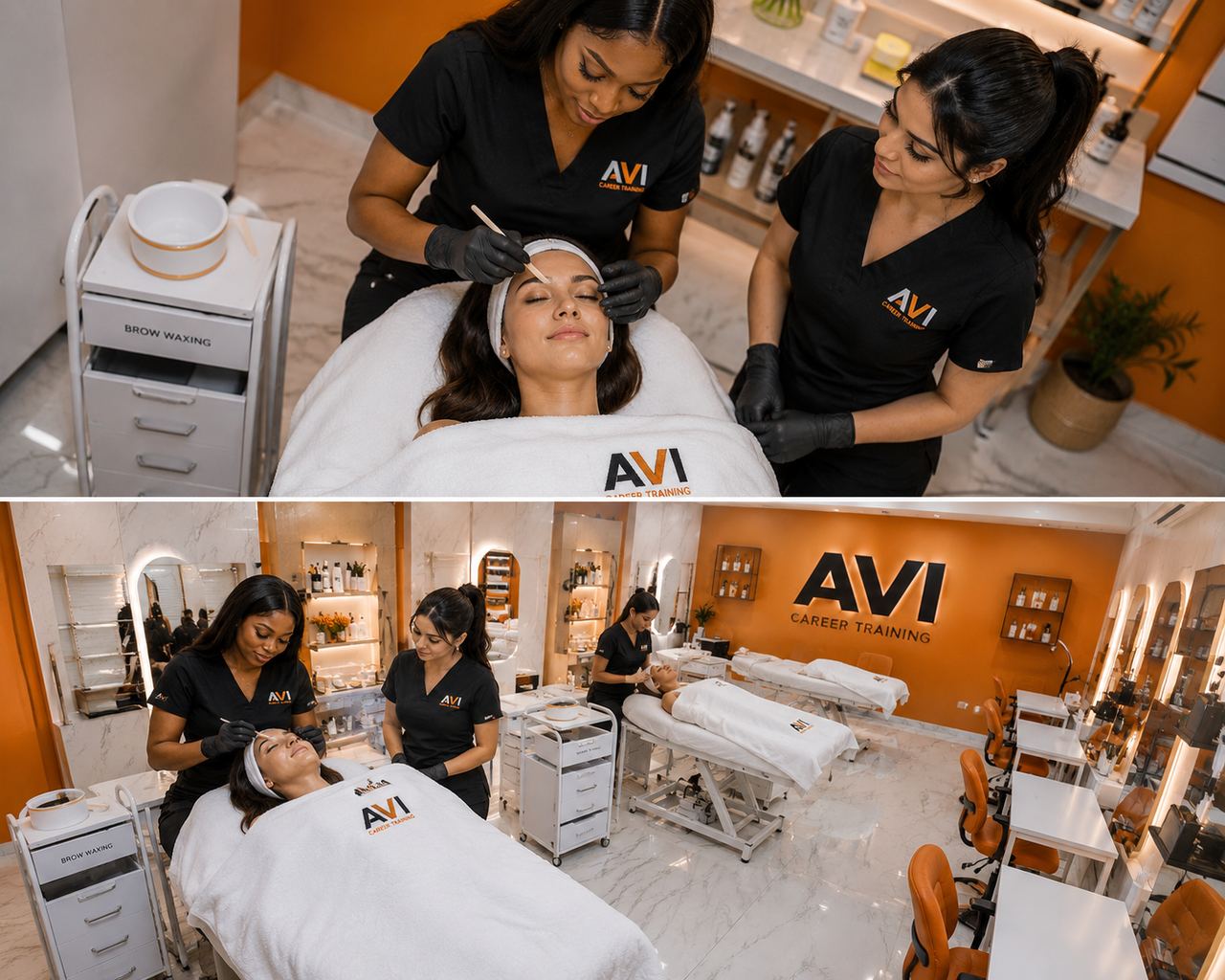
Master esthetics training in Northern Virginia is one of the fastest paths to a high-skill, in-demand career in one of the country’s most diverse and affluent metro markets — and I know that firsthand.
Three years ago, I was working a desk job in Fairfax County that paid the bills but left me dreading Monday mornings. A friend mentioned she’d enrolled in an esthetics program. I was skeptical. I pictured facials at a strip-mall salon. What I discovered was something entirely different: a 600-hour Master Esthetics credential that opened doors to medical spas, dermatology clinics, and luxury wellness centers across the Tysons–Arlington–DC corridor.
This article walks through exactly what the program looks like, what Virginia requires for licensure, what you can earn, and how to choose the right school. If you’re weighing a career change in Northern Virginia, read this before you decide.
Key Takeaways
- Virginia’s Master Esthetics license requires 600 hours of accredited training through DPOR
- AVI Career Training is COE Accredited and SCHEV Certified — located in Vienna, VA, minutes from Tysons Corner
- Master Estheticians can work in medical spas, dermatology offices, hotel spas, and private practice
- The DC–Arlington–Alexandria metro is one of the highest-paying markets for estheticians in the country — check current figures at BLS.gov
- No four-year degree required — you can be licensed and working in less than a year
- Federal financial aid (Title IV/FAFSA) is not available for this program; payment plan and private financing options are offered
Ready to take the first step? Apply to AVI Career Training’s Master Esthetics Program today.
—
Why I Decided to Pursue Master Esthetics Training
Changing careers in your late twenties or thirties feels risky — especially in a high cost-of-living area like Northern Virginia. You’re not going to quit your job and spend four years in school. That’s just not realistic.
That’s exactly why the Master Esthetics track appealed to me. The 600-hour program is designed to be completed in a focused, structured timeline — not years. And when you finish, you walk away with a credential that Virginia’s licensing board actually recognizes for independent professional practice.
The moment it clicked for me: I sat down and mapped out what I actually wanted from work. I wanted to use my hands. I wanted to see real results for real people. I wanted flexibility and the option to eventually work for myself. A master esthetician license in Virginia checked every single box.
What I didn’t expect was how much the scope of the training would surprise me. This isn’t a basic skincare course. Master Esthetics covers advanced clinical techniques — the kind that let you work alongside dermatologists and plastic surgeons in medical spa settings.
> Mini-Story #1: Consider someone like “Diane,” a 34-year-old project coordinator from Reston who spent eight years managing contracts for a federal agency. She loved helping people but felt no connection to the work. After researching esthetician career change options in Northern Virginia, she enrolled in the Master Esthetics program (NO FINANCIAL AID FOR THIS PROGRAM) at AVI Career Training. Six months later, she passed her Virginia State Board exam and accepted a position at a medical spa in McLean. Her first week on the floor, she performed a chemical peel series on a client who’d struggled with hyperpigmentation for years. “That’s the moment I knew I made the right call,” she said.
The Northern Virginia market matters here. This region — Fairfax County, Arlington, Alexandria, Loudoun — is one of the most educated, health-conscious, and high-income metro areas in the United States. Demand for skilled estheticians isn’t going anywhere.
—
What the 600-Hour Master Esthetics Program Actually Covers
The Master Esthetics program (NO FINANCIAL AID FOR THIS PROGRAM) at AVI Career Training is a 600-hour curriculum — and those hours matter. This is not the same as a basic esthetics certificate. The scope is broader, the techniques are more advanced, and the clinical applications are what employers in the DC metro market are specifically hiring for.
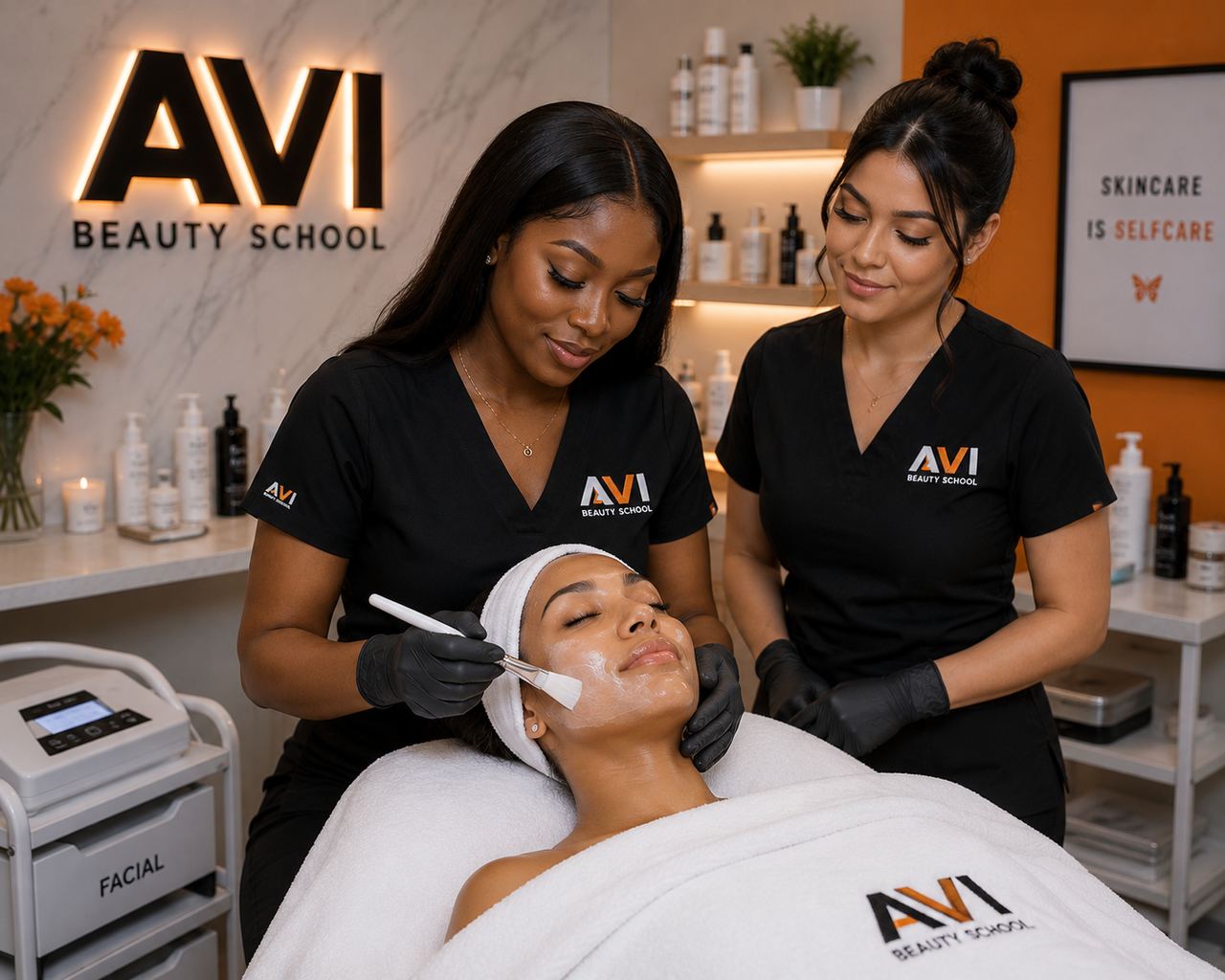
Here’s what the curriculum covers across those 600 hours:
Skin Science and Advanced Analysis
You’ll build a deep foundation in skin anatomy, physiology, and pathology. You learn to assess different skin conditions — acne, rosacea, hyperpigmentation, aging concerns — across a full spectrum of skin tones. This is where inclusive training matters most: the DC metro area is one of the most racially and ethnically diverse regions in the country, and your clients will reflect that.
Advanced Treatment Techniques
The hands-on clinical portion includes:
Inclusive Skin Tone Training
AVI’s curriculum is intentionally built around every client who walks through the door. Techniques are taught and practiced across all skin tones — not just the single-shade default you’ll find at many schools. In a market as diverse as Northern Virginia and the broader DMV, this is a practical career skill, not just a values statement.
Business and Professional Foundations
The program also covers client consultation skills, sanitation and safety protocols (critical for medical spa and clinical settings), and the business side of running a professional practice. If private practice is your long-term goal, these modules matter.
—
Virginia Licensing Requirements and Why They Matter
Virginia’s master esthetician license is issued by the Virginia Department of Professional and Occupational Regulation (DPOR) — the state agency that governs licensed professions including cosmetology and esthetics.
Here’s exactly what DPOR requires for a Master Esthetician license in Virginia:
The Virginia State Board exam tests both theory and practical skills. Your school’s curriculum has to map directly to those exam content areas — which is why attending a COE-accredited school like AVI is so important. You’re not guessing whether your training will prepare you. It’s designed specifically around what the board tests.
Master vs. Basic: What’s the Difference?
Virginia issues two esthetics licenses: Basic Esthetics (150 hours) and Master Esthetics (600 hours). The Master license unlocks a significantly broader scope of practice:
| | Basic Esthetics | Master Esthetics |
|—|—|—|
| Training Hours | 150 hours | 600 hours |
| Chemical Peels | Limited | Yes |
| Microdermabrasion | No | Yes |
| Medical Spa Eligibility | Rare | Common |
| Earning Potential | Entry-level | Advanced/Premium |
The difference in career trajectory is significant. Basic estheticians typically work in entry-level salon roles. Master Estheticians work in medical spas, dermatology offices, luxury hotel spas, and high-end wellness centers — often at meaningfully higher pay rates.
Accreditation also plays a role in licensure pathway. Because AVI Career Training is COE Accredited (Council on Occupational Education) and SCHEV Certified, your 600 hours are recognized by DPOR as meeting the state’s training requirements. That’s not guaranteed at every school.
For the most current licensing requirements, visit the Virginia DPOR Cosmetology Board directly.
—
How Master Esthetics Opened Doors in the DC Metro Market
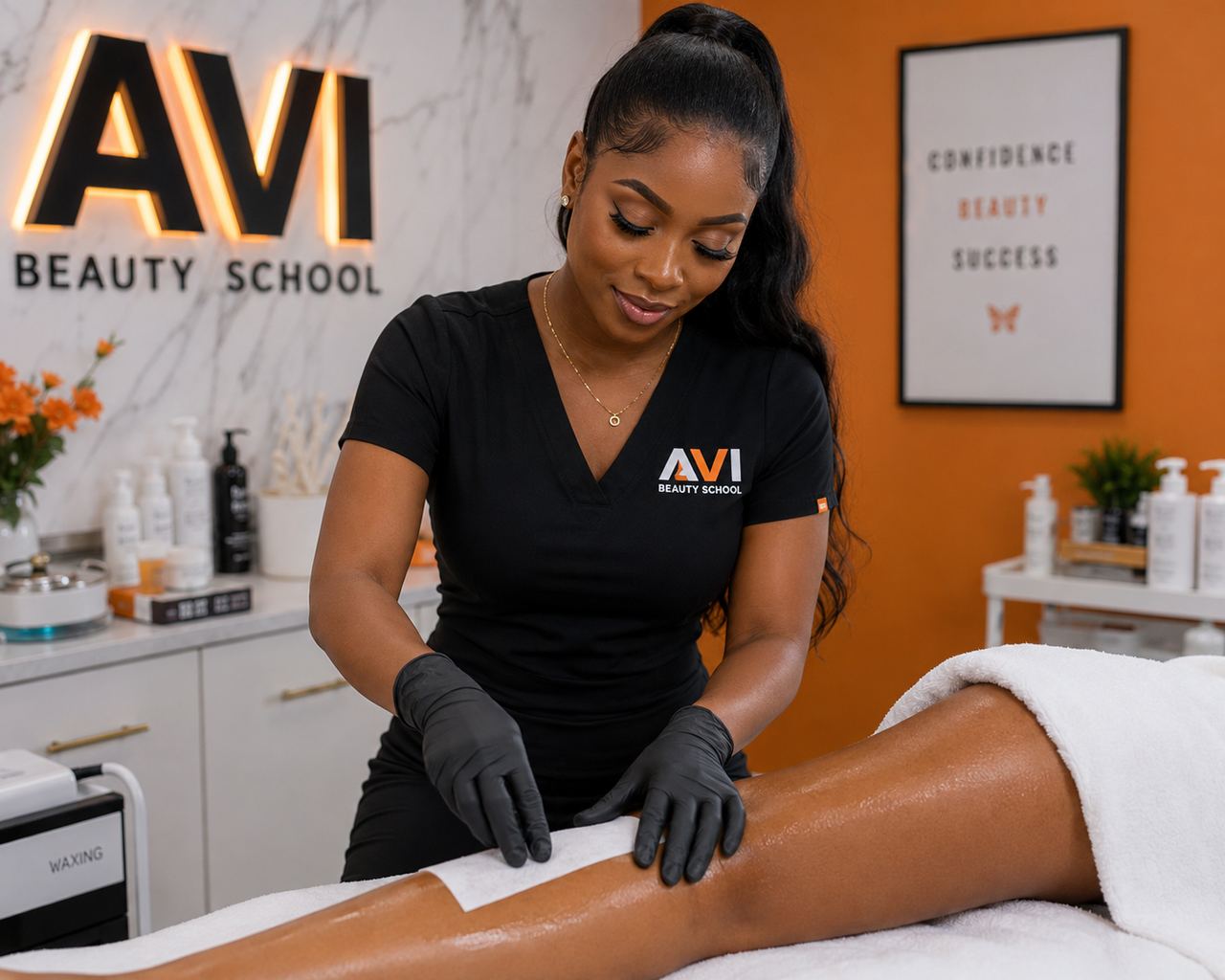
The DC–Arlington–Alexandria metro area is not an average market. Household incomes in Fairfax County, Loudoun County, and Arlington consistently rank among the highest in the United States. That translates directly into client spending on professional skincare services — and into employer budgets for skilled estheticians.
Where Master Estheticians Work in Northern Virginia
After completing a Master Esthetics program and earning your Virginia license, you’re qualified to pursue positions at:
What Do Master Estheticians Earn in Northern Virginia?
According to the U.S. Bureau of Labor Statistics (BLS), esthetician wages in the DC–Arlington–Alexandria metro area are among the highest in the nation. (Note: Verify current figures at BLS.gov SOC 39-5094 before publishing — salary data updates annually and should be current at time of publication.)
What the raw BLS numbers don’t capture is the premium that medical spa and clinical settings command in this market. Estheticians working in medical environments — with skills in chemical peels, microdermabrasion, and advanced treatments — routinely earn above the median, particularly when gratuity, commission structures, and product bonuses are included.
> Mini-Story #2: “Marcus” had worked in hotel hospitality management in DC for six years. He loved the service industry but wanted a more personal, skills-based career. A friend who worked at a Tysons med-spa told him the providers with Master Esthetics credentials earned significantly more than those with basic licenses. Marcus enrolled in the Master Esthetics program (NO FINANCIAL AID FOR THIS PROGRAM) at AVI Career Training, trained at the Vienna, Virginia campus, and passed his board exam on his first attempt. Within two months of licensing, he had offers from three medical spas. He chose a position in Arlington that offered a base rate plus commission on product sales and a quarterly performance bonus.
The takeaway: the Northern Virginia market rewards skill. A Master Esthetics credential from a COE-accredited school positions you above the entry-level field.
Explore the Master Esthetics Program at AVI →
—
What to Look for in a Master Esthetics School in Northern Virginia
Not all esthetics schools are the same. If you’re making a serious career investment — and 600 hours is a serious investment — here’s what to evaluate before enrolling anywhere.
1. Accreditation and State Certification
This is the non-negotiable. Your school must be accredited by a recognized body and certified by SCHEV (State Council of Higher Education for Virginia) for your training hours to count toward your DPOR license application.
AVI Career Training holds both: COE Accreditation (Council on Occupational Education) and SCHEV Certification. These credentials aren’t marketing language — they are regulatory requirements that protect your investment.
2. Inclusive Curriculum
Ask any school you’re considering: “How is your curriculum designed for diverse skin tones?” If the answer is vague, that’s a red flag. In the DMV market, your clients will represent every background. You need training that prepares you for every skin tone, not just the one that shows up in textbook photos.
AVI’s curriculum is built around inclusive technique from the ground up — because serving every client well isn’t optional in this market.
3. Instructor Credentials
Are the instructors licensed, actively practicing professionals? You want to learn from people who’ve worked in the industry you’re entering — not just career educators who’ve never been on a clinic floor.
4. Location and Schedule Accessibility
AVI Career Training is located at 1595 Spring Hill Rd #720, Vienna, VA 22182 — in Fairfax County, roughly 15 minutes from Tysons Corner and accessible from Arlington, Falls Church, Reston, and the broader DC metro. If you’re commuting from DC or Maryland, the location matters.
5. Payment Options (and Financial Aid Transparency)
Federal financial aid (Title IV/FAFSA) is not available for the Master Esthetics program because it is under the federal enrollment threshold for Title IV eligibility. Be skeptical of any school that implies otherwise.
AVI offers payment plan options and accepts the GI Bill® for eligible veterans and service members. If you’re a veteran exploring an esthetician career change in Northern Virginia, ask our admissions team directly about your benefits eligibility.
6. Career Support and Job Placement Context
Does the school have connections to the local employer market? Do graduates actually land jobs in the area? These are fair questions to ask on a campus tour. AVI’s location in the heart of the Northern Virginia wellness and medical spa corridor is not accidental — it’s designed to put graduates close to where the jobs are.
—
Frequently Asked Questions
Q: How long does it take to complete a Master Esthetics program in Virginia?
A: Virginia’s Master Esthetics license requires 600 hours of accredited training. At AVI Career Training in Vienna, VA, the program timeline depends on your schedule — full-time students complete the hours faster than part-time students. Contact AVI’s admissions team at (703) 943-9841 for current scheduling options.
Q: What can a Master Esthetician do that a regular esthetician can’t?
A: In Virginia, a Master Esthetician (600 hours) has a significantly broader scope of practice than a Basic Esthetician (150 hours). Master Estheticians are qualified to perform chemical peels, microdermabrasion, and advanced clinical skincare treatments — which makes them eligible to work in medical spas and dermatology offices. Basic Estheticians are typically limited to entry-level salon services.
Q: What is the difference between a Master Esthetics license and a basic esthetics license in Virginia?
A: Virginia’s DPOR issues two esthetics licenses. The Basic Esthetics license requires 150 training hours and covers foundational skincare services. The Master Esthetics license requires 600 hours and authorizes advanced clinical treatments including chemical peels, microdermabrasion, and specialized modalities. The Master license unlocks substantially more career settings and higher earning potential.
Q: How much do Master Estheticians earn in Northern Virginia?
A: The DC–Arlington–Alexandria metro is one of the highest-paying regions for estheticians in the U.S., according to Bureau of Labor Statistics data (SOC 39-5094). Master Estheticians working in medical spa and clinical settings typically earn above the regional median due to the specialized nature of their services. Check current wage data at BLS.gov and verify with local employers during your job search.
Q: Is Master Esthetics training worth it for a career change?
A: For most career changers in the Northern Virginia market, yes — especially if you want to work in medical spa, clinical, or high-end wellness settings. The 600-hour program is achievable without quitting your income entirely, and the Master Esthetics credential commands significantly higher starting positions than a basic license. The key is choosing a COE-accredited school that prepares you for the Virginia State Board exam and for the diverse client base you’ll serve.
Q: Does AVI Career Training accept the GI Bill® for Master Esthetics?
A: Yes. AVI Career Training accepts the GI Bill® for eligible veterans and service members. Federal financial aid (Title IV/FAFSA) is not available for the Master Esthetics program due to its program-hour structure. Contact admissions at (703) 943-9841 or visit the Vienna, VA campus to discuss your specific benefits.
Q: What makes AVI Career Training different from other esthetics schools in Northern Virginia?
A: AVI Career Training holds COE Accreditation (Council on Occupational Education) and SCHEV Certification — both required for your training hours to count toward a Virginia DPOR license. AVI’s curriculum is specifically built around inclusive skincare training across all skin tones, which is a practical necessity in the diverse DC metro market. The Vienna, VA campus is centrally located near Tysons Corner with access from throughout Fairfax County, Arlington, and DC.
—

—
Your Next Step Starts in Vienna, Virginia
Master esthetics training in Northern Virginia isn’t just a credential. It’s a career rebuilt on your terms.