
Master Esthetics School: Your Top Questions Answered
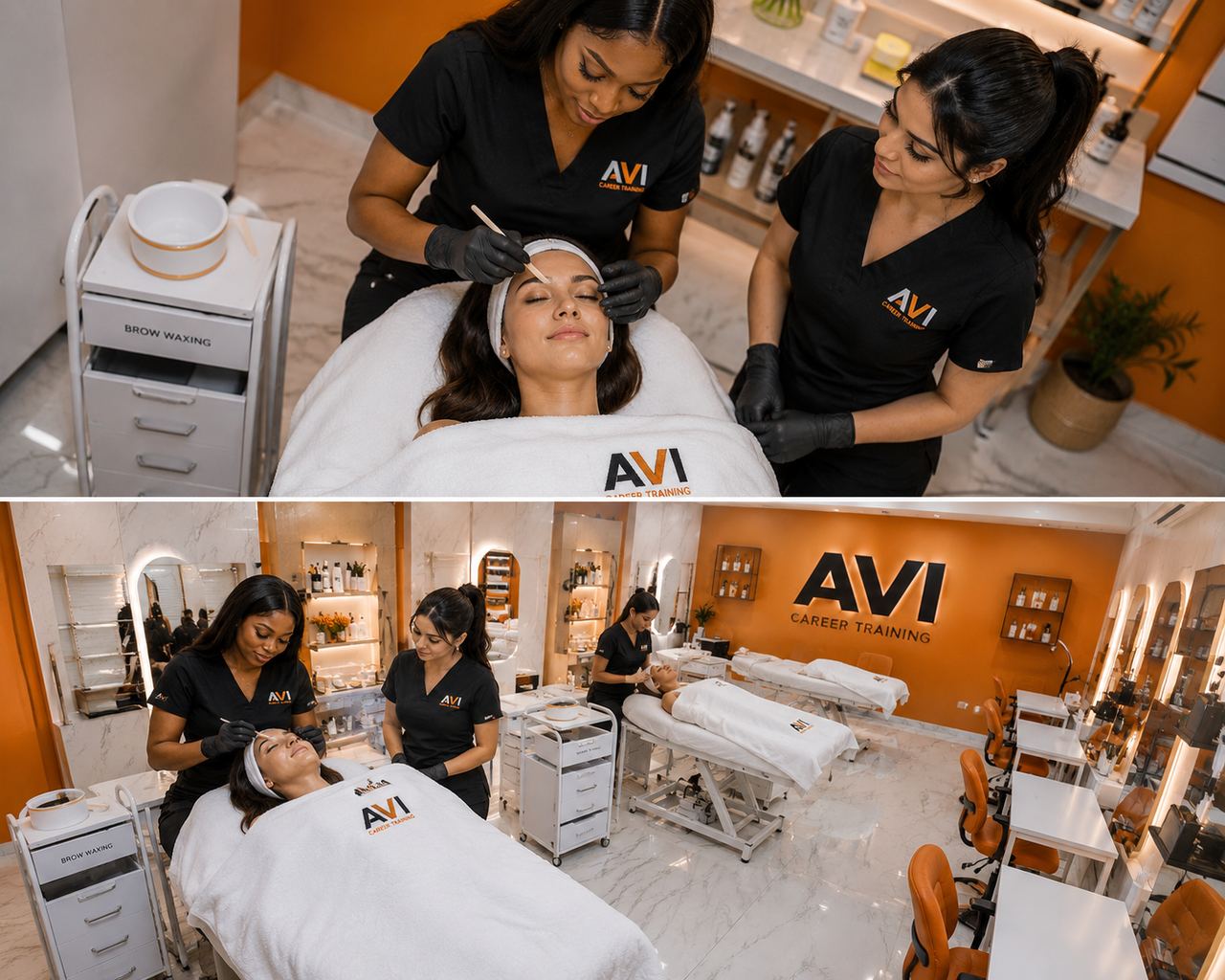
Master esthetics school is an advanced, licensed training program that prepares you to perform high-level skin care treatments — well beyond what a standard esthetics license covers. If you’re in Northern Virginia and serious about building a career in med spas, dermatology support, or luxury skin care, this credential is the one that opens those doors.
At AVI Career Training in Vienna, Virginia, the Master Esthetics program runs 600 hours and leads directly to Virginia State Board licensure through the Virginia Department of Professional and Occupational Regulation (DPOR). It’s a rigorous, hands-on program designed for people who want to enter the field at the highest possible level — or elevate an existing esthetics career.
Key Takeaways
- AVI’s Master Esthetics program is 600 hours — four times the 150-hour standard esthetics requirement in Virginia
- Graduates are eligible to sit for the Virginia State Board exam and obtain a master esthetician license through DPOR
- AVI Career Training is COE Accredited and SCHEV Certified, with GI Bill® accepted for eligible veterans
- Master estheticians qualify for roles in med spas, dermatology clinics, luxury day spas, and private suite rental
- The Bureau of Labor Statistics reports a median annual wage of $42,230 for skincare specialists nationally — with experienced master estheticians in clinical settings often earning significantly more
Ready to take the next step? Apply to AVI’s Master Esthetics program today and get started on your path to licensure.
—
What Is Master Esthetics School — and Who Is It For?
Master esthetics school is an advanced skin care training program that goes far beyond the foundational esthetics license. Where a standard esthetics program teaches core services like facials and basic waxing, a master esthetics program covers advanced clinical treatments, light-based therapies, specialty body services, and the business skills needed to work in high-demand professional settings.
In Virginia, there are two tiers of esthetics licensure:
The gap between those two tiers isn’t just about hours — it’s about what you’re legally qualified to do, where you can work, and what clients you can serve.
Who Should Consider Master Esthetics Training?
Master esthetics school is the right move for three types of students:
1. Licensed estheticians who want to expand their scope of practice and qualify for more competitive positions
2. Career changers who want to enter the beauty and wellness industry at a premium level from day one
3. New students who are serious about the field and don’t want to start over with a basic license before upgrading
If you’ve been researching esthetics careers and keep hitting a ceiling — job listings that say “master esthetician preferred,” med spas that require advanced certification, or clients who need treatments your current license doesn’t cover — master esthetics school is the answer.
—
How Many Hours Is Master Esthetics School in Virginia?
Virginia’s master esthetician license requires 600 clock hours of training — and that’s exactly what AVI Career Training’s Master Esthetics program delivers.
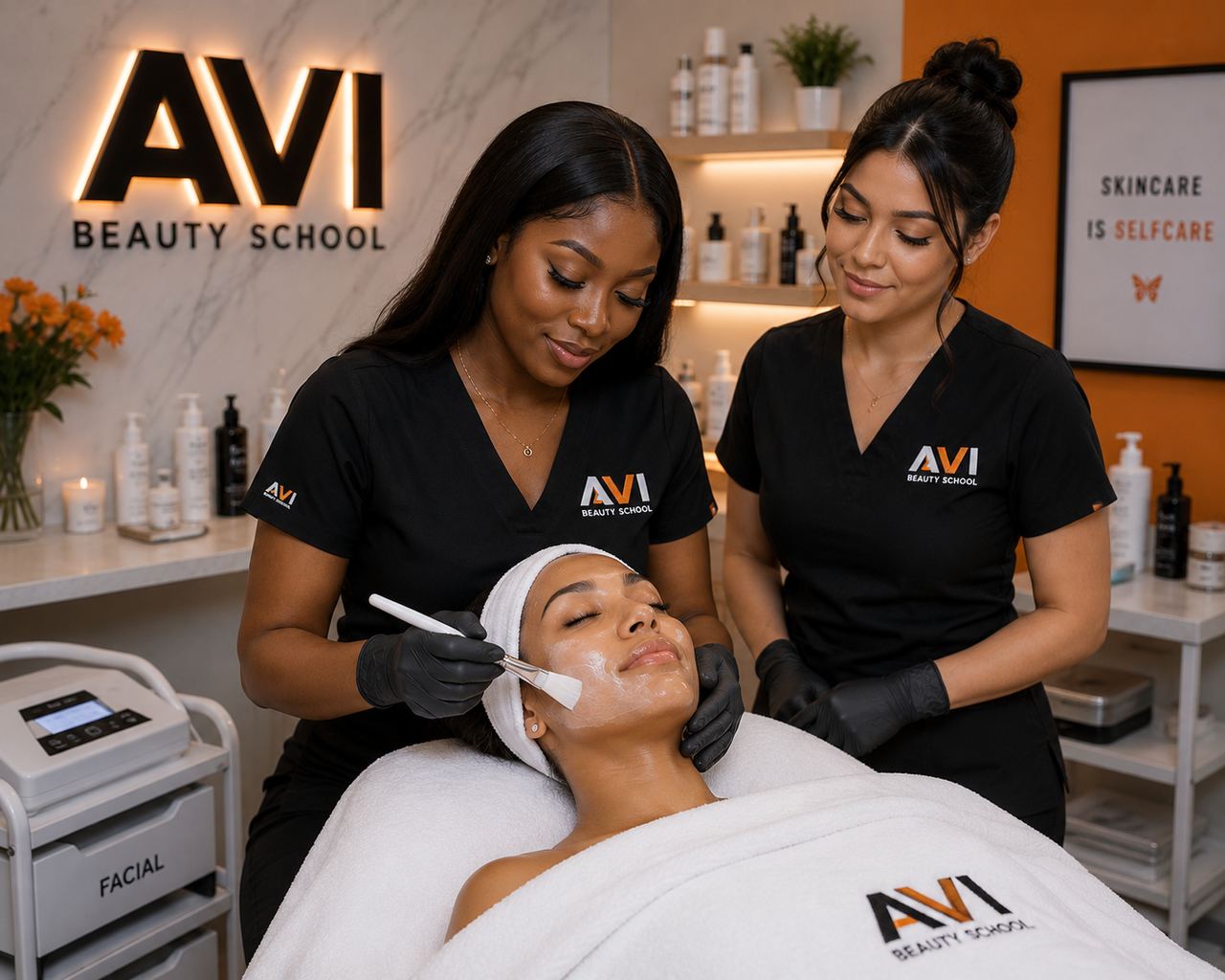
Those 600 hours are structured to give you real competency across every service area you’ll encounter in professional practice. This isn’t lecture time padded with theory. At AVI, you work on real clients in a supervised clinical setting, building the technique and confidence that employers actually hire for.
What Do You Learn Across 600 Hours?
AVI’s Master Esthetics curriculum covers a broad range of advanced topics, including:
After completing all 600 hours, graduates are eligible to sit for the Virginia State Board examination administered under DPOR. Passing that exam earns you your master esthetician license — the credential that makes you a fully licensed, practicing professional in the Commonwealth of Virginia.
> Important Note on Financial Aid: AVI’s Master Esthetics program is under 600 billable hours for Title IV purposes and does not qualify for federal financial aid (FAFSA/Pell Grant). Payment plan and private financing options are available. GI Bill® benefits may be applicable for eligible veterans — contact AVI admissions at (703) 943-9841 to confirm your eligibility.
—
What’s the Difference Between a Master Esthetician and a Regular Esthetician?
The clearest way to understand the difference: a standard esthetician license lets you work; a master esthetician license lets you work everywhere — and on a much wider range of services.
Here’s a direct comparison:
| | Standard Esthetician | Master Esthetician |
|—|—|—|
| Virginia Training Hours | 150 hours | 600 hours |
| Facial Services | ✅ Basic facials | ✅ Advanced clinical facials |
| Chemical Exfoliation | Limited | ✅ Full scope |
| Body Services | Limited | ✅ Wraps, scrubs, contouring |
| Light/Laser Therapy | ❌ | ✅ Eligible for advanced pathways |
| Med Spa / Clinical Settings | Often ineligible | ✅ Commonly required |
| Earning Potential | Entry level | Higher — clinical clientele |
Does the Extra Training Actually Pay Off?
That’s the real question — and the answer is yes, when you choose the right market.
Northern Virginia sits in the middle of one of the most economically active metro areas in the country. The DC metro area has a dense concentration of med spas, luxury day spas, dermatology clinics, and high-income residential neighborhoods that support premium skin care services. That means demand for master estheticians here is stronger than in many other regional markets.
The Bureau of Labor Statistics reports a median annual wage of $42,230 for skincare specialists nationally (SOC 39-5094). Experienced master estheticians working in clinical and med spa settings in high-cost-of-living markets like Northern Virginia and the DMV area frequently command rates above that median — particularly those who develop specialties in advanced facial treatments or cosmetic laser services.
The extra training pays off when you use it to position yourself in the right environments. AVI’s curriculum is built to make that transition smooth.
—
What Can You Do After Graduating from Master Esthetics School?
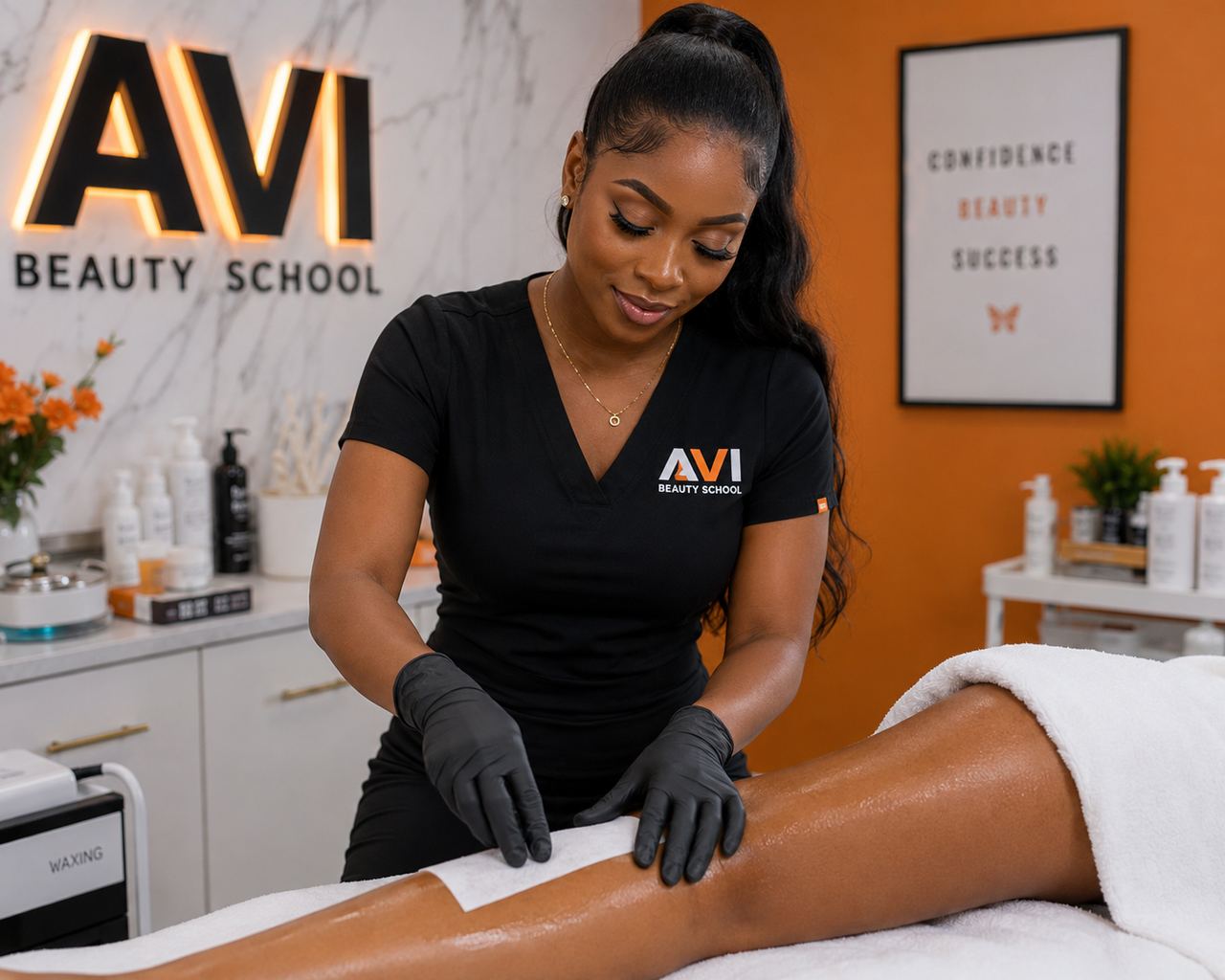
Completing master esthetics school and passing the Virginia State Board exam opens a genuinely wide range of career paths — wider than most people realize when they start researching the field.
Career Paths for Master Estheticians in Northern Virginia
Med Spas and Medical Aesthetic Clinics
Med spas are one of the fastest-growing segments of the beauty and wellness industry. Many of them require — not just prefer — master esthetician credentials for clinical-facing roles. Services like microdermabrasion, advanced chemical peels, and treatment coordination often fall within the master esthetician’s scope.
Luxury Day Spas
High-end day spas in Northern Virginia and the DC metro area seek master estheticians for their ability to offer premium, results-driven services. These settings typically offer higher service ticket prices and better earning potential than entry-level spa environments.
Dermatology Clinic Support Roles
Some dermatology practices employ master estheticians to handle patient-facing skin care services that fall outside the physician’s scope — things like pre- and post-procedure skin prep, maintenance treatment plans, and client education.
Cosmetic Laser Technology Pathway
AVI also offers a Cosmetic Laser Technology program that pairs naturally with master esthetics training. Laser and light-based treatments are among the highest-demand services in the med spa industry, and a master esthetics background gives you a strong clinical foundation to build on.
Private Suite Rental and Freelance
Many master estheticians eventually rent their own treatment suite and build a private clientele. The advanced credentials and broader service menu make it easier to command premium rates and fill a book with loyal, high-value clients.
A Student Story: From Retail to the Treatment Room
Consider someone like Jasmine — a former retail manager in her early 30s who had been getting advanced facials for years and knew, with absolute certainty, that skin care was where she wanted to be. She didn’t want to spend time on a basic license she’d immediately have to upgrade. She enrolled directly in AVI’s Master Esthetics program, put her organizational skills to work on the 600-hour curriculum, and graduated ready to sit for her Virginia State Board exam. Within weeks of licensing, she was interviewing at two med spas in Tysons Corner — positions that specifically listed “master esthetician license required.” The extra hours she put in upfront saved her time in the long run.
—
How Do You Choose the Right Master Esthetics School in Northern Virginia?
Not all master esthetics programs are the same — and in a field where your license and your hands-on skills determine your career, the school you choose matters more than most people realize. Here are the criteria that actually separate quality programs from generic ones.
1. Accreditation You Can Verify
Look for schools accredited by the Council on Occupational Education (COE) — one of the most respected accrediting bodies for career and vocational schools. COE accreditation means the school has been independently evaluated for educational quality, financial stability, and student outcomes. AVI Career Training is COE Accredited and SCHEV Certified by the State Council of Higher Education for Virginia, which is required for any school to legally operate and enroll students in Virginia.
You can verify accreditation status directly through the COE’s official directory and confirm DPOR-approved programs through the Virginia Department of Professional and Occupational Regulation.
2. Inclusive Curriculum Across All Skin Tones
This is non-negotiable. A quality master esthetics program trains you to work effectively on every skin tone and every skin type — not just the narrow range that appears in many traditional beauty school curricula. AVI’s curriculum is built around inclusive techniques from day one. In Northern Virginia, where your future clients will reflect one of the most diverse populations in the country, this training isn’t a bonus — it’s essential.
3. Real Hands-On Clinical Hours
600 hours in a classroom is not the same as 600 hours in a working clinic environment. Ask any school you’re considering: how much of the program is spent on real clients? At AVI, students work in a supervised clinical setting where real people come in for real services. That’s how you build the muscle memory and client communication skills that employers hire for.
4. GI Bill® Acceptance
For veterans and active-duty military members in the DC metro area, GI Bill® acceptance is a critical factor. AVI Career Training accepts GI Bill® benefits for eligible students. The Northern Virginia area has one of the largest concentrations of federal employees and veterans in the country — if that describes you or someone you know, this benefit is worth exploring before you commit to any program.
5. Instructor Credentials and Industry Experience
Your instructors should be licensed industry professionals with real-world experience in the services they’re teaching. At AVI, instructors aren’t just credentialed — they bring genuine clinical and spa experience into the classroom. Ask every school on your list: are your instructors actively licensed? What industry settings have they worked in?
A Student Story: A Veteran’s New Mission
Marcus spent eight years in the Army before transitioning out and settling in Northern Virginia near his family. He’d always been drawn to the wellness field — massage and skin care specifically — but didn’t know where to start as a career-changer in his 30s. A friend pointed him toward AVI. He confirmed his GI Bill® eligibility with the admissions team, enrolled in the Master Esthetics program, and used his military discipline to stay on top of the demanding 600-hour schedule. Eighteen months after separation, he was licensed, working at a high-end spa in the Tysons Corner area, and building a client base he’d never have had access to with a standard esthetics credential.
—
Frequently Asked Questions: Master Esthetics School
Q: How long does it take to become a master esthetician in Virginia?
A: Virginia requires 600 clock hours of training at an approved school. After completing those hours, you must pass the Virginia State Board exam administered through DPOR. Total time from enrollment to licensure depends on your program schedule, but most students complete AVI’s Master Esthetics program within several months of consistent full-time attendance.
—
Q: What is the difference between an esthetician and a master esthetician?
A: A standard Virginia esthetics license requires 150 hours of training and covers foundational skin care services. A master esthetician license requires 600 hours and unlocks a significantly broader scope of practice — including advanced clinical treatments, body services, and eligibility for roles in med spas and dermatology-adjacent settings.
—
Q: How many hours is master esthetics school in Virginia?
A: Virginia’s master esthetician license requires 600 clock hours of state-approved training. AVI Career Training’s Master Esthetics program meets that requirement exactly.
—
Q: Is master esthetics school worth it?
A: For students who want to work in clinical settings, med spas, or luxury environments — yes. The additional training unlocks a wider scope of practice, access to higher-paying positions, and greater flexibility to build a private clientele. In a high-demand market like Northern Virginia and the DC metro area, the advanced credential is a genuine competitive advantage.
—
Q: What can a master esthetician do that a regular esthetician cannot?
A: A master esthetician can perform advanced chemical exfoliation, a broader range of body treatments, light-based therapy services, and clinical-level skin analysis and treatment planning. They are also eligible for roles in med spas and dermatology support settings that typically require advanced credentials.
—
Q: Does AVI Career Training offer financial aid for the Master Esthetics program?
A: Federal financial aid (FAFSA/Title IV) is not available for AVI’s Master Esthetics program because it falls under the threshold for Title IV eligibility. Payment plans and private financing options are available. GI Bill® benefits may be applicable for eligible veterans — call (703) 943-9841 to confirm your specific eligibility.
—
Q: Where is AVI Career Training located?
A: AVI Career Training is located at 1595 Spring Hill Rd #720, Vienna, VA 22182 — in the Tysons Corner area of Northern Virginia, easily accessible from across the DC metro region.
—
Q: What accreditation does AVI Career Training hold?
A: AVI Career Training is accredited by the Council on Occupational Education (COE) and certified by the State Council of Higher Education for Virginia (SCHEV). Both are credentials you can verify independently before enrolling.
—

—
Ready to Start at AVI’s Master Esthetics School in Vienna, VA?
If you’ve read this far, you already know more about master esthetics training than most people who start the search. The next step is a simple one: connect with AVI Career Training and find out whether our program is the right fit for where you want your career to go.
AVI’s Master Esthetics program is 600 hours, hands-on, inclusive, and built for the Northern Virginia market. Federal financial aid (FAFSA/Title IV) is not available for this program — payment plans and private financing options are available. Our students graduate eligible to sit for the Virginia State Board exam and enter a field with real, growing demand — in one of the strongest regional markets in the country.
Questions before you apply? Call the admissions team directly at (703) 943-9841 or visit AVI Career Training’s website to learn more about what the program includes and how to get started.
—
About AVI Career Training
AVI Career Training is a COE-accredited, SCHEV-certified beauty and wellness career school located in Vienna, Virginia, in the heart of the Northern Virginia / DC metro area. AVI offers hands-on, career-focused programs in Master Esthetics, Basic Esthetics, Cosmetology, Nail Technology, Massage Therapy, Cosmetic Laser Technology, Electrolysis, and ES