Master Esthetics: A Healthcare Career Guide for the DMV
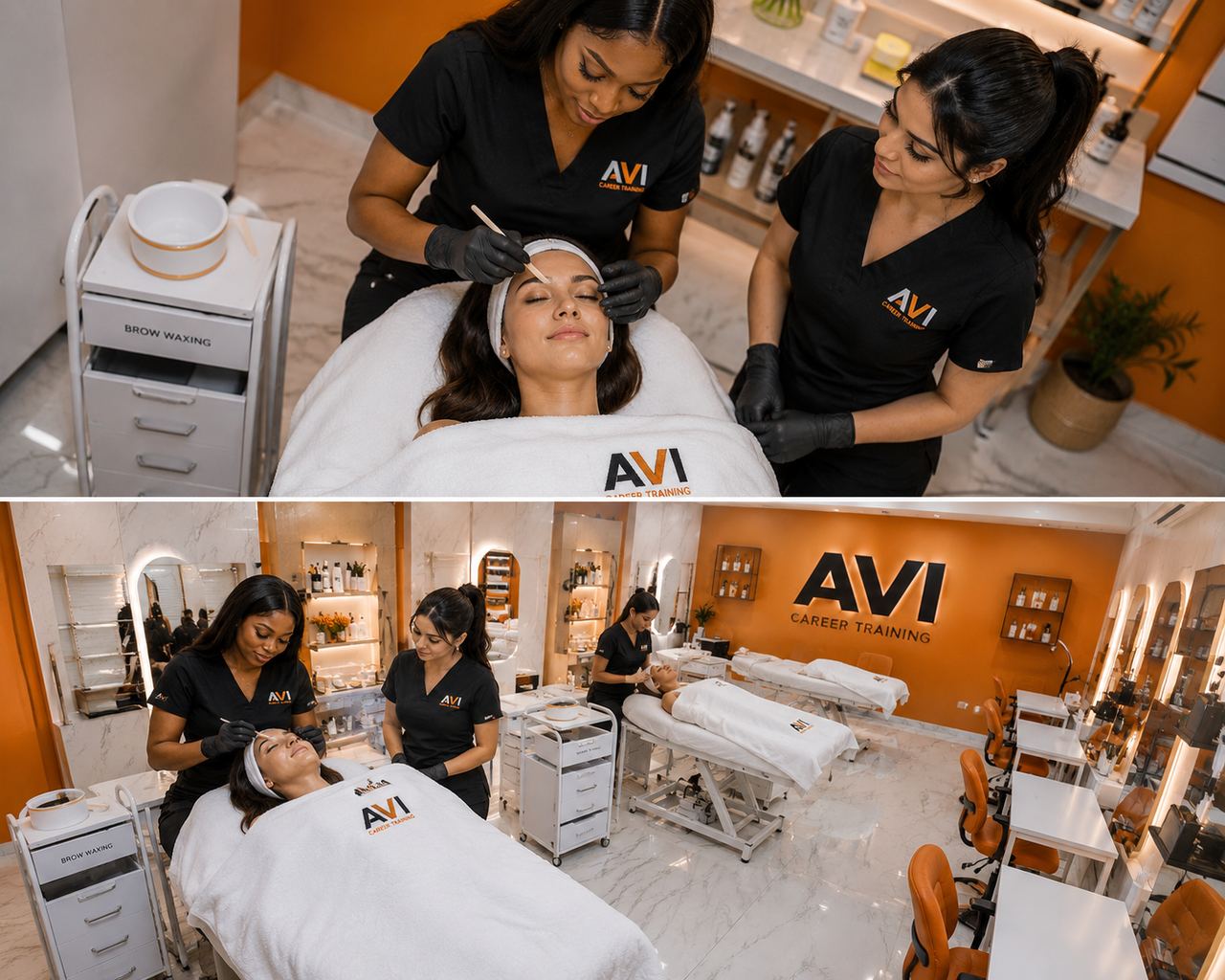
Master esthetics is one of the most direct paths into a healthcare-adjacent career in the DMV — combining advanced clinical skincare skills with real demand from medspas, dermatology offices, and oncology wellness programs across Northern Virginia, Maryland, and DC.
If you’ve been researching the master esthetics career DMV landscape and wondering whether this path is worth it, this guide answers every question: what the credential means, how Virginia licensing works, what you can earn, and how to choose the right program near you.
📋 Key Takeaways
- Virginia requires 600 clock hours of esthetics training to sit for licensure — no more, no less
- Licensure is administered by the Virginia Board of Barbering and Cosmetology under VA DPOR
- Master estheticians in the DC metro area earn between $45,000 and $75,000+ annually depending on setting and specialization
- Employment settings include medspas, dermatology clinics, oncology wellness centers, hotel spas, and private practice
- AVI Career Training in Vienna, VA is COE-accredited and SCHEV-certified, with a curriculum built for all skin tones
Ready to take the first step? Apply to AVI Career Training’s Esthetics program today.
—
What Is Master Esthetics — and How Is It Different from Basic Esthetics?
A master esthetician holds an advanced credential that goes well beyond what a standard esthetics license covers — enabling work with clinical-grade treatments, complex skin conditions, and medical-adjacent environments.
Here’s the simplest way to understand the difference: a basic esthetician license qualifies you to perform foundational skincare services — facials, waxing, basic extractions, and retail consultations. A master esthetician credential, by contrast, opens the door to chemical peels, microdermabrasion, advanced skin analysis, lymphatic drainage, and laser-adjacent treatments depending on state scope of practice.
What Does a Master Esthetician Actually Do?
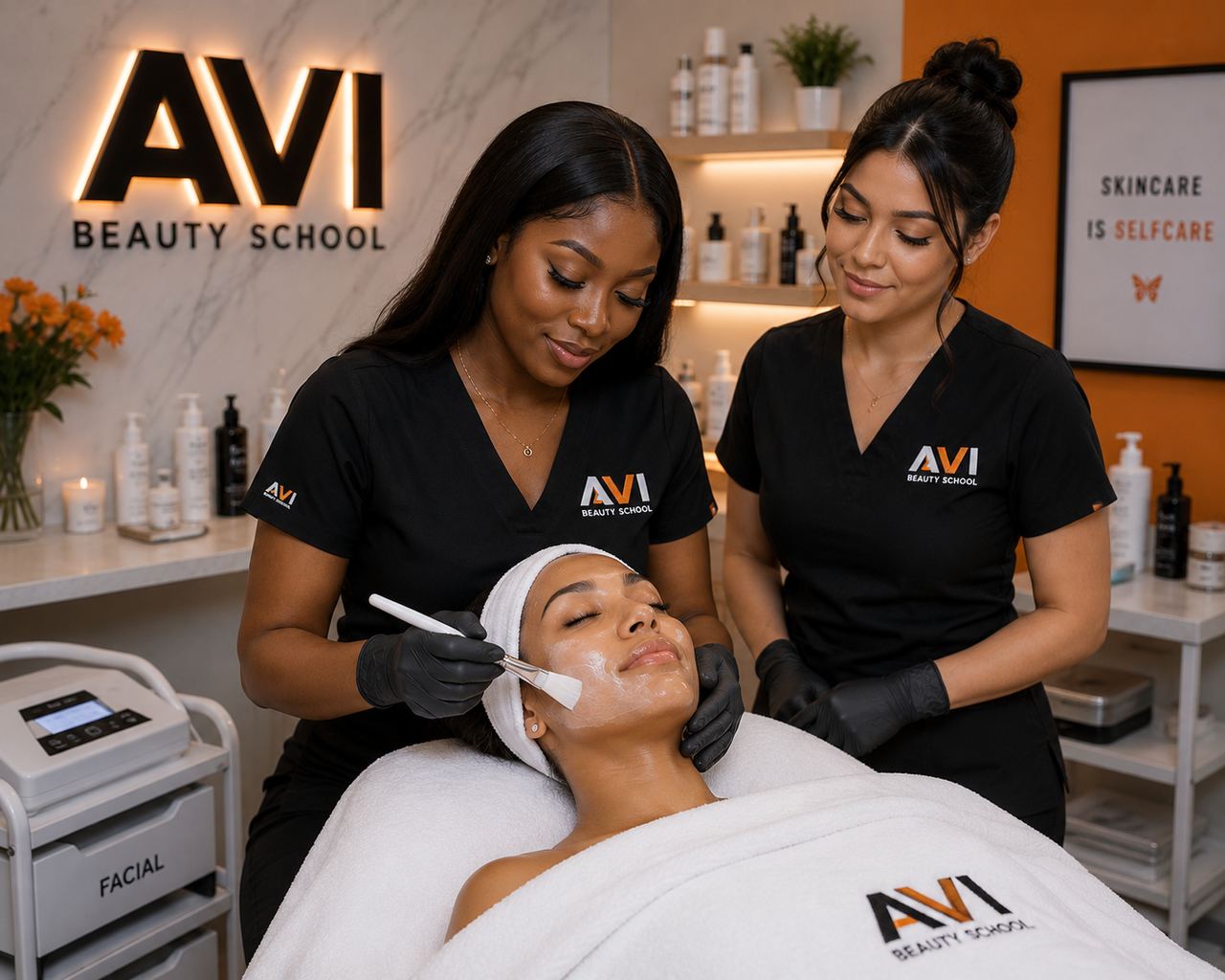
Master estheticians assess and treat skin at a clinical level. On any given day, that might mean:
- Performing enzyme and chemical peel treatments for acne scarring or hyperpigmentation
- Conducting advanced skin consultations using magnification and analysis tools
- Assisting in post-surgical skincare recovery under physician supervision
- Administering microdermabrasion or dermaplaning services
- Working alongside dermatologists on pre- and post-procedure skin prep
- Supporting oncology patients with sensitivity-focused skincare protocols
That clinical range is exactly what sets the master esthetician Virginia credential apart — and why employers in medspas and dermatology offices specifically seek it out.
The Terminology Question: “Master Esthetician” vs. “Master Esthetics License”
In Virginia, the state issues a single esthetics license — not a separate tiered “master” designation. What distinguishes a “master esthetician” in practice is the depth of their training, the advanced techniques covered in their program, and any post-licensure specializations they pursue. When DMV employers post for “master esthetician” roles, they’re looking for candidates trained beyond the basics. That’s why choosing a program with rigorous, clinical-grade curriculum matters enormously.
—
Why Master Esthetics Qualifies as a Healthcare-Adjacent Career
Esthetics is a healthcare-adjacent career because master estheticians regularly work inside clinical environments — under the supervision of physicians, dermatologists, and oncologists — contributing directly to patient skin health and recovery outcomes.
This isn’t a stretch. It’s the reality of how esthetics has evolved, especially in the DMV’s thriving medspa and dermatology market.
The Clinical Settings Where Master Estheticians Work
🏥 Dermatology Offices
Master estheticians prep and treat patients alongside dermatologists, handling pre-procedure skin conditioning and post-treatment recovery care.
💉 Medical Spas
The fastest-growing employment setting in the DMV — medspas blend clinical treatment with wellness, requiring estheticians with advanced technical skills.
🎗️ Oncology Wellness
Cancer patients often experience significant skin changes during treatment. Oncology-trained estheticians provide safe, sensitivity-focused care in hospital and outpatient settings.
🔬 Plastic Surgery Practices
Post-surgical skincare is a growing specialty — estheticians assist with healing protocols, scar management, and skin preparation before elective procedures.
Why Career-Changers from Healthcare Choose Esthetics
Many students entering AVI Career Training’s Esthetics program come from nursing support roles, medical assisting, or general wellness backgrounds. They’re drawn to esthetics because it combines their comfort with clinical environments and human care with entrepreneurial flexibility and creative expression.
Natalia’s story captures this well. She spent six years as a medical assistant in a dermatology practice in Fairfax, Virginia. She watched estheticians perform peels and microdermabrasion treatments every day and knew she wanted to do that work herself. After completing her esthetics training, she returned to the same practice — this time as a licensed provider rather than support staff. Her existing clinical knowledge made her transition seamless, and her employer valued her medical background immediately.
Is esthetics considered a healthcare career? Formally, esthetics is classified under personal care services — not licensed healthcare. But in practice, master estheticians work within healthcare teams, follow clinical protocols, and contribute to patient wellbeing in ways that are deeply healthcare-adjacent. For many employers in the DMV, the distinction barely matters.
—
Virginia Licensing Requirements and the 600-Hour Path
Becoming a licensed esthetician in Virginia requires completing 600 clock hours of approved esthetics training and passing both a written and practical examination administered by the Virginia Board of Barbering and Cosmetology.
Here’s the complete step-by-step picture.
Step 1: Complete 600 Clock Hours of Approved Training
Virginia state law sets the training requirement at exactly 600 clock hours for esthetics licensure. This is a non-negotiable baseline — you cannot sit for the licensing exam without a certificate of completion from an approved program that meets this requirement.
Those 600 hours must be completed at a school approved by the Virginia Board of Barbering and Cosmetology (VBBC) under the Virginia Department of Professional and Occupational Regulation (VA DPOR). AVI Career Training in Vienna, Virginia is both COE-accredited and SCHEV-certified, satisfying these requirements.
How long does it take to become a master esthetician in Virginia? Most students complete the 600-hour program in approximately five to six months when attending on a full-time schedule. Part-time enrollment may extend that timeline to eight to ten months.
Step 2: Pass the Written (Theory) Examination
After completing your 600 hours, you’ll apply to the VBBC to sit for the written theory exam. This covers:
Step 3: Pass the Practical (Skills) Examination
The practical exam tests your hands-on technique in a proctored setting. You’ll demonstrate real-world skills — skin analysis, facial procedures, proper sanitation protocol, and professional setup — on a live model or mannequin depending on exam format.
Step 4: Apply for Your Virginia Esthetics License
Once you pass both exams, you submit your license application to VA DPOR. With your license in hand, you can legally practice esthetics anywhere in the Commonwealth of Virginia.
Step 5: Maintain Your License with Continuing Education
Virginia requires licensed estheticians to complete continuing education hours to renew their license. The specific CE requirement should be verified directly with the Virginia Board of Barbering and Cosmetology at VA DPOR’s official website, as hour requirements are subject to change.
⚡ Virginia Licensing at a Glance
- Required training hours: 600 clock hours
- Licensing body: Virginia Board of Barbering and Cosmetology (VBBC) / VA DPOR
- Exams required: Written (theory) + Practical (skills)
- Renewal: Continuing education required — verify current hours with VBBC
- Approved local school: AVI Career Training, Vienna, Virginia
—
Career Paths and Earning Potential for Master Estheticians in the DC Metro Area
Master estheticians in the DC metro area earn between $45,000 and $75,000 annually, with clinical and medspa specialists regularly exceeding that range through commissions, tips, and advanced service fees.
The DMV is one of the strongest markets in the country for esthetics careers. Northern Virginia alone has seen a surge in medspa openings, with Tysons Corner, Reston, McLean, and Alexandria all hosting established clinical skin care businesses that compete for qualified estheticians.
Esthetician Salary Virginia: What the Numbers Say
According to the Bureau of Labor Statistics, the median annual wage for skincare specialists nationally is around $40,000 — but the DC metro market consistently outperforms that national median due to higher cost of living, denser medspa competition, and client willingness to pay premium prices for advanced treatments.
Here’s a realistic breakdown by setting for Northern Virginia and the broader DMV:
| Work Setting | Typical Annual Range (DMV) | Notes |
|---|---|---|
| Medical Spa | $50,000 – $75,000+ | Commission structures can push earnings significantly higher |
| Dermatology Office | $45,000 – $65,000 | Often salaried; strong benefits packages common |
| Hotel / Resort Spa | $42,000 – $60,000 | Tips and retail commissions add meaningful income |
| Private Practice / Suite | $55,000 – $90,000+ | Highest ceiling; requires building a client base |
| Oncology / Clinical Setting | $48,000 – $68,000 | Specialized certification can raise earning potential |
Specializations That Raise Your Earning Ceiling
The estheticians who earn at the top of these ranges typically hold at least one post-licensure specialization. High-demand specializations in the DMV include:
AVI Career Training offers programs in both Cosmetic Laser Technology and Electrolysis alongside its core Esthetics curriculum — giving students a clear path to specialization without leaving Vienna, Virginia.
A Career-Changer’s Story
Marcus had spent eight years in pharmaceutical sales before a family member’s skin cancer diagnosis pointed him toward oncology esthetics. He enrolled in an esthetics program at 34 — older than most of his classmates, and completely fine with that. Within two years of graduating and completing an oncology esthetics certification, he was working at a cancer care center in Bethesda, Maryland, earning more than he had expected and describing it as the most meaningful work he’d ever done.
That kind of pivot is more common in this field than most people realize, especially in the DMV where the client base and employer mix reward specialized skills.
—
How to Choose the Right Esthetics School in Northern Virginia
The right esthetics school in Northern Virginia combines state-approved curriculum, COE accreditation, inclusive training across all skin tones, and strong hands-on clinical hours — all factors that directly affect your licensing eligibility and career readiness.
Here’s what to evaluate before you enroll anywhere.
1. Accreditation and State Approval
This is the non-negotiable starting point. Your school must be:
AVI Career Training holds both COE accreditation and SCHEV certification. That means your 600 hours at AVI are fully recognized by the Virginia Board of Barbering and Cosmetology.
2. Curriculum That Covers All Skin Tones
This matters more than most prospective students realize when they’re researching schools. The DMV is one of the most diverse metro areas in the country. If your training doesn’t prepare you to analyze, treat, and recommend products for every skin tone — from the lightest to the deepest — you will be underprepared for the actual client base you’ll serve.
AVI Career Training’s curriculum is built around inclusive esthetics. Every technique, every skin analysis protocol, every product recommendation framework is taught with the full range of human skin in mind. That’s a core value — not a marketing line.
3. Hands-On Clinical Hours
Reading about chemical peels is not the same as performing them. Your 600 hours should be weighted heavily toward hands-on, practical work — not lecture-only classroom time. Ask any school you’re evaluating: what percentage of program hours are clinical versus theory?
4. Instructor Credentials
Your instructors should be licensed industry professionals — not just credentialed teachers. Working estheticians who’ve practiced in medspas, dermatology offices, or clinical settings bring real-world knowledge that textbooks can’t replicate.
5. Financial Considerations
💡 Important Financial Aid Notice
The Esthetics program (NO FINANCIAL AID FOR THIS PROGRAM) at AVI Career Training is under 600 hours and does not qualify for federal financial aid (Title IV / FAFSA). Federal student aid is not available for this program. AVI does offer payment plan options and private financing to help make your training accessible. Contact AVI’s admissions team at (703) 943-9841 to discuss tuition and payment options.
6. GI Bill® Acceptance
If you’re a veteran or active-duty service member exploring the medical esthetics career path, confirm whether a school accepts GI Bill® benefits. AVI Career Training accepts the GI Bill®, making it one of the few esthetics schools in Northern Virginia where veterans can apply their education benefits toward a hands-on career credential.

—
Frequently Asked Questions: Master Esthetics Career in the DMV
Q: What is the difference between an esthetician and a master esthetician?
A: A standard esthetician license qualifies you to perform foundational services — facials, waxing, basic extractions, and retail consultations. A master esthetician credential reflects advanced training that covers clinical-grade treatments such as chemical peels, microdermabrasion, advanced skin analysis, and medical-adjacent procedures. In Virginia, the state issues a single esthetics license, so the distinction comes down to the depth and rigor of the training program you complete.