Master Esthetician Careers in Virginia: 2026 Outlook
The master esthetician job outlook in Virginia for 2026 is strong — and in Northern Virginia’s high-income, med-spa-dense corridor, it’s exceptional. If you’re weighing whether a 600-hour Master Esthetics program is worth the investment, the data points in one direction: yes, and here’s exactly why.
Virginia’s proximity to Washington, D.C., gives the local esthetics market something most states don’t have — a dense concentration of affluent, health-conscious clients, a booming medical aesthetics industry, and some of the highest spa and clinic revenue per capita in the mid-Atlantic region. That combination creates genuine, sustained demand for credentialed, advanced-level skin care professionals.
This guide breaks down everything you need to know: what a master esthetician license unlocks, how Virginia’s licensing process works, which industry trends are driving 2026 hiring, what you can realistically expect to earn, and whether enrolling in a master esthetics program in Northern Virginia is the right move for your career.
- Virginia’s Master Esthetics program requires 600 hours of training — one of the most comprehensive credentials in the field.
- Master estheticians in Northern Virginia’s medical and clinical settings report earnings of $55,000–$75,000+ annually.
- The U.S. skincare specialist workforce is projected to grow faster than average through 2032, according to the Bureau of Labor Statistics.
- The DC metro area pays 15–25% above the national median for skincare specialists due to cost of living and high-income clientele.
- Master estheticians can perform advanced services — including laser treatments, chemical peels, and microcurrent therapies — that standard estheticians cannot.
Ready to take the next step? Apply to AVI Career Training’s Master Esthetics program and start building the career you’ve been researching.
—
What Is a Master Esthetician — and How Is It Different in Virginia?
A master esthetician in Virginia is a licensed skin care professional credentialed to perform a significantly broader range of clinical and advanced aesthetic services than a standard esthetician.
In Virginia, the distinction between a basic esthetician and a master esthetician comes down to two things: training depth and scope of practice. A standard esthetics license allows you to perform facials, basic extractions, waxing, and foundational skin care services. A master esthetician credential — earned after completing a 600-hour program and passing both written and practical Virginia State Board exams — opens the door to advanced clinical services.
What master estheticians in Virginia can do that standard estheticians cannot:
This expanded scope of practice is what drives the earning premium. It’s also what makes the master esthetician credential the right fit for anyone aiming at a career in medical aesthetics, high-end wellness, or clinical skin care — all of which are growing rapidly in Northern Virginia.
Virginia Master Esthetics
Written (Theory) + Practical
NoVA Clinical Settings
—
Virginia Master Esthetician License Requirements for 2026
Becoming a licensed master esthetician in Virginia requires completing a state-approved 600-hour program, passing both board exams, and meeting basic eligibility criteria set by the Virginia State Board of Cosmetology.
Here’s a clear, step-by-step breakdown of what the process looks like:
Step 1: Meet Basic Eligibility Requirements
Before enrolling in a master esthetics program, confirm you meet the following:
Step 2: Complete a Virginia-Approved 600-Hour Program
Virginia requires candidates to complete a 600-hour Master Esthetics program at a state-approved school. This is the core credential requirement — no shortcuts, no equivalency workarounds.
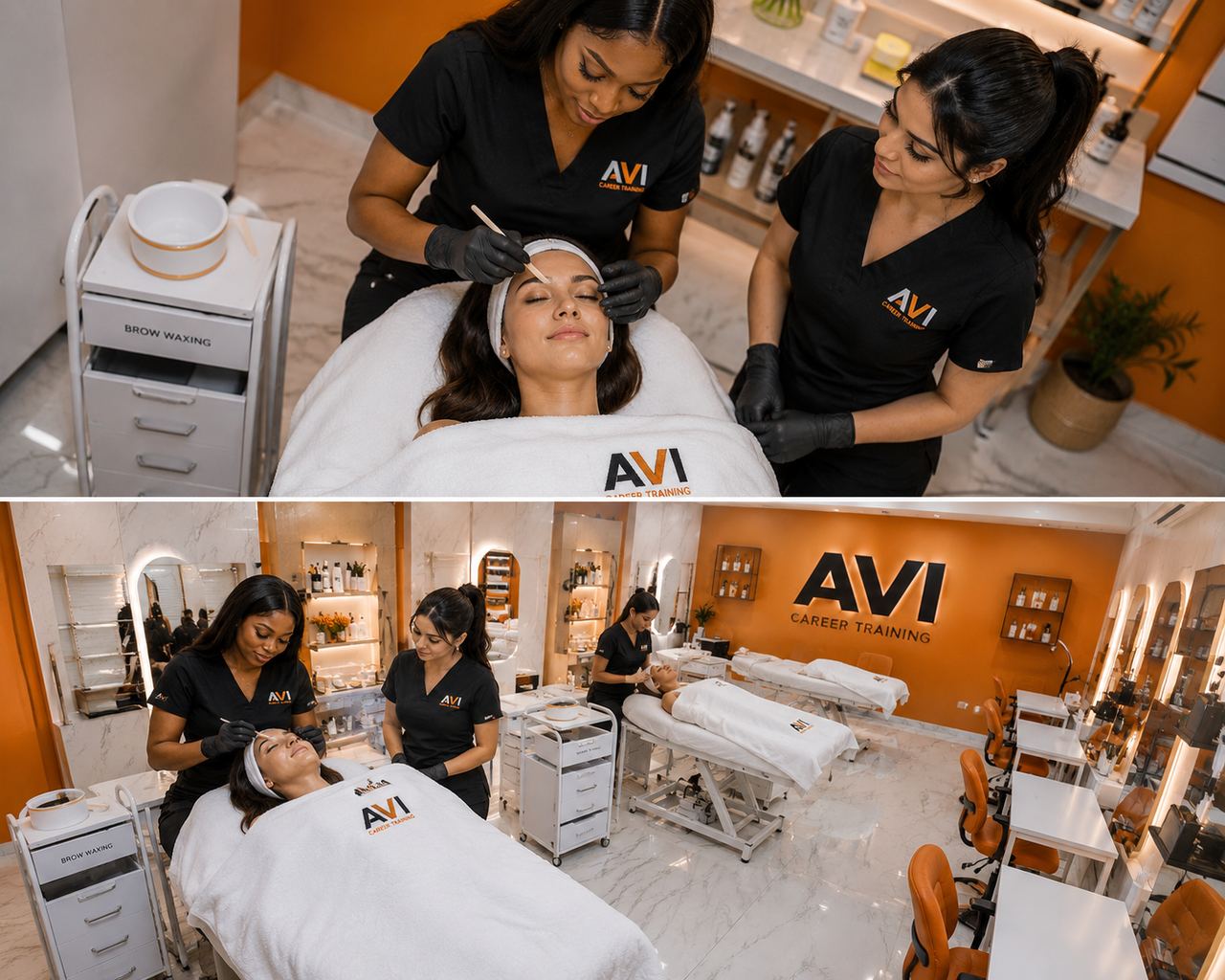
AVI Career Training’s Master Esthetics program (NO FINANCIAL AID FOR THIS PROGRAM) in Vienna, Virginia meets this 600-hour requirement and is approved by the Virginia Department of Professional and Occupational Regulation (DPOR). The curriculum covers advanced skin analysis, chemical exfoliation, laser and light therapy fundamentals, electrolysis awareness, facial massage, and inclusive techniques designed for all skin tones and Fitzpatrick skin types.
Step 3: Pass the Written (Theory) Board Exam
After completing your program hours, you’ll sit for the Virginia State Board written examination. This covers the theoretical foundations of master esthetics — anatomy, physiology, skin science, product chemistry, and safety protocols. Study materials and prep resources are typically provided through your school.
Step 4: Pass the Practical Board Exam
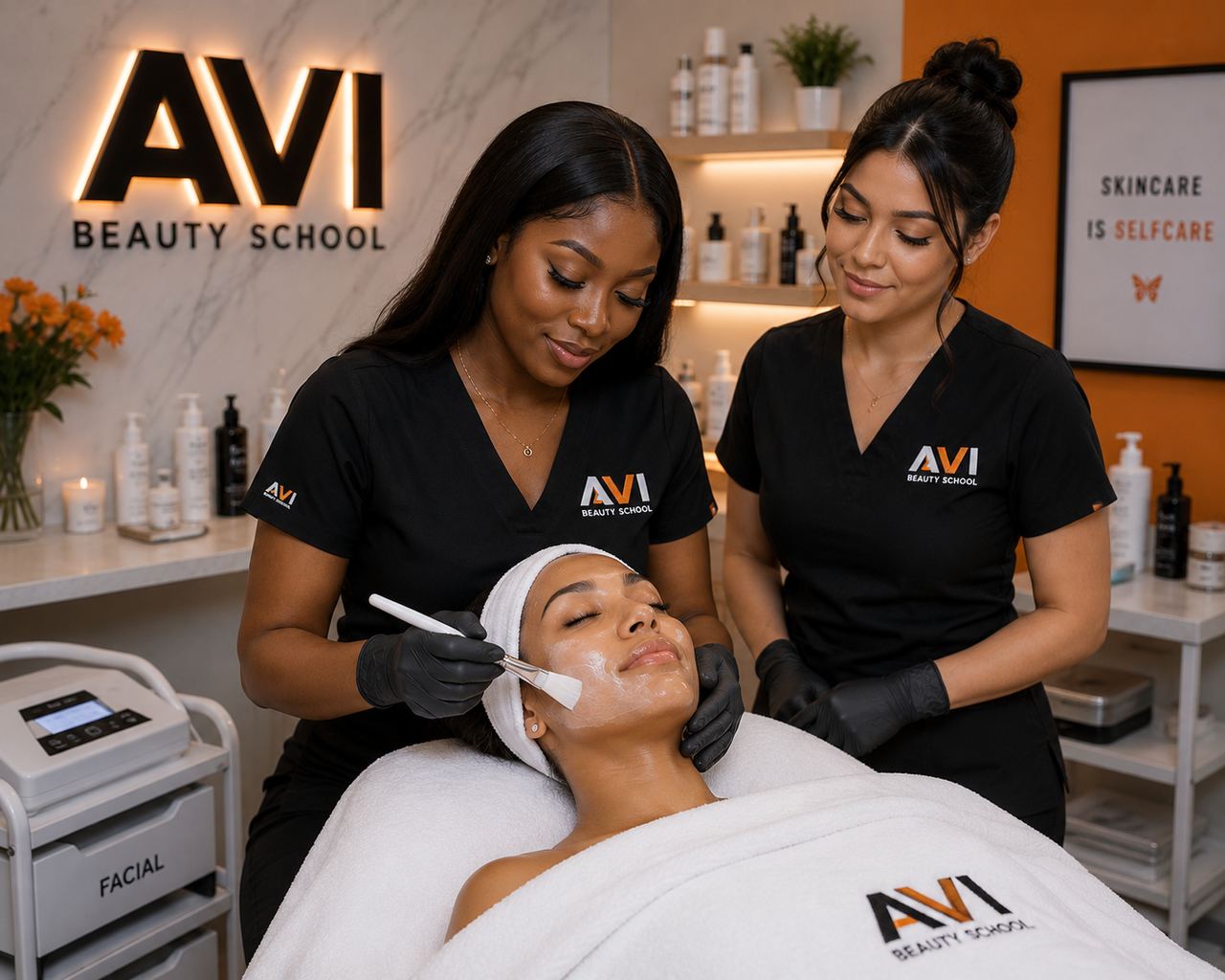
The practical exam tests your hands-on execution of core master esthetics services. Examiners assess technique, sanitation protocols, client consultation skills, and professional presentation. Schools with strong hands-on training — like AVI — prepare students directly for this component through real-client clinic hours.
Step 5: Apply for Your Virginia Master Esthetician License
Once both exams are passed, submit your licensure application through the Virginia Department of Professional and Occupational Regulation (DPOR). Your license is what allows you to practice legally — and it’s what unlocks access to higher-paying clinical and medical aesthetics roles.
—
Esthetics Industry Trends Driving Demand in 2026
Four major forces are reshaping the esthetics industry in 2026 — and all four are actively accelerating demand for master estheticians in Northern Virginia and the broader DMV area.
1. The Medical Aesthetics and Med Spa Boom
Med spas are the fastest-growing segment in the beauty and wellness industry. According to the American Med Spa Association (AmSpa), the U.S. medical aesthetics market has grown into a multi-billion-dollar industry, with no signs of slowing. In Northern Virginia — particularly along the Tysons Corner corridor and into Fairfax, Reston, and Arlington — med spas have proliferated at a pace that consistently outpaces available credentialed staff.
This is a direct opportunity for master estheticians. Clinical and med spa settings prefer — and often require — the advanced credential because it signals training in laser devices, chemical peels, and skin physiology at a depth that a basic license doesn’t cover.
2. Demand for Inclusive Skincare Expertise
The DC metro area is one of the most diverse markets in the country. Clients across the DMV bring a wide range of skin tones, skin concerns, and cultural skincare traditions — and they are increasingly selective about which practitioners they trust with their skin.
Master estheticians trained in inclusive techniques — practitioners who understand Fitzpatrick skin types across the full spectrum, who know how hyperpigmentation, keloid scarring, and melanin-rich skin respond differently to chemical exfoliants and laser energy — are in genuinely short supply. AVI’s curriculum addresses this directly, training students to work beautifully and safely on every skin tone. That’s not a marketing claim; it’s a competitive advantage in this market.
3. The Wellness Economy Expansion
The Global Wellness Institute estimates the wellness economy exceeds $5 trillion globally, and U.S. consumers are driving a significant share of that growth. In high-income markets like Northern Virginia, clients are treating skin care as preventive health — not luxury. That mindset shift elevates the role of the master esthetician from service provider to wellness partner, which supports both higher pricing and stronger client retention.
4. Technology-Driven Services Require Advanced Credentials
LED therapy, microcurrent, radiofrequency, and laser-adjacent treatments are now standard offerings in competitive spas and clinics. These technologies require practitioners who understand the science behind them — skin biology, contraindications, energy delivery, and safety protocols. That’s exactly what a 600-hour master esthetics curriculum is designed to teach. Standard estheticians without the advanced credential are increasingly shut out of these service menus.
- Northern Virginia ranks among the highest per-capita income regions in the United States
- The Tysons–Reston–Arlington corridor hosts one of the highest concentrations of med spas per capita in the mid-Atlantic
- DC metro area clients spend above the national average on personal care and wellness services
- The region’s federal workforce and contractor base supports stable, recession-resilient consumer spending on wellness
—
Master Esthetician Salary and Job Outlook in Virginia
Master estheticians in Northern Virginia earn measurably more than the national median — with clinical and medical aesthetics roles pushing compensation well above what a standard esthetics license can command.
What the Numbers Look Like
The Bureau of Labor Statistics (BLS) reports a U.S. median annual wage for skincare specialists of approximately $40,000–$42,000. That’s the national baseline.
Northern Virginia — and the DC metro region broadly — runs 15–25% above that median, driven by higher cost of living, premium clientele, and the density of high-end spas, dermatology practices, and medical aesthetics clinics in the area.
Here’s how the salary picture breaks down by setting and credential level:
| Setting / Role | Credential | Est. Annual Earnings (NoVA) |
|---|---|---|
| Day Spa / Retail Spa | Standard Esthetician | $38,000–$50,000 |
| Luxury Spa (Tysons / DC corridor) | Standard or Master | $48,000–$60,000 |
| Med Spa / Aesthetic Clinic | Master Esthetician | $55,000–$75,000+ |
| Dermatology Practice | Master Esthetician | $58,000–$72,000 |
| Private Practice / Specialization | Master + Specializations | $80,000+ |
Salary ranges reflect reported and estimated figures for the Northern Virginia / DC metro market. Individual earnings vary by employer, experience, service mix, and clientele.
Job Growth Outlook
The BLS projects employment for skincare specialists to grow faster than the average for all occupations through 2032. That projection was made before the post-pandemic med spa boom fully matured — meaning the near-term outlook in high-demand markets like Northern Virginia may be even stronger than those figures suggest.
The growth is concentrated at the top of the credential ladder. As med spas and dermatology practices raise their service standards and regulatory scrutiny increases around advanced treatments, the competitive advantage of the master esthetician credential becomes more pronounced — not less.
—
Is a Master Esthetics Program Worth It in Northern Virginia?
For anyone serious about a long-term career in skin care, a master esthetics program in Northern Virginia isn’t just worth it — it’s the most direct path to the market’s highest-demand, highest-paying roles.
Let’s look at the ROI honestly.
The investment: 600 hours of training at an accredited school. For most students, that’s a focused, full-time commitment measured in months — not years. There’s no four-year degree, no graduate program, no prolonged apprenticeship. You complete your hours, pass two board exams, apply for your license, and you’re eligible to work at a professional level that commands a real salary premium.
The return: In Northern Virginia’s medical aesthetics and luxury spa market, a master esthetician credential meaningfully expands both what you can do and what you can charge — or what an employer will pay you to do. The gap between a standard esthetician salary and a master esthetician salary in clinical settings in this area is routinely $15,000–$30,000 per year.
That’s not a hypothetical. That’s the documented difference between the earning ranges for the two credential levels in this specific market.
Two Students, Two Paths — Real Scenarios
Scenario 1 — Career Changer, Mid-30s: Priya worked in corporate project management for nine years before deciding she wanted a career that was hands-on, client-facing, and built around something she was genuinely passionate about. She enrolled in AVI Career Training’s Master Esthetics program in Vienna. Fourteen months later, she was licensed, hired at a med spa in Reston, performing laser facials and chemical peels — earning more in her first year of esthetics than she had in her last two years in project management.
Scenario 2 — Upgrading from Basic: Marcus had held a standard Virginia esthetics license for three years, working at a day spa in Fairfax. He was capped — both in terms of the services he could legally offer and the salary ceiling his employer could justify. He enrolled in the 600-hour Master Esthetics program to upgrade his credential. Within four months of relicensing, he’d moved to a dermatology clinic in Tysons at a $22,000 annual salary increase.
Both stories reflect what’s genuinely available in this market for credentialed, trained professionals.
Why AVI Career Training?
AVI Career Training’s Master Esthetics program (NO FINANCIAL AID FOR THIS PROGRAM) is built for students who want to enter the workforce with a competitive credential — not just a certificate. Located in Vienna, Virginia, in the heart of Northern Virginia’s professional corridor, AVI is:
For questions about enrollment, scheduling, or program structure, call (703) 943-9841 or apply online at avi.edu.