A Day in the Life of a Massage Therapy Student at AVI
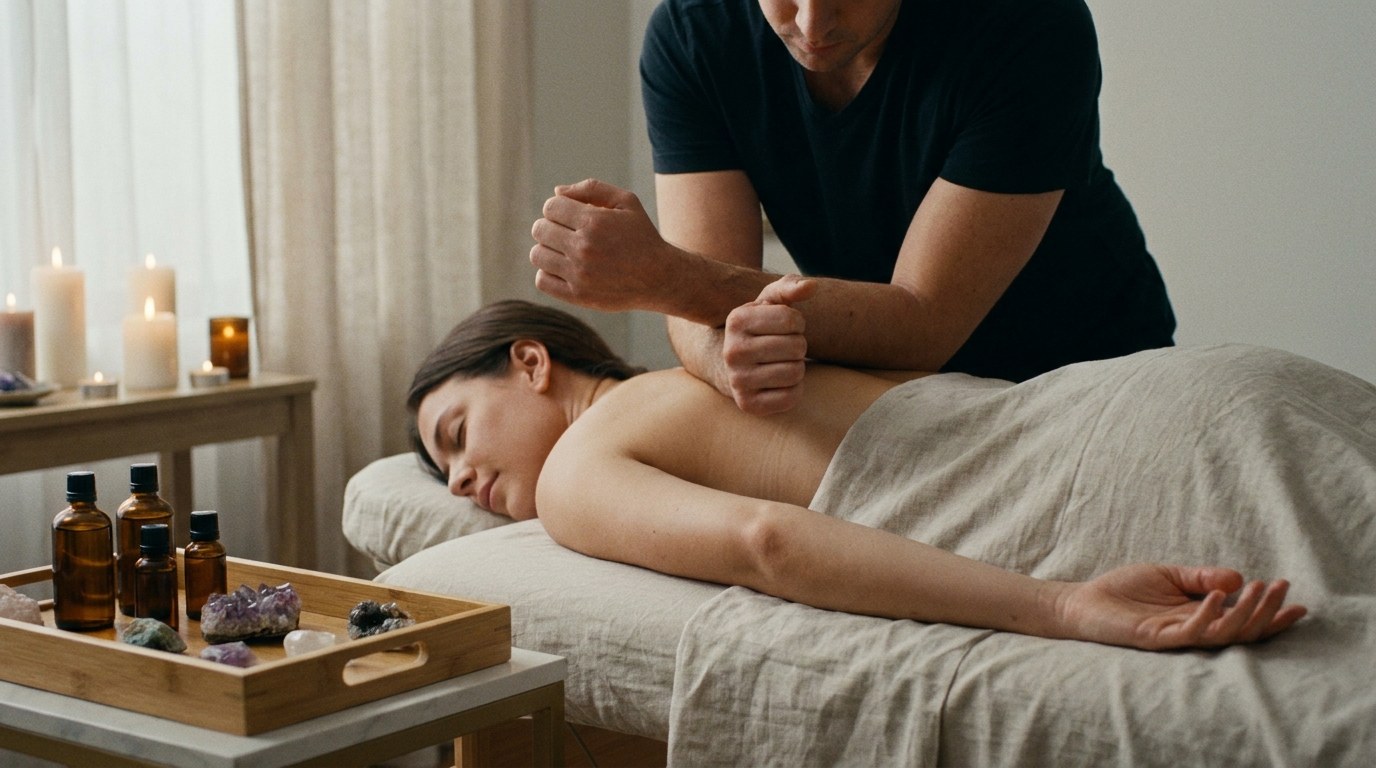
A massage therapy student at AVI Career Training spends their day moving between anatomy lessons, supervised technique practice, and real client sessions — building every skill Virginia requires for licensure in a single, focused 500-hour program.
If you’ve been searching Reddit threads, YouTube vlogs, and school websites trying to figure out what massage therapy school actually feels like day-to-day, this is the honest, specific answer you’re looking for. No fluff — just a real walk-through of what your schedule, training, and career pipeline look like at AVI Career Training in Vienna, Virginia.
—
⚡ Key Takeaways
- AVI’s Massage Therapy Program (NO FINANCIAL AID FOR THIS PROGRAM) is 500 hours — precisely aligned with Virginia’s minimum licensure requirement, so you’re not paying for a single extra hour.
- Training is split between classroom anatomy instruction, supervised partner practice, and real client clinic sessions.
- Virginia DPOR requires 500 hours from a DPOR-approved school before you can sit for the MBLEx licensing exam.
- AVI is COE-accredited and SCHEV-certified — two credentials that matter when comparing schools.
- The national median pay for massage therapists is ~$49,860/year (BLS), and the Northern Virginia / DC metro market consistently commands above the national median.
- Job growth for massage therapists is projected at ~19% — much faster than average (BLS).
Request Information & Apply Today →
—
Your Morning: Classroom Theory and Anatomy Foundations
Massage therapy school is more academically rigorous than most people expect — and that’s by design.
Most days at AVI begin in the classroom. Before you can safely and effectively work on a client, you need to understand what’s happening beneath the skin. That means diving deep into anatomy, physiology, kinesiology, and pathology. You learn where muscles originate and insert, how the lymphatic system flows, which conditions are contraindications for massage, and how the nervous system responds to different levels of pressure.
What the Classroom Curriculum Covers
Theory sessions typically cover:
- Anatomy & Physiology — skeletal, muscular, circulatory, and nervous systems
- Kinesiology — how the body moves and where dysfunction shows up
- Pathology & Contraindications — knowing when not to massage is just as critical as technique
- Professional Ethics & Scope of Practice — understanding what a massage therapist can and cannot do legally
- Hydrotherapy & Spa Theory — foundational for spa and wellness career settings
This isn’t busywork. It’s what separates a trained professional from someone who just gives a good shoulder rub. Licensed instructors at AVI — working professionals themselves — tie every theory lesson directly to hands-on application so you understand why each concept matters on the table.
Mini-story: Take Marcus, a former personal trainer from Fairfax who enrolled at AVI after watching clients plateau with exercise alone. He assumed the classroom portion would feel like a repeat of his fitness certifications. Instead, the depth of the pathology curriculum surprised him. “I knew muscles,” he said. “But learning contraindications — understanding when massage could actually do harm — that’s what made me feel like a real clinician, not just someone who knew how to press on sore spots.”
The structured morning classroom format also benefits students who are balancing family or part-time work. Knowing what to expect each day makes it easier to plan your life around the program.
—

Hitting the Table: Hands-On Technique Practice
The real transformation in massage therapy school happens when you move from your notebook to the massage table.
After morning theory, students shift to the practice floor — and this is where most people say the program clicks. You work in pairs or small groups, taking turns as both therapist and client. Instructors circulate constantly, correcting hand placement, body mechanics, pressure depth, and draping technique in real time.
Modalities You Learn at AVI
AVI’s 500-hour curriculum builds your skills progressively across core modalities:
- Swedish Massage — the foundation of Western massage; effleurage, petrissage, tapotement, friction, and vibration
- Deep Tissue Massage — working into deeper muscle layers for chronic tension and postural dysfunction
- Sports Massage — pre- and post-event techniques relevant for Northern Virginia’s large athletic and military population
- Prenatal Massage — specialized positioning and modified techniques for pregnant clients
- Seated/Chair Massage — increasingly in demand for corporate wellness in the DC metro market
- Reflexology & Spa Modalities — rounding out your service menu for spa career settings
Every technique builds on the anatomy you studied in the morning. You’re not memorizing strokes in isolation — you understand the tissue you’re working with and why each movement produces the outcome it does.
Body Mechanics: The Skill Most Students Don’t Expect to Need
One of the most important — and surprising — things students learn is how to protect their own bodies while working. Poor body mechanics are the number-one reason massage therapists leave the profession early. AVI instructors teach proper stance, weight transfer, and table height adjustment from day one. Your longevity in this career depends on it.
Inclusive Client Care as a Professional Skill
AVI trains students to work effectively and respectfully on clients of all body types, sizes, ages, and backgrounds. In the ethnically and demographically diverse Northern Virginia / DC metro region, this isn’t a nice-to-have — it’s a market reality. You’ll practice adaptive draping, modified positioning, and culturally responsive communication so you’re prepared to serve every client who walks through the door. That range of competence makes AVI graduates more employable across spas, medical offices, and community wellness settings.
—
The Clinic Floor: Working on Real Clients
Once you’ve built foundational technique skills, you advance to supervised client sessions — and this is where everything becomes real.
AVI’s clinic component puts you in front of actual paying clients under the direct supervision of a licensed instructor. You conduct a full intake — health history review, goal-setting conversation, contraindication screening — then design and deliver a session tailored to that client’s needs. Afterward, you document the session and debrief with your instructor.
What Real Client Sessions Teach You
Partner practice prepares you technically. Client sessions prepare you professionally. The difference is significant:
- Adaptability — real clients don’t present like your classmates. You learn to adjust pressure, pacing, and focus on the fly.
- Communication — intake skills, reading verbal and nonverbal cues, and professional rapport-building are career-defining.
- Session management — starting and ending on time, managing the room, transitioning smoothly between body areas.
- Professional confidence — the kind that only comes from experience with real people in a real setting.
This supervised clinic structure mirrors exactly what you’ll encounter in a spa, chiropractic office, or wellness center after graduation. Employers notice the difference between graduates who’ve logged real clinic hours and those who haven’t.
Mini-story: Priya was a career-changer from Reston who had spent 12 years in healthcare administration before enrolling at AVI. She was confident with the clinical intake process but nervous about adapting to a client who didn’t respond the way she’d practiced. Her first real clinic session was a 60-minute Swedish massage for a client with a shoulder injury she hadn’t encountered in partner practice. “My instructor was right there,” Priya recalled. “She gave me a quiet cue to reduce pressure on the affected side. Afterward, we talked through what I’d noticed, what I’d adapted, and what I’d do differently. That debrief was worth more than 10 hours of practice with a classmate who told me I was doing great.”
—

What You’re Building Toward: Virginia Licensing and Career Outcomes
Every hour at AVI is building toward one specific, achievable goal: becoming a licensed massage therapist in Virginia.
Virginia Licensure Requirements
Massage therapy in Virginia is regulated by the Virginia Department of Professional and Occupational Regulation (DPOR). To become licensed, you must:
1. Complete 500 hours of massage therapy education at a DPOR-approved school
2. Pass the MBLEx (Massage & Bodywork Licensing Examination), administered by the Federation of State Massage Therapy Boards (FSMTB)
3. Submit a licensure application to Virginia DPOR
AVI’s 500-hour program is precisely calibrated to this requirement. You complete the hours Virginia requires — not more, not less. There’s no padding, no unnecessary electives, no extra semesters added to increase tuition.
Where AVI Graduates Work in Northern Virginia
The Northern Virginia / DC metro market is one of the strongest in the country for massage therapy careers. Graduates from AVI’s program pursue positions at:
- Luxury spas in Tysons Corner, Arlington, and Washington DC
- Chiropractic and orthopedic clinics across Fairfax and Loudoun Counties
- Sports and athletic facilities serving Northern Virginia’s large competitive sports and military population
- Hospital-based integrative wellness programs connected to major health systems in the region
- Corporate wellness programs serving DC-area government contractors and federal agencies
- Private practice — building an independent clientele with full schedule control
The Bureau of Labor Statistics reports a national median salary of ~$49,860/year for massage therapists, with projected job growth of approximately 19% — much faster than the average for all occupations. The Northern Virginia and DC metro market typically commands above the national median given the region’s cost of living, density of luxury wellness facilities, and high-income clientele.
(Virginia minimum)
(BLS — faster than avg)
(BLS)
+ SCHEV Certified
—
Is AVI’s Massage Therapy Program Right for You?
AVI’s Massage Therapy Program (NO FINANCIAL AID FOR THIS PROGRAM) is designed for people who are serious about starting a career — not just exploring a hobby.
Who Thrives in This Program
This program is a strong fit if you:
- Want a career with schedule flexibility and strong earning potential without a four-year degree
- Are a career-changer who values hands-on, tactile work and connection with clients
- Have a healthcare, fitness, or wellness background and want to add a licensable credential
- Are a veteran or military-connected student looking to use your benefits in a focused, career-ready program
- Want to work in the Northern Virginia / DC metro area’s growing wellness industry
Program Length and Schedule
AVI’s program is 500 hours — the exact number Virginia requires for licensure. That means your investment of time and money goes entirely toward your credential, with no excess hours. Talk to AVI admissions about current schedule formats and cohort start dates to find the option that fits your life.
Tuition and Payment Options
Because AVI’s Massage Therapy Program (NO FINANCIAL AID FOR THIS PROGRAM) is under 600 hours, it does not qualify for federal financial aid (Title IV / FAFSA). This is important to understand before you enroll.
Payment options include:
- Payment plans arranged directly through AVI
- Private financing through third-party lenders
- Self-pay / employer sponsorship
If you are a veteran or military-connected student, contact AVI admissions to discuss GI Bill® eligibility and how your benefits may apply. AVI accepts the GI Bill® and has experience working with military students and their families.
For students interested in a program that does qualify for federal financial aid, AVI also offers longer programs such as cosmetology and esthetics — explore those options on the AVI website.
AVI’s COE Accreditation — Why It Matters When You’re Comparing Schools
When you’re comparing massage therapy schools in Northern Virginia, accreditation is the first filter to apply. AVI Career Training is accredited by the Council on Occupational Education (COE) and certified by SCHEV (the State Council of Higher Education for Virginia). COE accreditation means AVI’s curriculum, instructors, facilities, and outcomes have been independently evaluated and meet national standards for occupational education. That credential protects your investment and signals to employers that your training was rigorous.
Most schools advertising massage therapy programs in the DMV area won’t tell you their accreditation status upfront. Ask every school you consider.
—
Frequently Asked Questions About Massage Therapy School
Q: What do you learn in massage therapy school?
A: In massage therapy school, you learn human anatomy and physiology, kinesiology, pathology and contraindications, professional ethics, and hands-on technique in modalities including Swedish massage, deep tissue, sports massage, prenatal massage, and spa therapies. AVI’s curriculum also covers client intake, session documentation, and professional communication.
Q: How many hours does it take to become a licensed massage therapist in Virginia?
A: Virginia requires a minimum of 625 hours of massage therapy education from a DPOR-approved school. After completing 500 hours, you must pass the MBLEx exam and apply for licensure through the Virginia Department of Professional and Occupational Regulation (DPOR).
Q: Is massage therapy school hard?
A: Massage therapy school requires real academic effort, particularly in anatomy, physiology, and pathology. Most students find the hands-on component intuitive once they’ve built theoretical foundations. The challenge is sustainable — it’s designed to be completed in a focused program length, not stretched over years. Students who stay consistent with coursework and practice hours succeed.
Q: What is a typical day like in massage therapy school?
A: A typical day at AVI includes morning classroom instruction covering anatomy, physiology, or pathology, followed by hands-on technique practice with classmates under instructor supervision. As you advance, you transition to supervised client clinic sessions where you conduct full intake, deliver sessions, and debrief with instructors.
Q: How long does it take to complete a massage therapy program?
A: AVI’s Massage Therapy Program is 625 hours. The calendar length depends on your schedule format. Contact AVI admissions at (703) 943-9841 or visit the Vienna, VA campus to discuss current start dates and program pacing options.
Q: Does AVI Career Training accept the GI Bill® for massage therapy?
A: AVI Career Training accepts the GI Bill® and works with military-connected students. Because the Massage Therapy Program is under 600 hours, it qualifies for federal financial aid (Title IV / FAFSA), but GI Bill® eligibility is a separate question — contact AVI admissions directly to discuss your specific benefits situation.
Q: What can I do after completing massage therapy school in Northern Virginia?
A: Graduates from AVI’s Massage Therapy Program pursue careers at luxury spas in Tysons Corner and the DC metro area, chiropractic and orthopedic clinics, sports and athletic facilities, hospital-based integrative wellness programs, corporate wellness, and private practice. The Northern Virginia market offers some of the strongest demand in the country for licensed massage therapists.
Q: What is the difference between a COE-accredited school and a non-accredited massage therapy school?
A: COE (Council on Occupational Education) accreditation means the school’s curriculum, instructors, facilities, and student outcomes have been evaluated against national standards for occupational training. Graduating from a COE-accredited program like AVI gives employers, licensing boards, and benefit programs (including the GI Bill®) confidence in the quality of your training.
—
Ready to See AVI for Yourself?
Come tour our Vienna, VA campus, meet our instructors, and ask every question you have — before you commit to anything. Spots in our Massage Therapy Program fill up. Don’t wait.
Apply Now or Request Information →
Call us directly: (703) 943-9841 · 1595 Spring Hill Rd #720, Vienna, VA 22182
—
About AVI Career Training
AVI Career Training is a COE-accredited, SCHEV-certified beauty and wellness career school located in Vienna, Virginia, in the Northern Virginia / DC metro area. AVI offers hands-on career training programs in Massage Therapy, Cosmetology, Basic Esthetics, Master