A Day in the Life of a Massage Therapy Student
At AVI Career Training’s Massage Therapy program in Vienna, Virginia, a typical student day moves fluidly between anatomy instruction, hands-on technique practice, and real client sessions — all building toward the 625 hours required to become a licensed massage therapist in Virginia.
If you’ve been searching for a massage therapy school in Northern Virginia that gives you concrete skills, a clear licensing roadmap, and a community that actually supports you, this article walks you through exactly what to expect — from your first morning on campus to the moment you graduate ready to work.
Key Takeaways
- 500 hours of supervised training required for Virginia massage therapy licensure
- AVI’s program blends classroom theory with real hands-on clinic floor time
- AVI Career Training is COE Accredited and SCHEV Certified — two credentials that matter for licensure eligibility
- Massage therapist job growth is projected at 18% through 2032 — significantly faster than average (BLS)
- The Northern Virginia / DC metro market typically pays above the national median due to cost of living — a meaningful advantage for local graduates
Ready to see the campus and ask your questions in person? Schedule a tour at AVI Career Training today.
—
What Your First Week at Massage Therapy School Actually Looks Like
Your first week at massage therapy school is less overwhelming than you think — and more hands-on than most new students expect.
Day one begins with orientation. You’ll meet your instructors — all licensed professionals with real industry experience — and your classmates, who bring a genuinely diverse mix of backgrounds. In any given cohort at AVI’s Vienna, VA campus, you might sit next to a military spouse transitioning careers, a former office worker ready for something more meaningful, or a recent college grad who discovered a passion for wellness. That variety makes the learning environment richer than most people anticipate.
By midweek, you’re already touching on anatomy fundamentals — learning the language of the body that will become second nature by the time you graduate. Muscle groups, skeletal structures, how the nervous system responds to touch. It sounds academic, but instructors connect every concept directly to what your hands will do on the massage table.
By Friday of week one, most students have their first supervised hands-on session. It’s a milestone that sets the tone: this program moves, and it moves with purpose.
—
The Classroom + Clinic Floor: How AVI Structures Your 500 Hours
Virginia requires 500 hours of supervised training from a SCHEV-approved program before you can sit for the state licensing exam — and AVI Career Training’s Massage Therapy program (no financial aid available for this program, as it is under 600 hours) is built to meet that requirement with intention, not filler.

Those 500 hours split into two distinct learning environments that work together:
Classroom Instruction — The Science Behind the Touch
Theory instruction covers the subjects the Virginia Board of Nursing requires massage therapists to understand deeply:
This isn’t rote memorization. Every lecture connects to clinical application. When you learn that the piriformis muscle can compress the sciatic nerve, you’re also learning why certain deep tissue techniques relieve that pain — and how to apply them safely.
The Clinic Floor — Real Clients, Real Results
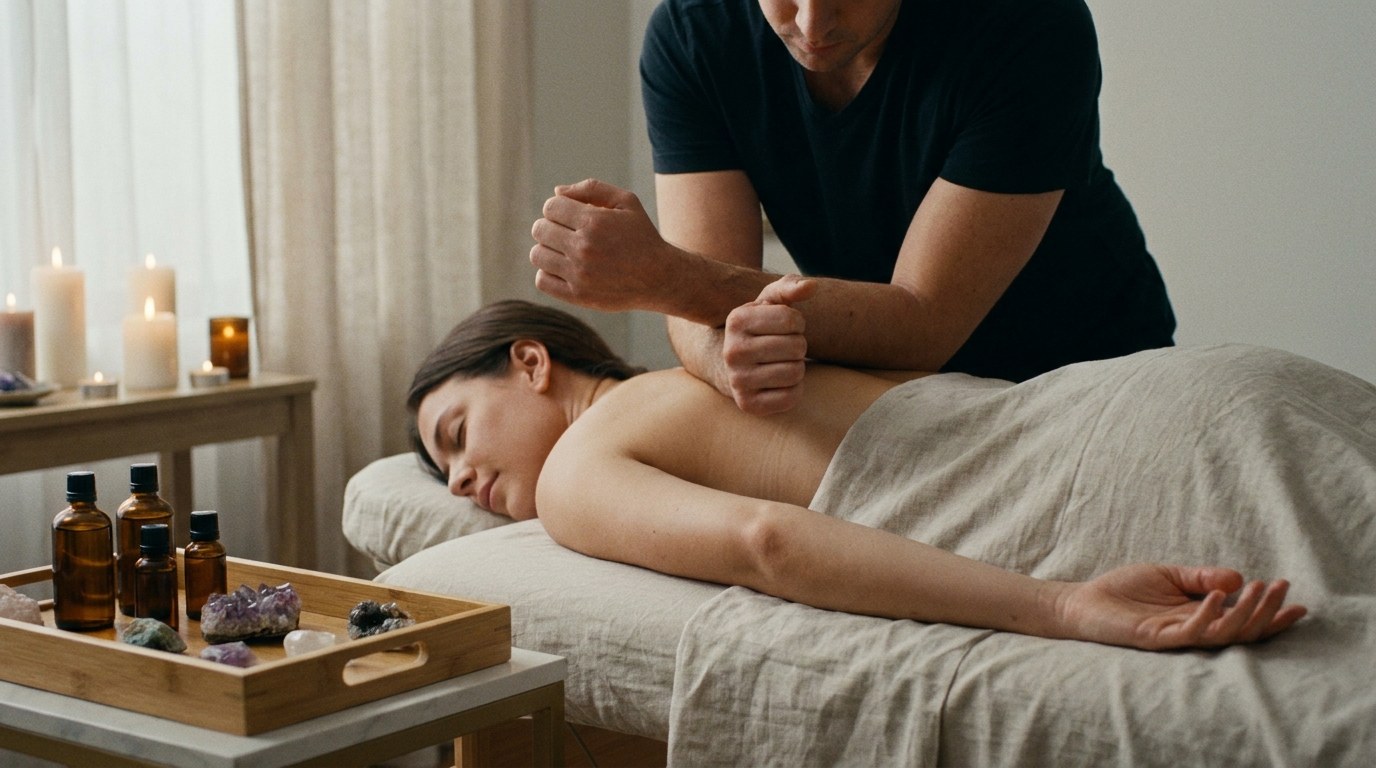
Clinic hours are where your confidence is built. Under instructor supervision, you work with actual clients who come to AVI’s student clinic for therapeutic massage services. This isn’t practice on mannequins or just working on classmates — it’s the real thing, in a structured, supportive environment.
Clinic floor hours are what prepare you for day one of your career. By the time you complete your 500 hours, you’ve already handled intake forms, conducted client consultations, adapted techniques for different body types, and learned to communicate professionally before, during, and after a session.
That’s the difference between a graduate who knows massage therapy and one who can do it under any circumstances.
—
The Techniques You’ll Practice Every Day
Repetition is how massage therapy becomes second nature — and AVI’s curriculum gives you daily hands-on practice across the modalities that Northern Virginia employers actually hire for.
Here’s a look at what you’ll work with throughout the program:
Swedish Massage
The foundation of Western massage therapy. You’ll learn effleurage, petrissage, friction, tapotement, and vibration — and you’ll refine these strokes throughout the program until your pressure, pace, and transitions feel seamless. Every other modality you learn builds on this base.
Deep Tissue Massage
Targeting deeper layers of muscle and connective tissue, deep tissue work requires precise technique and body mechanics. You’ll learn how to apply sustained pressure without injuring yourself — a critical skill for long-term career sustainability.
Myofascial Release
Fascia — the connective tissue that wraps muscles and organs — responds to slow, sustained pressure differently than muscle tissue does. Myofascial techniques address chronic tension and restrictions that Swedish work doesn’t fully reach.
Reflexology
Working with specific reflex points on the feet, hands, and ears, reflexology is increasingly requested in wellness settings throughout the Tysons Corner area and broader DC metro market. Adding this skill makes you more versatile from day one.
Additional Virginia Board-Relevant Disciplines
The curriculum also covers hydrotherapy applications, sports massage fundamentals, prenatal massage considerations, and seated chair massage — expanding the client populations you’re prepared to serve professionally.
—
Life Outside the Treatment Room — Community, Flexibility, and Support
The technical training is only part of what makes AVI’s Massage Therapy program work for students in the Northern Virginia / DMV area.
A Student Body That Looks Like Northern Virginia
AVI’s student community reflects the genuine diversity of the region — and that matters in ways that extend beyond representation. When you train alongside classmates from different backgrounds, you naturally develop the adaptability to work with the full range of clients you’ll encounter in your career: different body types, different pain histories, different cultural expectations around touch and wellness.
AVI’s curriculum is built to train students to serve every client who walks through a spa or clinic door — not a narrow demographic ideal. That inclusive approach is a professional advantage that follows graduates into every job they take.
Scheduling Considerations for Working Adults
Many AVI students in the Vienna, VA area are career changers, working parents, or military spouses managing complex schedules. AVI understands that — and program scheduling is designed with that reality in mind. If you’re balancing a job or family commitments alongside your training, speak with AVI admissions directly at (703) 943-9841 about scheduling options that fit your life.
Tuition and Payment Options
Important note on financial aid: AVI’s Massage Therapy program is under 600 hours, which means it qualifies for federal financial aid (Title IV / FAFSA). Federal financial aid is not available for this program.
However, AVI does offer payment plan options and private financing alternatives to make enrollment accessible. For military-connected students, GI Bill® benefits may be applicable — and Northern Virginia’s large military-adjacent population makes this a commonly used pathway. Contact AVI admissions at avi.edu/apply to discuss your specific financial situation and the options available to you.
Instructor Relationships That Actually Matter
At AVI, you’re not a number in a lecture hall. Class sizes allow instructors to give personalized feedback during every hands-on session. When your pressure is off or your body mechanics put you at risk for injury, an instructor catches it and corrects it — not after the fact, but in the moment. That kind of direct mentorship accelerates your development in ways self-study never could.
—
What Happens After Graduation — Virginia Licensure and Your Career Path

Graduating from AVI’s 625-hour Massage Therapy program positions you to pursue licensure in Virginia and enter one of the fastest-growing fields in healthcare and wellness.
The Virginia Licensure Process
In Virginia, massage therapy is regulated by the Virginia Board of Nursing (Massage Therapy section) under the Virginia Department of Professional and Occupational Regulation (DPOR). To become licensed, graduates must:
1. Complete 500 hours of supervised training from a SCHEV-approved program
2. Submit a licensure application to the Virginia Board of Nursing
3. Pass the required competency examination (MBLEx — the Massage & Bodywork Licensing Examination, administered nationally)
4. Meet all background and documentation requirements
Because AVI Career Training is both COE Accredited and SCHEV Certified, graduates are eligible to apply for Virginia licensure upon program completion. That accreditation isn’t a marketing badge — it’s a prerequisite that matters at the licensing stage.
What the Northern Virginia Job Market Looks Like
The national picture is strong: the Bureau of Labor Statistics reports a median annual wage for massage therapists of approximately $49,860 (2023 data) and projects 18% job growth through 2032 — significantly faster than the average for all occupations.
In the Northern Virginia and DC metro market, that baseline often skews higher. The density of high-end spas, integrative health clinics, chiropractic offices, sports medicine practices, and corporate wellness programs in the Tysons Corner area and throughout the DMV creates consistent, strong demand for qualified licensed massage therapists. Graduates who enter this market with 500 verified hours, a state license, and clinic floor experience are positioned competitively from day one.
Where AVI Graduates Work
Entry-level positions for licensed massage therapists in Northern Virginia include:
The flexibility of the massage therapy profession — to work in multiple settings, set your own hours in private practice, or build a specialized clientele — is a major reason career changers in Northern Virginia are drawn to this field.
—
Frequently Asked Questions About Massage Therapy School in Northern Virginia
Q: What does a massage therapy student do every day in school?
A: A typical day at AVI Career Training’s Vienna, VA campus involves a mix of classroom instruction (anatomy, physiology, pathology, ethics) and hands-on practice — either working with classmates or serving real clients during supervised clinic floor sessions. Both components count toward the required 500 hours.
Q: How many hours do I need to become a licensed massage therapist in Virginia?
A: Virginia requires 625 hours of supervised training from a SCHEV-approved massage therapy program. AVI Career Training’s program meets this requirement exactly and prepares graduates to sit for the MBLEx licensing exam.
Q: How long does massage therapy school take in Virginia?
A: At AVI Career Training, the 625-hour Massage Therapy program length depends on the schedule you choose. Contact AVI admissions directly at avi.edu/apply or call (703) 943-9841 to discuss current cohort schedules and completion timelines.
Q: What should I expect on my first day of massage therapy school?
A: Expect orientation, introductions to your instructors and classmates, a campus walkthrough, and an overview of the curriculum structure. You won’t be performing full massage sessions on day one — AVI builds your skills deliberately and progressively from the first week forward.
Q: Is massage therapy school hard to get through?
A: It’s demanding — physically and academically — but structured and very manageable with consistent effort. The anatomy and pathology content requires real study. The hands-on hours require physical stamina. AVI instructors provide ongoing feedback and support so students aren’t navigating challenges alone.
Q: Is AVI Career Training’s Massage Therapy program accredited?
A: Yes. AVI Career Training is accredited by the Council on Occupational Education (COE) and certified by the State Council of Higher Education for Virginia (SCHEV). Both credentials are required for graduates to be eligible for Virginia massage therapy licensure.
Q: Does financial aid cover the Massage Therapy program at AVI?
A: No. AVI’s Massage Therapy program is under 600 hours and qualifies for federal financial aid (Title IV / FAFSA). Payment plans and private financing options are available, and GI Bill® benefits may apply for eligible military-connected students. Contact AVI admissions to discuss your options.
Q: Where is AVI Career Training located?
A: AVI Career Training is located at 1595 Spring Hill Rd #720, Vienna, VA 22182 — in the Tysons Corner area of Northern Virginia, easily accessible from Fairfax, McLean, Reston, and the broader DC metro area.
—
Take the Next Step Toward Your Massage Therapy Career
A career in massage therapy starts with one decision: choosing the right school. AVI Career Training’s Massage Therapy program in Vienna, Virginia gives you the 625 hours, the hands-on clinic experience, the licensing preparation, and the community support to enter the Northern Virginia job market ready to work — not just ready to learn on the job.
The DMV area needs qualified, licensed massage therapists. The job growth data backs it up. The only question is whether you’re ready to take the first step.
Questions before you apply? Call AVI admissions directly at (703) 943-9841 or visit the campus at 1595 Spring Hill Rd #720, Vienna, VA 22182.
—
About AVI Career Training
AVI Career Training is a COE-accredited, SCHEV-certified beauty and