Massage Therapy School in Northern Virginia | AVI Career Training
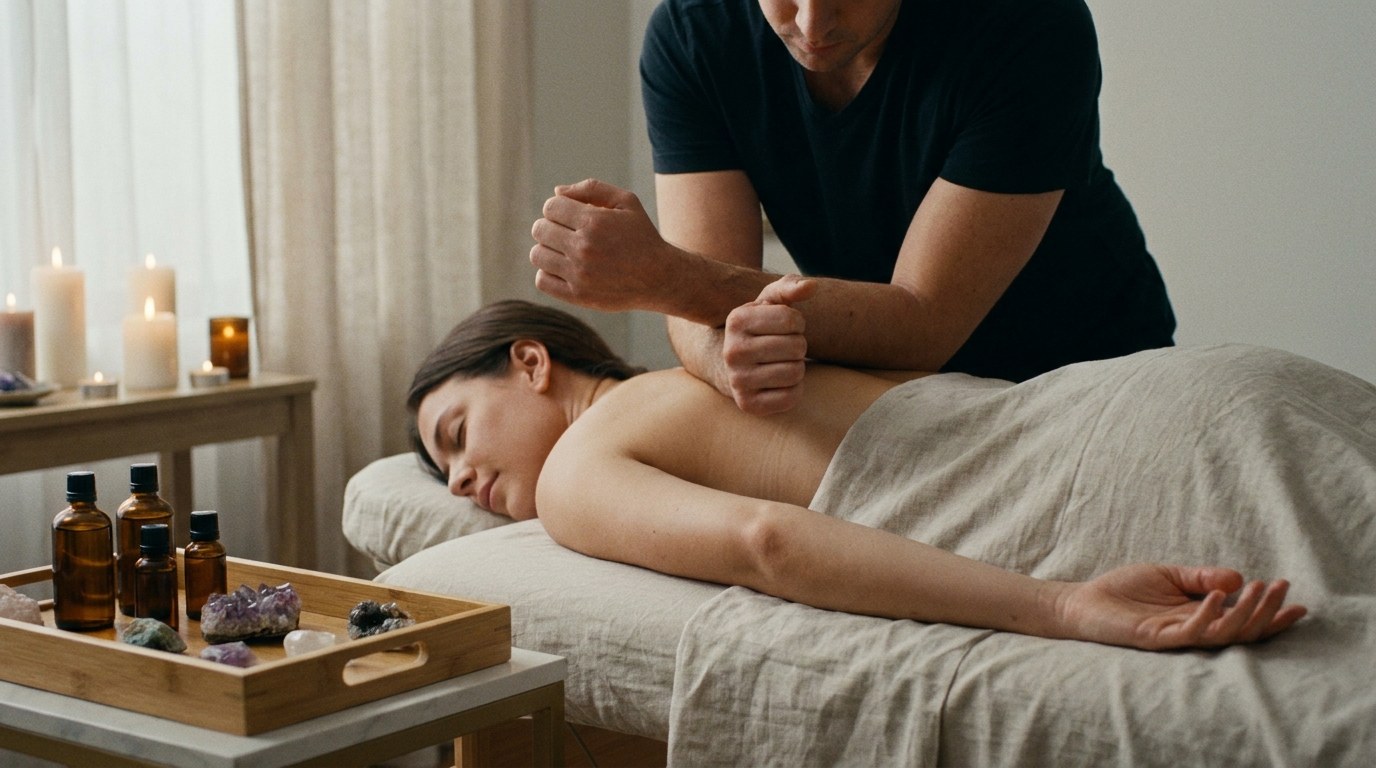
AVI Career Training’s 625-hour Massage Therapy program in Vienna, Virginia gives you the hands-on training you need to meet Virginia’s licensing requirements and launch a rewarding career in one of the fastest-growing wellness markets in the country.
If you’ve been searching for a massage therapy school in Northern Virginia that combines real clinical experience with state-approved education — you’re in the right place. AVI is COE Accredited and SCHEV Certified, and our students train on real clients before they ever graduate.
—
⚡ Key Takeaways
- Virginia requires 500 clock hours of approved massage therapy training for licensure
- After graduation, you must pass the MBLEx national licensing exam to practice in Virginia
- Massage therapists in the DC-Arlington-Alexandria metro earn above the national median — one of the highest-paying LMT markets in the U.S.
- The BLS projects 11% job growth for massage therapists through 2033 — faster than average
- AVI is COE Accredited and SCHEV Certified, and accepts the GI Bill® for eligible students
Apply to AVI’s Massage Therapy Program →
—
What Does a Massage Therapist Actually Do?
A licensed massage therapist (LMT) uses structured, hands-on techniques to manipulate soft tissue — muscles, tendons, and connective tissue — to reduce pain, relieve tension, and support overall wellness.
This is not a one-setting career. LMTs work across a wide range of environments:
A Day in the Life of an LMT
On any given day, you might assess a client’s tension patterns, customize a session combining Swedish and deep tissue techniques, document treatment notes, and schedule follow-up appointments. You work with your hands — and your communication skills matter just as much. Clients trust you with their physical discomfort, and that relationship is built on professionalism and care.
The Northern Virginia market is especially rich in opportunity. The region’s mix of federal employees, active-duty military and veterans, tech professionals, and a rapidly growing wellness-conscious population creates consistent, year-round demand for skilled LMTs.

—
Virginia Licensing Requirements for Massage Therapists
To practice as a licensed massage therapist in Virginia, you must complete 500 clock hours of approved massage therapy education and pass the MBLEx (Massage & Bodywork Licensing Examination).
Virginia’s massage therapy licensure falls under the Virginia Department of Professional and Occupational Regulation (DPOR). Here is the path from student to licensed professional:
Step 1: Complete 500 Hours of Approved Training
Virginia requires a minimum of 625 clock hours at a state-approved massage therapy school. Those hours must cover anatomy and physiology, massage theory and technique, ethics, and clinical practice. AVI’s program is structured to meet — and exceed — these requirements.
Step 2: Pass the MBLEx
The MBLEx is administered by the Federation of State Massage Therapy Boards (FSMTB) and is the national licensing exam accepted in Virginia. It covers kinesiology, pathology, massage theory, and professional ethics. AVI prepares students for this exam throughout the program — not just in the final weeks.
Step 3: Apply for Your Virginia License
Once you pass the MBLEx, you submit your licensure application to Virginia DPOR along with your exam scores, proof of completed training hours, and applicable fees. After approval, you are a licensed massage therapist in the Commonwealth of Virginia — legally permitted to practice.
Virginia LMT Licensing at a Glance
- Training Required: 500 clock hours at an approved school
- Licensing Exam: MBLEx (administered by FSMTB)
- Licensing Body: Virginia Department of Professional and Occupational Regulation (DPOR)
- Renewal: Virginia LMT licenses require periodic renewal and continuing education
> Always verify the most current licensing requirements directly with Virginia DPOR before applying, as regulations can change.
—
AVI’s 625-Hour Massage Therapy Program — What You’ll Learn
AVI Career Training’s Massage Therapy program (NO FINANCIAL AID FOR THIS PROGRAM) in Vienna, Virginia is built around one goal: making you job-ready before you graduate.
The program is 500 hours — exactly what Virginia requires for licensure eligibility. Every hour is intentional. You won’t sit through filler lectures. You’ll spend the majority of your time doing what LMTs actually do: working on clients, refining technique, and building the clinical judgment that separates good therapists from great ones.
Core Curriculum Areas
Anatomy & Physiology
You can’t work effectively on the body without understanding it. You’ll study musculoskeletal anatomy, the nervous system, and how massage affects each system — the foundation for everything else in the program.
Swedish Massage
The baseline technique every LMT must master. Swedish massage develops your pressure control, rhythm, and client communication before you move into more advanced modalities.
Deep Tissue Massage
Deep tissue work targets the deeper layers of muscle and connective tissue. You’ll learn how to apply therapeutic pressure safely and effectively — critical for clinical and sports settings.
Clinical Applications
This is where your training becomes real. You’ll work with actual clients in AVI’s supervised clinic, gaining experience assessing needs, customizing sessions, and documenting outcomes. These hours build the confidence that carries you into your first job.
Business, Ethics & Professional Practice
Being a skilled LMT is only part of the equation. You’ll cover client communication, professional boundaries, HIPAA awareness, and the basics of building a practice — whether you plan to work for an employer or go independent.
Inclusive Training — Every Client, Every Body
AVI trains students to work with clients of all body types, ages, and backgrounds. In a market as diverse as Northern Virginia and the broader DMV area, that’s not just a value — it’s a professional advantage. You’ll graduate prepared to serve everyone who walks through your door.
—
Career Outlook — Salary and Job Opportunities in Northern Virginia
The career outlook for massage therapists is strong — and Northern Virginia is one of the best places in the country to build that career.

National Earning Potential
According to the U.S. Bureau of Labor Statistics, the national median annual wage for massage therapists was $49,860 as of May 2023. The BLS also projects 11% job growth for the profession through 2033 — faster than the average for all occupations.
(BLS, May 2023)
Through 2033 (BLS)
LMT Markets in the U.S.
Why Northern Virginia Is a Premium LMT Market
The DC-Arlington-Alexandria metro area consistently ranks among the highest-paying markets for massage therapists in the country according to BLS Metro Area Occupational Employment data. Several factors drive that:
Employed vs. Self-Employed — Know Your Options
Working for a spa, clinic, or wellness center offers stability, a built-in client base, and benefits. Going independent or building a private practice offers flexibility and higher per-session income — but requires business skills and client-building effort. AVI’s curriculum prepares you for both paths.
—
💬 Student Story: Career Change at 34
Marcus had spent a decade in IT support in the Tysons Corner area. He was good at his job, but something was missing. After his own sports massage helped him recover from a running injury, he started researching massage therapy programs in Northern Virginia. He enrolled in AVI’s 625-hour Massage Therapy program, kept his part-time job during training, and passed the MBLEx on his first attempt. Six months after graduation, he was working at a physical therapy practice in Vienna and building a weekend client roster on the side. “I wish I’d done this sooner,” he said. “I actually look forward to Mondays now.”
—
Why Choose AVI Career Training in Vienna, VA?
AVI Career Training is a purpose-built career school — not a university where wellness programs compete for attention with 200 other degree tracks. Every instructor, every classroom, and every clinical hour here is focused on launching working professionals in beauty and wellness.
Accreditation That Matters
AVI is accredited by the Council on Occupational Education (COE) and certified by the Virginia Department of Education (SCHEV). These are not decorative credentials. COE accreditation means AVI’s programs have been independently evaluated for quality, outcomes, and institutional integrity. SCHEV certification confirms Virginia state approval. When you graduate from AVI, your credential carries weight.
GI Bill® Accepted
AVI accepts the GI Bill® for eligible veterans and active-duty service members. Given the density of the military community in the Northern Virginia and DMV area — Fort Belvoir, Quantico, the Pentagon — this is a significant benefit. If you’ve served, your education benefit may cover a substantial portion of your program costs. Contact AVI’s admissions team at (703) 943-9841 to verify your specific eligibility.
Tuition & Payment Options
Federal financial aid (Title IV / FAFSA) is NOT available for AVI’s Massage Therapy program because it is under 600 hours. AVI offers payment plan options and may be able to connect you with private financing resources. The GI Bill® remains available for eligible veterans. Contact admissions to discuss your specific situation and get a clear picture of total program costs before you enroll.
Location — Built for Northern Virginia Students
AVI is located at 1595 Spring Hill Rd #720, Vienna, VA 22182 — minutes from the Tysons Corner metro area, easily accessible from Fairfax, Falls Church, McLean, Reston, and the broader DC metro. You don’t need to commute into the District or drive an hour for quality massage therapy training. It’s here, in your community.
An Inclusive Training Environment
AVI’s training philosophy is rooted in serving everyone — students and clients of all backgrounds, body types, and life experiences. Northern Virginia is one of the most ethnically and culturally diverse regions in the country. AVI trains you to meet that reality, not just the narrow slice of clientele depicted in generic wellness marketing. You will graduate prepared to serve the full range of clients you’ll actually encounter.
—
💬 Student Story: From Stay-at-Home Parent to Licensed Therapist
Priya had been out of the workforce for six years raising her kids in Reston. When her youngest started school, she knew she wanted a career that offered flexibility, meaningful work, and real earning potential — without a four-year degree. A friend mentioned AVI’s massage therapy program in Vienna. Priya visited the campus, met the instructors, and enrolled the following month. She completed her 500 hours, passed the MBLEx, and now works three days a week at a medical spa in Fairfax — with room to grow her hours as her kids get older. “AVI treated me like a professional from day one,” she said. “I never felt behind.”
—
Frequently Asked Questions About Massage Therapy School in Northern Virginia
Q: How many hours do you need to become a massage therapist in Virginia?
A: Virginia requires 500 clock hours of approved massage therapy education from a state-recognized school. AVI Career Training’s 500-hour program meets this requirement and prepares you to sit for the MBLEx licensing exam.
—
Q: How long does massage therapy school take in Northern Virginia?
A: Program length depends on your schedule and how the hours are structured. AVI’s 625-hour Massage Therapy program can typically be completed in several months. Contact AVI admissions at (703) 943-9841 to get current schedule options and projected completion timelines.
—
Q: How much does a massage therapist make in Virginia?
A: The national median annual wage for massage therapists is $49,860 (BLS, May 2023). The DC-Arlington-Alexandria metro area is consistently one of the highest-paying markets for LMTs in the country. Your income will vary based on setting, hours, and whether you are employed or self-employed.
—
Q: Is massage therapy school worth it?
A: For most people, yes. A 500-hour program is a relatively short, focused investment compared to a four-year degree. The BLS projects 11% job growth through 2033, the DC metro market pays above the national median, and the career offers genuine flexibility in setting and schedule. For career-changers, parents re-entering the workforce, or veterans transitioning out of service, massage therapy offers a clear, achievable path.
—
Q: What is the difference between a massage therapy certificate and a license?
A: A certificate is what your school awards upon completing your program — it documents that you finished your training hours. A license is the legal authorization issued by the state (Virginia DPOR) that allows you to practice professionally. In Virginia, you cannot legally practice as a massage therapist without a state license, which requires passing the MBLEx after completing your 625 hours.
—
Q: Does AVI Career Training accept the GI Bill® for massage therapy?
A: Yes. AVI accepts the GI Bill® for eligible veterans and service members. Given Northern Virginia’s large military and veteran population, this is one of AVI’s most valuable offerings. Contact AVI at (703) 943-9841 to confirm your specific benefit eligibility.
—
Q: Where exactly is AVI Career Training located?
A: AVI Career Training is located at 1595 Spring Hill Rd #720, Vienna, VA 22182 — in the Tysons Corner area of Northern Virginia. The campus is accessible from Fairfax, Falls Church, McLean, Reston, and across the DMV area.
—
Q: Does massage therapy training at AVI include real client practice?
A: Yes. AVI’s program includes supervised clinic hours where students work with real clients. This hands-on experience is a core part of what makes AVI graduates job-ready from day one.
—
Ready to Start Your Massage Therapy Career?
AVI Career Training’s 500-hour program in Vienna, VA is designed to take you from first class to licensed professional — with real clinical experience and an accredited credential behind you.
Apply Now — Start Your Application
Questions? Call us at (703) 943-9841 or contact AVI admissions.
—
About AVI Career Training
AVI Career Training is a COE-accredited, SCHEV-certified beauty