
Massage Therapy School in Northern Virginia
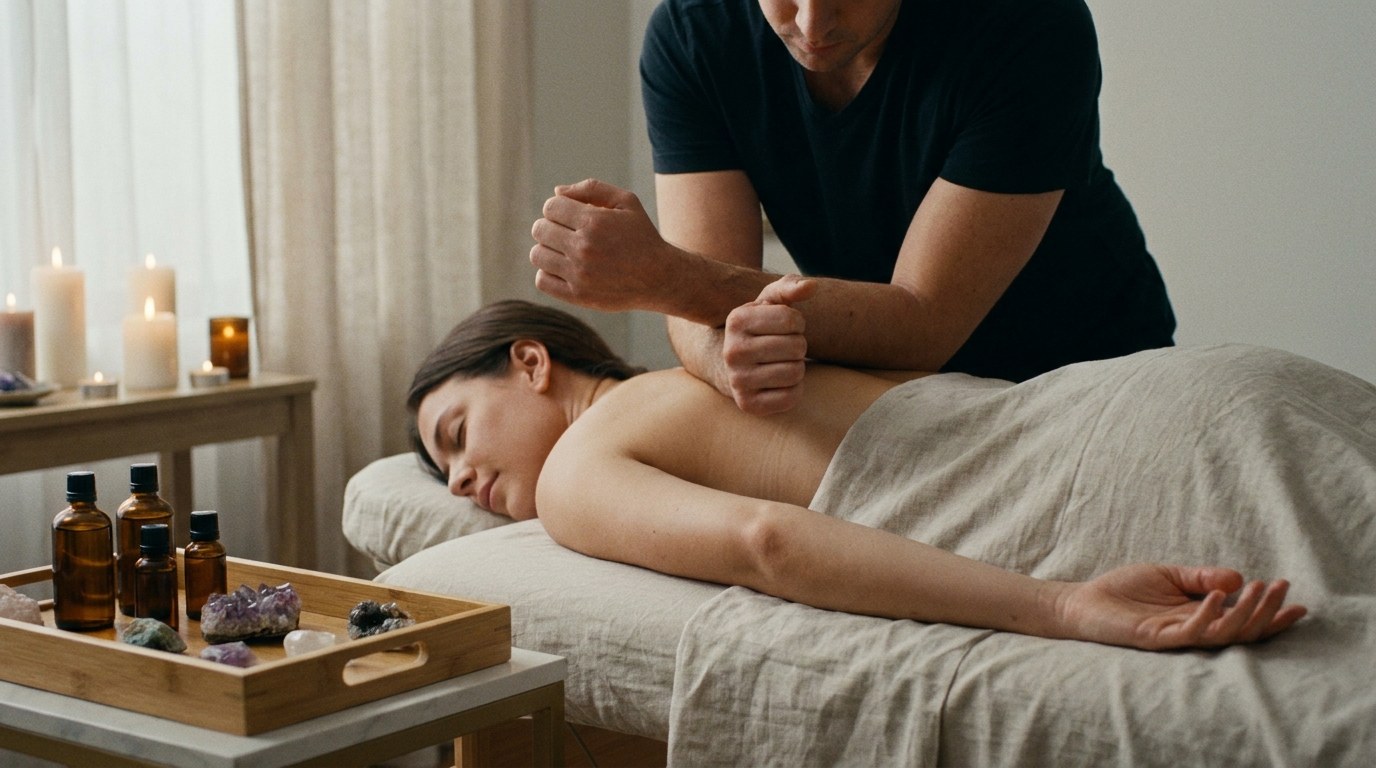
If you want to become a licensed massage therapist in Northern Virginia, AVI Career Training’s 500-hour Massage Therapy program in Vienna, VA gives you the hands-on training, state-required credentials, and career-ready skills to launch a fulfilling wellness career in one of the most in-demand markets in the country.
The DC metro area is home to one of the highest concentrations of health-conscious, high-income households in the United States. Tysons Corner, Fairfax County, Arlington — these are communities where wellness spending is strong, demand for skilled therapists is real, and a massage therapy license opens doors that a four-year degree cannot.
AVI Career Training is COE Accredited and SCHEV Certified, serving students across the Northern Virginia and greater DMV area from our campus at 1595 Spring Hill Rd #720, Vienna, VA 22182. Whether you’re changing careers, entering the workforce for the first time, or building on existing wellness experience, this program was built for you.
Key Takeaways
- Virginia requires 500 hours of approved massage therapy training to sit for the licensing exam.
- Licensure is governed by the Virginia Board of Nursing (VBON) and requires passing the MBLEx with a scaled score of 630 or higher.
- AVI’s Massage Therapy program is exactly 500 hours — designed to meet Virginia’s requirements precisely.
- Massage therapy employment is projected to grow faster than average nationally, per the Bureau of Labor Statistics (BLS).
- Northern Virginia wages for massage therapists trend above the national median due to regional cost of living and high-income clientele density.
- AVI Career Training is COE Accredited and SCHEV Certified — located in Vienna, VA, convenient to Tysons, Fairfax, and Arlington.
Explore AVI’s Massage Therapy program and start your application today.
—
What Does a Licensed Massage Therapist Actually Do?
A licensed massage therapist uses structured, hands-on techniques to manipulate soft tissue — muscles, connective tissue, tendons, and ligaments — to reduce pain, relieve stress, and support physical recovery.
This is skilled, in-demand work. It is not a single technique. Trained therapists move fluently between modalities depending on the client’s needs:
What makes massage therapy a compelling career is its range. One licensed therapist can work in a day spa in Tysons Corner in the morning and support a sports medicine practice in Fairfax in the afternoon. You can work for a luxury hotel, a chiropractic clinic, a corporate wellness program, or yourself.
The Northern Virginia and DC metro area is one of the strongest markets in the country for all of these settings. High household incomes, a dense federal workforce, and a culture of wellness investment mean consistent, premium-rate clientele for therapists who hold a Virginia license and bring real skill.

—
Virginia Licensing Requirements: What You Need to Know
Virginia’s massage therapy licensing requirements are clear, achievable, and structured around a 500-hour training standard that AVI’s program meets exactly.
Here is what you need to earn your Virginia massage therapy license:
1. Complete 500 Hours of Approved Training
Virginia requires 500 hours of massage therapy education from a state-approved program. Your program must cover core subjects including anatomy, physiology, kinesiology, pathology, ethics, and clinical hands-on practice. AVI’s Massage Therapy program is built to fulfill this requirement entirely.
2. Pass the MBLEx
The licensure exam is the MBLEx — the Massage & Bodywork Licensing Examination, administered by the Federation of State Massage Therapy Boards (FSMTB). Virginia requires a scaled score of 630 or higher to pass. The MBLEx covers anatomy and physiology, kinesiology, pathology, client assessment, and ethics. AVI’s curriculum is aligned to these exam domains.
3. Apply for Your Virginia State License
After passing the MBLEx, you submit a separate state license application to the Virginia Board of Nursing (VBON), which oversees massage therapy licensure in the Commonwealth. You can review current requirements directly on the Virginia Department of Professional and Occupational Regulation (DPOR) website.
How long does it take? Most students completing a 500-hour program full-time finish within several months. Part-time scheduling extends that timeline. Either way, you can be licensed and working in under a year from the day you enroll — a much faster path to a stable income than a traditional four-year degree.
> Meet Daniela: A former hotel front-desk supervisor in Tysons Corner, Daniela had always been drawn to wellness work but assumed a career change meant going back to school for years. When she found AVI’s 500-hour program, she enrolled and completed training in under nine months while working part-time. She passed the MBLEx on her first attempt and now works full-time at a high-end spa minutes from where she used to check in hotel guests. She earns more per hour than she did in hospitality — and she controls her schedule.
—
What to Look for in a Massage Therapy Program — And What Sets AVI Apart
Not all massage therapy programs are equal. When you’re investing your time and tuition in a program, here is what actually matters — and how AVI Career Training delivers on each point.
Accreditation and State Approval
This is non-negotiable. Your program must be approved by the state of Virginia (SCHEV certified) and ideally accredited by a recognized national body. AVI Career Training is COE Accredited — accredited by the Council on Occupational Education (COE) — and SCHEV Certified, meaning AVI meets Virginia’s standards for postsecondary career training. These credentials protect your investment and validate your training to employers and licensing boards.
Hands-On, Clinically Relevant Training
Massage therapy is a hands-on profession. A program heavy on lecture and light on practice will leave you underprepared for both the MBLEx and real client work. AVI’s curriculum builds practical skill throughout all 500 hours — you develop technique, client communication skills, and professional confidence in a real training environment.
An Inclusive Curriculum That Reflects Real Clients
The Northern Virginia and DMV area is one of the most culturally diverse metro regions in the country. Your clients will reflect that diversity. AVI’s training prepares you to serve a genuinely diverse clientele with the cultural awareness and adaptive technique that high-quality wellness practice requires. This is not a box-checking exercise — it is a professional advantage in this market.
Location That Positions You for This Market
AVI’s campus is in Vienna, VA — directly accessible from Tysons Corner, Fairfax, Arlington, Reston, and the broader DC metro. You are training where you will work. The networks you build during your program — instructors, peers, clinical contacts — are already embedded in the Northern Virginia wellness market.
Flexible Enrollment Options
Career changers and working adults need scheduling that fits their lives. AVI offers enrollment options designed to accommodate students who can’t simply walk away from their current jobs and responsibilities. You can pursue your 500-hour program without putting your entire life on hold.
Explore AVI’s Massage Therapy program and start your application today.
—
Career Outlook and Earning Potential in Northern Virginia

Massage therapy is a strong career choice right now — and the Northern Virginia / DC metro market makes it stronger.
According to the Bureau of Labor Statistics Occupational Outlook Handbook, massage therapy employment is projected to grow faster than the average for all occupations. Consumer demand for wellness services — driven by everything from stress management to injury rehabilitation — has made massage therapy a resilient, growing profession.
Why Northern Virginia Pays More
National median figures for massage therapists are a starting point. In the DC metro area, wages consistently trend above that median. The reasons are straightforward:
Where Can a Virginia-Licensed Massage Therapist Work?
One license, multiple career tracks. A Virginia massage therapy license gives you access to:
> Meet Marcus: A former Army medic who separated from service and settled in Fairfax County with his family, Marcus was looking for a civilian healthcare-adjacent career that valued hands-on skill. He enrolled at AVI, completed the 500-hour Massage Therapy program, and passed his MBLEx on the first attempt. He now splits his time between a sports medicine clinic in Falls Church and a growing private practice. His military background — precision, anatomy knowledge, client care — transferred directly. He credits the structured, hands-on training at AVI for making the transition feel natural rather than overwhelming.
The flexibility angle is real: massage therapy is one of the few licensed healthcare-adjacent careers where self-employment is not just possible — it is a primary career model. Many AVI graduates start in an employer setting, build clientele, and transition to private practice within a few years.
—
How to Enroll in AVI’s Massage Therapy Program
Enrolling in AVI Career Training’s Massage Therapy program is a straightforward process. Here is what to expect.
Step 1: Submit Your Application
Start your application online. AVI’s admissions team reviews your application and reaches out to discuss your goals, schedule options, and program start dates. You can apply directly at the link below or call (703) 943-9841 to speak with an admissions advisor.
Step 2: Meet Basic Admissions Requirements
AVI’s Massage Therapy program is open to students who hold a high school diploma or GED equivalent. No prior massage experience is required. You bring the commitment — AVI provides the structure, instruction, and credentials.
Step 3: Understand Tuition and Payment Options
Because AVI’s Massage Therapy program is 500 hours, it does not qualify for federal financial aid (Title IV / FAFSA). Federal student aid is not available for this program. Tuition is payable through:
If you are a veteran or active-duty service member, contact AVI’s admissions team directly to discuss your specific situation and eligibility. Veterans interested in benefit programs should confirm applicable coverage with their VSO or the VA prior to enrollment.
AVI’s 500-hour Massage Therapy program does not qualify for federal financial aid (FAFSA/Title IV) because it is under the 600-hour federal threshold. Payment plans and private financing options are available. Contact admissions at (703) 943-9841 to discuss your options.
Step 4: Start Training
Once enrolled, you begin a structured 500-hour curriculum that covers anatomy, physiology, pathology, multiple massage modalities, ethics, business practice, and MBLEx preparation. By the time you complete the program, you are prepared to sit for your licensing exam and walk into any professional setting with confidence.
Or call us at (703) 943-9841 — we’re happy to answer your questions.
—
Frequently Asked Questions
Q: How long does it take to become a licensed massage therapist in Virginia?
A: Most students completing a 500-hour program full-time finish training within several months, then sit for the MBLEx exam. From enrollment to licensed practice, many students complete the full process in under a year.
—
Q: How many hours do you need for a massage therapy license in Virginia?
A: Virginia requires 500 hours of approved massage therapy training from a state-recognized program. AVI Career Training’s Massage Therapy program is exactly 500 hours, meeting this requirement in full.
—
Q: What does a massage therapist earn in Northern Virginia / the DC metro area?
A: According to the Bureau of Labor Statistics, massage therapists in the DC metro area earn above the national median due to regional cost of living and high-income clientele. Earnings vary based on employment setting, experience, and whether you work for an employer or operate a private practice. Self-employed therapists in established Northern Virginia practices can command strong hourly rates.
—
Q: Is massage therapy school worth it?
A: For the right person, yes — absolutely. A 500-hour program (significantly shorter and more affordable than a four-year degree) produces a licensed healthcare-adjacent professional with flexible career options across spas, clinics, sports medicine, hospitality, and private practice. In a market like Northern Virginia, the return on a focused, accredited program can be substantial.
—
Q: Can I use financial aid or the GI Bill® for massage therapy school at AVI?
A: AVI’s Massage Therapy program does not qualify for federal financial aid (FAFSA/Title IV) because it is under the 600-hour federal threshold. Payment plans and private financing options are available. Veterans should contact AVI admissions directly at (703) 943-9841 to discuss their specific situation and any applicable benefits.
—
Q: Is AVI Career Training accredited?
A: Yes. AVI Career Training is accredited by the Council on Occupational Education (COE) and certified by the State Council of Higher Education for Virginia (SCHEV). These accreditations confirm that AVI meets rigorous standards for educational quality, faculty credentials, and student outcomes.
—
Q: Where is AVI Career Training located, and what areas does it serve?
A: AVI Career Training is located at 1595 Spring Hill Rd #720, Vienna, VA 22182 — convenient to Tysons Corner, Fairfax, Arlington, Reston, and the broader DC metro area. Most students commute from Northern Virginia communities throughout Fairfax County and the DMV region.
—
Q: What exam do I take to become a licensed massage therapist in Virginia?
A: Virginia requires the MBLEx — the Massage & Bodywork Licensing Examination — administered by the Federation of State Massage Therapy Boards (FSMTB). You must pass with a scaled score of 630 or higher, then submit a separate state license application to the Virginia Board of Nursing (VBON).
—
About AVI Career Training
AVI Career Training is a COE Accredited, SCHEV Certified beauty and wellness school located in Vienna, Virginia, serving the Northern Virginia and greater DC metro area. AVI offers hands-on career training programs in Cosmetology, Basic Esthetics, Master Esthetics, Massage Therapy, Electrolysis, Cosmetic Laser Technician