Massage Therapy Jobs in the DMV: Pay, Settings & How to Start
Massage therapy jobs in the DMV pay well, open doors across multiple work settings, and require a training program you can complete in less than a year — making this one of the most accessible career pivots in the Northern Virginia and DC metro area right now.
Whether you’re tired of sitting at a desk, returning to the workforce, or simply ready to do work that genuinely helps people, a career as a licensed massage therapist (LMT) in the DMV offers real earning potential and real flexibility. This guide covers exactly what you can expect to earn, where you can work, what Virginia requires for licensure, and how AVI Career Training in Vienna, Virginia prepares you for all of it.
Apply to AVI’s Massage Therapy program today →
- Virginia massage therapists earn a median salary of approximately $49,000–$52,000/year, with DMV-area wages typically running 10–20% above the national median.
- Self-employed LMTs in the DMV commonly charge $80–$140 per session, giving full-time practitioners strong income potential.
- Virginia requires 500 hours of education from a state-approved program plus passage of the MBLEx exam for licensure.
- AVI Career Training’s 625-hour Massage Therapy program (NO FINANCIAL AID FOR THIS PROGRAM) is COE Accredited and SCHEV Certified — meeting Virginia’s requirements directly.
- DMV employers span luxury spas, chiropractic clinics, corporate wellness programs, integrative health centers, and private practice.
—
What Massage Therapists Actually Earn in Virginia and the DC Metro
Virginia massage therapists earn a median annual salary of approximately $49,000–$52,000, and in the DC metropolitan statistical area, that number trends even higher — typically 10–20% above the national median, according to Bureau of Labor Statistics occupational data.
The national median for massage therapists sits around $49,860 per year (BLS.gov, most recent data). But the DMV isn’t average. Northern Virginia and DC consistently rank among the highest-paying metro areas for licensed massage therapists, driven by higher household incomes, strong demand from corporate and government-sector professionals, and a wellness culture that treats massage as a routine health expense — not a luxury.
How you structure your career matters. An LMT employed at a spa or clinic earns a predictable hourly wage plus gratuities — typically between $20 and $35 per hour before tips. A self-employed or private-practice therapist in the DMV can charge $80–$140 per 60-minute session, and a full client book of 20–25 sessions per week translates to substantial annual income.
Gratuities are a real income factor in this profession. At many spas and resort properties — especially around the Tysons Corner corridor — tips regularly add 15–25% to a therapist’s session earnings.
View current BLS occupational data for massage therapists →
—
Where You Can Work as a Licensed Massage Therapist in the DMV
Licensed massage therapists in the DMV work across more settings than most people expect — and Northern Virginia’s economic mix makes this region especially rich with options.

Day Spas and Luxury Hotel Spas
The Tysons Corner area alone hosts several high-end hotel spas and day spas with ongoing demand for licensed therapists. Properties like these offer consistent clientele, structured schedules, and often include benefits packages — a good entry point for new graduates building their confidence and client base.
Chiropractic and Physical Therapy Clinics
This is one of the fastest-growing employment settings for LMTs in Northern Virginia. Chiropractic offices and outpatient physical therapy clinics integrate massage therapy directly into patient care plans. You’ll work alongside other healthcare professionals, see patients with specific musculoskeletal needs, and often enjoy steady, appointment-based scheduling.
Corporate Wellness Programs
Northern Virginia’s dense population of government contractors, tech firms, and federal agencies has created strong demand for on-site corporate wellness services. Chair massage programs, employee wellness days, and contracted wellness partnerships are an active market — one that rewards therapists who want variety and flexible scheduling.
Medical and Integrative Health Centers
Integrative medicine is growing throughout the DMV. Medical practices that combine conventional care with complementary modalities — acupuncture, chiropractic, naturopathic medicine — frequently employ licensed massage therapists as part of a coordinated care team. These roles often come with competitive pay and a clinically focused environment.
Private Practice and Mobile Therapy
Many experienced LMTs in the DMV eventually build independent practices — either seeing clients from a private studio or offering mobile massage services. Northern Virginia’s affluent residential communities and the region’s strong wellness culture make private practice a realistic long-term goal. Several AVI graduates have done exactly this within a few years of licensure.
The bottom line: massage therapy jobs in the DMV span a wider range of environments than almost any other wellness profession. You’re not choosing between spas or nothing — you’re choosing between five distinct career tracks.
—
Virginia Licensing Requirements: What You Need to Practice Legally
Yes, massage therapists in Virginia are required to hold a state license — and the path to getting one is straightforward when you know the steps.
Virginia’s massage therapy licensure is overseen by the Virginia Department of Professional and Occupational Regulation (DPOR), which sets and enforces the requirements for anyone practicing massage therapy in the Commonwealth. Here’s what you need:
Virginia LMT Licensing Checklist
- ✅ Complete 500 hours of massage therapy education at a state-approved school
- ✅ Pass the MBLEx (Massage & Bodywork Licensing Examination), administered by the Federation of State Massage Therapy Boards (FSMTB)
- ✅ Submit a Virginia DPOR license application with proof of education and exam passage
- ✅ Pass a background check
- ✅ Renew your license every two years with required continuing education
A note on the MBLEx: This is the nationally recognized licensing exam accepted by Virginia and most other states. It covers anatomy, physiology, pathology, massage theory, and professional ethics. Most students who complete a rigorous, hands-on 500-hour program are well-prepared to pass on their first attempt.
Review Virginia DPOR massage therapy requirements →
Mini-Story #1: Marcus had worked as a personal trainer in the DC area for six years before a wrist injury forced him to rethink his career. He enrolled in AVI’s Massage Therapy program (NO FINANCIAL AID FOR THIS PROGRAM) in Vienna, completed his 625 hours, passed the MBLEx on his first attempt, and transitioned into a role at a sports medicine clinic in Fairfax within three months of graduating. His background in anatomy made the coursework click fast — and his new schedule gives him evenings free for the first time in years.
—
How AVI Career Training Prepares You for the Virginia State Board
AVI Career Training’s Massage Therapy program (NO FINANCIAL AID FOR THIS PROGRAM) is built around Virginia’s 625-hour requirement — and then some.

AVI Career Training, located at 1595 Spring Hill Rd #720 in Vienna, Virginia, is accredited by the Council on Occupational Education (COE) and certified by the State Council of Higher Education for Virginia (SCHEV). These aren’t decorative credentials — they’re signals that AVI meets rigorous educational standards and that your credential will be recognized by employers, licensing boards, and in other states if you ever move.
Hands-On from Day One
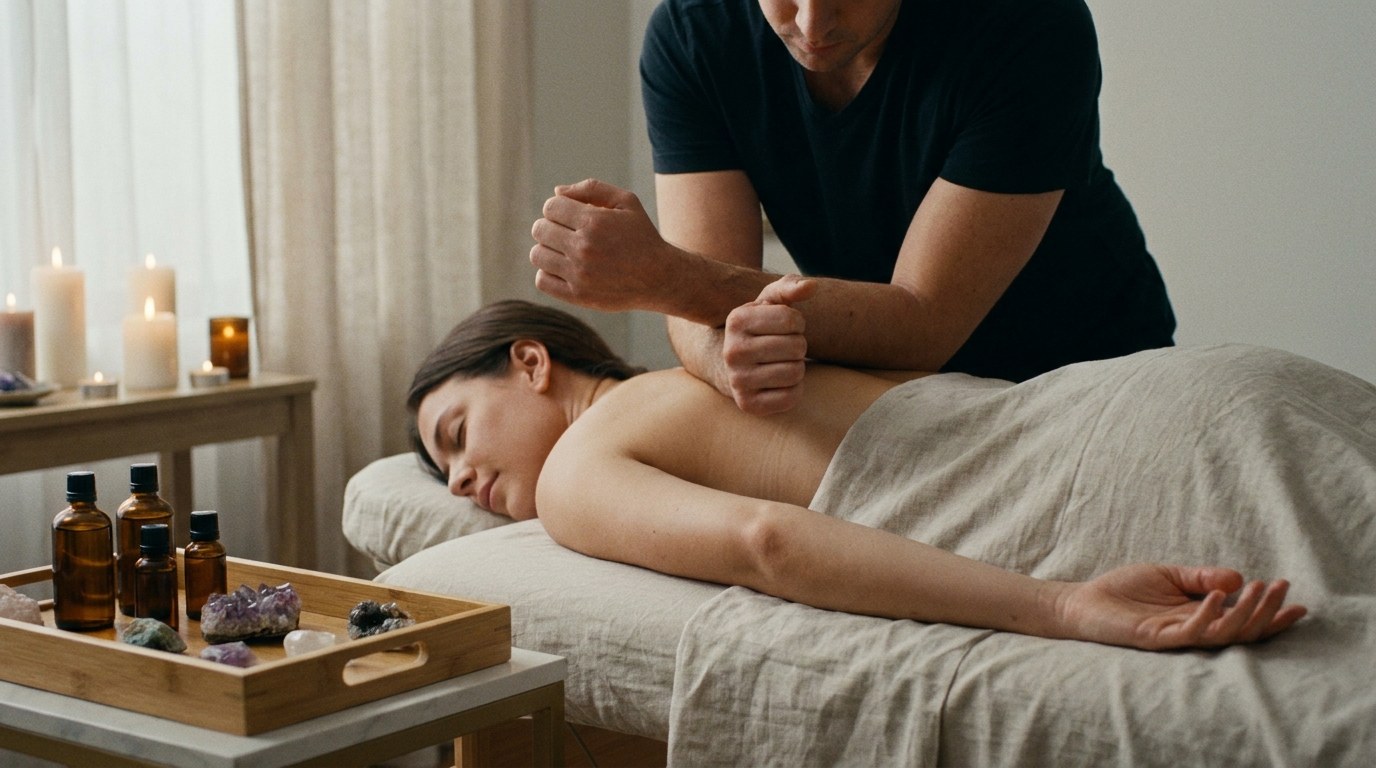
AVI’s approach centers on clinical, hands-on training — not just textbook content. You practice techniques on real people in a supervised clinic environment, building the muscle memory, client communication skills, and professional confidence that employers and clients expect from day one.
Curriculum Designed Around the MBLEx
The 625-hour curriculum covers everything the MBLEx tests: anatomy and physiology, kinesiology, pathology, massage theory, ethics, and professional practice. Your instructors are licensed industry professionals — not just academics. They know what the board exam requires and what clients actually need.
Tuition and Payment Options
Because AVI’s Massage Therapy program is under 600 hours, federal financial aid (Title IV / FAFSA) is not available for this program. AVI does offer payment plan options and private financing alternatives to help make tuition accessible. Contact AVI’s admissions team directly at (703) 943-9841 to discuss what works for your situation.
GI Bill® benefits are accepted at AVI for eligible programs — if you’re a veteran or active-duty service member, connect with admissions to confirm your specific benefit eligibility.
Mini-Story #2: Priya had spent 10 years in healthcare administration before deciding she wanted to work with patients directly — with her hands, not a spreadsheet. She found AVI’s Massage Therapy program while researching massage therapy schools in Northern Virginia, enrolled at the Vienna campus, and graduated 625 hours later with a license and a job offer from an integrative health center in McLean. “I wish I had done this sooner,” she said. “The training was real. I felt ready.”
Ready to take the next step? Apply to AVI’s Massage Therapy program today →
—
Is Massage Therapy the Right Career Move for You?
Massage therapy is a great career in the DC area for the right person — and being honest about what “the right person” means will save you time and help you commit with confidence.
You’ll Thrive If You:
Be Realistic About:
The DMV Market Advantage
If you’re going to launch a massage therapy career anywhere, Northern Virginia and the DC metro are among the best markets in the country to do it. The combination of high average household income, strong wellness culture, dense corporate and government employment, and a population that actively seeks professional wellness services gives licensed massage therapists here a consistent edge.
You’re not choosing a risky career in a soft market. You’re choosing a licensed, regulated profession in one of the most economically robust metros in the United States.
—
Frequently Asked Questions About Massage Therapy Jobs in the DMV
Q: How much does a massage therapist make in Virginia?
A: Virginia massage therapists earn a median annual salary of approximately $49,000–$52,000, according to Bureau of Labor Statistics data. In the DC metropolitan area, wages typically run 10–20% above the national median. Self-employed LMTs in the DMV who charge $80–$140 per session and maintain a full client book can earn substantially more.
—
Q: Where do most massage therapists work?
A: Most licensed massage therapists work in spas, chiropractic offices, physical therapy clinics, medical and integrative health centers, hotels, or private practice. In the DMV, corporate wellness programs and government-adjacent employer benefits packages also create steady demand for contracted massage therapy services.
—
Q: How long does it take to become a licensed massage therapist in Virginia?
A: Virginia requires 625 hours of massage therapy education from a state-approved program, plus passage of the MBLEx licensing exam. At AVI Career Training in Vienna, Virginia, students complete the 625-hour Massage Therapy program and are then eligible to sit for the MBLEx. Total timeline from enrollment to licensure typically ranges from several months to under a year, depending on your schedule.
—
Q: Is massage therapy a good career in the DC area?
A: Yes — the DC metro area is one of the strongest markets in the country for licensed massage therapists. High household incomes, a dense wellness-conscious population, corporate wellness programs, and a large healthcare sector create consistent demand across multiple employment settings. Salaries in the DMV run above national averages, and the market supports both employed positions and private practice.
—
Q: Do massage therapists need a license in Virginia?
A: Yes. Virginia requires a massage therapy license issued by the Virginia Department of Professional and Occupational Regulation (DPOR) to practice massage therapy for compensation. Licensure requires completing 500 hours at an approved school and passing the MBLEx exam.
—
Q: Does AVI Career Training’s Massage Therapy program qualify for financial aid?
A: Because AVI’s Massage Therapy program is under 600 hours, it does not qualify for federal financial aid (Title IV / FAFSA). AVI offers payment plan options and can connect you with private financing alternatives. GI Bill® eligibility varies by benefit type — contact AVI admissions at (703) 943-9841 to discuss your situation directly.
—
Q: What is AVI Career Training’s Massage Therapy program?
A: AVI Career Training’s Massage Therapy program is a 625-hour, hands-on career training program in Vienna, Virginia that meets Virginia’s state licensure requirements. The program covers anatomy, physiology, kinesiology, massage theory, pathology, ethics, and clinical practice. AVI is accredited by the Council on Occupational Education (COE) and certified by SCHEV. Graduates are eligible to sit for the MBLEx and apply for Virginia DPOR licensure.
—
About AVI Career Training
1595 Spring Hill Rd #720, Vienna, VA 22182
📞 (703) 943-9841
🌐 avicareertraining.com
AVI Career Training is a COE-accredited, SCHEV-certified beauty and wellness career school serving the Northern Virginia and DC metro area from its Vienna, Virginia campus near Tysons Corner. AVI offers hands-on career training programs in Cosmetology, Esthetics, Massage Therapy, Nail Technology, Electrolysis, and Cosmetic Laser Technology. Financial aid is available for qualifying programs. GI Bill® accepted for eligible students.
Accreditations: Council on Occupational Education (COE) · State Council of Higher Education for Virginia (SCHEV)
Service Area: Vienna, VA · Tysons Corner · Northern Virginia · DC Metro · Maryland
Apply: avi.edu/apply