
Massage Therapy: Virginia’s Fastest-Growing Career in 2026
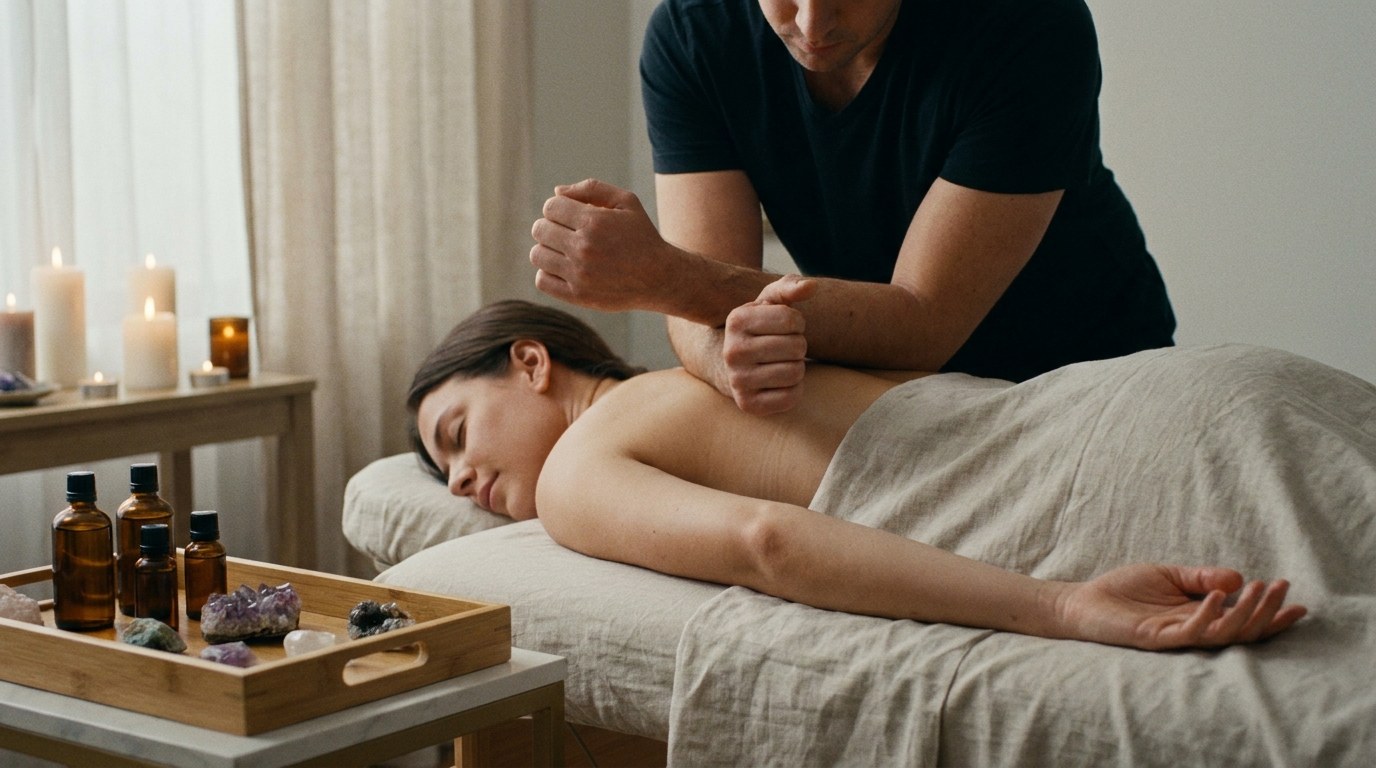
Massage therapy is one of the fastest-growing careers in Virginia, with the U.S. Bureau of Labor Statistics projecting employment growth of approximately 18–20% through 2032 — more than four times the national average for all occupations. If you’ve been wondering whether a massage therapy career makes sense in 2026, the short answer is yes — and Northern Virginia is one of the best places in the country to build it.
This article breaks down exactly what that growth means for you, what Virginia requires to get licensed, what you can realistically earn, and how AVI Career Training‘s Massage Therapy program (NO FINANCIAL AID FOR THIS PROGRAM) in Vienna, Virginia can get you there.
—
Key Takeaways
- The BLS projects massage therapy employment to grow 18–20% through 2032 — far above average for all U.S. occupations.
- Virginia requires 500 hours of accredited training and passing the MBLEx to earn a state license.
- Virginia massage therapists earn a median annual wage above $60,000, with Northern Virginia professionals often earning significantly more.
- AVI Career Training’s COE-accredited, SCHEV-certified 625-hour Massage Therapy program is located in Vienna, Virginia — minutes from Tysons Corner.
- Veterans may use the GI Bill® toward eligible programs at AVI. Note: Federal financial aid (Title IV/FAFSA) is NOT available for this program.
—
Why Massage Therapy Demand Is Surging in Virginia Right Now
Massage therapy demand in Virginia is growing faster than most people realize — and the numbers behind that growth are striking.
The U.S. Bureau of Labor Statistics’ Occupational Outlook Handbook projects massage therapist employment to grow roughly 18–20% from 2022 to 2032, placing it firmly among the fastest-growing careers in the country. For context, the average growth rate across all U.S. occupations is about 3%. That gap is not a rounding error — it reflects a real structural shift in how Americans think about health, recovery, and wellness.
The Northern Virginia Advantage
Northern Virginia isn’t just growing — it’s growing in exactly the ways that fuel massage therapy demand. The DMV area is home to a dense concentration of federal employees, defense contractors, tech professionals, and dual-income households with disposable income and high-stress careers. That demographic is the bread-and-butter client base for massage therapy practices.
Tysons Corner, Arlington, McLean, and Reston are packed with spas, chiropractic clinics, sports medicine facilities, luxury hotels, and integrative health centers — all of which employ licensed massage therapists. The region’s cost of living also pushes wages above national medians, which matters when you’re evaluating a career move.
Wellness Is No Longer Optional for Many Clients
A generational shift is underway. Younger professionals view massage therapy as part of routine health maintenance — not a luxury splurge. Clinical applications are expanding too. Massage is increasingly integrated into physical therapy settings, oncology support care, prenatal health programs, and sports recovery protocols. That broadens the employment landscape well beyond the day spa.
The result: demand in Virginia is consistent, not seasonal. Whether you work at a resort in the Blue Ridge foothills or a chiropractic office in Fairfax County, clients are booking regularly and returning consistently.
—

—
What Virginia Requires to Become a Licensed Massage Therapist
To become a licensed massage therapist in Virginia, you need to complete 625 hours of accredited training, pass the MBLEx national board exam, and submit a licensure application to the Virginia Board of Nursing.
Let’s walk through each step so you know exactly what you’re committing to — and why none of it should feel out of reach.
Step 1: Complete 500 Hours of Approved Training
The Virginia Department of Professional and Occupational Regulation (DPOR) sets the training standard at 500 hours from a state-approved massage therapy program. Those hours cover anatomy and physiology, massage theory and technique, pathology, business ethics, and supervised clinical practice.
This is not a weekend seminar or an online certificate. It’s structured, hands-on professional training — the kind that actually prepares you to work on real clients with real results.
Step 2: Pass the MBLEx
The MBLEx — the Massage & Bodywork Licensing Examination — is the nationally recognized board exam required for Virginia licensure. It’s administered by the Federation of State Massage Therapy Boards (FSMTB) and tests your knowledge of anatomy, physiology, kinesiology, pathology, and professional standards.
Most graduates from quality programs pass on their first attempt. Good schools prepare you for the MBLEx throughout your training, not just at the end.
Step 3: Submit Your Application to VBON
After passing the MBLEx, you’ll submit your licensure application to the Virginia Board of Nursing (VBON), which oversees massage therapy licensure in the state. The application includes proof of your training hours, MBLEx results, a background check, and the associated fees.
Once approved, you’re a Virginia-licensed massage therapist — legally authorized to practice in any of the settings you choose.
- 500 hours of approved training from a SCHEV-certified program
- Passing score on the MBLEx
- Background check and state application submitted to VBON
- License issued at the state level; renewable biennially
—
What Massage Therapists Actually Earn in Virginia
Virginia massage therapists earn a median annual wage that compares favorably to national figures — and Northern Virginia professionals typically earn above that median due to the DC metro cost of living and premium clientele.
According to the U.S. Bureau of Labor Statistics, the median annual wage for massage therapists nationally sits around $49,860 (most recent OOH data), with the top 25% earning significantly more. Virginia’s figures trend higher than the national median, particularly in the Northern Virginia corridor.
Earnings Vary Significantly by Setting
Where you work shapes what you earn as much as how long you’ve been licensed:
Specializations That Increase Your Earning Power
Adding specializations after licensure can meaningfully raise your rates and your appeal to specific client populations. Prenatal massage, sports massage, myofascial release, and deep tissue therapy are among the most in-demand add-on skills in Northern Virginia’s competitive wellness market. Therapists who can market these specializations often charge premium session rates and attract steady referral pipelines from OBs, athletic trainers, and physical therapists.
The bottom line: massage therapy is not a minimum-wage career. For a motivated, well-trained therapist in Northern Virginia, six-figure annual income is achievable — particularly for those who build a private practice or specialize strategically.
—
Who Is Choosing Massage Therapy as a Career in 2026 (And Why It Works)
Massage therapy in 2026 draws a wide range of students — career-changers, veterans, wellness advocates, and people who are simply done sitting at a desk for eight hours a day.
Meet Denise: From HR Manager to Licensed Therapist
Denise spent 14 years in corporate human resources in Fairfax County. She was good at her job, but the work left her feeling disconnected — processing paperwork instead of helping people in ways she could actually see. At 38, she enrolled in a 625-hour Massage Therapy program. Within six months of finishing, she was working part-time at a chiropractic clinic in Tysons Corner while building her own private practice on weekends. Two years later, she left her corporate job entirely. Her income is comparable to what she made in HR — and she looks forward to going to work.
Denise’s story is not unusual. Career-changers in their 30s and 40s make up a significant portion of massage therapy students. The training timeline is short compared to a second bachelor’s degree. The licensing path is clear. And the demand for qualified therapists means that graduates who take the work seriously are hired quickly.
Meet Marcus: Veteran, Now Therapist
Marcus served eight years in the Army before transitioning to civilian life in the DC area. He wanted a career that used his discipline and physical endurance, helped others, and didn’t trap him behind a computer. He enrolled at a Northern Virginia massage therapy school using his GI Bill® benefits. After completing his 500 hours and passing the MBLEx, he landed a position at a sports recovery center in Arlington, where he works with athletes and active-duty personnel dealing with chronic pain and performance recovery.
Veterans make exceptional massage therapists. The precision, patience, and client-first mindset that military service builds translates directly into clinical bodywork. If you’re transitioning out of service, massage therapy deserves a serious look.
Other Profiles Choosing This Path
Beyond career-changers and veterans, massage therapy draws:
- People from physically active backgrounds — personal trainers, yoga instructors, athletes — who want to deepen their wellness expertise
- Parents re-entering the workforce who want flexible scheduling and genuine career satisfaction
- Recent graduates who want a credential they can use immediately without a four-year commitment
- Healthcare adjacent workers — CNAs, medical assistants, dental assistants — who want to expand their scope or pivot toward a wellness focus
—

—
How to Start Your Massage Therapy Career at AVI Career Training in Northern Virginia
AVI Career Training’s COE-accredited, SCHEV-certified 625-hour Massage Therapy program (NO FINANCIAL AID FOR THIS PROGRAM) in Vienna, Virginia is designed to take you from zero experience to career-ready — efficiently, hands-on, and with the credentials employers and licensing boards recognize.
What the Program Covers
AVI’s Massage Therapy curriculum covers the full scope required for Virginia licensure and real-world practice:
- Anatomy, physiology, and kinesiology
- Swedish massage, deep tissue, and sports massage techniques
- Prenatal and geriatric massage applications
- Pathology and contraindications
- Hydrotherapy and body mechanics
- Professional ethics, business practices, and MBLEx preparation
You’ll practice on real clients in AVI’s supervised clinic setting — not just classmates in a classroom. That hands-on experience is what separates job-ready graduates from paper certificate holders.
Why AVI’s Location Works for Northern Virginia Students
AVI Career Training is located at 1595 Spring Hill Rd #720, Vienna, VA 22182 — in the heart of the Tysons Corner area, easily accessible from Fairfax, Arlington, McLean, Reston, and the broader DMV area. Whether you commute from inside the Beltway or from Loudoun or Prince William County, Vienna is a practical, central location.
Tuition and Payment Options
AVI’s Massage Therapy program is under 600 hours, which means federal financial aid (Title IV / FAFSA) is NOT available for this program. This is an important fact to know upfront so you can plan accordingly.
That said, payment options exist. AVI offers payment plans to help students manage tuition over time, and the school accepts the GI Bill® for eligible veterans. If you’re a veteran considering this path, contact AVI’s admissions team at (703) 943-9841 to discuss your specific eligibility and benefits.
For non-veterans, private financing options and employer education assistance programs may also be available depending on your situation. AVI’s admissions staff can walk you through the options in a no-pressure conversation.
Your Next Step
If you’re ready to stop researching and start moving, the path forward is simple. Apply to AVI Career Training online, or call (703) 943-9841 to speak with an admissions advisor who can answer your specific questions about the program, scheduling, and payment. You can also schedule a campus tour to visit the Vienna, VA location and see the facility firsthand.
A career in massage therapy doesn’t require years of school or a mountain of debt. It requires the right 500 hours — and the commitment to see them through.
—
Frequently Asked Questions: Massage Therapy Career in Virginia
Q: How long does it take to become a massage therapist in Virginia?
A: Virginia requires 625 hours of approved massage therapy training, which is the minimum to sit for the MBLEx and apply for state licensure. Depending on whether you attend full-time or part-time, most students complete their training in approximately 6 to 12 months. AVI Career Training’s 500-hour program in Vienna, Virginia is designed for working adults and career-changers looking to enter the field efficiently.
—
Q: How much do massage therapists make in Virginia?
A: Massage therapists in Virginia earn wages that generally exceed the national median, particularly in the Northern Virginia and DC metro corridor. The BLS reports a national median annual wage around $49,860, with Virginia’s figures trending higher. Experienced therapists in Northern Virginia — especially those who specialize or build private practices — can earn well above that figure. Setting, specialization, and years of experience all affect earning potential.
—
Q: Is massage therapy a good career in 2026?
A: Yes. The U.S. Bureau of Labor Statistics projects approximately 18–20% employment growth for massage therapists through 2032 — far above the 3% national average across all occupations. In high-demand markets like Northern Virginia, qualified therapists find consistent employment across spas, chiropractic clinics, sports recovery centers, and private practice. The combination of growth rate, earnings potential, and scheduling flexibility makes massage therapy one of the strongest career choices available without a four-year degree.
—
Q: What are the Virginia State Board requirements for massage therapy licensure?
A: Virginia massage therapy licensure is overseen by the Virginia Board of Nursing (VBON) under the Virginia Department of Professional and Occupational Regulation (DPOR). Requirements include: (1) completion of 500 hours of training from a state-approved program, (2) a passing score on the MBLEx, (3) a background check, and (4) submission of a licensure application and fees to VBON. Once approved, the license is valid for two years and must be renewed biennially.
—
Q: What is the job growth rate for massage therapists in the US?
A: According to the U.S. Bureau of Labor Statistics’ Occupational Outlook Handbook, massage therapist employment is projected to grow approximately 18–20% from 2022 to 2032 — significantly faster than the average for all occupations. This growth is driven by increased integration of massage therapy into medical and wellness settings, rising consumer demand for preventive health services, and expanding clinical applications such as oncology support, sports recovery, and prenatal care.
—
Q: Does AVI Career Training in Vienna VA accept the GI Bill® for massage therapy?
A: Yes. AVI Career Training accepts the GI Bill® for eligible veterans. The 625-hour Massage Therapy program (NO FINANCIAL AID FOR THIS PROGRAM via Title IV/FAFSA — program is under 600 hours) may be covered in full or in part through Post-9/11 GI Bill® benefits depending on your eligibility. Veterans should contact AVI admissions directly at (703) 943-9841 or visit avi.edu/apply to discuss their specific situation before enrolling.
—
Q: What is the difference between a massage therapist and a massage technician in Virginia?
A: In Virginia, “licensed massage therapist” (LMT) is the recognized professional credential issued by the Virginia Board of Nursing after completing 500 training hours and passing the MBLEx. “Massage technician” is an older or informal term. To legally practice massage therapy for compensation in Virginia, you must hold a current Virginia massage therapy license — which requires the full 625-hour training and board exam.
—
Q: Can I become a massage therapist in Virginia without a college degree?
A: Absolutely. Virginia does not require a college degree to become a licensed massage therapist. You need to complete 500 hours of approved training, pass the MBLEx, and meet VBON’s application requirements. This makes massage therapy one of the most accessible professional health and wellness careers for adults without a four-year degree.