Massage Therapy Careers in the DMV: Your Complete Guide
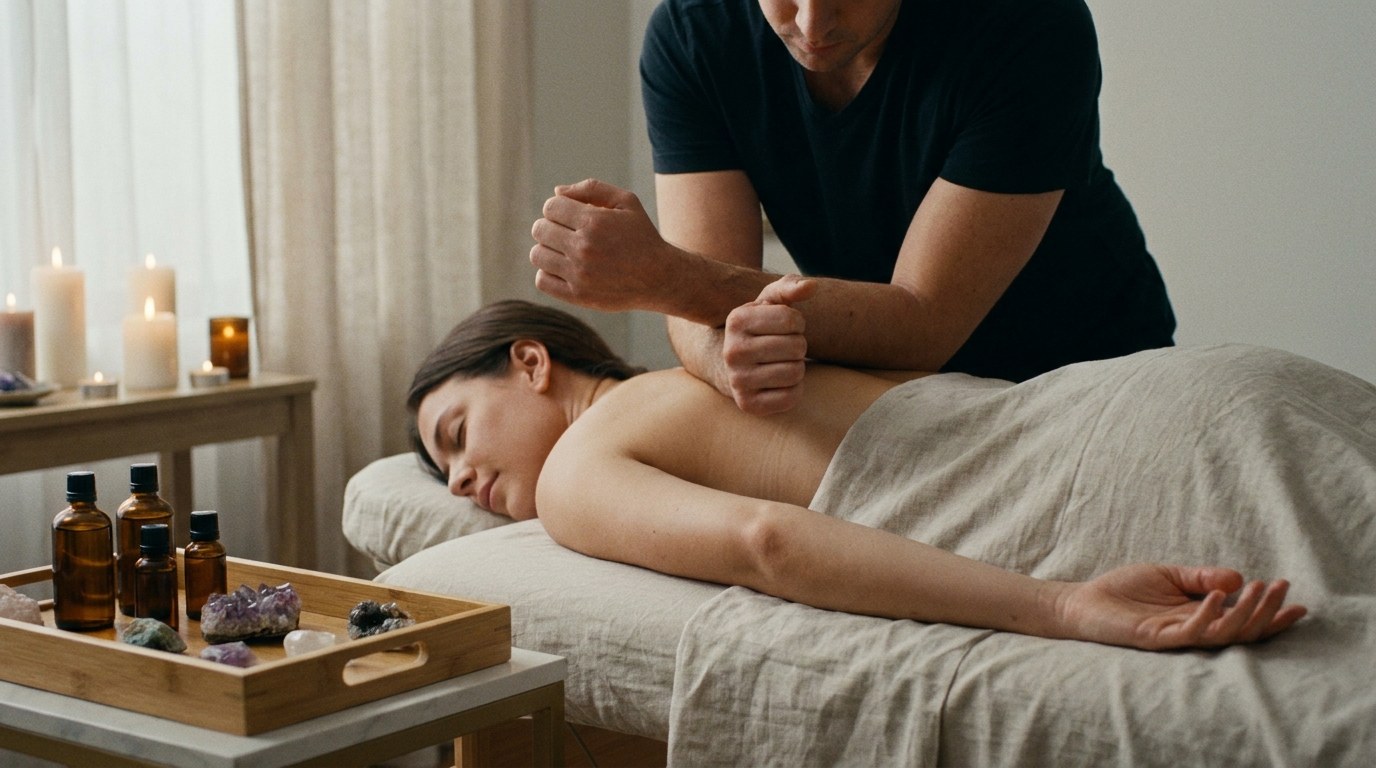
A massage therapy career in the DMV is one of the fastest paths into healthcare — with 625 hours of accredited training, you can be licensed and earning in under a year in the Washington DC–Northern Virginia–Maryland metro area.
This guide covers everything you need to know about pursuing a massage therapy career DMV-wide: what the job actually involves, what Virginia requires for licensure, what you can earn in Northern Virginia, and how to choose a program that sets you up for real success.
⚡ Key Takeaways
- Virginia requires 500 clock hours of massage therapy education and a passing score on the MBLEx exam for licensure through VDPOR.
- The national median wage for massage therapists is approximately $49,860/year (BLS); Northern Virginia and the DC metro typically pay above this median.
- The DMV area offers diverse employment settings — from Inova Health and chiropractic clinics to luxury spas near Tysons Corner and corporate wellness programs.
- AVI Career Training in Vienna, VA offers a COE-accredited, SCHEV-certified 625-hour Massage Therapy program (no federal financial aid available for this program — see financing options below).
- Specializations like sports massage, prenatal massage, and medical massage can significantly increase your earning potential over time.
If you’re ready to explore the path, Apply at AVI Career Training
—
What Is Massage Therapy — And Why It’s a Healthcare Career
Massage therapy is far more than a spa service. It is a clinically recognized, hands-on healthcare discipline that addresses pain, injury recovery, and overall physical wellness through the skilled manipulation of soft tissue, muscle, and fascia.
Licensed massage therapists work alongside physicians, physical therapists, chiropractors, and mental health professionals throughout the DMV region. Hospitals within the Inova Health System, outpatient rehabilitation centers in Fairfax County, and integrative wellness clinics across Northern Virginia all employ credentialed massage therapists as part of their care teams.
What is AVI Career Training’s Massage Therapy program? AVI Career Training’s Massage Therapy program in Vienna, Virginia is a COE-accredited, SCHEV-certified 625-hour professional training program that prepares students for Virginia licensure through the Department of Professional and Occupational Regulation (VDPOR). The program covers anatomy, physiology, kinesiology, pathology, and multiple therapeutic modalities with significant hands-on clinic hours.
The scope of practice for a licensed massage therapist includes:
- Pain management — addressing chronic low back pain, tension headaches, and musculoskeletal conditions
- Post-surgical and injury recovery — assisting patients in regaining range of motion and reducing scar tissue
- Mental health support — documented benefits for anxiety, depression, and PTSD (notably relevant in a metro area with a large veteran and military-connected population)
- Workplace wellness — corporate wellness programs across the DC metro’s substantial government contractor and tech employer base
- Sports performance and recovery — serving the area’s athletes, from amateur runners to professional sports teams
This is a regulated healthcare profession in Virginia. Practicing massage therapy without a valid license issued by the Virginia Department of Professional and Occupational Regulation (VDPOR) is illegal and subject to enforcement action. That regulatory weight is exactly what distinguishes licensed massage therapists from unregulated practitioners — and it is what gives your credential real value to employers and clients.
The DMV Job Market for Massage Therapists in 2024–2025
The DMV area is one of the strongest regional markets for massage therapy careers in the country, driven by high household incomes, a large healthcare infrastructure, and a workforce culture that increasingly values preventive wellness.
National median annual wage for massage therapists (BLS OES)
Projected job growth for massage therapists through 2032 (BLS)
Estimated range for experienced therapists in Northern Virginia / DC metro
Note: Salary figures are sourced from Bureau of Labor Statistics OES data and regional employer surveys. Individual earnings vary based on employment setting, experience, specialization, and hours worked. Verify current figures at BLS.gov.
Where DMV Massage Therapists Work
The Northern Virginia and DC metro area offers a more diverse set of employment settings than most U.S. markets. Here is where licensed massage therapists find work:
- Hospital and health systems — Inova Fairfax Hospital, Inova Mount Vernon, and associated outpatient clinics integrate massage therapy into oncology support, pain management, and rehabilitation programs
- Chiropractic and physical therapy clinics — particularly dense in Fairfax County, Loudoun County, and Prince William County, where demand for manual therapy practitioners remains high
- Luxury hotel spas — the Tysons Corner corridor, Reston, and the greater DC area have a concentration of full-service hotel spas (Marriott, Hilton, Westin properties) that employ full-time licensed therapists
- Medispas and aesthetic wellness centers — a growing segment across Northern Virginia that combines skincare, laser services, and therapeutic massage
- Corporate wellness programs — Northern Virginia’s massive government contractor, tech, and federal agency workforce has created strong demand for on-site and chair massage programs
- Independent/private practice — experienced therapists with an established clientele often transition to self-employment, setting their own rates and schedules
- Sports facilities and athletic training — from McLean to Woodbridge, sports performance centers and athletic clubs employ licensed massage therapists for recovery services
Earning Potential in Northern Virginia
Massage therapist salary in Northern Virginia reflects the region’s cost of living and the competitive demand for licensed practitioners. Entry-level positions in clinic or spa settings typically start between $38,000 and $48,000 annually, including gratuities. With two to four years of experience, earnings commonly reach $55,000 to $70,000. Therapists who build a private client base, add specializations, or move into medical massage settings can exceed this range.
Self-employed therapists set their own rates — and the DMV market supports session fees of $90 to $150+ per hour at the private practice level.

Ready to Build a Healthcare Career in the DMV?
AVI Career Training’s Massage Therapy program in Vienna, VA gives you the clinical skills, hands-on hours, and COE-accredited credentials employers recognize.
Virginia Licensing Requirements — What You Actually Need
Virginia is a licensed state for massage therapy. Every person practicing massage therapy for compensation must hold a valid license issued by the Virginia Department of Professional and Occupational Regulation (VDPOR).
Here is exactly what you need, step by step:
- Complete 625 clock hours of massage therapy education
Virginia requires a minimum of 625 clock hours from a state-approved massage therapy school. Your program must include specific content areas including anatomy, physiology, kinesiology, pathology, massage theory and technique, and professional ethics. AVI Career Training’s 500-hour curriculum meets and addresses all VDPOR content requirements. - Pass the MBLEx
The Massage & Bodywork Licensing Examination (MBLEx), administered by the Federation of State Massage Therapy Boards (FSMTB), is Virginia’s required licensure exam. It covers anatomy, physiology, kinesiology, pathology, client assessment, ethics, and guidelines for professional practice. The exam is computer-based and administered at Pearson VUE testing centers — including locations throughout the DMV area. - Submit your VDPOR application
Once you have passed the MBLEx, you submit your license application to VDPOR with your official school transcripts, exam score documentation, and applicable fees. Applications are processed through the VDPOR online portal. - Maintain your license — CE requirements
Virginia requires continuing education for license renewal. Verify current renewal cycle length and CE hour requirements directly with VDPOR, as requirements are subject to regulatory updates. Your school and the FSMTB are also good resources for staying current on renewal requirements.
Important: Virginia law prohibits practicing massage therapy without a valid VDPOR license. This applies to all settings — spas, clinics, private practice, and mobile services. Working without a license is not a technicality — it is a violation subject to fines, cease-and-desist orders, and criminal referral in repeated cases.
How Many Hours Do You Need to Become a Massage Therapist in Virginia?
Virginia requires 625 clock hours of massage therapy education. This is the minimum for licensure through VDPOR. AVI Career Training’s program is built precisely around this 500-hour requirement, ensuring graduates are fully prepared to sit for the MBLEx and apply for their Virginia license without additional coursework.
How to Choose the Right Massage Therapy School in Northern Virginia
Choosing a massage therapy school is one of the most consequential decisions you will make in this career path. The quality of your training directly affects your MBLEx pass rate, your clinical readiness, and how quickly you find employment after graduation.
Here is an honest framework for evaluating any program — including AVI’s:
Accreditation: The Non-Negotiable
Your school must be accredited by a recognized agency and approved by the state of Virginia. Look specifically for:
- Council on Occupational Education (COE) accreditation — a nationally recognized accreditor for career and technical education programs. AVI Career Training is COE-accredited.
- SCHEV certification — the State Council of Higher Education for Virginia certifies private career schools. AVI is SCHEV-certified.
- VDPOR program approval — the school’s massage therapy program must be approved by Virginia’s regulatory body for graduates to be eligible for state licensure.
Attending a non-accredited or non-approved program could disqualify you from licensure entirely. Always verify accreditation status before enrolling anywhere.
Curriculum Depth and Hands-On Hours
A strong massage therapy program covers more than basic technique. Evaluate curricula for:
- Anatomy, physiology, and kinesiology — the clinical foundation every licensed therapist needs
- Pathology — understanding contraindications protects both you and your clients
- Multiple modalities — Swedish, deep tissue, neuromuscular, and myofascial techniques
- Hands-on clinic hours — supervised practice on real clients, not just fellow students
- MBLEx preparation — structured exam readiness support from instructors who know the test
Tuition, Financing, and the Financial Aid Reality
⚠️ Federal Financial Aid Note: AVI Career Training’s Massage Therapy program is 625 hours — below the 600-hour federal threshold required to qualify for Title IV federal financial aid (FAFSA/Pell Grant). Federal financial aid is not available for this program. AVI offers payment plan options and works with students to identify alternative financing paths. Contact the admissions team directly to discuss your options before enrolling.