Massage Therapy Careers in the DMV: Complete Guide
A massage therapy career in the DMV area offers strong job security, scheduling flexibility, and earning potential — and the local market is uniquely positioned to support it.
Northern Virginia, Washington DC, and Maryland form one of the wealthiest metro regions in the country. That means robust demand for both wellness and medically integrated massage therapy services — from high-income households in Fairfax County and McLean to federal workforce wellness programs and military rehabilitation services near Fort Belvoir and the Pentagon. If you’re weighing massage therapy as a career path, the DMV is one of the best places in the country to pursue it.
This guide covers everything you need to know: what massage therapists actually do, Virginia’s licensing requirements, salary expectations, where to train, and how to decide if this career is right for you.
- Virginia requires 500 hours of approved massage therapy training before you can apply for licensure
- The national licensing exam required in Virginia is the MBLEx (Massage & Bodywork Licensing Examination)
- BLS projects ~18–19% job growth for massage therapists over the next decade — far faster than most occupations
- The national median annual wage is ~$49,860; DMV-area therapists typically earn above that figure
- AVI Career Training in Vienna, Virginia offers a COE-accredited, 625-hour Massage Therapy program aligned exactly with Virginia’s licensure requirements
Apply Now — Start Your Massage Therapy Career
—
What Does a Massage Therapist Actually Do?
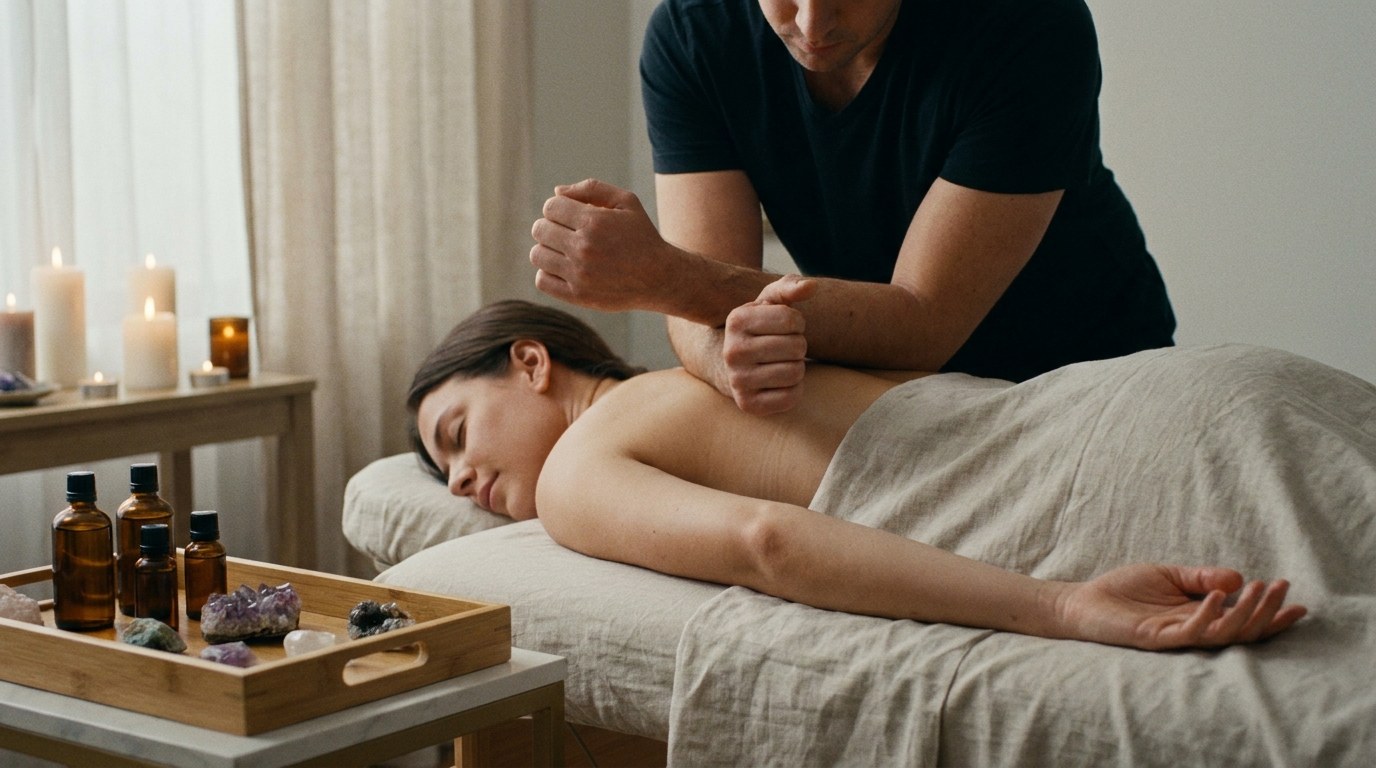
Massage therapists use hands-on soft-tissue manipulation to reduce pain, relieve tension, support recovery, and improve overall physical well-being — and their work extends well beyond the spa.
Most people picture a spa when they hear “massage therapist,” but that’s only one slice of where DMV-area therapists work. The profession has steadily moved into clinical and medical settings, and that shift is especially visible in Northern Virginia’s healthcare landscape.
Common Work Settings in the DC Metro Area
- Medical spas and wellness centers — the most common entry point for new graduates
- Chiropractic and physical therapy clinics — where massage therapists work alongside licensed practitioners to support musculoskeletal treatment plans
- Hospitals and integrative health centers — including oncology massage programs and post-surgical recovery support
- Sports facilities and athletic training rooms — serving amateur and professional athletes across the region
- Corporate wellness programs — the DC metro’s dense federal and private-sector workforce has created steady demand for on-site wellness services
- Private practice — experienced therapists often transition to building independent client bases, especially in high-income Northern Virginia communities
The Clinical Side of Massage Therapy
Modern massage therapy is not simply relaxation work. Techniques like myofascial release, trigger point therapy, lymphatic drainage, and sports massage require anatomical knowledge and clinical precision. Virginia’s 500-hour training requirement reflects that depth — students learn musculoskeletal anatomy, pathology, and assessment alongside hands-on technique.
This clinical foundation is what allows massage therapists to work alongside physicians, physical therapists, and chiropractors as part of integrated care teams — a growing model across the DMV’s healthcare ecosystem.
—
Virginia Licensing Requirements for Massage Therapists
Virginia requires 500 hours of training from a state-approved school, passage of the MBLEx, and a completed application to the Virginia Department of Professional and Occupational Regulation (DPOR) before you can legally practice massage therapy in the state.
Here’s the exact licensing pathway, step by step.
Step 1: Complete 500 Hours of Approved Training
Virginia mandates 625 hours of massage therapy education from a school approved by the Virginia Department of Professional and Occupational Regulation (DPOR). Curriculum must cover anatomy and physiology, massage theory and technique, pathology, and professional ethics. This is not a shortcut program — 500 hours is a substantive foundation, typically completed in roughly eight to twelve months depending on schedule format.
Step 2: Pass the MBLEx
The MBLEx (Massage & Bodywork Licensing Examination) is the national licensing exam required in Virginia. It tests your knowledge across anatomy, physiology, kinesiology, pathology, massage application, ethics, and guidelines for professional practice. Most massage therapy schools incorporate MBLEx prep directly into their curriculum.
Step 3: Submit Your Application to DPOR
After passing the MBLEx, you submit a licensure application to DPOR. The application includes proof of your training hours, your exam results, and the required fee. Once approved, you receive your Virginia Massage Therapist license.
Continuing Education Requirements
Virginia requires 24 CE hours per two-year renewal cycle to maintain your license. CE courses can cover advanced techniques, ethics, pathology, or specialty modalities — giving you a built-in pathway to keep building your skills over time.
> Verify current requirements directly at dhp.virginia.gov — licensing rules can update, and DPOR’s site is always the authoritative source.
—

—
Massage Therapist Salary & Job Outlook in the DC Metro Area
The national median annual wage for massage therapists is approximately $49,860 according to the U.S. Bureau of Labor Statistics — and DMV-area therapists consistently earn above that figure due to the region’s cost of living, affluent client base, and high demand.
What the Numbers Show
The BLS projects roughly 18–19% job growth for massage therapists over the next decade. That’s not a rounding error — it’s nearly four times the average growth rate for all occupations. Healthcare integration, aging demographics, and growing awareness of massage’s clinical applications are all driving that demand nationally.
In the DC metro area, those national trends are amplified. Fairfax County, Arlington, and Alexandria consistently rank among the highest-income counties in the United States. That means:
- A larger share of residents who pay out-of-pocket for wellness services without hesitation
- A concentration of corporate offices, law firms, and federal agencies with employee wellness budgets
- A growing ecosystem of medical spas, integrative health clinics, and concierge wellness providers
> Verify the most current BLS wage and outlook data at bls.gov/ooh/healthcare/massage-therapists.htm.
Employed vs. Self-Employed Income Models
Your income trajectory depends significantly on how you choose to work.
Employed therapists — working at spas, clinics, or wellness centers — receive a predictable schedule, benefits in some settings, and built-in client flow. This is the most common starting point for new graduates, and it’s a great way to build clinical hours and confidence.
Self-employed therapists in the DMV’s high-income markets can charge $80–$150+ per session, setting their own rates and schedule. Building a private practice takes time and hustle, but the earning ceiling is significantly higher. Many experienced therapists move into private practice after two to three years in an employed setting.
DMV-Specific Demand Drivers
Beyond general wellness demand, the DC metro area has several unique factors that make it a particularly strong market:
- Federal workforce and military community: Fort Belvoir, the Pentagon corridor, and multiple military installations create consistent demand for stress management and rehabilitation-adjacent services — and many of these clients are covered by military health plans that increasingly include massage therapy
- Government and contractor workforce density: High-stress, high-income desk workers are a core massage therapy client base — and the DMV has more of them per square mile than almost anywhere else
- Medical integration growth: Northern Virginia’s expanding network of integrative health clinics and chiropractic practices increasingly employs or contracts massage therapists as part of patient care teams
—
Where to Train for Massage Therapy in Northern Virginia
The right massage therapy school in Northern Virginia will be DPOR-approved, accredited by a recognized body, and structured to give you enough hands-on clinical hours to walk into your first job confident and ready.
What to Look for in a Massage Therapy Program
Not all programs are equal. When evaluating massage therapy schools in the DMV area, here are the factors that matter most:
- State approval: The program must be approved by Virginia DPOR. Without this, your hours won’t count toward licensure.
- Accreditation: Institutional accreditation from a recognized body — like the Council on Occupational Education (COE) — signals that the school meets consistent educational quality standards.
- Hands-on clinical hours: Look for programs where you spend meaningful time practicing techniques on real people, not just in a classroom.
- MBLEx preparation: A strong program integrates exam prep so you’re ready to pass on your first attempt.
- Instructor credentials: Your instructors should be licensed, actively practicing professionals — not just classroom lecturers.
- Schedule flexibility: Many students are changing careers or managing family obligations. Evening and weekend options matter.
AVI Career Training’s Massage Therapy Program
AVI Career Training’s Massage Therapy program (NO FINANCIAL AID FOR THIS PROGRAM) in Vienna, Virginia is a 500-hour, COE-accredited program designed to meet Virginia’s exact licensure requirements — and prepare you for the MBLEx from day one.
Located in the Tysons Corner area, AVI’s campus is centrally positioned in Fairfax County and easily accessible from DC, Maryland, and throughout Northern Virginia. AVI is also SCHEV Certified and accepts the GI Bill® — making the program accessible to veterans and active-duty service members.
What sets AVI apart:
- COE Accreditation & SCHEV Certification — institutional credentials that reflect genuine educational quality
- 500 hours — exactly aligned with Virginia’s licensure requirement, with no wasted time or inflated hours
- Hands-on curriculum — you learn by doing, with real technique practice from early in the program
- GI Bill® accepted — serving the DMV’s significant military and veteran community
- Instructor-led MBLEx prep — integrated into the curriculum so the exam doesn’t sneak up on you
> Important note on tuition: Because AVI’s Massage Therapy program is under 600 hours, it does not qualify for federal financial aid (Title IV / FAFSA). Payment plan and private financing options are available. Contact AVI’s admissions team to discuss tuition and payment options.
Apply Now — Start Your Massage Therapy Career
—

—
Is Massage Therapy the Right Healthcare Career for You?
Massage therapy is a genuinely rewarding career — but it’s also physical work that requires stamina, people skills, and a commitment to ongoing learning. Here’s how to assess whether it fits your life.
Physical Considerations
Massage therapy is hands-on work. You’ll be on your feet for most of your shift, using your hands, forearms, and body weight to deliver therapeutic pressure. Most therapists work between four and six sessions per day, with rest periods between clients. Good body mechanics — which quality training programs teach explicitly — are essential for a long, injury-free career.
If you’re physically active and comfortable with sustained physical engagement, this rarely becomes a barrier. Therapists who pay attention to their own posture and self-care routinely work full careers without significant injury.
Personality Fit
The most successful massage therapists share a few common traits:
- Genuine interest in helping people feel better — this isn’t just a marketing line; client outcomes drive word-of-mouth referrals and career longevity
- Comfort with physical proximity — you’re working in close contact with clients, and that should feel natural, not awkward
- Patience and attentiveness — every client presents differently, and adapting your approach in real time is part of the job
- Communication skills — intaking client needs, explaining what you’re doing, and following up effectively are all part of delivering excellent care
Career Growth Paths
One of massage therapy’s strongest qualities as a career is the depth of specialization available. After building foundational experience, you can pursue advanced training in:
- Sports massage — working with athletes at all levels, from weekend warriors to professional teams
- Oncology massage — a growing specialty supporting cancer patients through treatment and recovery
- Lymphatic drainage — particularly in demand for post-surgical recovery and medical spa settings
- Prenatal massage — a consistently busy specialty with dedicated client referral networks
- Myofascial release and trigger point therapy — highly valued in clinical and chiropractic settings
Each specialization can increase both your per-session rate and your referral base — especially in a medically sophisticated market like Northern Virginia.
Mini Story: A Career Changer Who Found Her Fit
Consider someone like Priya — a former administrative professional in her mid-30s who spent years behind a desk at a federal contractor near Tysons Corner. She loved helping people but felt disconnected from the work. After researching healthcare careers that didn’t require a four-year degree, she found massage therapy, enrolled in AVI Career Training’s Massage Therapy program (NO FINANCIAL AID FOR THIS PROGRAM), and completed her 500 hours while working part-time. Within three months of passing her MBLEx, she was working at an integrative health clinic in Arlington — serving clients dealing with chronic pain, post-surgical recovery, and stress. Two years later, she has a growing private practice on weekends and earns more than she did in her previous career.
That trajectory isn’t a fantasy — it’s a realistic outcome for motivated graduates entering the DMV market with the right credentials.
Mini Story: A Veteran Transitioning Into Wellness
Consider Marcus, a former Army medic who transitioned out of service at Fort Belvoir and wanted a healthcare-adjacent career that didn’t require years of additional schooling. His hands-on clinical instincts were already strong. AVI’s acceptance of the GI Bill® made the Massage Therapy program financially accessible, and his background in anatomy gave him a head start in the classroom. He graduated, passed his MBLEx on the first attempt, and now works at a sports medicine clinic in Fairfax — applying the same care and precision he brought to his military service, in a civilian career that works for his family’s schedule.
The DMV’s veteran and military community is large, and massage therapy is one of the career paths that translates military healthcare experience remarkably well.
—
Frequently Asked Questions About Massage Therapy Careers in Virginia
Q: How long does it take to become a massage therapist in Virginia?
A: Virginia requires 500 hours of approved training. Depending on whether you attend full-time or part-time, most students complete their program in eight to twelve months. After finishing your hours, you’ll need to pass the MBLEx before applying for your Virginia license.
—
Q: How much do massage therapists make in the DMV area?
A: The national median annual wage for massage therapists is approximately $49,860 according to the BLS. DMV-area therapists typically earn above the national median due to the region’s high cost of living and affluent client base. Self-employed therapists in Northern Virginia often charge $80–$150+ per session.
—
Q: What are the licensing requirements for massage therapists in Virginia?
A: You must complete 500 hours of training from a DPOR-approved school, pass the MBLEx national licensing exam, and submit a licensure application to the Virginia Department of Professional and Occupational Regulation (DPOR). You’ll also need 24 CE hours every two years to renew your license.
—
Q: Is massage therapy a good career in Northern Virginia?
A: Yes — Northern Virginia is one of the strongest massage therapy markets in the country. High household incomes, a large federal and military workforce, and the growing integration of massage into medical settings all drive consistent demand. BLS projects roughly 18–19% job growth for massage therapists nationally over the next decade.
—
Q: What is the difference between a massage therapist and a physical therapist?
A: A massage therapist focuses specifically on soft-tissue manipulation to reduce pain, tension, and stress — and can practice with 625 hours of training and a state license. A physical therapist (PT) holds a doctoral degree (DPT), evaluates and treats movement disorders, and works across a broader clinical scope. Massage therapists and physical therapists frequently work together in integrated care settings, with massage complementing PT’s broader treatment plans.
—
Q: Does AVI Career Training’s Massage Therapy program qualify for financial aid?
A: AVI’s Massage Therapy program is 625 hours, which is under the 600-hour threshold for federal financial aid (Title IV / FAFSA). Federal financial aid is not available for this program. AVI does accept the GI Bill® for eligible veterans and service members. Payment plans and private financing options are available — contact AVI admissions at (703) 943-9841 to learn more.
—
Q: Where is AVI Career Training located?
A: AVI Career Training is located at 1595 Spring Hill Rd #720, Vienna, VA 22182 — in the Tysons Corner area of Fairfax County. The campus is centrally positioned for students commuting from across Northern Virginia, DC, and Maryland.
—