
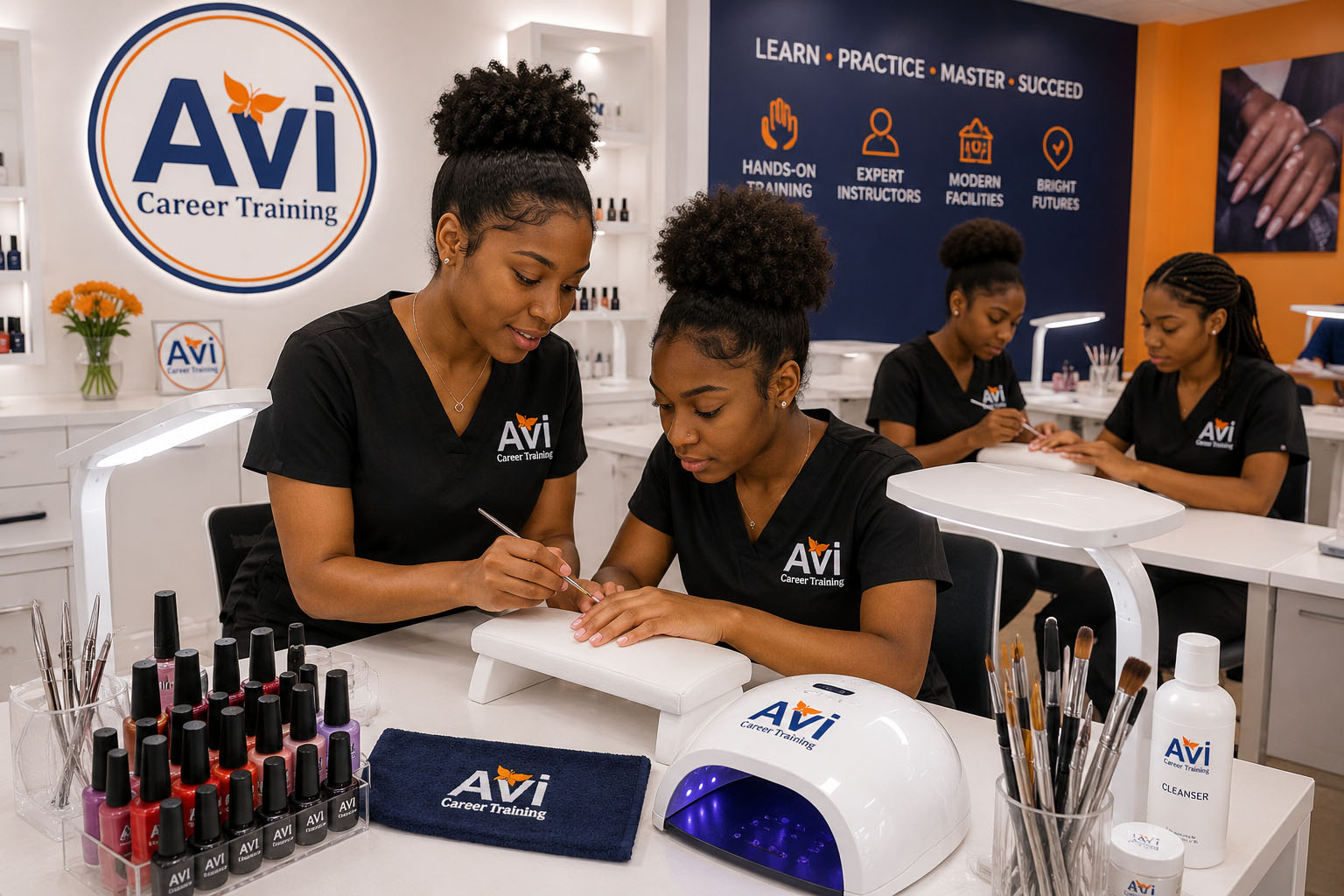
Learn Nail Technology From Day One In Fairfax County
You can start learning nail technology from day one at AVI Career Training in Vienna, VA, where a focused 150-hour Nail Technology program gives you hands-on skills, real-world experience, and a clear path toward a rewarding beauty career in Fairfax County and beyond.
Key Takeaways
- AVI Career Training offers a 150-hour Nail Technology program at its Vienna, VA campus, conveniently located in Fairfax County.
- Students begin hands-on practice from the very first day of class.
- The school is accredited by the Council on Occupational Education (COE), meaning your credential carries real weight with employers.
- AVI offers multiple beauty and wellness programs, so you can expand your skills after completing Nail Technology.
- Applying is simple and straightforward at avi.edu/apply.
Why Nail Technology Is a Smart Career Choice in Fairfax County
Fairfax County is one of the most populated and economically active counties in Virginia. Salons, spas, and nail studios throughout the region are consistently looking for skilled, licensed nail technicians who can deliver high-quality services to clients. Whether you picture yourself working at a high-end spa in Tysons Corner, a neighborhood nail salon in Reston, or even launching your own independent nail studio, getting properly trained and licensed is the essential first step.
Nail technology is also one of the most accessible paths into the professional beauty industry. The program hours are manageable, the skills are immediately marketable, and the career offers real flexibility in terms of schedule and setting. Many nail technicians build loyal client bases quickly and enjoy steady income from repeat business. If you are looking for a career that blends creativity, client interaction, and entrepreneurial opportunity, nail technology checks every box.
What You Will Learn at AVI Career Training
At AVI Career Training, the Nail Technology program is designed to take you from complete beginner to job-ready professional in just 150 hours of training. You do not need any prior beauty industry experience to enroll. From your very first class session, you will be learning through a combination of theory instruction and practical application — meaning you are working with real tools and real techniques right away.
Core Skills Covered in the Program
Throughout the program, students develop a thorough understanding of nail care science and salon-ready technique. Topics typically covered include:
- Nail anatomy and the biology of healthy nails and skin
- Sanitation, disinfection, and infection control protocols
- Manicures and pedicures, including basic and specialty services
- Nail enhancements such as acrylic, gel, and wrap systems
- Nail art and decorative techniques
- Client consultation and communication skills
- Virginia state board examination preparation
- Salon business fundamentals and professional ethics
This combination of technical knowledge and soft skills ensures that graduates are not just capable technicians — they are confident, professional, and client-ready from the moment they step into a salon.
COE Accreditation: Why It Matters for Your Future
AVI Career Training is accredited by the Council on Occupational Education (COE), a nationally recognized accrediting body for career and technical schools. COE accreditation is not just a formality — it is a meaningful signal to employers, licensing boards, and licensing agencies that the education you received met rigorous academic and professional standards.
When you complete your Nail Technology program at AVI, your training credential comes from an accredited institution. That matters when you apply for your Virginia nail technician license, when you apply for jobs at reputable salons, and when you consider advancing your education in the future. Accreditation gives your investment in training real, lasting value.
A Campus Built for Beauty and Wellness Careers
AVI Career Training is located at 112 Lawyers Rd NW, Suite 3, Vienna, VA 22180 — right in the heart of the greater Fairfax County area. The campus is purpose-built for beauty and wellness education, with modern training facilities, professional-grade equipment, and instructors who bring real industry experience into the classroom.
Learning in a professional environment from day one helps students develop the habits, standards, and confidence that employers look for. At AVI, you are not learning in a makeshift classroom. You are training in a space designed to mirror the professional settings where you will actually work.
Expand Your Skills With Other AVI Programs
One of the advantages of training at AVI Career Training is the range of programs available to you. Once you complete your Nail Technology training, you may want to broaden your beauty and wellness expertise. AVI offers the following programs:
- Cosmetology — 1,000 hours
- Basic Esthetics — 600 hours
- Master Esthetics — 750 hours
- Massage Therapy — 625 hours (Title IV federal financial aid available)
- Laser Technician — 120 hours
- Medical Assistant — 600 hours
- ESL (English as a Second Language) — 1,200 hours
Many students choose to complete Nail Technology first and then return to pursue Esthetics or Cosmetology, building a versatile skill set that opens doors to a wider range of employment and entrepreneurial opportunities. AVI’s supportive campus environment makes that kind of continued education feel natural and achievable.
Ready to Get Started? Here Is How to Apply
Getting started at AVI Career Training is easier than you might think. If you are ready to take the first step toward a nail technology career, visit avi.edu/apply to submit your application. The admissions team is friendly, knowledgeable, and happy to answer any questions you have about the program, schedule options, or what to expect on your first day.
You can also reach AVI Career Training directly by phone at (571) 520-4417. Whether you prefer to talk things through before applying or you are ready to move forward right now, the team at AVI is ready to help you get there.
Frequently Asked Questions
How long does the Nail Technology program at AVI Career Training take to complete?
The Nail Technology program at AVI Career Training is 150 hours. The actual calendar time to complete the program will depend on your schedule and class availability, but the relatively compact hour requirement makes it one of the faster paths into a licensed beauty career. Contact AVI at (571) 520-4417 or visit avi.edu/apply to learn about current scheduling options.
Do I need any prior experience to enroll in the Nail Technology program?
No prior experience is required. AVI Career Training’s Nail Technology program is designed for students who are starting from scratch. Instructors guide you through everything from basic nail anatomy to advanced enhancement techniques, and you begin getting hands-on practice from your very first day of training.
Is AVI Career Training accredited?
Yes. AVI Career Training is accredited by the Council on Occupational Education (COE), a nationally recognized accrediting body for occupational and technical schools. COE accreditation means the program meets established standards for curriculum quality, instructor qualifications, and student outcomes — all of which matter when you pursue your Virginia nail technician license and apply for jobs.
Where is AVI Career Training located, and is it accessible for Fairfax County students?
AVI Career Training is located at 112 Lawyers Rd NW, Suite 3, Vienna, VA 22180. Vienna is situated within easy reach of communities throughout Fairfax County, including McLean, Falls Church, Reston, Herndon, and beyond. Whether you are commuting from nearby or from elsewhere in Northern Virginia, the campus location is convenient and accessible.
Can I pursue other beauty programs at AVI after completing Nail Technology?
Absolutely. AVI Career Training offers a full range of beauty and wellness programs, including Cosmetology (1,000 hours), Basic Esthetics (600 hours), Master Esthetics (750 hours), Massage Therapy (625 hours, with Title IV federal financial aid available), and Laser Technician (120 hours). Many students use Nail Technology as an entry point into the beauty industry and then return to expand their qualifications. The AVI admissions team can help you map out a training plan that fits your career goals — reach out at (571) 520-4417 or apply online at avi.edu/apply.