Laser Technician Training in Virginia: Licensing, Career & Salary Guide
Becoming a laser technician in Virginia starts with completing an accredited training program and understanding the state’s licensing requirements — and the Northern Virginia market offers some of the strongest earning potential in the country for qualified graduates.
If you’re researching how to build a career in cosmetic laser technology, you’re looking at a specialty that combines science, skincare, and real clinical skill. This guide walks you through exactly what it takes: the Virginia licensing pathway, what quality laser technician training covers, what you can expect to earn in the DC metro area, and how to choose the right school.
> Ready to take the first step? Apply to AVI Career Training’s Cosmetic Laser Technology program and get your career moving.
—
Key Takeaways
—
What Does a Laser Technician Do?
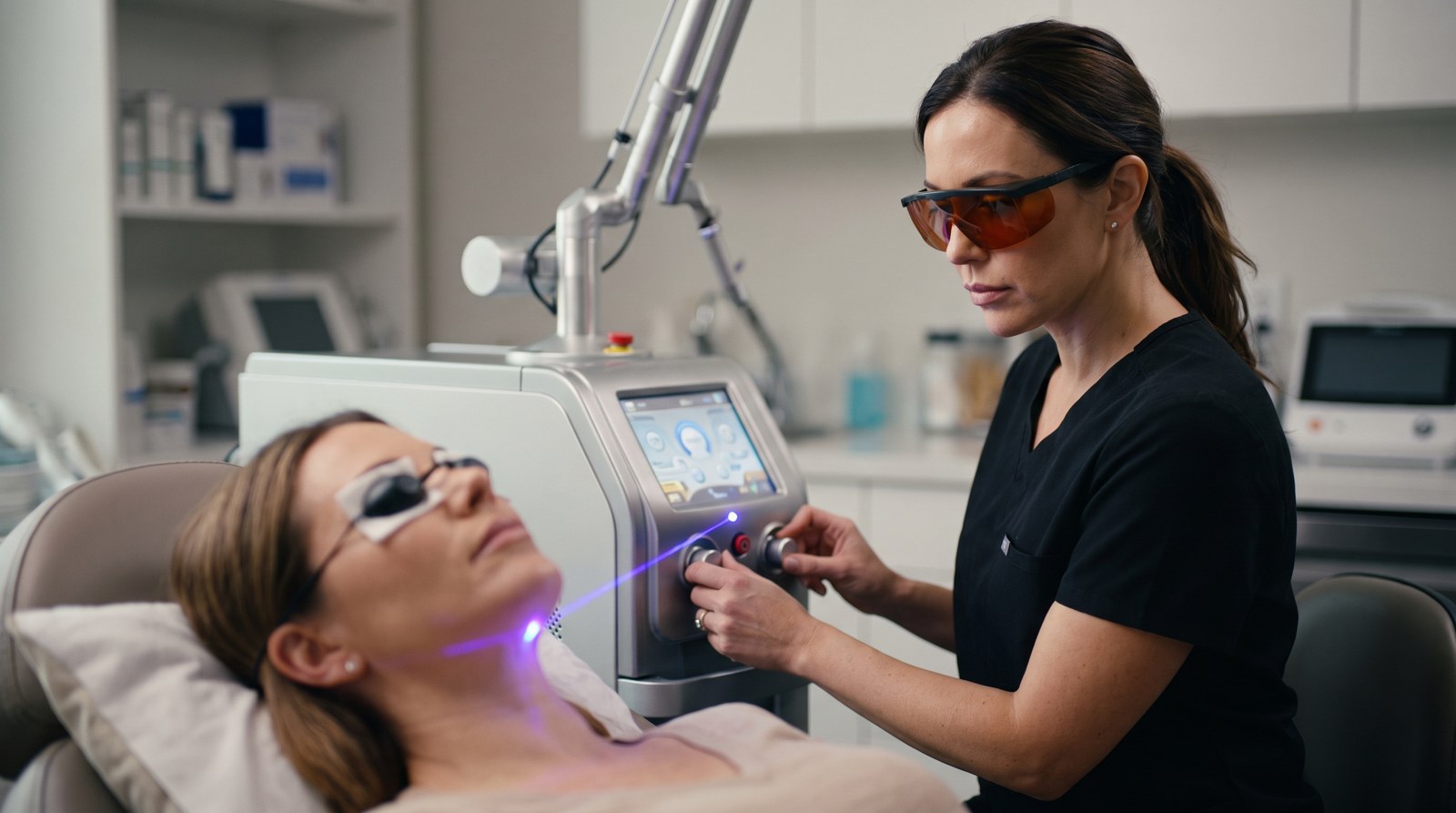
A laser technician — sometimes called a laser esthetician or cosmetic laser specialist — uses medical-grade and cosmetic light-based devices to treat a range of skin and hair concerns. This is a hands-on, client-facing role that requires both technical knowledge and a confident, reassuring presence.
The most common services laser technicians perform include:
What makes this role clinically interesting is the breadth of knowledge required. A skilled laser technician isn’t just pressing buttons — they’re assessing skin type, evaluating contraindications, selecting the right device and settings for each client, and monitoring outcomes over time.
Working effectively on every skin tone is essential in this field. Laser parameters must be precisely calibrated based on Fitzpatrick skin type to ensure both safety and results. This is a core reason why inclusive, comprehensive training matters so much — and why AVI Career Training builds skin-tone diversity into its curriculum from day one.
Laser technicians work in medical spas, dermatology practices, plastic surgery centers, day spas, and dedicated laser clinics. In Northern Virginia, where the demand for advanced skincare services is high and clientele is diverse, this is one of the most dynamic career paths in the beauty and wellness industry.
—
Virginia Licensing Requirements for Laser Technicians
Understanding Virginia’s regulatory framework is essential before you enroll in any program. The rules are specific, and working outside them creates serious legal risk.
Who Regulates Laser Services in Virginia?
The Virginia Department of Professional and Occupational Regulation (DPOR) oversees cosmetology and esthetics licensure in the state. Cosmetic laser services — including laser hair removal, photofacials, and skin rejuvenation treatments — fall under the scope of regulated practice.
Virginia law distinguishes between cosmetic laser services and medical laser procedures. Cosmetic laser services may be performed by a licensed esthetician working within their authorized scope. Higher-intensity medical laser procedures must be performed by or under the direct supervision of a licensed medical professional, such as a physician or registered nurse.
This means that for most cosmetic laser roles, holding a current Virginia esthetics license is the standard qualifying credential. It also means that your training school matters — only graduates of DPOR-approved programs are eligible to sit for the Virginia State Board exam.
The Esthetics Licensing Pathway
To earn a Virginia esthetics license, you must:
1. Complete 600 clock hours of training at a DPOR-approved school
2. Pass the Virginia State Board written and practical exams
3. Submit your application and fees to DPOR
Once licensed, you can pursue cosmetic laser training as a specialty credential layered onto your esthetics foundation. Some programs — like the one at AVI Career Training — integrate laser technology training into a structured career pathway so students build both credentials efficiently.
Why Licensing Matters for Laser Work Specifically
Licensing isn’t just a formality. Laser devices carry real risk when used incorrectly — burns, scarring, and hyperpigmentation are documented outcomes of undertrained or unsupervised practice. Virginia’s regulatory structure exists to protect clients and ensure that anyone performing these services has demonstrated competency.
If you’re evaluating laser technician programs, verify that the school is DPOR-approved for esthetics training and that their laser curriculum aligns with current industry and safety standards. Credentials from non-approved programs will not make you eligible for Virginia licensure.
—
What to Expect from a Cosmetic Laser Technology Program
A quality cosmetic laser technology program prepares you to work safely and skillfully with light-based devices across a range of skin types and treatment goals. Here’s what the curriculum should cover — and what to look for when comparing programs.
Core Curriculum Areas
Laser Physics and Light Science
You’ll learn how laser and light-based energy interacts with tissue — the principles of selective photothermolysis, wavelength, fluence, and pulse duration. This isn’t abstract theory. Understanding why a specific laser setting works on one skin type and could cause harm on another is foundational knowledge every technician needs.
Fitzpatrick Skin Type Assessment
The Fitzpatrick scale classifies skin by its response to UV exposure and is the standard framework for laser parameter selection. Your training should teach you to accurately assess every client across the full spectrum — from Type I to Type VI — and adjust treatment protocols accordingly. At AVI, inclusive skin-tone training is a program priority, not an afterthought.
Device Competency
Professional laser programs introduce students to the types of equipment they’ll encounter in the field — Nd:YAG, alexandrite, diode, IPL, and fractional devices. Hands-on time with real equipment is non-negotiable. Reading about laser devices is not the same as operating them safely.
Safety Protocols and Contraindications
You’ll learn how to screen clients for conditions that make laser treatment unsafe — medications that increase photosensitivity, active skin conditions, recent sun exposure, hormonal factors, and more. You’ll also cover proper eye protection, treatment room safety, and emergency protocols.
Client Consultation and Documentation
Professional laser practice involves thorough intake forms, consent documentation, pre- and post-treatment care instructions, and outcome tracking. These are clinical skills that protect both the client and the practitioner.
Hands-On Clinical Practice
Classroom instruction must be paired with supervised, hands-on hours on real clients. This is where technique becomes instinct — and it’s what separates graduates who are truly ready to work from those who only studied theory.
A Day in the Program: Meet Danielle
Danielle came to AVI Career Training after five years as a medical receptionist at a dermatology office. She’d watched laser procedures every day and knew she wanted to be the one performing them — not just scheduling them. She enrolled in AVI’s esthetics program to meet the Virginia licensing requirement, then continued into the Cosmetic Laser Technology track.
What surprised her most was the depth of the skin science curriculum. “I thought I already knew a lot from working in a derm office,” she said. “But learning the actual physics of how the laser interacts with different skin tones — that was a completely different level.” By the time she graduated, she had hands-on experience with multiple device types and was comfortable performing consultations independently. She passed her Virginia State Board exam on her first attempt and accepted a position at a medical spa in Tysons within two months of completing her training.
—
Laser Technician Salary and Career Outlook in Northern Virginia
One of the most common questions prospective students ask is: what will I actually earn? The honest answer depends on your setting, your experience, and — importantly — your location.
National Salary Baseline
According to the U.S. Bureau of Labor Statistics (BLS), skincare specialists (SOC 39-5094) earn a national median annual wage of approximately $42,000–$48,000. The field is projected to grow faster than average over the next decade, driven by increasing consumer demand for non-surgical cosmetic procedures.
Laser technicians who specialize in clinical or medical spa settings typically earn above the general skincare specialist median, particularly when commission structures are factored in.
The Northern Virginia Premium
Northern Virginia is one of the most economically robust regions in the country. The DC metro area has a high cost of living, high disposable income, and a dense concentration of medical spas, dermatology practices, and wellness clinics. That combination creates consistent demand for skilled laser professionals — and above-average compensation to match.
Laser specialists working in medical spa settings in the Northern Virginia and DC metro area commonly earn between $45,000 and $75,000+ annually, depending on experience, the services they offer, and whether they work on salary, hourly, or commission structures.
For current, state-specific wage data, the BLS Occupational Employment and Wage Statistics tool allows you to look up skincare specialist wages by metro area — a useful benchmark when evaluating your earning potential.
Factors That Influence Earnings
—
How to Choose the Right Laser Technician School in Virginia
Not all laser training programs are equal. Here’s what to evaluate before you commit to a school.
Accreditation and State Approval
This is non-negotiable. Your program must be approved by Virginia DPOR for esthetics training in order for your clock hours to count toward licensure. For additional institutional credibility, look for schools accredited by a recognized accrediting body — such as the Council on Occupational Education (COE).
AVI Career Training is both COE Accredited and SCHEV Certified, which means its programs meet rigorous quality standards recognized by state and federal education agencies. This also matters for financial aid eligibility.
Hands-On Clinical Hours
Ask specifically how many supervised clinical hours are included in the laser technology curriculum — and what devices students actually train on. A program that relies primarily on lecture and demonstration without real hands-on practice is not adequate preparation for clinical employment.
Skin-Tone Inclusivity in Training
This is a differentiator that matters both ethically and professionally. Laser work requires competency across the full Fitzpatrick scale. Programs that train primarily on lighter skin tones leave graduates unprepared for a significant portion of the client population — and create real safety risks.
AVI Career Training’s curriculum explicitly addresses the full range of skin tones. This is a program value, not just a talking point.
Equipment Quality
Ask what devices the program uses. Training on professional-grade, industry-current equipment matters. Employers in the Northern Virginia market expect graduates to be familiar with modern laser and IPL platforms — not outdated technology.
Job Placement and Career Support
Does the school have relationships with local employers? Does it offer career services, resume support, or connections to hiring partners? Ask about graduate outcomes — where do alumni work, and how quickly did they find employment after licensure?
Financial Aid Availability
Laser technician training is an investment. Look for schools that offer federal financial aid (Pell Grants, student loans) for eligible students, and ask whether military education benefits — including the GI Bill® — are accepted.
AVI Career Training offers financial aid for those who qualify, and proudly accepts GI Bill® benefits. If you’re a veteran or active-duty service member exploring a career change, reach out to AVI’s admissions team to learn about your options.
From Career Change to Career Launch: Meet Marcus
Marcus spent 12 years in the Army and left active duty with a clear goal: he wanted a career in aesthetics that would let him be his own boss eventually. He used his Post-9/11 GI Bill® benefits to enroll at AVI Career Training, completing the Esthetics program before moving into the Cosmetic Laser Technology track. The structured, hands-on environment felt familiar to him. “In the military, you learn by doing. AVI was the same way — they don’t just lecture you, they put you to work.” He now works at a medical spa in McLean and is building the clientele he’ll need to open his own laser studio within the next few years.
—
Frequently Asked Questions
How Do I Become a Laser Technician in Virginia?
The established pathway is to complete 600 clock hours of esthetics training at a DPOR-approved school, pass the Virginia State Board written and practical exams to earn your esthetics license, and then complete a cosmetic laser technology program. Virginia DPOR oversees the licensing framework, and cosmetic laser services must be performed by a licensed esthetician or under appropriate medical supervision depending on the device and procedure type.
Do You Need a License to Do Laser Hair Removal in Virginia?
Yes. Virginia requires that cosmetic laser services — including laser hair removal — be performed by a licensed esthetician or under the supervision of a licensed medical professional. Performing these services without the appropriate credentials is a violation of state law. Completing an accredited esthetics program and passing the Virginia State Board exam is the standard pathway to practice.
How Long Does Laser Technician Training Take?
The timeline depends on your starting point. If you’re beginning with no prior credentials, you’ll first complete an esthetics program — which at AVI Career Training covers the required 600 clock hours. After earning your esthetics license, the Cosmetic Laser Technology program adds additional focused training in laser science, safety, and hands-on technique. Contact AVI admissions directly for current program schedules and timeline estimates.
How Much Does a Laser Technician Make in Virginia?
Laser specialists in Northern Virginia and the DC metro area commonly earn between $45,000 and $75,000+ annually in medical spa and clinical settings. The exact figure depends on your experience, specialization, and whether you work on a salary, hourly, or commission structure. The Northern Virginia market pays above the national median for skincare specialists due to high cost of living and strong consumer demand for cosmetic services.
What Is the Difference Between an Esthetician and a Laser Technician?
An esthetician is a licensed skincare professional trained in facials, chemical exfoliation, waxing, and other non-invasive treatments. A laser technician specializes in light-based cosmetic devices — laser hair removal, IPL, skin rejuvenation, and similar treatments. In Virginia, laser technicians typically hold an esthetics license as their foundational credential, then add cosmetic laser training as a specialty. The two paths are complementary, and many professionals hold both credentials to maximize their service offerings and earning potential.
—
Start Your Laser Technician Training at AVI Career Training
AVI Career Training’s Vienna, Virginia campus is one of the Northern Virginia metro area’s most respected beauty and wellness schools — COE Accredited, SCHEV Certified, and built on the belief that beauty education should serve every student and every client.
Our Cosmetic Laser Technology program gives you the hands-on training, skin-science foundation, and clinical confidence to compete for the best positions in the region’s growing medical spa and aesthetic clinic market. Whether you’re starting from scratch or building on existing credentials, AVI provides the structured pathway to get licensed and get working.
Ready to take the next step?
Apply to AVI Career Training today — or call us at (703) 943-9841 to speak with an admissions advisor. Our campus is located at 1595 Spring Hill Rd #720, Vienna, VA 22182, and we’d love to show you around.