
Laser Technician School Near Washington DC: What to Look For
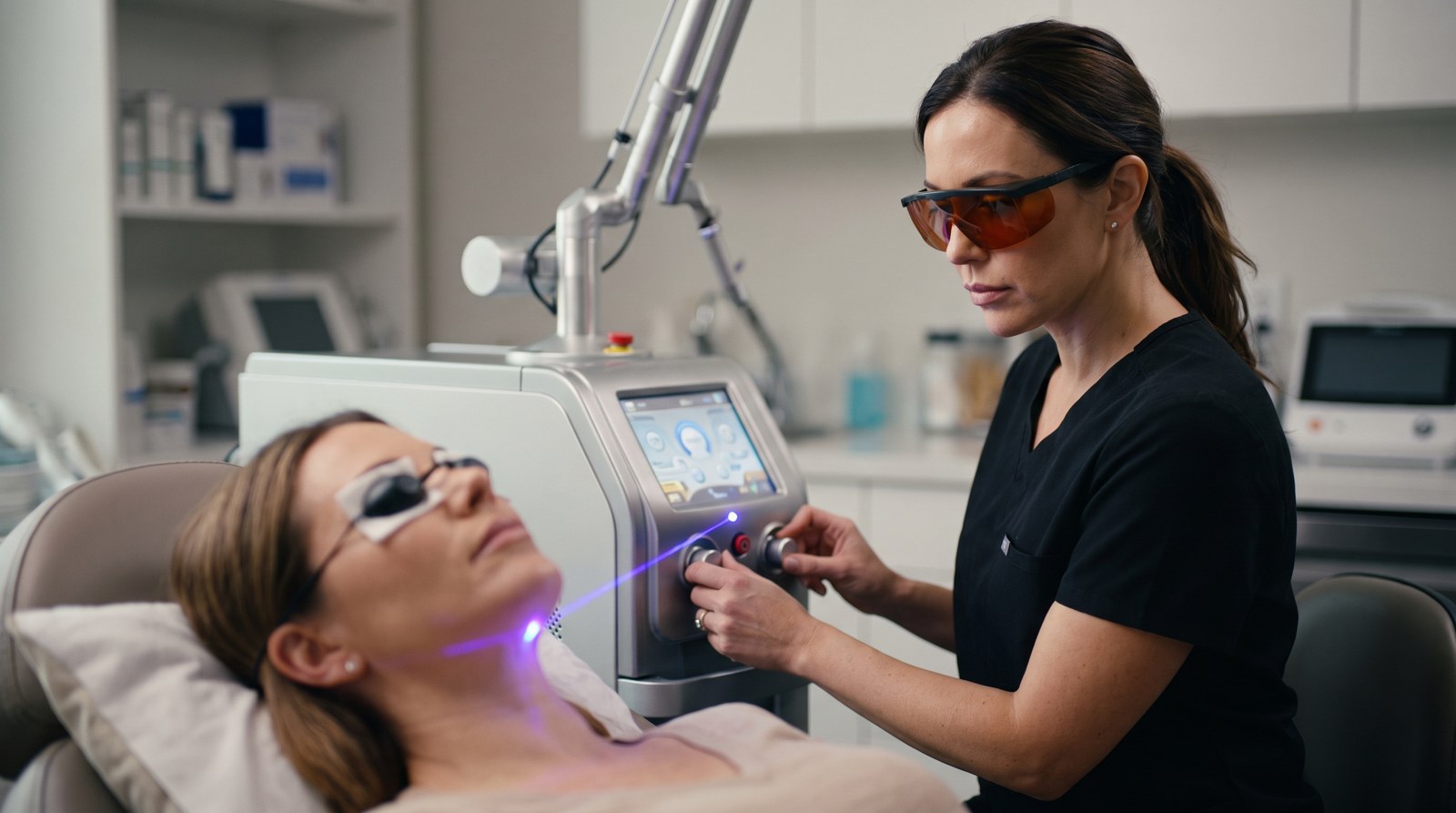
If you’re searching for a laser technician school near Washington DC, AVI Career Training in Vienna, Virginia is the answer — a 120-hour, hands-on Cosmetic Laser Technology program that is COE accredited, SCHEV certified, and designed to train you for the real DC metro market.
The DC metro area is one of the most competitive and rewarding markets in the country for cosmetic laser professionals. Medical spas, dermatology clinics, and high-end wellness centers are everywhere — from Tysons Corner and Arlington to Bethesda and Georgetown. If you’re ready to build a career in laser aesthetics, getting your training right from the start matters more than most people realize.
This guide walks you through what the DC market looks like for laser technicians, what Virginia’s licensing rules actually require, what to look for when choosing a school, and how AVI’s program compares. By the end, you’ll have everything you need to make a confident decision.
- AVI’s Cosmetic Laser Technology program is 120 hours of hands-on clinical training in Vienna, VA — approximately 15 miles from Washington DC
- AVI Career Training is COE Accredited and SCHEV Certified — two credentials that matter for your career and Virginia compliance
- Virginia regulates who can perform cosmetic laser procedures; attending a certified program is a critical step toward legal practice
- The DC metro market is one of the highest-demand corridors in the country for laser aesthetics professionals
- Inclusive training across all Fitzpatrick skin types is not optional in a market as diverse as Washington DC — it’s a professional requirement
- Federal financial aid (FAFSA/Title IV) is NOT available for this program — it is under 600 hours; private payment options are available
Apply to AVI’s Laser Program →
—
Why the DC Metro Area Is a Strong Market for Laser Technicians
The Washington DC metro area is one of the best markets in the country to launch a career in cosmetic laser aesthetics — and the numbers back that up.
Northern Virginia alone is home to a dense concentration of medical spas, plastic surgery practices, dermatology offices, and integrative wellness centers. The Tysons Corner corridor — just minutes from AVI’s Vienna campus — is packed with high-end aesthetic clinics that actively recruit trained laser professionals. Cross into Maryland or DC proper, and that density only increases.
What drives this? The DC metro population is well-educated, health-conscious, and has significant disposable income. Demand for laser hair removal, skin rejuvenation, and light-based aesthetic treatments has grown steadily year over year. These aren’t passing trends — they’re established service lines that medical spas and clinics have built their business models around.
For laser technicians, that translates to consistent career opportunity. Graduates with proper credentials and hands-on training are well-positioned to find employment in this market quickly. Whether you’re targeting a role in a Tysons Corner med spa, a Northern Virginia dermatology office, or a wellness center inside the Beltway, the demand is real and the market rewards skill and credibility.
There’s one more factor worth naming directly: Washington DC is one of the most racially and ethnically diverse cities in the United States. That diversity extends throughout Northern Virginia and Maryland. Laser technicians who can confidently and safely treat clients across the full spectrum of skin tones — across all Fitzpatrick skin types — have a meaningful professional advantage. More on that in a moment.
—
Virginia Licensing Rules Every Laser Technician Student Should Know
Virginia regulates cosmetic laser procedures — and knowing the rules before you enroll can save you from a costly mistake.
In Virginia, cosmetic laser and intense pulsed light (IPL) procedures are regulated under the oversight of the Virginia Department of Professional and Occupational Regulation (DPOR). These treatments are considered medical procedures in many contexts, and the state has specific requirements about who can legally perform them and under what level of physician supervision.
Here’s what that means practically:
Who Can Perform Laser Treatments in Virginia?
Cosmetic laser procedures in Virginia are typically performed by or under the supervision of licensed medical professionals. Laser technicians — also called laser practitioners or medical aestheticians — often operate under a medical director’s oversight in a med spa or clinical setting. The specific scope depends on the treatment type and the supervising practitioner’s license.
This is why the credentials of your school matter so much. Training at a SCHEV-certified (State Council of Higher Education for Virginia) school means your program has been reviewed and approved by the Virginia state agency responsible for overseeing private postsecondary education. That’s not just a marketing badge — it’s a legal requirement for operating as a school in Virginia and a signal to employers and licensing bodies that your training meets state standards.
Why COE Accreditation Matters Too
COE accreditation — from the Council on Occupational Education — is the national accrediting body recognized for career and technical schools. For laser technician students, COE accreditation signals that the program has been independently evaluated for educational quality, instructor qualifications, curriculum rigor, and student outcomes.
When you’re sitting across from a hiring manager at a Northern Virginia med spa, “COE Accredited and SCHEV Certified” on your transcript is a credible signal that your training was serious. It distinguishes you from someone who completed an unaccredited weekend workshop.
For the most current information on Virginia’s laser practitioner requirements, visit the Virginia Department of Professional and Occupational Regulation (DPOR) directly.
—
The 5 Things to Look for in a Laser Technician School
Choosing the right laser technician school near Washington DC comes down to five concrete criteria — and most programs fall short on at least one of them.
1. Accreditation and State Certification
This is non-negotiable. Your school should be both COE Accredited and SCHEV Certified (in Virginia). Without these credentials, your training may not be recognized by employers, and you may face complications qualifying for certain roles. Always verify accreditation status directly with the accrediting body — not just the school’s marketing materials.
2. Hands-On Clinical Hours
Laser technology is a hands-on skill. Reading about laser physics is not the same as operating a device on a real client. Look for programs that prioritize clinical practice hours — not just lecture time. Ask specifically: How many of the program’s total hours are spent on hands-on equipment operation? If the school can’t give you a clear answer, that’s a red flag.
3. Inclusive Skin Tone Training
This is the most frequently overlooked factor — and in the DC metro market, it’s potentially the most important.
Laser and light-based devices interact differently with melanin. A technician trained only on lighter skin tones is genuinely unprepared to safely serve a large portion of the Washington DC area’s population. Look for programs that explicitly teach safe laser application across the Fitzpatrick Skin Type scale — all six types, including darker tones (Fitzpatrick Types IV, V, and VI) where improper settings can cause burns, hyperpigmentation, or scarring.
This isn’t just an ethical consideration. It’s a clinical safety requirement and a professional competitive advantage in a diverse metro market.
4. Instructor Credentials and Industry Experience
Your instructors should be licensed professionals with real-world experience in laser aesthetics — not just academics. Ask about their backgrounds. Have they worked in medical spas or aesthetic clinics? Do they have current knowledge of the devices used in today’s market? Industry-experienced instructors teach you things textbooks don’t: how to handle difficult client consultations, how to read skin reactions in real time, and how employers actually evaluate new technicians.
5. Location and Convenience
Practical matters. A program you can realistically attend and complete is better than a theoretically superior program two hours away. For DC-area students, a school in Northern Virginia — close to major transit corridors and inside the metro area you plan to work in — is a meaningful logistical advantage.
—
What You’ll Learn in a Quality Cosmetic Laser Technology Program
A well-designed cosmetic laser program gives you both the scientific foundation and the practical skills to operate safely and effectively from day one.
Here’s what a quality curriculum should cover:
Laser Physics and Device Operation
You can’t safely operate equipment you don’t understand. A strong program starts with the science — how laser and light-based devices generate energy, how that energy interacts with tissue and melanin, and how to select the correct settings for a given client and treatment. This is the foundation everything else builds on.
Skin Anatomy and Fitzpatrick Typing
Understanding the skin’s layers, phototypes, and physiological responses is essential for safe treatment planning. Students should learn to assess and document a client’s Fitzpatrick Skin Type before any treatment, adjusting parameters accordingly. In a market as diverse as Northern Virginia and the broader DMV area, this knowledge isn’t academic — it’s daily practice.
Laser Hair Removal
Laser hair removal is the most common cosmetic laser service in the market. Students learn proper technique for multiple body areas, hair cycle science (why multiple sessions are necessary), contraindications, and how to set realistic client expectations.
Skin Rejuvenation and Light-Based Treatments
Beyond hair removal, quality programs cover photorejuvenation, intense pulsed light (IPL) treatments for pigmentation and vascular concerns, and an introduction to other light-based modalities. This broadens your employable skill set considerably.
Safety Protocols and Clinical Documentation
Laser safety isn’t optional — it’s regulated. Students should learn proper eyewear requirements, client screening protocols, informed consent documentation, adverse event response, and OSHA-relevant safety standards. Employers in clinical settings will expect you to know this on day one.
Client Consultation and Treatment Planning
Technical skill without communication skill is incomplete. Strong programs include training on how to conduct intake consultations, explain procedures and realistic outcomes, identify contraindications, and build client trust — all skills that directly affect client retention and your professional reputation.
—
How AVI Career Training’s Cosmetic Laser Program Stacks Up
AVI Career Training’s Cosmetic Laser Technology program (NO FINANCIAL AID FOR THIS PROGRAM — this program is under 600 hours and does not qualify for federal financial aid/FAFSA) is the direct local answer to what you’ve been searching for.
Here’s what makes AVI the right choice for DC-area students:
Location: Northern Virginia’s Tysons Corridor
AVI is located at 1595 Spring Hill Rd #720, Vienna, VA 22182 — in the heart of Northern Virginia’s Tysons Corner area, approximately 15 miles from Washington DC. For students throughout the DMV, this is a genuinely convenient location. You’re training inside the market where you’ll work.
Inclusive Training Across All Fitzpatrick Skin Types
AVI’s curriculum is built around the principle that beauty training should prepare you to serve every client who walks through your door. That means substantive, hands-on training with clients across all six Fitzpatrick skin types — not a footnote in a textbook, but an actual clinical competency.
In a market as diverse as Washington DC, Northern Virginia, and the broader DMV, this isn’t a differentiator — it’s a baseline professional requirement. AVI treats it that way.
Hands-On, Not Lecture-Heavy
The 120-hour program is structured around clinical, hands-on training. You’ll work with real clients and real devices — not just observe and take notes. That clinical exposure is what employers in Northern Virginia med spas and aesthetic clinics are looking for when they review your credentials.
Tuition and Payment Options
Important: The Cosmetic Laser Technology program is under 600 hours and does not qualify for federal financial aid, including FAFSA or Title IV funding. Students interested in this program should ask AVI’s admissions team about private payment plans and financing options. Call (703) 943-9841 or visit avi.edu/apply to get current tuition details and explore your options.
Note: AVI does accept the GI Bill® for eligible programs — confirm with admissions whether your specific program qualifies, as eligibility can vary by program length and structure.
A Natural Next Step: Esthetics Training
Many laser technician students find that combining their laser credential with AVI’s Esthetics program creates a broader, more marketable skill set. Advanced estheticians and laser technicians often work in overlapping roles in med spa and clinical settings — and employers value candidates who can do both. Ask AVI’s admissions team about sequencing your programs.
—
Student Story #1: Vanessa had worked as a receptionist at a Northern Virginia medical spa for three years. She watched laser technicians walk in and out daily and knew she wanted to make that career shift — but she wasn’t sure where to start. A quick search for “laser aesthetics school DC metro” led her to AVI. She enrolled in the 120-hour Cosmetic Laser Technology program, completed her training at the Vienna campus, and was hired by a medspa in the Tysons area within weeks of finishing. She had applied to her own workplace — and they already knew the quality of AVI graduates.
Student Story #2: Marcus was a transitioning Army veteran stationed at Fort Belvoir. He’d been researching career options and kept coming back to aesthetics — specifically cosmetic laser technology, a field where his discipline and attention to detail translated directly. He found AVI through a Google search, confirmed the GI Bill® inquiry with admissions, and enrolled. For Marcus, having a school only 15 miles from DC — with real clinical hours and training that covered diverse skin tones — was exactly the right fit for his next chapter.
—
Frequently Asked Questions: Laser Technician School Near Washington DC
Q: How long does it take to become a laser technician near Washington DC?
A: AVI Career Training’s Cosmetic Laser Technology program in Vienna, Virginia is 120 hours of hands-on training. The exact calendar duration depends on your schedule and enrollment format — contact AVI admissions at (703) 943-9841 for current session dates and pacing options.
—
Q: Do you need a license to perform laser treatments in Virginia?
A: Virginia regulates cosmetic laser procedures through the Virginia Department of Professional and Occupational Regulation (DPOR). Laser treatments are typically performed under physician oversight in licensed medical spa or clinical settings. Attending a SCHEV-certified school like AVI Career Training ensures your training meets Virginia’s educational standards. Visit DPOR’s website for current regulatory details.
—
Q: What should I look for in a cosmetic laser school?
A: The five most important factors are: (1) accreditation status — look for COE Accredited and SCHEV Certified; (2) hands-on clinical hours; (3) inclusive skin tone training across all Fitzpatrick skin types; (4) instructor credentials and industry experience; and (5) location and convenience relative to where you’ll work.
—
Q: How much do laser technicians make in the Washington DC area?
A: The DC metro market — including Northern Virginia and Maryland — is one of the highest-earning regions in the country for cosmetic laser professionals, driven by a high concentration of affluent clientele and dense medical spa and aesthetics clinic presence. For verified salary data, visit the Bureau of Labor Statistics Occupational Outlook Handbook.
—
Q: Is laser technician training covered by financial aid or the GI Bill?
A: Federal financial aid (FAFSA/Title IV) is not available for AVI’s Cosmetic Laser Technology program because it is under 600 hours. AVI does accept the GI Bill® — contact admissions to confirm eligibility for your specific program. Private payment plans may also be available.
—
Q: Does AVI Career Training’s laser program cover all skin tones?
A: Yes. AVI’s curriculum explicitly trains students to work safely and effectively across all six Fitzpatrick skin types, including darker tones (Types IV, V, and VI). In a market as diverse as the DC metro area, that inclusive training is a professional necessity.
—
Q: Where exactly is AVI Career Training located relative to Washington DC?
A: AVI Career Training is located at 1595 Spring Hill Rd #720, Vienna, VA 22182 — in the Tysons Corner area of Northern Virginia, approximately 15 miles from Washington DC. It’s accessible from throughout the DMV corridor.
—
Q: Can I combine laser training with esthetics at AVI?
A: Many students do. AVI’s Esthetics program and Cosmetic Laser Technology program cover overlapping skill areas, and employers in med spa and clinical settings often value candidates with both credentials. Ask AVI’s admissions team about program sequencing options.
—
Ready to Train as a Laser Technician Near Washington DC?
AVI Career Training’s 120-hour Cosmetic Laser Technology program in Vienna, VA gives you the hands-on clinical training, COE accreditation, and inclusive skin tone curriculum you need to compete in the DC metro market. Seats are limited — take the next step today.