
How to Choose the Best Laser Technician School Near Ashburn VA
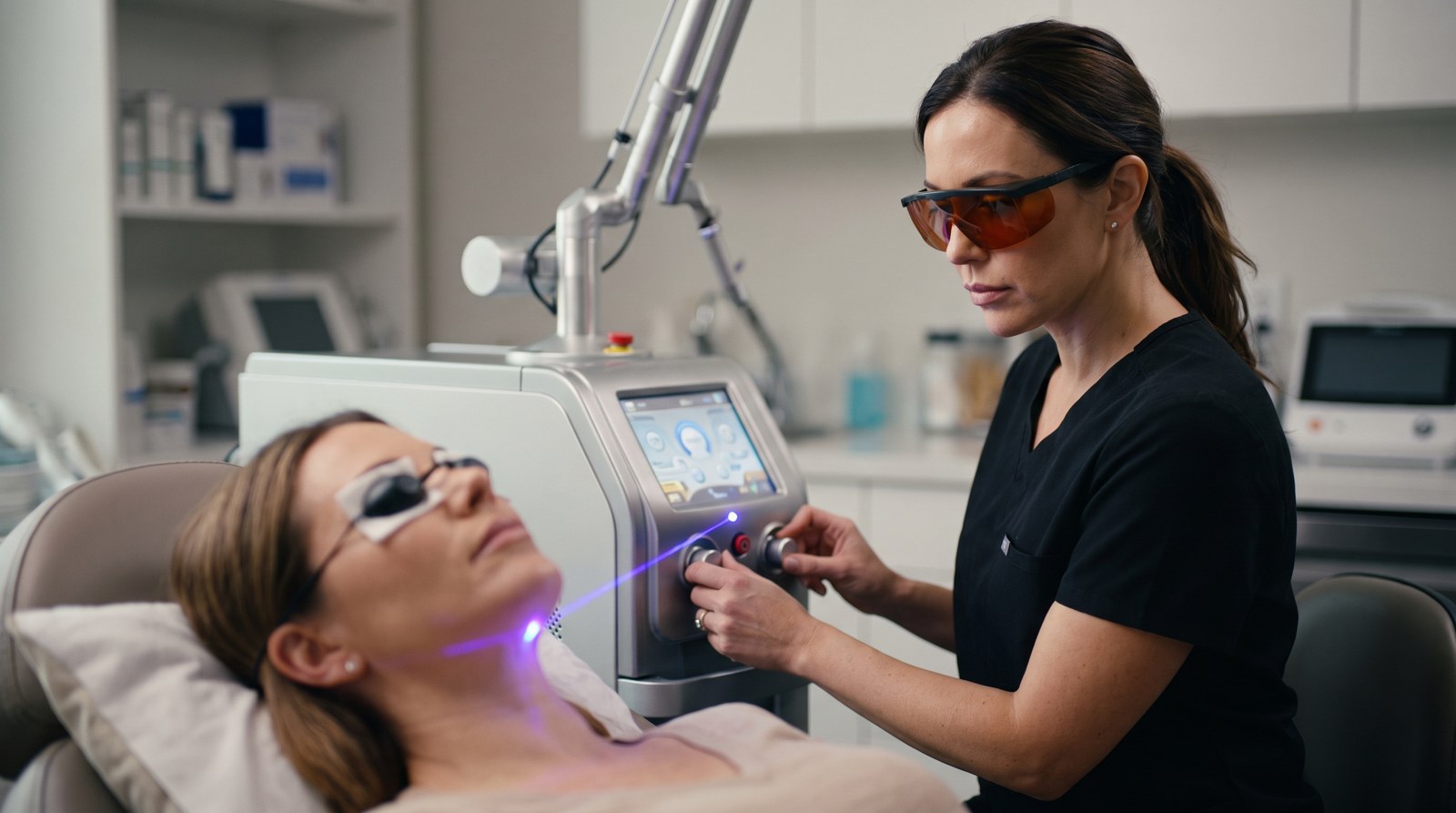
The best laser technician school near Ashburn VA is AVI Career Training in Vienna, Virginia — a COE-accredited program with hands-on clinical training, just 20–25 minutes from Loudoun County via Route 7 or the Dulles Toll Road.
If you’re exploring cosmetic laser technician training in Northern Virginia, you already know the field is growing fast. Med spas, dermatology practices, and aesthetic clinics across the DMV area are actively hiring trained laser technicians — and the path to that career starts with choosing the right school.
This guide walks you through everything you need to evaluate: Virginia’s licensing landscape, the five factors that separate strong programs from weak ones, and exactly what AVI’s Cosmetic Laser Technology program offers students who are ready to get started.
- AVI Career Training’s Cosmetic Laser Technology program is 120 hours — one of the most focused, efficient paths to laser certification in Northern Virginia
- AVI is COE-accredited and SCHEV-certified — the credentials that matter most for legal practice in Virginia
- The Ashburn-to-Vienna commute is approximately 20–25 minutes via Route 7 / Dulles Toll Road (Route 267)
- Laser technicians in Virginia earn a median range of $45,000–$65,000/year, with Northern Virginia salaries trending toward the higher end
- AVI’s curriculum trains students on all Fitzpatrick skin types — a clinical differentiator that matters in a diverse region like the DMV
- GI Bill® is accepted at AVI — a meaningful benefit for Loudoun County’s large military-connected community
Ready to take the next step? Start your application at AVI Career Training today.
—
What Does a Laser Technician Actually Do?
A laser technician operates cosmetic laser and light-based devices to perform treatments like laser hair removal, skin rejuvenation, pigmentation correction, and acne scar reduction — all under the scope of an aesthetic or medical practice.
The role sits at the intersection of science and skincare. You’re not just pressing a button — you’re assessing skin type using the Fitzpatrick scale, calibrating energy settings, managing client safety, and delivering clinical results. That’s why proper training matters so much.
In Northern Virginia’s growing med-spa market, laser technicians work in a variety of settings: standalone medical spas, dermatology offices, plastic surgery practices, and multi-service aesthetic clinics. The demand is real, and it’s accelerating. According to industry analysts, the medical spa sector in the United States has experienced consistent double-digit growth over the past decade, and the DC metro region reflects that trend directly.
What services do laser technicians typically perform?
Most in-demand service at Northern VA med spas
Photofacials, IPL, collagen stimulation
Sun spots, melasma, hyperpigmentation
Resurfacing, texture improvement
—
Virginia Licensing Requirements for Laser Technicians
How long does it take to become a laser technician in Virginia? Program length varies, but AVI’s focused Cosmetic Laser Technology program (NO FINANCIAL AID FOR THIS PROGRAM) is 120 hours — students can complete their training in a matter of weeks depending on scheduling, then pursue employment in clinical or spa settings.
Do you need a license to operate a laser in Virginia? Virginia’s regulatory framework for cosmetic laser operators is evolving. The Virginia Department of Professional and Occupational Regulation (DPOR) and the Virginia Board of Cosmetology oversee licensing for aesthetics-adjacent practitioners. Completing a SCHEV-certified program at a COE-accredited school positions you to meet current and emerging state requirements — and makes you a far more competitive candidate in the job market.
Here’s what you need to understand about the regulatory landscape:
SCHEV Certification: Why It Matters
The State Council of Higher Education for Virginia (SCHEV) certifies postsecondary schools that meet Virginia’s academic standards. Enrolling in a SCHEV-certified program means your training is recognized by the Commonwealth — a baseline requirement for legitimate, defensible credentials.
COE Accreditation: The Gold Standard
The Council on Occupational Education (COE) is a nationally recognized accrediting body for occupational and technical schools. COE accreditation signals that a school has met rigorous standards for curriculum quality, instructor credentials, student services, and program outcomes. Employers in Northern Virginia recognize it. Licensing boards recognize it. You should too.
Why Unaccredited or Online-Only Programs Fall Short
Some programs advertise laser technician “certification” through purely online coursework. In a field that involves calibrated medical-grade devices and direct client skin contact, online-only training is simply not sufficient. Virginia employers — and increasingly, Virginia regulators — expect candidates who have completed hands-on hours in a clinical or supervised setting.
> ⚠️ Important: Always verify current Virginia DPOR requirements directly at dpor.virginia.gov before enrolling in any program. Regulatory requirements can change, and accurate, current information protects your career investment.
—
The 5 Key Factors to Evaluate When Choosing a Laser School
What should I look for in a laser technician school? Evaluate five things: accreditation status, hands-on clinical hours, instructor credentials, equipment quality, and scheduling flexibility. A school that checks all five prepares you for real employment — not just a certificate on the wall.
1. Accreditation Status (COE and SCHEV)
This is non-negotiable. A school’s accreditation determines whether your training is recognized by employers, licensing boards, and — in some cases — the military education benefits system. Look specifically for COE accreditation and SCHEV certification if you’re training in Virginia.
Schools without these credentials may offer cheaper tuition or faster completion, but the cost to your career can be significant if employers or regulators don’t recognize your training.
2. Hands-On Clinical Hours
Cosmetic laser work is a tactile, equipment-driven skill set. You learn by doing — not by watching videos. Ask every school you consider: How many of the program hours are hands-on? Do students perform treatments on real clients?
A program that front-loads classroom theory without sufficient clinical practice leaves you underprepared for the speed and pressure of a real med-spa environment.
3. Instructor Credentials
Your instructors should be licensed professionals with real-world industry experience — not just certified trainers reading from a curriculum manual. Ask about your potential instructors’ backgrounds. Have they worked in clinical settings? Do they have experience with diverse skin tones and complex cases?
4. Equipment Quality and Modernity
The devices you train on should reflect what you’ll encounter in the field. If a school is running outdated equipment, you’ll spend your first months on the job learning machines from scratch. Look for programs that train on current-generation laser and light-based platforms.
5. Proximity and Scheduling Flexibility
Consistency matters in accelerated programs. A school that’s 45–60 minutes away creates friction — especially if you’re managing work or family alongside training. Scheduling options (morning, afternoon, or weekend availability) can make the difference between completing your program and dropping out due to life logistics.
—
Why Location Near Ashburn Matters More Than You Think
If you’re searching for a laser tech program near Ashburn, the commute question isn’t trivial — it’s a daily reality that affects your success rate and your professional network.
AVI Career Training is located at 1595 Spring Hill Rd #720, Vienna, VA 22182 — approximately 20–25 minutes from Ashburn via Route 7 or the Dulles Toll Road (Route 267). That makes AVI the closest COE-accredited cosmetic laser program to Loudoun County.
The Northern Virginia Med-Spa Market Is Growing — Fast
Loudoun County and the broader Northern Virginia corridor are experiencing significant growth in aesthetic services. New medical spas are opening across Ashburn, Sterling, and Leesburg — and they’re hiring. Training locally means you’re building your professional network in the exact market where you plan to work.
When you complete your 120-hour Cosmetic Laser Technology program at AVI, you’re not just a graduate — you’re a Northern Virginia-trained technician with relationships in the DMV area aesthetic community.
A Note for Military-Connected Students Near Loudoun County
Loudoun County has a significant military-connected population, particularly near the Fort Belvoir corridor and the broader DC metro defense community. AVI Career Training accepts GI Bill® benefits — making the program financially accessible for veterans and military family members looking to transition into a growing civilian career field. Contact AVI’s admissions team at (703) 943-9841 to discuss your GI Bill® eligibility.
Real student scenario: Consider someone like Marcus — a veteran transitioning out of service after eight years, living in Ashburn with a family and a tight timeline to secure civilian employment. He needed a career path that was fast, credentialed, and within driving distance. AVI’s 120-hour program, accessible via his Post-9/11 GI Bill® benefits, gave him a specific credential in a growing field without requiring a two-year commitment or a cross-county commute. Six months after completing the program, he was employed full-time at a Tysons Corner area medical spa.
—
What to Expect from AVI’s Cosmetic Laser Technology Program
AVI Career Training’s Cosmetic Laser Technology program (NO FINANCIAL AID FOR THIS PROGRAM) in Vienna, Virginia is a 120-hour, hands-on training program designed to prepare students for real employment in clinical aesthetic settings across Northern Virginia and the DMV area.
Program Highlights
- 120 hours of focused, career-targeted training
- COE-accredited and SCHEV-certified — credentials recognized by Virginia employers and regulatory bodies
- Hands-on clinical practice on real clients — not just mannequins or simulation
- Training on modern laser and light-based devices used in current med-spa environments
- Fitzpatrick skin type competency built into the curriculum — you’ll be prepared to safely and effectively treat all skin tones
- Instructors who are licensed industry professionals with real clinical experience
- GI Bill® accepted for eligible veterans
Inclusive Training: The Fitzpatrick Scale Difference
This is worth emphasizing — because not every laser school addresses it adequately.
The Fitzpatrick skin type scale is the clinical framework used to assess how different skin tones respond to laser energy. Improper settings for darker skin tones can cause burns, hyperpigmentation, or scarring. This isn’t a minor technicality — it’s a patient safety issue and a liability issue for employers.
AVI’s curriculum trains students to work skillfully and safely across all six Fitzpatrick skin types. In a region as diverse as Northern Virginia and the DC metro area, that competency isn’t optional — it’s essential. It also makes AVI graduates more competitive when applying to clinics that serve a broad, multicultural clientele.
Another student scenario: Priya, a licensed esthetician from Herndon, had been referring laser clients to other providers for years. She wanted to add laser services to her skill set — but needed a program that would train her on clients who looked like her own clientele: a diverse mix of South Asian, Middle Eastern, and East African skin tones with higher Fitzpatrick scale classifications. AVI’s inclusive curriculum and Fitzpatrick-competent training made it the clear choice. She completed the 120-hour program while maintaining her existing client schedule and launched laser services within weeks of graduating.
Career Outcomes and Salary Expectations
How much does a laser technician make in Northern Virginia? According to data from the Bureau of Labor Statistics and industry job boards, laser technicians in Virginia earn approximately $45,000–$65,000 per year, with Northern Virginia salaries trending toward the higher end of that range due to the region’s cost of living and concentration of high-end aesthetic practices. These figures are reference ranges, not guarantees — individual outcomes depend on experience, employer, and location.
Is laser technician school worth it near Ashburn VA? For most students, yes — the 120-hour time commitment is short, the credential is industry-recognized, and the local job market in Northern Virginia is genuinely strong. The key is choosing an accredited program that prepares you to practice legally and compete effectively.
Tuition and Payment Options
Because AVI’s Cosmetic Laser Technology program (NO FINANCIAL AID FOR THIS PROGRAM) is 120 hours — well under the 600-hour threshold required for federal financial aid eligibility — federal student aid (Title IV / FAFSA) is not available for this program. Students should not expect to use Pell Grants or federal loans to fund this training.
Payment options to ask AVI’s admissions team about include:
- Payment plans structured over the course of the program
- Private financing through third-party lenders
- GI Bill® benefits for eligible veterans and qualifying military family members
For specific tuition figures and current payment plan options, contact AVI directly at (703) 943-9841 or submit an inquiry online.
How to Apply
Applying to AVI’s Cosmetic Laser Technology program is straightforward. The admissions team will walk you through program requirements, scheduling options, and payment planning. There’s no reason to wait — the Northern Virginia med-spa market is hiring now, and a 120-hour program means you could be career-ready in weeks, not years.
—
Frequently Asked Questions: Laser Technician School Near Ashburn VA
Q: How long does it take to become a laser technician in Virginia?
A: At AVI Career Training in Vienna, VA, the Cosmetic Laser Technology program is 120 hours. Depending on your schedule, you can complete the program in a matter of weeks. This is one of the most efficient credentialed pathways to laser technician work in Northern Virginia.
Q: Do you need a license to operate a laser in Virginia?
A: Virginia’s regulatory framework for cosmetic laser operators is administered through the Virginia Department of Professional and Occupational Regulation (DPOR). Requirements can change, so always verify current rules at dpor.virginia.gov. Completing a SCHEV-certified program at a COE-accredited school — like AVI — positions you to meet current standards and gives employers confidence in your credentials.
Q: What should I look for in a laser technician school?
A: Look for five things: COE accreditation, SCHEV certification (in Virginia), genuine hands-on clinical hours, qualified instructors with real industry experience, and modern equipment that reflects what you’ll use on the job. Proximity and scheduling flexibility are practical factors that affect whether you actually complete the program.
Q: How much does a laser technician make in Northern Virginia?
A: Laser technicians in Virginia typically earn $45,000–$65,000 per year, with Northern Virginia salaries trending toward the higher end. Northern Virginia’s concentration of high-end medical spas and aesthetic practices supports stronger compensation than many other Virginia markets. These are reference ranges — not guarantees — based on BLS and industry salary data.
Q: Is laser technician school worth it near Ashburn VA?
A: For most students in Loudoun County, yes. The 120-hour commitment at AVI is manageable, the COE accreditation and SCHEV certification are employer-recognized credentials, and the Northern Virginia med-spa market is actively growing. The return on investment for a focused, accredited laser technician program is strong compared to longer, more expensive alternatives.
Q: Is AVI Career Training the closest accredited laser school to Ashburn VA?
A: AVI Career Training in Vienna, Virginia is approximately 20–25 minutes from Ashburn via Route 7 or the Dulles Toll Road (Route 267), making it the closest COE-accredited cosmetic laser program available to Loudoun County students.
Q: Does AVI accept GI Bill® benefits for the laser technician program?
A: Yes. AVI Career Training accepts GI Bill® benefits, which is a significant advantage for the large military-connected population in Loudoun County and the broader Northern Virginia area.