
Laser Technician Careers in the DMV: Pay, Jobs & How to Start
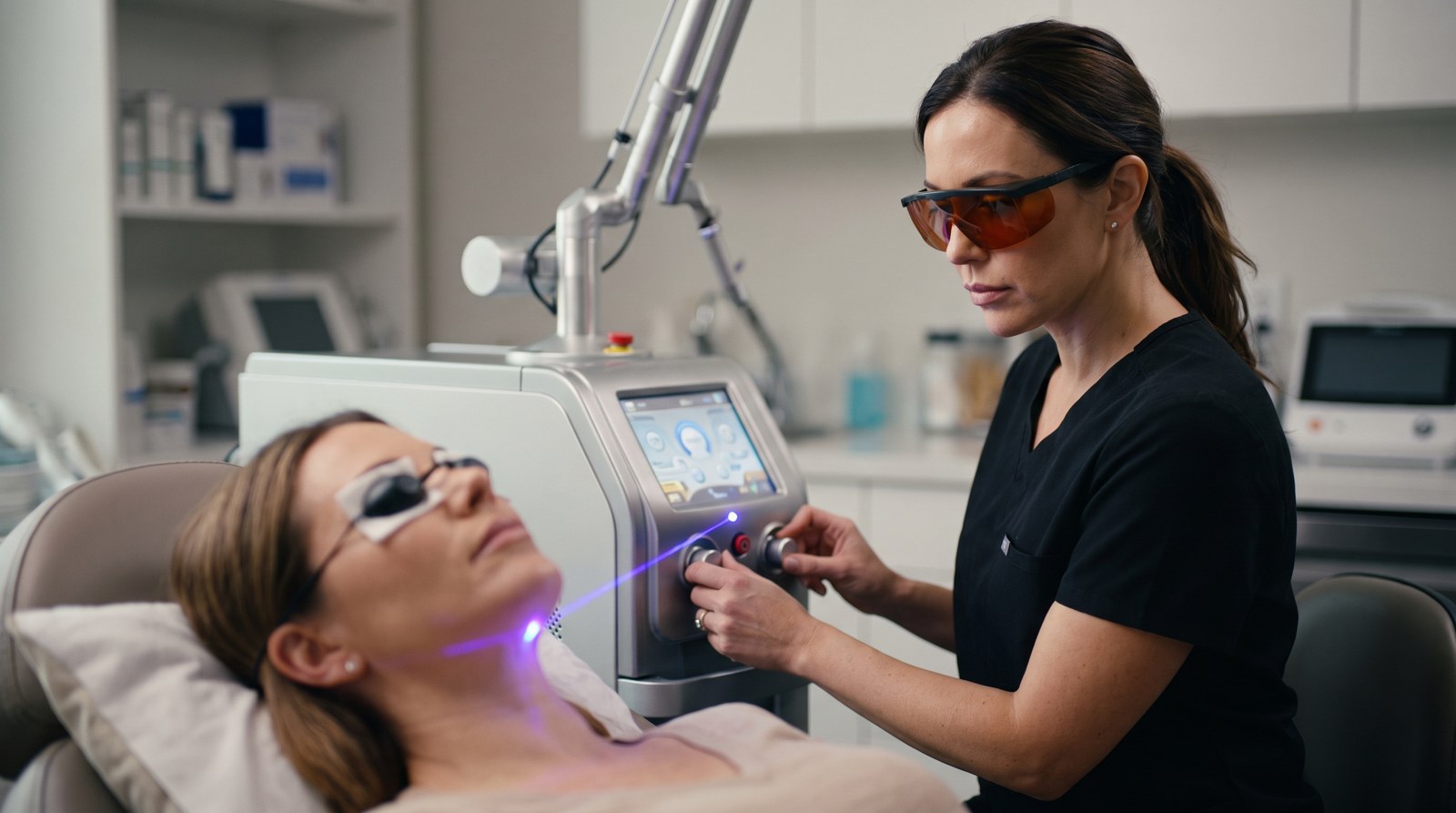
Laser technicians in the DC metro area earn a median annual wage above $43,000 — with experienced techs at Northern Virginia medical spas regularly reaching well above that when commissions and per-service bonuses are factored in.
If you’re researching a cosmetic laser technician career and wondering whether the DMV job market makes it worth the investment, this guide gives you the real numbers, the local employment landscape, Virginia’s licensing requirements, and a clear path to getting started — without a four-year degree.
—
⚡ Key Takeaways
- Skincare specialists — the BLS category that includes laser technicians — earn a median annual wage above $43,000 in the DC-Arlington-Alexandria metro, outpacing the national median.
- Experienced laser techs at Northern Virginia medical spas can earn $55,000–$75,000+ annually when base pay, commissions, and service bonuses are combined.
- Virginia’s regulatory framework (DPOR + physician-supervision rules) means employers actively prefer candidates with formal, documented training hours.
- AVI Career Training’s Cosmetic Laser Technology program is 120 hours of hands-on clinical training — no four-year degree required.
- Northern Virginia (Fairfax County, Tysons, Arlington) is one of the highest-income suburban markets in the US — a direct demand driver for premium laser aesthetics services.
—
What Does a Laser Technician Actually Do?
A laser technician is a trained aesthetic professional who uses energy-based devices to perform skin and hair treatments on clients in medical spas, dermatology offices, and wellness clinics.
The role goes well beyond a single service. On any given day, a laser technician might perform:
- Laser hair removal — the highest-volume service at most medical spas
- IPL (Intense Pulsed Light) treatments — for pigmentation, sun damage, and redness
- Skin rejuvenation and resurfacing — targeting fine lines, texture, and tone
- Photofacials and broadband light (BBL) therapy
- Laser vein treatments and spot corrections
Laser Technician vs. Esthetician: What’s the Difference?
An esthetician performs manual and chemical skin treatments — facials, exfoliation, waxing, peels. A laser technician specifically operates energy-based devices that penetrate deeper layers of the skin. The two credentials often overlap: many laser techs hold an esthetics license as a foundational credential and then complete specialized laser training on top of it.
In Virginia, this distinction matters legally. Operating cosmetic laser equipment in a medical setting falls under the oversight of the Virginia Department of Professional and Occupational Regulation (DPOR) and the Virginia Medical Practice Act, which typically requires physician supervision. Employers want technicians who understand both the clinical and regulatory sides of the work — which is exactly why formal, structured training is taken seriously here.
—
What Laser Technicians Earn in Virginia and the DC Metro
Laser technician salary in the DMV is one of the strongest in the country for this field — and the data backs that up.
According to the U.S. Bureau of Labor Statistics Occupational Employment and Wage Statistics (OEWS) program, skincare specialists (SOC 39-5094) in the DC-Arlington-Alexandria metro area consistently earn a median annual wage above the national median for the occupation. The region’s high household incomes and dense concentration of medical spas translate directly into stronger wages and larger client bases for laser professionals.
Laser Hair Removal Technician Salary in Virginia: Realistic Ranges
Here’s what current job posting data from Indeed, Glassdoor, and ZipRecruiter shows for laser technician roles in Virginia and the DC metro:
💡 The Commission Factor
Many Northern Virginia and DC medical spas structure pay as base salary + commission on services sold. A laser technician who builds a strong client book and performs high-ticket packages (think full-body laser hair removal or multi-session skin rejuvenation series) can meaningfully exceed the base salary figures above. Tips, while not standard in all clinical settings, are also common at luxury med spas.
—
Where Laser Technicians Work in Northern Virginia and DC
The DMV is one of the best job markets in the country for laser esthetician jobs — and the geography makes that concrete.
Fairfax County, where AVI Career Training is located, ranks among the highest-income counties in the United States. The Tysons Corner corridor, Arlington, McLean, Reston, and Alexandria are home to a dense concentration of high-earning professionals and federal employees — exactly the clientele that drives demand for premium aesthetic services.
Top Employers and Work Settings for DMV Laser Technicians
Medical spas (medspa) are the dominant employer. The NoVA/DC corridor has seen significant growth in both independent medspas and franchise locations — many clustered in Tysons, Reston Town Center, Pentagon City, and along the I-66 and Dulles corridors.
Dermatology and plastic surgery practices employ laser technicians as clinical support staff, often with more structured schedules and benefits packages than independent spas.
Hotel and resort spas — Northern Virginia has several luxury hotel properties and resort-adjacent spa operations where laser services command premium pricing.
Franchise laser clinics — brands like LaserAway and others have expanded significantly into Northern Virginia and DC submarkets, creating consistent entry-level demand for trained technicians.
Aesthetic surgery centers — these settings often handle post-procedure laser treatments and skin rejuvenation, requiring techs with solid clinical training and comfort operating under physician oversight.
—
Virginia Licensing Requirements for Laser Technicians
Virginia’s regulatory framework is something every aspiring laser technician needs to understand before starting — and it’s one of the clearest arguments for getting formal training from a structured, accredited program.
How Virginia Regulates Laser Aesthetics
The Virginia Department of Professional and Occupational Regulation (DPOR) oversees esthetics licensing in the commonwealth. DPOR requires 600 clock hours of training for a standard esthetics license — a foundational credential that many laser technicians hold before or alongside their laser specialization.
Cosmetic laser operation in Virginia’s medical spa context falls under the Virginia Medical Practice Act, which generally requires physician oversight. This means laser technicians work under the supervision of a licensed physician or medical director — a structure that makes employers particularly attentive to a candidate’s training documentation, clock hours, and credentials.
Why Formal Training Matters for Laser Jobs in Virginia
Completing a structured cosmetic laser program — one with documented clinical hours — positions you to:
- Demonstrate compliance-ready credentials to medical directors and hiring managers
- Pursue national certification through bodies like the National Council on Laser Certification (NCLC), which many DMV employers now prefer or explicitly require
- Operate confidently and safely on clients with diverse skin tones — a non-negotiable skill in the DC metro’s diverse population
The bottom line: in Virginia’s physician-supervised environment, showing up with documented, verifiable training hours is the difference between getting hired and being passed over.
—
—
How AVI Career Training Prepares You for This Career in the DMV
AVI Career Training’s Cosmetic Laser Technology program (NO FINANCIAL AID FOR THIS PROGRAM) is built specifically for the Northern Virginia and DC metro job market — and the location isn’t incidental. AVI sits in Vienna, Virginia, minutes from the Tysons Corner corridor, where the concentration of medical spas and aesthetic clinics is among the highest in the region.
What the Program Covers in 120 Hours
The Cosmetic Laser Technology program at AVI Career Training delivers 120 hours of hands-on, clinically grounded training that covers:
- Laser physics and device operation — understanding how energy-based devices work before you touch a client
- Skin anatomy and physiology — including safe treatment protocols for all Fitzpatrick skin types (a critical skill in the DMV’s diverse metro population)
- Laser hair removal technique — the core revenue-generating service at most medical spas
- IPL, photofacial, and skin rejuvenation modalities
- Client consultation and safety screening
- Regulatory compliance and documentation — so you’re workplace-ready under Virginia’s physician-supervision framework
The program is accredited by the Council on Occupational Education (COE) and the school is certified by the Virginia State Council of Higher Education for Virginia (SCHEV). These aren’t just credentials on a wall — COE accreditation is recognized by the U.S. Department of Education and signals to employers that your training meets verified industry standards.
A Real Path, Not a Detour
Consider Maya, a 31-year-old esthetician working at a Tysons-area day spa. She loved skin care but watched medical spa clients book laser services she wasn’t qualified to provide — and leave significant revenue on the table. She enrolled in AVI’s 120-hour Cosmetic Laser Technology program while continuing to work part-time. Within weeks of completing the program, she had the documented training hours and foundational knowledge to interview confidently at a Northern Virginia medspa — and accepted an offer with a base + commission structure that immediately outpaced her previous hourly rate.
Or take Jordan, a former Army medic transitioning out of service and looking for a healthcare-adjacent career that didn’t require a four-year clinical degree. With a background in anatomy and patient care, Jordan found the technical side of laser training intuitive. AVI’s location near the Tysons area made the program accessible from his home in Fairfax County, and the COE-accredited credential gave him something concrete to present to hiring managers in a field where clinical credibility matters.
No Financial Aid for This Program — What to Know
Because the Cosmetic Laser Technology program is 120 hours, it does not qualify for federal financial aid (Title IV / FAFSA). This is important to understand before you plan your enrollment. AVI offers payment plan options and can connect prospective students with private financing resources to help make the program accessible. Reach out to AVI admissions at (703) 943-9841 to discuss your options directly.
—
Frequently Asked Questions: Laser Technician Careers in the DMV
Q: How much does a laser technician make in Virginia?
A: Laser technicians in Virginia — classified under BLS SOC 39-5094 (Skincare Specialists) — earn a median annual wage above the national occupational median in the DC-Arlington-Alexandria metro. Entry-level positions typically start between $38,000 and $48,000 annually. Experienced laser technicians at Northern Virginia medical spas with base pay, commissions, and per-service bonuses can earn $65,000 to $85,000 or more per year.
Q: Do you need a license to do laser hair removal in Virginia?
A: Virginia does not have a single standalone “laser technician license,” but operating laser equipment in a medical spa or clinical setting falls under the Virginia Medical Practice Act, which requires physician oversight. Many employers require or strongly prefer candidates who have completed a formal cosmetic laser training program with documented clock hours and who hold or are eligible for national certification (e.g., through the National Council on Laser Certification). A standard Virginia esthetics license — requiring 600 clock hours under DPOR — is also a common foundational credential for laser technicians in the commonwealth.
Q: What is the difference between a laser technician and an esthetician?
A: An esthetician performs manual and chemical skin treatments — facials, waxing, exfoliation, and peels. A laser technician uses energy-based devices (lasers, IPL, broadband light) to perform deeper skin and hair treatments. Many laser technicians also hold an esthetics license, but laser training is a specialized credential requiring separate, device-specific education and clinical hours.
Q: Where do laser technicians work in the DC metro area?
A: The most common employers are medical spas, particularly in the Northern Virginia corridor (Tysons, Arlington, Reston, McLean, Alexandria), dermatology and plastic surgery practices, luxury hotel and resort spas, and franchise laser clinic brands expanding throughout Northern Virginia and DC. The region’s high household incomes drive strong, consistent demand for premium aesthetic services.
Q: How long does it take to become a certified laser technician?
A: AVI Career Training’s Cosmetic Laser Technology program (NO FINANCIAL AID FOR THIS PROGRAM) is 120 hours of hands-on training. You do not need a four-year degree. After completing the program, graduates are positioned to pursue national certification through bodies like the National Council on Laser Certification (NCLC), which many DMV employers prefer or require.
Q: Is cosmetic laser training worth it in Northern Virginia?
A: Yes — and the market data supports it. Northern Virginia’s combination of high household incomes, a dense medical spa market, and strong client demand for energy-based aesthetic services makes the DMV one of the strongest regional markets for laser technician careers in the country. A 120-hour specialized program can open doors to commission-eligible positions that out-earn many jobs requiring years of general education.
Q: Does AVI Career Training offer financial aid for the laser program?
A: No. Because the Cosmetic Laser Technology program is 120 hours, it does not qualify for federal financial aid (Title IV / FAFSA). AVI offers payment plan options and can connect students with private financing resources. Contact AVI admissions at (703) 943-9841 to discuss your options.
Q: What certification can I earn after completing AVI’s laser program?
A: After completing AVI’s 120-hour Cosmetic Laser Technology program, graduates are positioned to sit for national certification through the National Council on Laser Certification (NCLC) — a credential that many Northern Virginia and DC medical spas now prefer or explicitly require when hiring laser technicians.