
Laser Technician License Requirements in Virginia
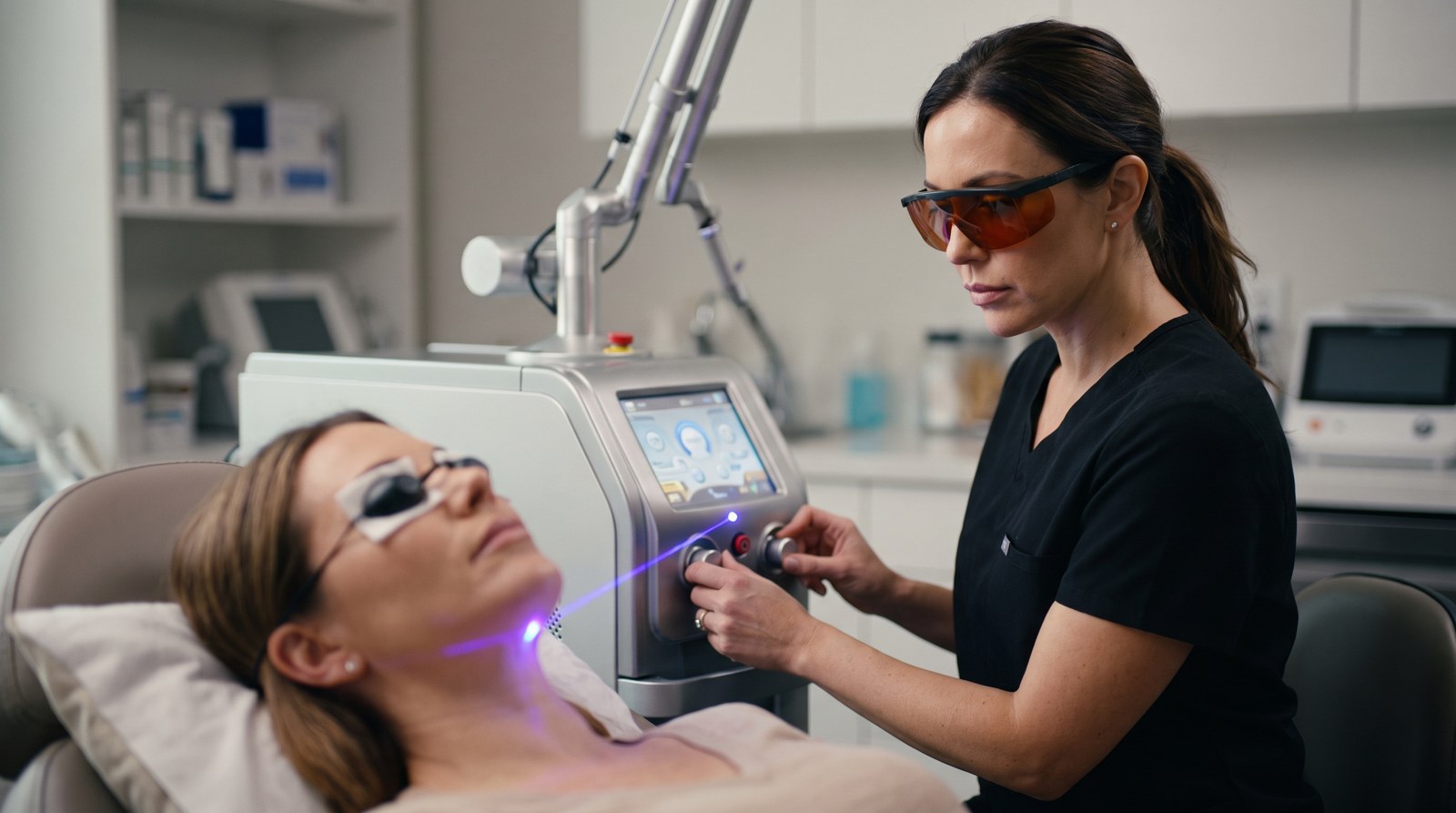
To legally perform laser treatments in Virginia, you need a foundational esthetics license issued by the Virginia Department of Professional and Occupational Regulation (DPOR), completed laser-specific training, and — critically — a licensed medical professional overseeing your practice. No single standalone “laser license” exists in Virginia; instead, the state uses a layered credentialing system that combines esthetics licensure, specialized laser training, and medical supervision.
If that sounds like a lot to unpack, don’t worry. This guide breaks every requirement down clearly so you know exactly where you stand — and what your next step looks like.
Key Takeaways
- Virginia does not issue a standalone “laser technician license” — laser work falls under DPOR esthetics licensure plus medical supervision requirements.
- A Virginia esthetics license requires 260 hours of approved training at a DPOR-recognized school.
- Virginia law requires laser procedures to be performed under delegation from a licensed physician or authorized medical practitioner.
- AVI Career Training’s Cosmetic Laser Technician program (NO FINANCIAL AID FOR THIS PROGRAM) is 120 hours, COE-accredited, and located in Vienna, Virginia.
- Laser technicians in Virginia typically earn $40,000–$70,000+ annually, with higher earning potential in the Northern Virginia / DC metro corridor.
Explore AVI’s Laser Program — Apply Now
—
Does Virginia Require a License to Operate Laser Equipment?
Virginia does not issue a dedicated “laser technician license” — but that does not mean the field is unregulated. Far from it.
Here is what confuses most people researching this topic: Virginia regulates cosmetic laser work through existing professional licensing frameworks, not a separate laser-specific credential. That means the path to legally operating laser equipment in Virginia runs through two parallel tracks: esthetics licensure under the Virginia Department of Professional and Occupational Regulation (DPOR) and a medical supervision requirement tied to Virginia’s medical practice statutes.
The DPOR Connection
DPOR governs esthetics and cosmetology licensing in Virginia. Estheticians who want to perform cosmetic laser treatments — including laser hair removal, skin rejuvenation, and light-based therapies — are expected to hold an active Virginia esthetics license as their foundational professional credential. You can verify current licensing requirements directly at dpor.virginia.gov.
The Medical Supervision Requirement
Virginia law places laser and light-based cosmetic procedures in a category that requires physician oversight or delegation from another authorized practitioner. This means even a fully licensed esthetician with advanced laser training cannot legally perform laser treatments without working under the supervision of — or with written delegation from — a licensed physician or qualifying medical professional.
This requirement is why most laser technicians in Virginia are employed by or contracted through medical spas, dermatology clinics, or aesthetic medicine practices rather than traditional day spas or salons. The medical director structure is not bureaucratic red tape — it is the legal framework that defines where and how you can practice.
> Bottom line: Virginia laser technician certification is not a single document you hang on a wall. It is a combination of your esthetics credential, your specialized laser training, and the supervised practice environment you work within.
—
Virginia Laser Technician Requirements — What You Actually Need
Here is a practical, step-by-step breakdown of what it takes to work legally as a cosmetic laser technician in Virginia.
Step 1: Earn Your Virginia Esthetics License
A Virginia esthetics license is the foundational credential. To qualify, you must complete 260 hours of esthetics training at a DPOR-approved school, then pass the Virginia State Board examination.
The 260-hour requirement covers skin analysis, facials, hair removal, chemical exfoliation, and the safety and sanitation protocols that underpin all advanced skincare work. This license is what legally establishes you as a trained skin care professional in Virginia’s eyes — and it is the professional credential most medical spas and laser clinics require before they will even consider you for a laser role.
Step 2: Complete Specialized Laser Training
An esthetics license alone does not qualify you to operate laser equipment. You need dedicated cosmetic laser training that covers:
This is where a structured, accredited laser training program is essential — not just for your safety competency, but for your professional credibility with employers.
Step 3: Understand the Laser Safety Officer (LSO) Framework
Facilities that operate lasers are typically required to designate a Laser Safety Officer (LSO) responsible for ensuring compliance with ANSI Z136 standards. As a laser technician, you may not be the LSO — but you need to understand what that role entails, how safety protocols are established, and your responsibilities within that framework. Quality laser training programs build this into their curriculum.
Step 4: Work Under Medical Supervision
Once you are trained and licensed, you must work in a setting that provides the required medical oversight. This means finding employment with a medical spa, dermatology practice, or aesthetic clinic that has a medical director structure in place. Your physician supervisor or delegating practitioner is legally accountable for the treatments performed under their delegation — and you are accountable for operating within the scope of your training and their protocols.
—
How Laser Technician Training Works — Hours, Curriculum, and What to Expect
A quality cosmetic laser training program teaches you to operate safely and confidently on real clients — across every skin tone, every treatment type, and every equipment platform you are likely to encounter in a professional setting.
What the Curriculum Covers
AVI Career Training’s Cosmetic Laser Technician program (NO FINANCIAL AID FOR THIS PROGRAM) is a 120-hour, hands-on program at AVI’s campus in Vienna, Virginia — located in the heart of the Northern Virginia / Tysons Corner area. The program is designed for students who already hold or are pursuing a Virginia esthetics license and want to add laser as a specialized, high-earning skill.
The curriculum includes:
The Inclusive Curriculum Difference
One of AVI’s defining commitments is training students to work beautifully on every skin tone. The Fitzpatrick Scale is central to this — it is the clinical tool that guides laser parameter selection across a full range of complexions. Many programs treat darker skin tones as an afterthought. At AVI Career Training, inclusive laser technique is built into the curriculum from day one.
A Real Student Path: From Esthetician to Laser Specialist
Consider someone like Priya — a licensed esthetician with two years of experience at a Northern Virginia spa, watching her medical spa colleagues perform laser treatments and wondering how to cross that bridge. She enrolled in AVI’s 120-hour Cosmetic Laser Technician program (NO FINANCIAL AID FOR THIS PROGRAM) while continuing to work part-time. Within four months of completing the program, she had secured a position at a Tysons Corner medical spa, performing laser hair removal and IPL photofacials — with a pay increase that more than justified her training investment.
Priya’s story is not unusual. It reflects a pattern AVI sees often: experienced estheticians who add laser credentials as a career accelerator, moving into medical spa environments with significantly higher earning ceilings.
Explore AVI’s Laser Program — Apply Now
—
Career Outlook — What Laser Technicians Earn in Northern Virginia
The Northern Virginia and DC metro market is one of the densest concentrations of medical spas and aesthetic clinics on the East Coast — and demand for qualified laser technicians reflects that density.
Salary Ranges in Virginia
Laser technicians in Virginia typically earn in the $40,000–$70,000+ range annually, depending on:
For context, the Bureau of Labor Statistics categories skin care specialists as a broad occupational group — laser technicians who operate in medical spa or clinical settings often earn toward the higher end of that range and beyond, particularly in high-cost-of-living metro markets like Northern Virginia and the DC corridor. You can review current data at bls.gov.
Where the Jobs Are
The Tysons Corner, Arlington, Fairfax, and Reston corridors have a high concentration of:
Many of these employers actively seek laser-trained estheticians — candidates who already understand skin, client communication, and professional standards, and who carry a verified laser training credential from an accredited program.
The Stacking Advantage
Here is the career math that matters: an esthetician without laser training is limited to traditional spa services. An esthetician with laser training can work in medical spa environments, charge premium service rates, and often move into a lead technician or trainer role faster. The 120-hour investment in laser training is one of the highest-return credential additions available in the esthetics field.
A Career Changer’s Story: From Retail to the Treatment Room
Marcus had spent eight years in retail management before deciding he wanted a career that was hands-on, growing, and not tied to a big-box floor. He enrolled in AVI’s Basic Esthetics program and completed the Cosmetic Laser Technician program (NO FINANCIAL AID FOR THIS PROGRAM) shortly after. Within six months of licensure, he had landed a position at a medical spa in the Vienna-Tysons area — performing laser hair removal and assisting with photofacial treatments. His income surpassed his retail management salary within his first full year.
—
How to Get Started with Laser Training in Northern Virginia
The path to becoming a cosmetic laser technician in Virginia is straightforward when you map it out step by step.
Your Roadmap
Step 1 — Earn Your Esthetics License
Complete 260 hours at a DPOR-approved esthetics school, pass the Virginia State Board exam, and activate your license. This is the professional foundation everything else is built on.
Step 2 — Enroll in a Laser Training Program
Choose an accredited program that provides hands-on training, covers ANSI Z136.3 safety standards, applies the Fitzpatrick Scale as a clinical framework, and is taught by instructors with real-world clinical experience.
Step 3 — Complete Your 120-Hour Laser Program
AVI’s Cosmetic Laser Technician program (NO FINANCIAL AID FOR THIS PROGRAM) is 120 hours of focused, hands-on training. You will graduate with the technical skills and safety knowledge employers expect.
Step 4 — Secure a Position in a Supervised Setting
Apply to medical spas, dermatology practices, or aesthetic clinics in Northern Virginia. Your training documentation and esthetics license are the primary credentials employers evaluate. AVI’s career support resources can help you connect with local opportunities.
Step 5 — Build Your Specialization
Once you are working, expand your device proficiency, pursue continuing education in new modalities, and build toward senior or lead technician roles.
Why Choose AVI Career Training
Why AVI Stands Out
- COE Accredited — Council on Occupational Education (COE) accreditation signals program quality to employers and licensing bodies
- SCHEV Certified — Approved by the State Council of Higher Education for Virginia
- Located in Vienna, Virginia — Convenient to the entire Northern Virginia / Tysons / DC metro corridor
- Inclusive curriculum — Fitzpatrick Scale applied across all skin tones; no student is trained to default to one complexion
- Experienced instructors — Licensed industry professionals with real clinic and spa backgrounds
- Program length — 120 hours; focused and completion-oriented without unnecessary padding
A Note on Tuition and Payment
Because AVI’s Cosmetic Laser Technician program is under 600 hours, it does not qualify for federal financial aid (Title IV / FAFSA). Federal student aid is not available for this program. AVI does offer payment plan options and can connect you with private financing resources to help make the program accessible. Contact AVI’s admissions team directly at (703) 943-9841 to discuss current tuition, scheduling, and payment options.
Start Your Application at AVI Career Training
—
Frequently Asked Questions
Q: Do you need a license to perform laser treatments in Virginia?
A: Yes. Virginia requires laser technicians to hold an active esthetics license issued by the Virginia Department of Professional and Occupational Regulation (DPOR) and to work under the supervision or delegation of a licensed physician or authorized medical practitioner. There is no standalone “laser license” in Virginia — the credential structure combines esthetics licensure, specialized laser training, and a medically supervised practice setting.
Q: How many training hours are required to become a laser technician in Virginia?
A: Two training components are involved. First, a Virginia esthetics license requires 260 hours of DPOR-approved esthetics training. Second, a dedicated cosmetic laser training program — such as AVI’s 120-hour program — provides the laser-specific skills and safety knowledge required to work with laser and light-based devices. Total training investment is typically 380+ hours when both components are combined.
Q: Can estheticians perform laser hair removal in Virginia?
A: Yes — licensed estheticians in Virginia can perform laser hair removal when they have completed specialized laser training and are working within a practice that has a medical director or supervising physician providing the required oversight. An esthetics license alone, without laser training and a compliant medical supervision structure, is not sufficient.
Q: How long does it take to become a certified laser technician in Virginia?
A: Timeline depends on your starting point. If you are starting from scratch, completing a Virginia esthetics license (260 hours) typically takes several months, followed by a 120-hour laser training program. Most students complete both components within 12–18 months. If you already hold an esthetics license, you can complete AVI’s 120-hour laser program on its own and enter the workforce much faster.
Q: What is the difference between a laser technician and a laser safety officer in Virginia?
A: A laser technician is the trained professional who performs laser treatments on clients. A Laser Safety Officer (LSO) is the designated individual within a facility responsible for ensuring compliance with laser safety standards — specifically ANSI Z136.3, the American National Standard for Safe Use of Lasers in Health Care. In a medical spa or clinic, the LSO may be a physician, a senior technician, or a clinical manager. Quality laser training programs teach technicians to understand LSO responsibilities and operate within that safety framework, even if they are not personally designated as the LSO.
Q: Is AVI Career Training’s laser program accredited?
A: Yes. AVI Career Training is accredited by the Council on Occupational Education (COE) and certified by the State Council of Higher Education for Virginia (SCHEV). The Cosmetic Laser Technician program (NO FINANCIAL AID FOR THIS PROGRAM) is offered through AVI’s Vienna, Virginia campus, conveniently located near the Tysons Corner area and accessible throughout Northern Virginia and the DC metro region.