
Is Laser Technician a Good Career? A Parent’s Guide
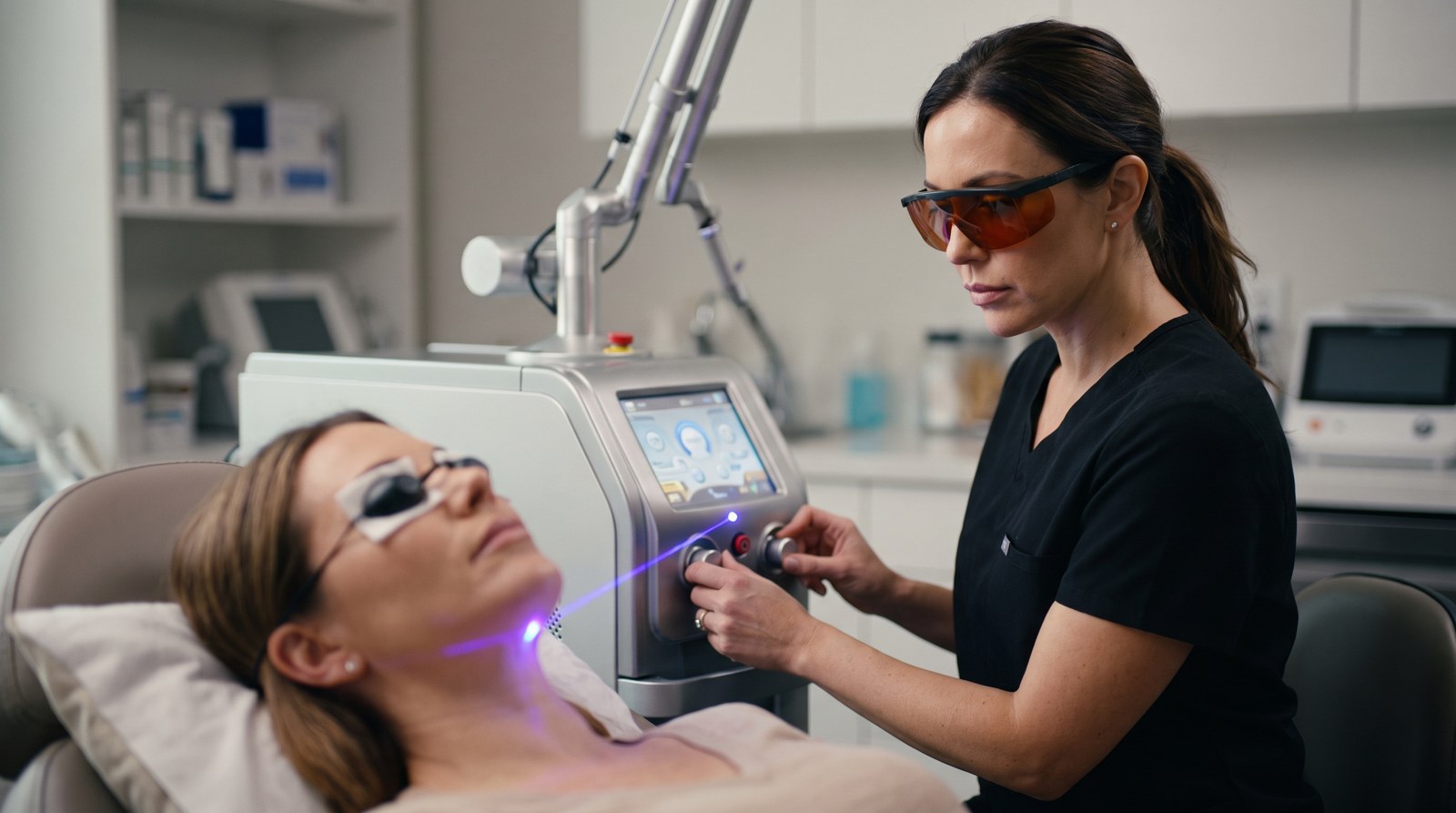
Yes — for the right student, the laser technician career path is one of the strongest short-term training investments available in Northern Virginia right now. The U.S. medical spa industry is projected to exceed $27 billion by 2030, and the DC metro corridor sits at the center of that growth. Before you sign anything or spend a dollar, though, you deserve a clear picture: what the job actually involves, what Virginia requires, what your student can realistically earn, and how to tell a legitimate program from a weekend workshop. That’s exactly what this guide gives you.
🔑 Key Takeaways for Parents
- Training time: AVI Career Training’s Cosmetic Laser Technology program is 120 hours — a focused, career-ready timeline, not a years-long commitment
- Earning potential: Laser-specialized roles in the Northern Virginia / DC metro market typically exceed the national esthetics median of ~$40,000–$42,000, with experienced technicians at medical spas earning considerably more
- Job growth: The BLS projects ~17% growth for skincare specialists through 2032 — faster than average for all occupations
- Virginia rules: Virginia does not issue a standalone laser technician license — cosmetic laser procedures must be performed under proper medical supervision; proper training is the non-negotiable first step
- Financial aid: Federal financial aid (FAFSA/Title IV) is not available for this program; payment plan and private financing options apply
- Local access: AVI Career Training is located in Vienna, VA — approximately 10 minutes from Falls Church
—
What Does a Laser Technician Actually Do?
A laser technician is a trained professional who operates medical-grade light and energy-based devices to improve skin and reduce unwanted hair — working in medical spas, dermatology clinics, and cosmetic surgery practices.
This is not a “beauty hobby” career. It’s a medical-adjacent role that requires technical precision, client assessment skills, and a thorough understanding of how different laser wavelengths interact with varying skin tones and tissue types. The work is hands-on, science-grounded, and genuinely skilled.
Day-to-Day Services a Laser Technician Performs
- Laser hair removal — permanent reduction of unwanted body and facial hair using targeted light energy
- Photofacials (IPL treatments) — addressing sun damage, redness, and uneven pigmentation with intense pulsed light
- Laser skin resurfacing — reducing fine lines, acne scars, and texture irregularities through controlled ablation or fractionated laser
- Skin rejuvenation and tightening — non-invasive collagen stimulation using radiofrequency or near-infrared devices
- Pre- and post-treatment skin assessments — evaluating Fitzpatrick skin type, contraindications, and healing progress
The Northern Virginia and Tysons Corner market is particularly strong for this skill set. The corridor from Falls Church through Tysons to McLean is dense with medical spas, plastic surgery practices, and high-end dermatology clinics — many of which actively recruit trained laser technicians.
If your student is detail-oriented, genuinely curious about how technology works, and drawn to a career with direct impact on how clients feel about themselves, this role is worth a serious look.
—
Virginia Licensing Requirements: What Your Student Needs to Know
Virginia does not issue a standalone “laser technician license” — and any school or weekend workshop that implies otherwise is giving you incomplete information.
Here’s the accurate picture: In Virginia, the use of cosmetic laser devices falls under regulations governed by the Virginia Board of Medicine and is subject to physician oversight requirements. Laser and light-based procedures are considered medical procedures under Virginia law, which means they must be performed under the supervision or delegation of a licensed physician. The Virginia Department of Professional and Occupational Regulation (DPOR) governs related esthetics licensing, and the State Council of Higher Education for Virginia (SCHEV) certifies the schools authorized to deliver this training.
Why Program Credentials Matter More Than You Think
Because Virginia’s framework places the legal weight on the supervising medical practice, employers screen for candidates with documented, credentialed training. A 48-hour weekend laser course — offered online or out of state — does not carry the same weight as a SCHEV-certified program at a COE-accredited school. Hiring managers at reputable medical spas know the difference, and so do their liability insurers.
This is where AVI Career Training’s accreditation status becomes a practical career asset — not just a marketing bullet point.
When evaluating any program, ask directly: Is this school SCHEV-certified? Is it COE-accredited? Does the curriculum address Virginia-specific supervision requirements? If the answer to any of those is unclear, keep looking.
—
Salary and Job Outlook — Is the Money Real?
The short answer is yes — and the Northern Virginia market pays above the national average.
The Bureau of Labor Statistics (BLS) reports a national median annual wage of approximately $40,000–$42,000 for skincare specialists as of 2023 (bls.gov). The BLS also projects 17% employment growth for this occupation through 2032 — a rate classified as “much faster than average.” That’s a meaningful signal for a parent trying to evaluate long-term stability.
Laser-specialized roles consistently outperform the general esthetics median. Medical spas and clinical practices command higher service pricing than day spas, and that revenue flows through to compensation. In the DC metro market, laser technicians with a year or two of clinical experience and proficiency across multiple device types are routinely positioned above the national baseline.
National median for skincare specialists (BLS, 2023)
Projected job growth through 2032 — much faster than average
U.S. medical spa industry projected value by 2030
AVI Cosmetic Laser Technology program length
Earning Trajectory Over Time
Entry-level laser technicians typically start in a clinic or medical spa setting, learning device protocols and building a client base under supervision. With experience, they often take on senior or lead technician roles, command higher hourly rates or commission structures, or move into practice management. Some pursue advanced certifications in radiofrequency, body contouring, or other energy-based modalities to expand their service menu — and their earning ceiling.
The competitive edge in Northern Virginia is straightforward: the region’s population is dense, diverse, and high-income. Clients here expect premium services and return for maintenance treatments regularly. That creates stable, recurring revenue for the practices that employ laser technicians — and stable employment demand for technicians themselves.
—
How Long Does Training Take — and What Does It Cost?
AVI Career Training’s Cosmetic Laser Technology program (NO FINANCIAL AID FOR THIS PROGRAM) is 120 hours — a focused, structured curriculum designed to move a motivated student from no experience to career-ready in a realistic timeframe.
That 120-hour structure is deliberate. It covers enough depth to be genuinely useful in a clinical setting: laser physics, skin anatomy, Fitzpatrick skin typing, device operation, safety protocols, contraindication assessment, and hands-on practice. It does not pad the curriculum to inflate program length.
The ROI Conversation Every Parent Should Have
Here’s the comparison worth making: a four-year undergraduate degree in Virginia currently averages well over $100,000 in total cost at a public university — and that’s before private school tuition or room and board. The time investment is 48 months minimum, often longer. Graduates enter the workforce carrying significant debt in a competitive job market with no guaranteed employment outcome.
A 120-hour laser technology program is a fundamentally different investment model. The cost is a fraction of a degree program. The timeline to employment is measured in months, not years. And the career outcome — employed laser technician in a growing medical spa market — is specific, not vague.
Tuition and Payment Options
The GI Bill® is accepted at AVI Career Training — if your student is a veteran or active-duty service member, contact admissions to confirm current benefit applicability to this specific program.
Ready to See the Numbers?
Our admissions team can walk you through current tuition, payment plan structures, and scheduling options — no pressure, no sales script. Just clear answers to your real questions.
Or call us directly: (703) 943-9841
—
What to Look for in a Laser Technician Program (Northern Virginia Edition)
Not all laser training is equal — and in a state with Virginia’s regulatory framework, program quality has direct implications for your student’s employability.
Here’s a five-point checklist built specifically for parents evaluating local options:
1. Accreditation and State Certification
Look for COE accreditation (Council on Occupational Education) and SCHEV certification (State Council of Higher Education for Virginia). These are not interchangeable with general “approved” or “registered” designations. COE accreditation requires a school to meet rigorous educational quality standards reviewed by an external body. SCHEV certification means Virginia has reviewed and authorized the program to operate. AVI Career Training holds both.
2. Hands-On Clinical Hours — Not Just Lecture
Cosmetic laser work is a physical skill. A program that is primarily lecture, video, or online-only modules will not prepare your student to operate equipment confidently in a clinical setting. Ask specifically: How many of the 120 hours are spent with live clients and real devices? The answer tells you a great deal about program quality.
3. Inclusive Skin Tone Training
Northern Virginia is one of the most ethnically diverse regions in the United States. A laser program that trains students primarily on light skin tones is preparing them for a fraction of the available client population. It also creates safety risks — incorrect device settings on deeper skin tones can cause burns and hyperpigmentation. Ask any prospective program directly: How does your curriculum address Fitzpatrick skin types IV, V, and VI? AVI’s curriculum is built around inclusive technique — not as an add-on, but as a foundation.
4. Instructor Credentials
Your student’s instructor should be a licensed, practicing professional — not someone who completed a course last year. Ask about instructor licensing, years of clinical experience, and continuing education. At AVI Career Training, instructors are licensed industry professionals with hands-on background in the services they teach.
5. Virginia Regulatory Alignment
A strong program will explicitly address Virginia’s physician supervision framework — not skip over it or treat it as a technicality. Your student should graduate understanding how to work compliantly in a Virginia clinical environment, which facilities require what oversight structures, and how to evaluate a prospective employer’s compliance. This knowledge is not optional; it’s what separates a career-ready graduate from someone who completed a course.
—
Frequently Asked Questions
Q: How long does it take to become a laser technician?
A: At AVI Career Training in Vienna, Virginia, the Cosmetic Laser Technology program is 120 hours. Depending on scheduling, most students complete the program within a few months. From enrollment to career-ready graduation, the timeline is significantly shorter than any degree program — measured in months, not years.
Q: Do laser technicians need a license in Virginia?
A: Virginia does not issue a standalone laser technician license. Cosmetic laser procedures in Virginia are regulated as medical procedures and must be performed under the supervision of a licensed physician. This means proper training from a credentialed program — combined with employment at a compliant medical practice — constitutes the legal career path. The Virginia Department of Professional and Occupational Regulation (DPOR) and the Virginia Board of Medicine govern the related regulatory framework.
Q: How much do laser technicians make in Northern Virginia?
A: The national median for skincare specialists is approximately $40,000–$42,000 per year (BLS, 2023). Laser-specialized roles in the Northern Virginia and DC metro market consistently exceed that baseline. Technicians with clinical experience across multiple device types and a strong client base at a medical spa can earn considerably more — particularly in the high-income Tysons Corner and McLean corridor.