Is Medical Assistant a Good Career? A DC Parent’s Complete Guide
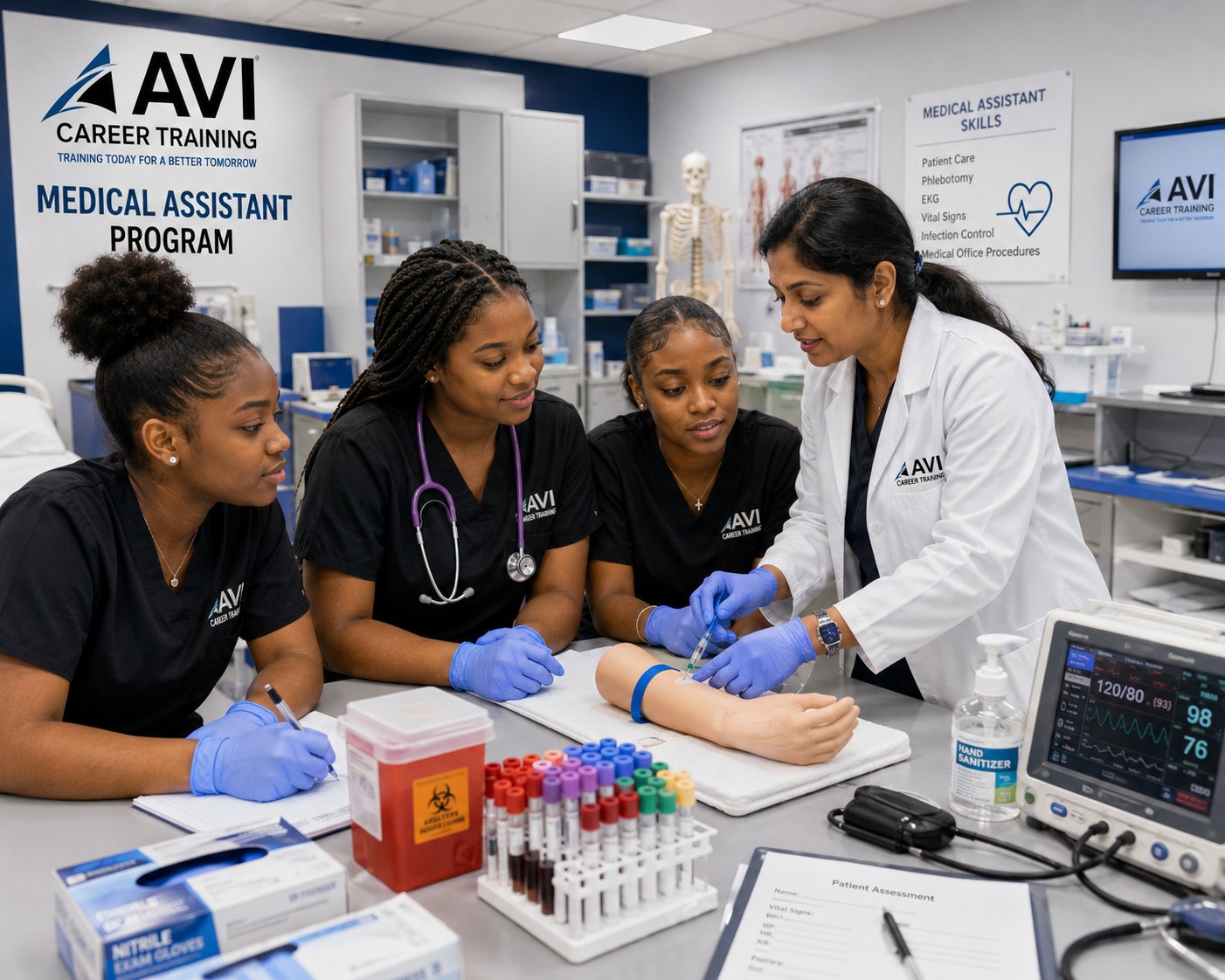
Medical assisting is a legitimate, stable career — but whether it’s the right career for your child depends on training time, salary expectations, licensing realities, and what they actually want to do every day. For DC-area families weighing this path, the honest answer is more nuanced than most websites let on.
This guide walks you through what a medical assistant career actually looks like in the Washington DC metro, what it pays in Northern Virginia, how long training takes, and — critically — what comparable healthcare-adjacent careers exist that may be faster, clearer, and just as rewarding. If your child wants a hands-on, client-facing career in health and wellness without a four-year degree, you have more options than you may realize.
—
📋 Key Takeaways
- The median annual wage for medical assistants in the Washington-Arlington-Alexandria metro is approximately $42,000–$46,000, according to BLS data — entry-level roles typically start lower.
- Medical assistant training in Virginia typically takes 9–12 months for a certificate or up to two years for an associate degree.
- Virginia does not require state licensure for medical assistants, but national certification (CMA or RMA) is strongly preferred by DC-area employers.
- Comparable wellness careers — esthetician, massage therapist, cosmetic laser technician — can be completed in as few as 5–12 months and require state licensure, which actually signals higher professional standards to employers.
- AVI Career Training in Vienna, Virginia trains students for several of these healthcare-adjacent wellness careers with COE accreditation, financial aid availability, and GI Bill® acceptance.
—
What Does a Medical Assistant Actually Do Day-to-Day?
A medical assistant is a multi-role clinical and administrative professional — not a nurse, not a physician assistant, and not a medical technologist. Understanding this distinction matters before your child commits to any training program.
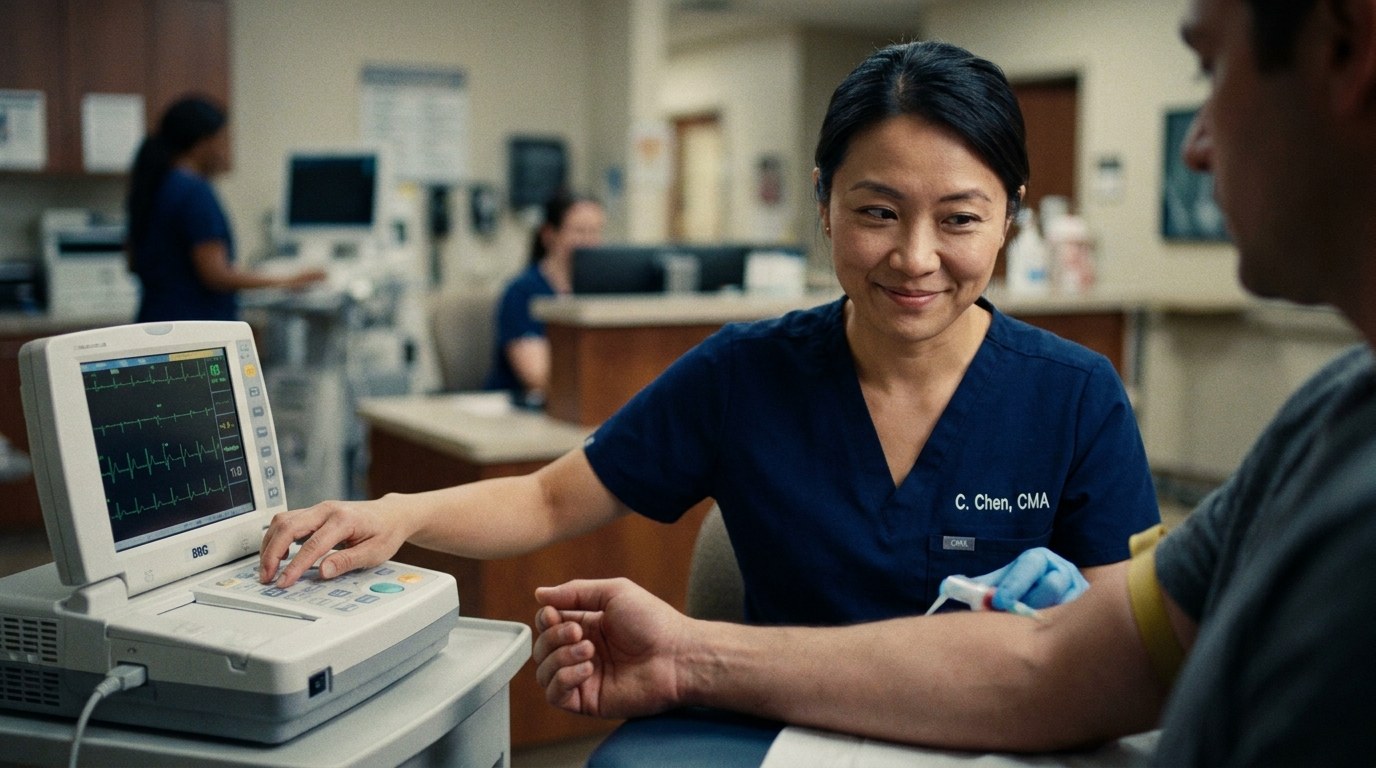
On the clinical side, medical assistants take patient vital signs, prepare exam rooms, draw blood (phlebotomy), administer injections, perform basic EKGs, and assist physicians during procedures. On the administrative side, they schedule appointments, manage patient records, handle insurance pre-authorizations, and process billing. In smaller practices, one person often does both.
What It’s Not
Medical assistants are not licensed to diagnose, prescribe, or perform many of the skilled clinical tasks a registered nurse (RN) or licensed practical nurse (LPN) handles. If your child is drawn to healthcare but hasn’t yet clarified what kind of healthcare work excites them, that distinction is worth exploring before investing in training.
The daily reality: a lot of patient throughput, significant administrative documentation, close supervision by physicians, and modest starting pay. For many students, that’s a great fit. For others — especially those who want more creative autonomy, one-on-one client relationships, or a wellness-focused environment — it may not be.
—
Medical Assistant Salary and Job Outlook in the Washington DC Area
The DC metro market pays medical assistants better than the national median — but “better than average” doesn’t always mean what families expect.
According to the U.S. Bureau of Labor Statistics (BLS), the national median annual wage for medical assistants is approximately $42,000 (2023 BLS data). In the Washington-Arlington-Alexandria, DC-MD-VA metropolitan area, wages run somewhat higher, with experienced MAs in competitive practices reaching $48,000–$52,000. Entry-level positions in Northern Virginia, however, frequently start in the $34,000–$38,000 range.
Job Growth: The Real Picture
The BLS projects 14% job growth for medical assistants through 2032 — faster than average for all occupations. The DC area’s dense concentration of hospitals, specialty clinics, urgent care centers, and federal health agencies makes this metro a particularly strong market.
That said, growth and salary are two different things. Medical assisting is a competitive field in Northern Virginia. Employers in this market increasingly prefer candidates with national certification — either the Certified Medical Assistant (CMA) credential from the American Association of Medical Assistants (AAMA) or the Registered Medical Assistant (RMA) from the American Medical Technologists (AMT). Neither is required by Virginia state law, but skipping certification puts your child at a disadvantage in a crowded applicant pool.
—
How Long Does Medical Assistant Training Take in Virginia?
Most medical assistant programs in Virginia fall into two categories: certificate programs and associate degree programs.
Certificate programs at community colleges and vocational schools typically run 9–12 months and cover both clinical and administrative skills. These are the faster path to the workforce and sufficient for most entry-level positions.
Associate degree programs at community colleges run 18–24 months and provide a broader academic foundation. They may slightly improve hiring prospects at hospital systems or larger medical groups, but they also add a full year to your child’s time before they start earning.
The Certification Exam Factor
After completing an accredited program, candidates can sit for the CMA or RMA exam. Exam prep adds weeks to the timeline. The AAMA’s CMA exam requires graduation from a CAAHEP- or ABHES-accredited program, so program accreditation matters significantly for this path.
Why Hands-On Hours Matter
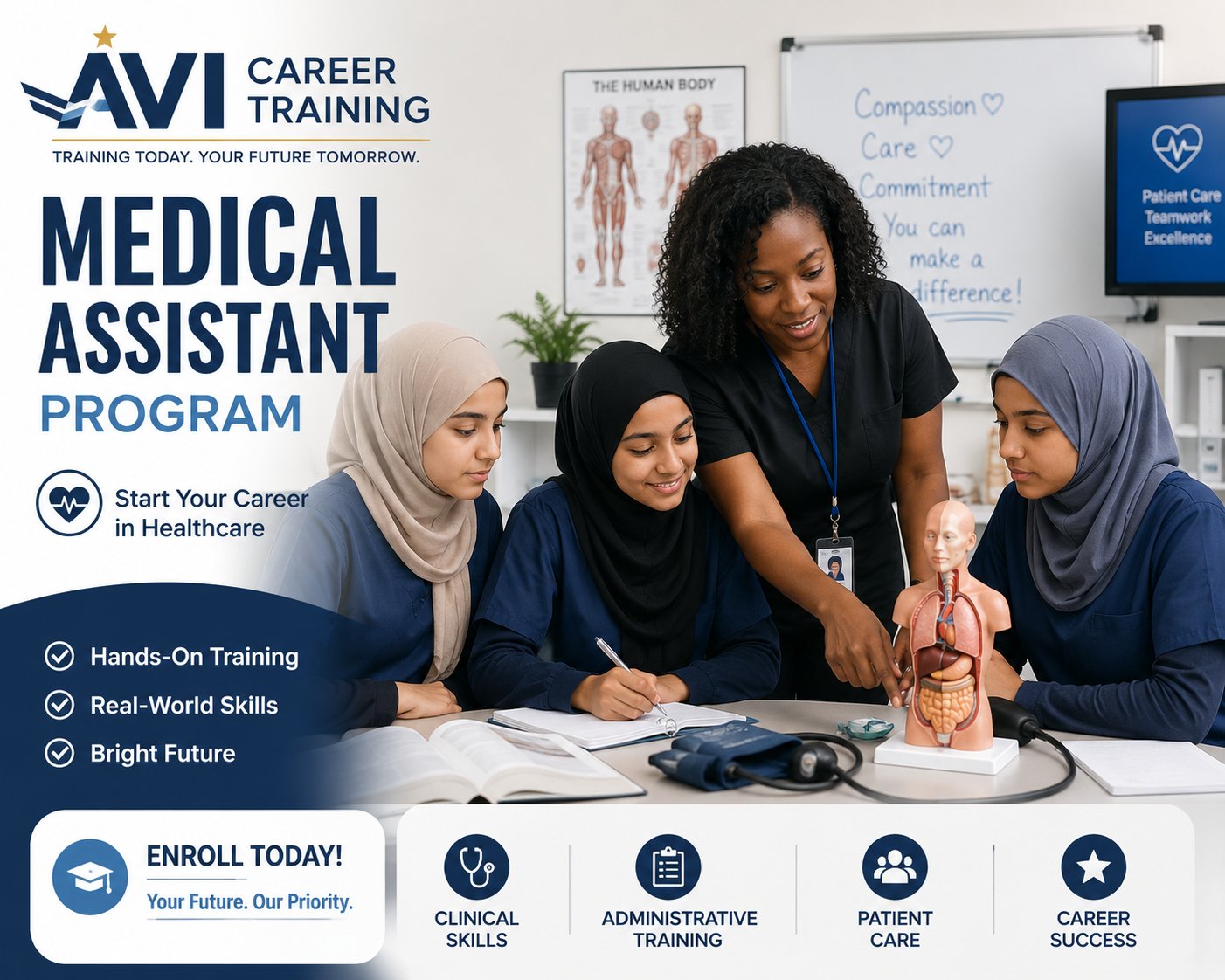
One detail most program comparison sites gloss over: the quality and volume of hands-on clinical hours varies dramatically between programs. Programs that rush through practicals produce graduates who feel underprepared on day one. When evaluating any career training program — in medical assisting or any other field — ask specifically how many hands-on lab and externship hours are included. This question applies equally to wellness and beauty careers, and it’s one of the things that separates strong training programs from weak ones.
—
What Parents Should Really Ask Before Choosing Any Healthcare-Adjacent Career
Here’s the question most parents are actually trying to answer, even when they search “medical assistant”: What’s the best hands-on healthcare career my child can launch quickly, without a four-year degree, that pays well and has real job security?
Medical assisting is one answer. It’s not the only one.
Before you settle on a path, here’s the framework a smart career counselor would walk you through:
1. What Does Your Child Actually Love Doing?
Medical assistants work in fast-paced clinical environments with high patient volume, physician oversight, and significant administrative responsibility. That suits some people perfectly.
But if your child is drawn to one-on-one client relationships, a creative element in their work, a wellness-focused (rather than illness-focused) environment, and the satisfaction of visible, tangible results — careers like esthetics, massage therapy, or cosmetic laser technology may align more naturally with their strengths.
2. How Does Licensing Work?
This is where the medical assistant path has a real quirk. Virginia does not license medical assistants at the state level. That means there’s no standardized credential the public can look up — and no Virginia Department of Professional and Occupational Regulation (DPOR) protection for consumers or practitioners.
By contrast, estheticians, massage therapists, nail technicians, and cosmetologists in Virginia are all licensed by the Virginia DPOR. That licensing requirement creates a higher professional standard, clearer career milestones, and a credential your child carries for life. From a parent’s perspective, a licensed profession often provides more long-term security than an uncredentialed one.
3. How Long Is Training, Really?
| Career Path | Typical Training Time | Virginia Licensing? |
|—|—|—|
| Medical Assistant (certificate) | 9–12 months | No state license required |
| Esthetician | 5–6 months | Yes — Virginia DPOR |
| Massage Therapist | 6–9 months | Yes — Virginia DPOR |
| Cosmetic Laser Technician | Varies by program | Yes — Virginia DPOR |
| Cosmetologist | 12–14 months | Yes — Virginia DPOR |
4. What Does Earning Potential Look Like Over Time?
Medical assistants in the DC metro can reach $48,000–$52,000 with experience and certification. Licensed estheticians and massage therapists, particularly those who build clientele or work in high-end DC-area spas and medical aesthetics clinics, can reach comparable income levels — with the added upside of tips, commission structures, and eventual self-employment potential that medical assisting rarely offers.
A Real-World Example: Priya, a parent in McLean, came to AVI Career Training’s open house after spending months researching medical assistant programs for her daughter. Her daughter was interested in skincare, clients, and a wellness-oriented career. After comparing timelines and licensing, she enrolled in AVI’s Basic Esthetics program. Seven months later, her daughter was licensed, employed at a medical spa in Tysons Corner, and earning more than the entry-level MA salaries Priya had been researching.
—
Hands-On Healthcare-Adjacent Careers Trained Right Here in Northern Virginia
If your child wants a clinical, client-facing, wellness-oriented career without a four-year degree — and they want to train close to home in the DMV area — AVI Career Training in Vienna, Virginia offers several programs worth serious consideration.
AVI is COE Accredited (Council on Occupational Education) and SCHEV Certified by the Virginia Department of Education. Financial aid is available for qualifying programs, and AVI accepts the GI Bill® for eligible veterans and dependents. The school is located in the Tysons Corner area at 1595 Spring Hill Rd #720, Vienna, VA 22182.
Here are three programs that directly serve students drawn to the healthcare-adjacent space:
Massage Therapy
Massage Therapy is one of the most directly healthcare-adjacent paths AVI offers. Graduates work in spas, chiropractic offices, physical therapy clinics, sports medicine facilities, and medical wellness centers throughout the Northern Virginia and DC market. Virginia DPOR licensing is required and earned after completing the program and passing state board exams. Financial aid is available for this program for qualifying students.
Basic Esthetics and Master Esthetics
Esthetics sits at the intersection of skincare science and client care — a natural fit for students interested in the clinical side of wellness without the administrative load of a medical office. Northern Virginia’s booming medical aesthetics industry (think: laser clinics, dermatology spas, and high-end wellness centers throughout Tysons, Reston, and Arlington) creates strong demand for licensed estheticians. Virginia DPOR licensure is required. Financial aid is available for qualifying students.
Cosmetic Laser Technology
For students who want the most clinical, technology-forward path in the wellness space, Cosmetic Laser Technology may be the answer. Laser technicians perform treatments like laser hair removal, skin rejuvenation, and body contouring — procedures increasingly offered at medical spas and dermatology practices across the DC metro. Virginia DPOR regulates this field. Check with AVI admissions for current program details and financial aid eligibility.
Another Student Story: Marcus graduated high school in Fairfax County with a strong interest in biology and client-facing work but no interest in a two- or four-year academic program. His mother found AVI while researching healthcare training programs in Northern Virginia. Marcus enrolled in the Cosmetic Laser Technology program, completed hands-on training with industry-standard equipment, and is now employed at a medical spa in Arlington — doing work he describes as “basically skincare science every day.”
Is AVI Right for Your Child?
If your child is drawn to hands-on, client-facing wellness careers — and you want a licensed, credentialed path with real job outcomes in the Northern Virginia market — AVI Career Training is worth a visit. Programs range from esthetics and massage therapy to cosmetic laser technology, all taught by licensed industry professionals in a COE-accredited environment.
—
—
Frequently Asked Questions
Q: How long does it take to become a medical assistant in Virginia?
A: Most certificate programs in Virginia take 9–12 months to complete. Associate degree programs take 18–24 months. After graduation, candidates typically prepare for and sit for a national certification exam (CMA or RMA), adding several additional weeks to the full timeline before they’re job-ready with credentials.
—
Q: How much do medical assistants make in the Washington DC area?
A: According to BLS data, medical assistants in the Washington-Arlington-Alexandria metro earn a median of approximately $46,000 annually. Entry-level positions in Northern Virginia typically start between $34,000 and $38,000. Experienced MAs with national certification at competitive practices can earn $48,000–$52,000.
—
Q: Do medical assistants need to be licensed in Virginia?
A: No. Virginia does not require state licensure for medical assistants. However, national certification — the CMA (from AAMA) or RMA (from AMT) — is strongly preferred by employers in the DC metro market and significantly improves hiring prospects.
—
Q: What careers are similar to medical assistant that don’t require a 4-year degree?
A: Several healthcare-adjacent wellness careers require no four-year degree and often involve shorter training timelines than a medical assistant certificate. These include licensed esthetician (5–6 months), licensed massage therapist (6–9 months), cosmetic laser technician, and nail technician — all of which are regulated by Virginia DPOR. AVI Career Training in Vienna, VA trains students for all of these careers.
—
Q: Is medical assistant or esthetics a better career for my child?
A: It depends entirely on what your child wants to do daily. Medical assisting suits students who thrive in fast-paced clinical environments with physician oversight, patient throughput, and significant administrative work. Esthetics suits students drawn to one-on-one client relationships, skincare science, creative work, and a wellness-focused environment. Esthetics training is typically shorter (5–6 months) and results in a Virginia DPOR license. Both offer solid job prospects in the DC metro.
—
Q: Does AVI Career Training offer medical assistant programs?
A: No. AVI Career Training does not offer medical assistant training. AVI specializes in COE-accredited beauty and wellness careers: cosmetology, esthetics, massage therapy, electrolysis, cosmetic laser technology, nail technology, and ESL. For families whose child wants a hands-on, healthcare-adjacent career without a four-year degree, AVI’s wellness programs are a credible, fast, and locally accessible alternative worth exploring.
—
Q: Where is AVI Career Training located?
A: AVI Career Training is located at 1595 Spring Hill Rd #720, Vienna, VA 22182 — in the Tysons Corner area of Northern Virginia, convenient to students throughout Fairfax County, Arlington, McLean, Reston, and the broader DC metro area.
—
Q: Does AVI accept financial aid?
A: Yes, financial aid is available for qualifying students in eligible programs at AVI Career Training. AVI also accepts the GI Bill® for veterans and eligible dependents. Contact AVI admissions at (703) 943-9841 or apply online to confirm financial aid eligibility for your specific program of interest.
—
The Bottom Line for DC-Area Families
Medical assisting is a solid, growing career — but it’s not the only path to a rewarding, hands-on healthcare-adjacent career in Northern Virginia. Before your child commits to any program, ask what they genuinely want to do every day. Ask whether licensing protects their long-term career. Ask how training quality is measured in hands-on hours. And ask whether the timeline and earning trajectory match your family’s goals.
If the answer points toward wellness, skincare, massage, or cosmetic technology — fields where licensed professionals serve real clients, build real skills, and build real careers in the Tysons Corner, Arlington, and DC metro market — AVI Career Training is worth a conversation.
Reach out to AVI’s admissions team at (703) 943-9841, or take the first step right now:
—