Is Cosmetology a Good Career? A Parent’s Guide
Yes — cosmetology is a good career, and in Northern Virginia’s high-earning market, it can be an especially strong one. The real question isn’t whether the career is valid. It’s whether it’s the right fit for your teen, and whether the school they choose will actually prepare them for it.
If you’re a parent researching this path — maybe your son or daughter has been talking about beauty school for months, and you’re not sure what to make of it — this guide is written for you. We’ll walk through what a cosmetology career actually looks like in 2025, what Virginia requires for licensure, what your teen can expect to earn in the Northern Virginia area, and how cosmetology school compares to a four-year college. No fluff, no pressure — just the information you need to help your family make a smart decision.
- Virginia requires 1,500 clock hours of cosmetology training before sitting for the State Board exam
- Cosmetologists in the Washington, DC–Arlington–Alexandria metro area frequently earn above the national median of ~$33,400/year, with booth renters and salon owners earning significantly more
- Cosmetology school takes a fraction of the time and cost of a four-year university — and federal financial aid (including Pell Grants) is available at COE-accredited schools
- A cosmetology license opens doors to eight or more distinct career tracks — from salon ownership to editorial styling to beauty education
- AVI Career Training in Vienna, VA is COE-accredited and SCHEV-certified — two of the most important quality markers a beauty school can carry
—
What a Cosmetology Career Actually Looks Like in 2025
Cosmetology is not just cutting hair — it’s a licensed, multi-track profession with a wider range of career options than most parents realize.
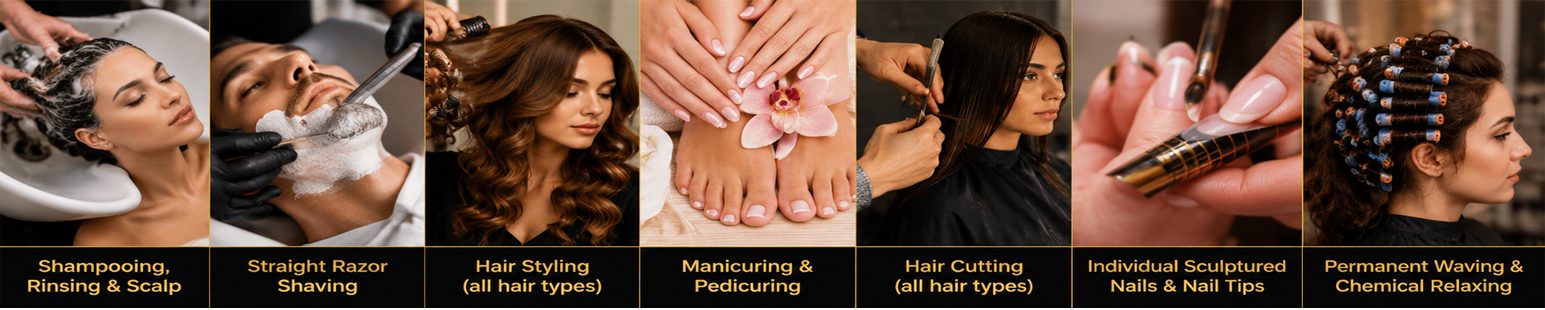
When people picture a cosmetologist, they often imagine someone behind a salon chair. That’s one version of the career, and it’s a solid one. But the cosmetology license is also a launchpad. Here’s what the full career ecosystem actually looks like:
Career Tracks Available With a Cosmetology License
- Salon Stylist — The most common entry point. Work in a salon, build clientele, and grow your income over time through tips, commissions, or booth rent
- Salon Owner — Many licensed cosmetologists eventually open their own businesses. The entrepreneurial ceiling here is entirely self-determined
- Session / Freelance Stylist — Work weddings, photo shoots, film and TV productions, and fashion events on a project basis
- Platform Artist — Travel, demonstrate products, and teach techniques at trade shows and professional events on behalf of beauty brands
- Beauty Educator — Teach at a cosmetology school or lead continuing education workshops for licensed professionals
- Product Sales Representative — Represent professional beauty brands to salons and distributors
- Editorial Stylist — Work with photographers, magazines, and creative directors on shoots and campaigns
That range matters for your conversation at home. Your teen isn’t choosing between “doing hair” and having a real career. They’re choosing a licensure path that branches into business, education, creative arts, and brand development.
What Makes Cosmetology Recession-Resilient
People get their hair done whether the economy is up or down. The personal care services industry has consistently demonstrated durability through economic cycles — employment for hairdressers and cosmetologists is projected to grow steadily through the coming decade, according to the U.S. Bureau of Labor Statistics. That’s not a guarantee, but it is a meaningful data point when parents are thinking about long-term job security.
> Meet Maya: Maya’s daughter had wanted to do hair since she was 12. By the time she was 17, she’d been watching styling tutorials for years and had a gift for color. Maya was skeptical — she’d always assumed her daughter would go to a four-year university. But after researching the career tracks, the Virginia licensing pathway, and the earning potential in Northern Virginia, Maya enrolled her daughter at AVI Career Training in Vienna. Eighteen months later, her daughter passed her State Board exam on the first attempt and is now building a client base at a Tysons-area salon — with no student loan debt.
—
Virginia Licensing Requirements — What Your Teen Needs to Know
How long does it take to become a licensed cosmetologist in Virginia? In Virginia, students must complete 1,000 clock hours of cosmetology training, then pass a two-part State Board exam (written and practical). With full-time enrollment, this typically takes 12 to 14 months. Part-time schedules extend the timeline proportionally.
Here’s the step-by-step pathway your teen will follow:
Step 1: Enroll in a Virginia-Approved Cosmetology Program
Virginia requires students to complete their training at a school approved by the Virginia Department of Professional and Occupational Regulation (DPOR). Students must be at least 16 years old to enroll. AVI Career Training is both SCHEV-certified and COE-accredited, meeting and exceeding the state’s approval standards.
Step 2: Complete 1,500 Clock Hours
This is a non-negotiable threshold. Virginia’s cosmetology licensing requirements set 1,000 hours as the minimum for eligibility to sit for the State Board exam. Those hours cover theory (the science of hair, skin, and nails; chemistry; sanitation) and hands-on practical skills (cutting, coloring, chemical services, and more).
At AVI, that curriculum is also built to be inclusive — students train on all hair textures and skin tones, which matters both ethically and professionally in a market as diverse as the Northern Virginia and greater DMV area.
Step 3: Pass the Virginia State Board Exam
The Virginia State Board exam has two components:
- Written (Theory) Exam — Tests knowledge of cosmetology science, safety, sanitation, and Virginia state law
- Practical (Skills) Exam — Demonstrates hands-on competency in core technical services
Both components must be passed to receive licensure. Your teen’s school should be preparing them specifically for this exam — not just teaching general techniques.
Step 4: Obtain and Maintain the License
Once licensed, Virginia cosmetologists must renew their license biennially (every two years). Continuing education requirements apply at renewal. This is a professional credential — your teen will maintain and grow it throughout their career.
- Minimum age to enroll: 16
- Required training hours: 1,500 clock hours
- Exam: Written + Practical (Virginia State Board)
- Governing body: Virginia DPOR
- License renewal: Every 2 years
—
What Do Cosmetologists Earn in Northern Virginia?
Is cosmetology school worth the cost? In Northern Virginia, the earning picture is meaningfully better than national averages suggest — and it improves substantially as a stylist builds clientele, moves to booth rental, or opens their own business.
The National Baseline
The U.S. Bureau of Labor Statistics (BLS) reports a national median annual wage of approximately $33,400 for hairdressers, hairstylists, and cosmetologists (May 2023 data — verify current figures at publish date). That’s the national midpoint, which means half earn more and half earn less.
The Northern Virginia Premium
National medians don’t tell the full story for your teen. The Washington, DC–Arlington–Alexandria metropolitan area is one of the highest-earning markets in the country for personal care professionals, driven by:
- Higher area cost of living — clients in this market pay more for services
- Spending power — Northern Virginia’s affluent client base supports premium pricing
- Demand — The DMV area’s population density and growth create consistent demand for skilled stylists
According to BLS Occupational Employment and Wage Statistics (OEWS) data for the DC-Arlington-Alexandria metro area, cosmetologists in this region frequently earn above the national median. Verify current OEWS metro-level figures at publish date at bls.gov.
The Booth Rental Ceiling
Here’s what many parents don’t realize: a significant portion of experienced cosmetologists don’t work as employees — they rent a booth in a salon and run their own client business. Booth renters set their own prices, keep their own revenue, and build their own brand. Their income is self-determined, not salary-capped.
For an established cosmetologist with a loyal clientele in the Annandale, Vienna, or Tysons Corner area, annual income from booth rental can substantially exceed any salaried position. Add tip income — which is real, consistent, and material in this profession — and the earning picture becomes considerably more compelling.

> Meet James: James was a father of twins in Annandale — one interested in engineering, one interested in cosmetology. His instinct was to push both toward four-year universities. After doing the math on cosmetology school costs versus university costs, and looking at what stylists were earning in the Tysons area, he had a change of heart. His daughter enrolled at AVI, completed her 1,500 hours, and passed her State Board exam. She’s now three years into building her clientele — and her income recently crossed what many of her friends earn in entry-level salaried roles, without any student loan payments.
—
Cosmetology School vs. Four-Year College — An Honest Comparison
This is the comparison most parents are already making in their heads. Here’s the honest version — not a sales pitch against college, but a fair look at what each path actually involves.
Time to Career Entry
| Path | Time to Workforce | |—|—| | Cosmetology School | 12–14 months (full-time) | | Four-Year University | 4 years minimum |
A teen who enrolls in cosmetology school at 18 can be a licensed, working professional by 19 or 20. A teen who enrolls in a four-year university won’t graduate until 22 — at the earliest.
Total Education Cost
The average in-state tuition and fees at a four-year public university in Virginia run approximately $14,000–$16,000 per year — and that’s before room, board, and textbooks. Over four years, the total investment often reaches $60,000–$80,000 or more.
Cosmetology school programs are substantially shorter and, at many accredited schools, significantly less expensive in total. At COE-accredited schools like AVI Career Training, federal financial aid is available — including Pell Grants, which do not need to be repaid. AVI also accepts the GI Bill® for eligible veterans and military-connected families.
Debt Load at Career Entry
The average student loan debt for a four-year university graduate in Virginia is significant — often exceeding $30,000. A cosmetologist who uses financial aid wisely can enter the workforce with little to no debt, which changes the early-career financial picture dramatically.
Career Satisfaction and Autonomy
This one is harder to quantify but worth naming. Cosmetologists consistently report high levels of job satisfaction driven by creative work, client relationships, and schedule flexibility. The ability to set your own hours, build your own clientele, and eventually own your own business is a form of autonomy that many desk careers don’t offer.
College is the right path for teens with goals that require a four-year degree. But for a teen who is genuinely drawn to beauty and wellness, cosmetology school offers faster career entry, lower total cost, federal financial aid access, and a profession with real earning potential — especially in a premium market like Northern Virginia. These aren’t trade-offs against each other. They’re different tools for different goals.
—
How to Choose the Right Cosmetology School Near Annandale, VA
Not all cosmetology schools deliver the same outcomes. Here’s a practical checklist of what to evaluate — and why each item matters.
The Cosmetology School Evaluation Checklist
✅ Accreditation Type Look for COE accreditation (Council on Occupational Education) — this is a nationally recognized accreditor for career schools. COE accreditation means the school has met rigorous standards for curriculum, faculty, student services, and outcomes. It also unlocks federal financial aid eligibility. AVI Career Training is COE-accredited. ✅ State Approval In Virginia, schools must be certified by SCHEV (the State Council of Higher Education for Virginia) and meet Virginia DPOR standards. Verify this before enrolling anywhere. AVI is SCHEV-certified. ✅ Curriculum Inclusivity Ask specifically whether the school trains students on all hair textures and skin tones. In a market as diverse as Northern Virginia and the broader DMV area, a stylist who can only work confidently on one hair type is professionally limited. AVI’s curriculum is explicitly built around inclusive techniques. ✅ Hands-On Hours and Live Client Experience Your teen should be working on real clients — not just mannequins — before graduation. Ask any school you’re considering how many hours students spend on live clients and what their student salon setup looks like. ✅ State Board Pass Rate Schools with strong preparation programs have strong pass rates. Ask directly. A school that can’t — or won’t — share this number is telling you something. ✅ Financial Aid Availability If the school is COE-accredited, it should be able to process FAFSA and award federal aid. Confirm this, and ask about payment plans and scholarship opportunities as well. ✅ Location and Schedule Flexibility For families in Annandale, Vienna, or the broader Northern Virginia area, AVI Career Training’s campus in Vienna (near the Tysons Corner area) offers a practical commute. Ask about schedule options — day programs, evening availability — to find what fits your family’s situation.
Why AVI Career Training Stands Out for Northern Virginia Families
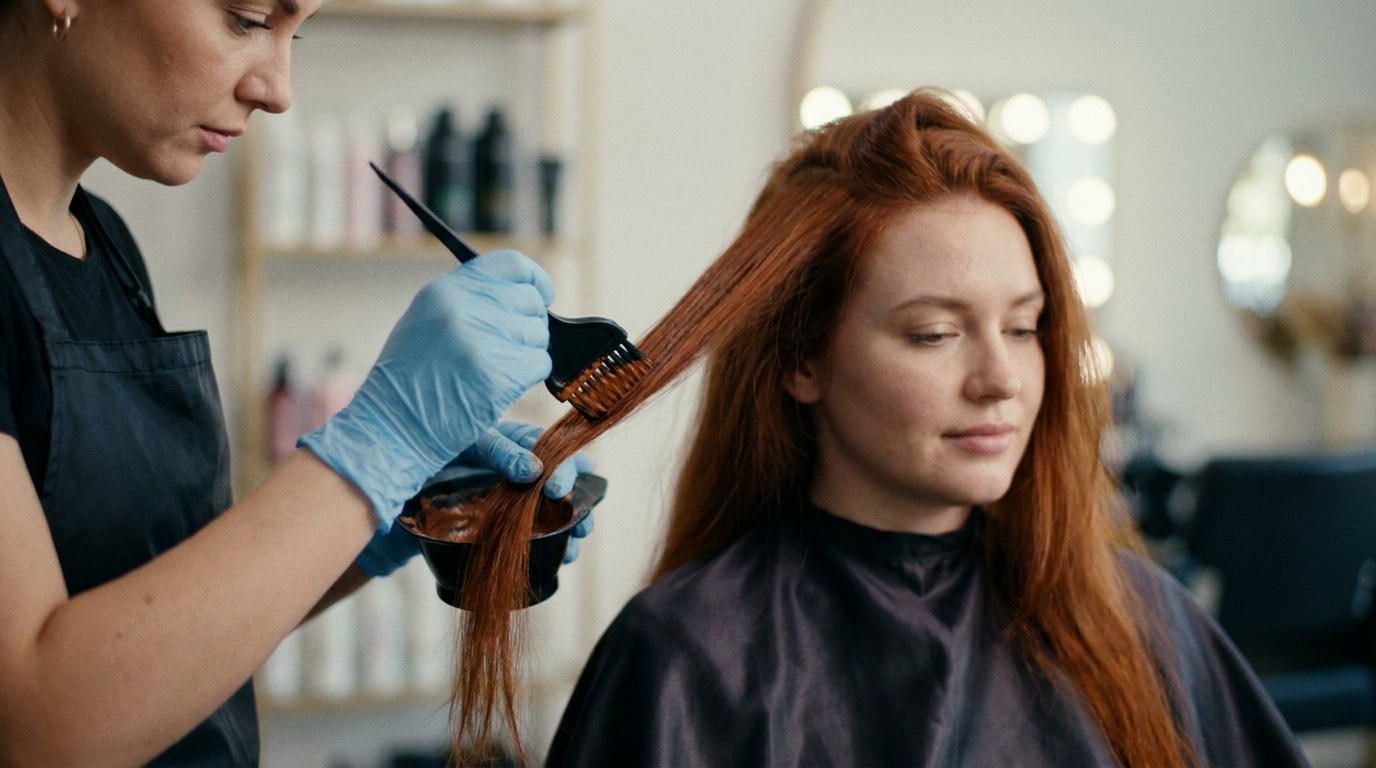
AVI Career Training is a COE-accredited, SCHEV-certified beauty and wellness school located at 1595 Spring Hill Rd #720 in Vienna, Virginia — a short drive from Annandale, Tysons Corner, and the broader Northern Virginia area. AVI’s Cosmetology program is built around Virginia DPOR requirements, inclusive technique training, and hands-on client experience designed to prepare graduates for the State Board exam and the real-world salon environment.
Federal financial aid is available. The GI Bill® is accepted. And the school’s instructors are licensed industry professionals — not academics teaching from a textbook, but working cosmetologists who have built careers in the same market your teen is preparing to enter.
If you want to see the program in person, the best next step is to schedule a tour or call AVI directly at (703) 943-9841.
—
Frequently Asked Questions About Cosmetology as a Career
Q: How long does it take to become a licensed cosmetologist in Virginia?
A: Virginia requires 1,000 clock hours of cosmetology training, followed by a written and practical State Board exam. With full-time enrollment, most students complete training in 12 to 14 months. Part-time programs take longer depending on your schedule.
Q: How much do cosmetologists make in Northern Virginia?
A: Cosmetologists in the Washington, DC–Arlington–Alexandria metro area earn above the national median of ~$33,400/year, driven by the area’s cost of living, client spending power, and market demand. Booth renters and salon owners have a self-determined income ceiling that can significantly exceed salaried positions. Tip income adds meaningfully to take-home pay.
Q: Is cosmetology school worth the cost?
A: For students who are genuinely motivated by the craft, the return on investment is strong — especially in a high-earning market like Northern Virginia. Cosmetology school is shorter and less expensive than a four-year degree, federal financial aid is available at COE-accredited schools, and career entry happens in months rather than years.
Q: What can you do with a cosmetology license besides hair?
A: A cosmetology license covers hair, skin, and nail services. Career tracks beyond the salon chair include platform artistry, session styling, beauty education, editorial work, product sales, and salon ownership. Many licensed cosmetologists also add specialty certifications in esthetics or cosmetic laser technology over time.
Q: What is the difference between cosmetology and esthetics as a career?
A: Cosmetology covers hair, skin, and nails and requires 1,000 hours in Virginia. Esthetics focuses specifically on skincare — facials, waxing, chemical peels, and advanced skin treatments.