A beauty school admissions interview is your first chance to show that you are serious, prepared, and ready to commit to a professional training program. Admissions staff use these conversations to assess your motivation, career clarity, and logistical readiness. Knowing how to prepare for a beauty school interview means more than rehearsing answers. It means arriving with the right documents, presenting yourself with care, and asking questions that signal genuine intent. This guide covers every step, from paperwork to presentation, so you walk in confident and walk out with a strong impression.
What documents and logistical steps do you need before the interview?
The most common reason candidates face enrollment delays is missing paperwork. Missing valid ID and high school transcripts or a GED is a top cause of admission setbacks. Gathering these items before your scheduled visit removes a major obstacle and signals that you take the process seriously.
Here is what to bring to your beauty school admissions interview:
- Valid government-issued photo ID (driver’s license, state ID, or passport)
- High school diploma, official transcripts, or GED certificate
- Social Security card (required for financial aid applications)
- Completed application form, if not submitted online in advance
- Any prior cosmetology or esthetics training records, if applicable
Financial readiness matters just as much as academic documentation. Discussing tuition plans and FAFSA early is strongly advised to prevent delays in starting your program. Admissions teams view candidates who have already researched financial aid options as more mature and committed.
Contact the school before your visit to confirm exactly which documents are required. Policies vary by program, and a quick phone call or email saves you from showing up unprepared.
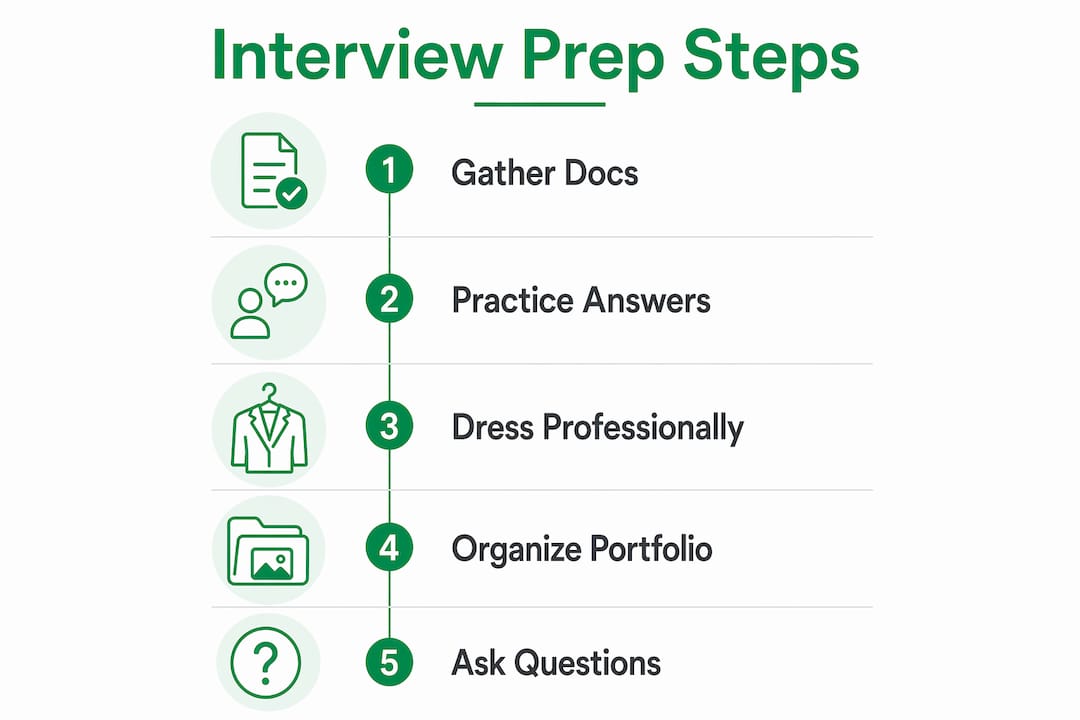
Pro Tip: Organize all your documents in a clean folder or portfolio before the interview. Fumbling through a bag for paperwork sends the wrong message about your attention to detail.
The table below shows the most common documents and why each one matters:
| Document | Why it matters |
|---|---|
| Valid photo ID | Confirms identity for enrollment and licensing |
| High school diploma or GED | Meets minimum academic entry requirements |
| Social Security card | Required to process FAFSA and financial aid |
| Prior training records | Demonstrates relevant background and commitment |
| Completed application | Speeds up the admissions review process |
What questions are commonly asked in beauty school interviews?
Beauty school interviews are not designed to intimidate you. Admissions questions aim to understand your commitment, your career direction, and how the school can best support your goals. Knowing the most common prompts lets you think through your answers in advance without sounding scripted.
These are the questions you are most likely to face:
- Why do you want to attend beauty school? Admissions staff want to hear a specific reason, not a vague passion for beauty. Mention a real experience, such as a mentor who inspired you or a moment when you realized this was your path.
- What area of study interests you most? Be ready to explain whether you are drawn to cosmetology, esthetics, or another specialty, and why. Referencing the esthetician program benefits or cosmetology track shows you have done your research.
- What are your long-term career goals? Interviewers want to see that you have thought beyond graduation. Mention whether you want to work in a salon, open your own business, or specialize in a particular service.
- What challenges do you anticipate, and how will you handle them? Candidates should articulate potential challenges such as scheduling, finances, or balancing other responsibilities. Showing that you have a plan demonstrates maturity.
- What do you know about this school’s programs? This question rewards preparation. Referencing specific program details, externship partnerships, or licensing outcomes shows genuine interest.
Interviewers prefer authentic, grounded responses that focus on work habits and willingness to learn. Overly rehearsed answers that sound like a performance tend to fall flat. Speak naturally, use real examples from your life, and stay focused on your actual goals.
Pro Tip: Practice your answers out loud with a friend or family member, not just in your head. Hearing yourself speak builds confidence and helps you catch answers that sound unclear or too long.

How should you dress and present yourself for the interview?
Your appearance is the first thing admissions staff notice, and in a beauty program, it carries extra weight. Professional appearance with neat hair, polished nails, and appropriate attire conveys respect for the program and shows your eye for detail. Think of your look as a portfolio piece, not just an outfit.
Follow these presentation guidelines:
- Wear clean, professional clothing. Business casual is the right register. Avoid overly casual items like ripped jeans, athletic wear, or graphic tees.
- Keep hair neat and styled. You do not need an elaborate look, but your hair should be clean, intentional, and well-finished.
- Maintain polished, well-kept nails. Chipped polish or bitten nails contradict the professional standard beauty programs teach.
- Use subtle, well-applied makeup. Dramatic looks can work if they are executed cleanly, but understated and precise is always a safe choice.
- Wear closed-toe shoes. Many beauty school environments require them for safety, and wearing them to the interview shows you already understand professional standards.
Body language matters as much as clothing. Arrive on time, make eye contact, offer a firm handshake, and sit up straight. These small signals communicate confidence and professionalism before you say a single word. Showing punctuality and professionalism from arrival through the entire visit is part of how admissions teams evaluate candidates.
How can your campus tour help you ace the interview?
Most beauty schools combine the admissions interview with a campus tour. Treat these as one connected event, not two separate activities. The tour and interview together allow admissions staff to assess your professionalism, curiosity, and engagement from the moment you walk through the door.
Candidates who ask prepared, specific questions consistently stand out. Writing down specific questions before your visit sets top candidates apart from those who show up without a plan. Aim for 5 to 10 questions that reflect real research.
Strong questions to ask during your tour and interview include:
- What externship partners does the school work with, and how are students placed?
- What is the licensing exam pass rate for recent graduates?
- What financial aid options are available, and when should I apply?
- How does the school support students who fall behind or need extra help?
- What does a typical week look like for a first-term student?
- Are there career placement services after graduation?
The table below compares the impact of prepared versus unprepared questions:
| Approach | Signal sent to admissions |
|---|---|
| Specific questions about externships and pass rates | High intent, serious research, professional maturity |
| General questions like “What do you teach?” | Low preparation, surface-level interest |
| No questions at all | Disengagement or lack of commitment |
Asking about externship partners is particularly effective at Avi, where students benefit from connections to leading spas and salons across Northern Virginia. Referencing career development opportunities during your tour shows you are already thinking about life after graduation.
Key Takeaways
Candidates who prepare documentation, practice authentic answers, and present themselves professionally give admissions teams every reason to say yes.
| Point | Details |
|---|---|
| Gather documents early | Bring valid ID, transcripts or GED, and Social Security card to avoid enrollment delays. |
| Know your interview questions | Prepare honest, specific answers about your motivation, goals, and anticipated challenges. |
| Dress with intention | Neat hair, polished nails, and professional attire show you already understand beauty industry standards. |
| Ask prepared questions | Specific questions about externships, pass rates, and financial aid signal serious intent. |
| Treat the tour as part of the interview | Admissions staff evaluate your professionalism and engagement from the moment you arrive. |
What I have learned from watching candidates succeed and stumble
The candidates who impress admissions teams most are rarely the most polished or the most theatrical. They are the ones who show up on time, speak honestly about why they are there, and ask questions that prove they have thought about their future.
I have seen candidates with flawless resumes lose the room because they gave answers that sounded memorized and hollow. I have also seen candidates with no prior beauty experience earn immediate respect by being direct, curious, and genuinely excited about the work. Sincerity is not a soft skill. It is the most persuasive thing you can bring into that room.
The interview is not an interrogation. It is a chance to align your goals with what the school offers, and to confirm that the program is the right fit for you too. Candidates who approach it as a two-way conversation, rather than a test to pass, consistently come across as more mature and more ready.
One more thing: the tour is not a formality. Walk through every room with real attention. Notice the equipment, the cleanliness, the way instructors interact with students. What you observe during that visit will either confirm your choice or raise questions worth asking. Either outcome is valuable.
— krishna
Avi Career Training: where your beauty career starts
Avi Career Training in Fairfax County, VA, offers accredited programs in cosmetology, esthetics, and massage therapy, backed by personalized mentorship and real-world training from day one. The admissions team at Avi is built to support you through every step, from your first inquiry to your first day in the clinic.
Financial aid options are available, and the Avi team encourages prospective students to discuss tuition planning early in the admissions process. Externship partnerships with leading spas and salons across Northern Virginia give graduates a direct path into the workforce. If you are ready to take the next step, explore the Avi cosmetology program and see how the curriculum is built to get you licensed, skilled, and hired.
FAQ
What documents should I bring to a beauty school interview?
Bring a valid government-issued photo ID, your high school diploma or GED transcripts, and your Social Security card. Missing any of these is a leading cause of enrollment delays.
What are the most common beauty school interview questions?
Admissions staff typically ask about your motivation for entering the field, your area of interest such as cosmetology or esthetics, your long-term career goals, and any challenges you anticipate. Honest, specific answers perform better than rehearsed ones.
How should I dress for a beauty school admissions interview?
Wear clean, professional clothing with neat hair, polished nails, and subtle makeup. Your appearance signals your understanding of industry standards before you answer a single question.
Should I prepare questions to ask during the interview?
Yes. Preparing 5 to 10 specific questions about externship placements, licensing pass rates, and financial aid demonstrates serious intent and sets you apart from unprepared candidates.
How early should I apply for financial aid?
Apply for FAFSA and discuss tuition options with the admissions team as early as possible. Addressing financial readiness early prevents delays and shows the admissions team that you are ready to commit.