How To Get Your Esthetician License In Virginia
To get your esthetician license in Virginia, you must complete a state-approved esthetics training program, pass the required written and practical exams, and submit a license application to the Virginia Board of Barbers and Cosmetology. It sounds straightforward, and with the right school guiding you, it truly can be. Whether you dream of working in a luxury spa, a medical clinic, or launching your own skincare business, earning your esthetician license opens the door to a rewarding, in-demand career in the beauty and wellness industry.
At AVI Career Training in Vienna, Virginia, we help students move through every step of this process with confidence. Here is exactly what you need to know to make it happen.
Key Takeaways
- Virginia requires a minimum of 600 hours of training for a Basic Esthetics license and 750 hours for a Master Esthetics license.
- You must pass both a written (theory) exam and a practical (hands-on) exam administered through PSI Exams.
- You need to be at least 16 years old and hold a high school diploma or GED to apply for licensure.
- AVI Career Training is accredited by the Council on Occupational Education (COE) and offers both Basic and Master Esthetics programs.
- Federal financial aid (Title IV) is available for eligible students enrolled in qualifying programs at AVI.
- After passing your exams, you submit your application and fee to the Virginia Department of Professional and Occupational Regulation (DPOR).
- Virginia esthetician licenses must be renewed every two years, which may include continuing education requirements.
Step 1: Understand Virginia’s Esthetician License Requirements
Before you enroll anywhere, it helps to know what the Commonwealth of Virginia actually requires. The Virginia Board of Barbers and Cosmetology oversees esthetician licensing in the state. To qualify for a Basic Esthetics license, you must:
- Be at least 16 years of age
- Have a high school diploma, GED, or equivalent
- Complete a minimum of 600 clock hours of training at a Board-approved school
- Pass both the written and practical portions of the PSI licensing exam
- Submit a completed application and applicable fee to DPOR
If you want to expand your scope of practice and work in more advanced settings such as medical spas or dermatology offices, Virginia also offers a Master Esthetics license, which requires 750 hours of approved training. The master-level credential opens the door to services like advanced chemical peels, microdermabrasion, and other clinical skincare treatments that are off-limits to basic estheticians.
Step 2: Choose the Right Esthetics Program
Not all esthetics schools are created equal. The quality of your training will shape your entire career, so choosing a program that is accredited, well-equipped, and taught by experienced professionals is one of the most important decisions you will make.
AVI Career Training, located at 112 Lawyers Rd NW Suite 3, Vienna, VA 22180, is accredited by the Council on Occupational Education (COE)—one of the most respected accrediting bodies in career and technical education. COE accreditation means the school has met rigorous standards for curriculum, faculty qualifications, student services, and outcomes.
AVI offers two esthetics pathways to match your career goals:
- Basic Esthetics (600 hours): This program covers the foundational skills every esthetician needs, including skin analysis, facials, hair removal, exfoliation techniques, sanitation and safety, and client consultation. It is the perfect starting point if you are new to the industry.
- Master Esthetics (750 hours): Building on the basics, this advanced program prepares you for clinical-level skincare services and positions you for opportunities in medical aesthetics, high-end spas, and specialty skincare clinics.
Both programs are designed to prepare you thoroughly for the Virginia licensing exam while giving you real, hands-on practice with actual clients in a professional setting.
Ready to take the first step? Apply to AVI Career Training today and speak with an admissions advisor about which program is right for you.
Step 3: Complete Your Required Training Hours
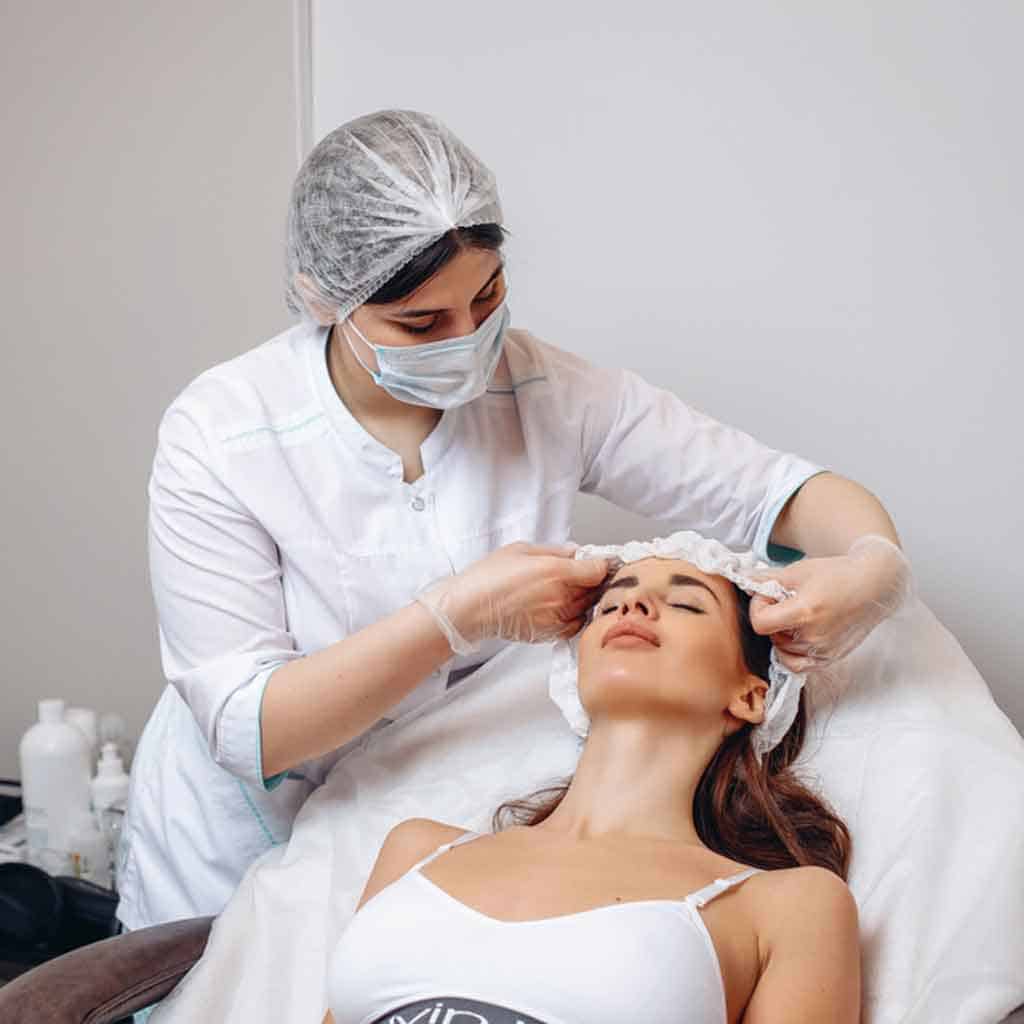
Once you enroll, your primary job is to show up, absorb everything, and practice your skills consistently. Esthetics training at AVI combines classroom instruction with hands-on clinic time, so you graduate not just knowing the theory but having real experience treating clients under the supervision of licensed instructors.
Your coursework will typically cover topics such as:
- Skin anatomy, physiology, and disorders
- Facial massage techniques and manual treatments
- Chemical exfoliation and peels (advanced students)
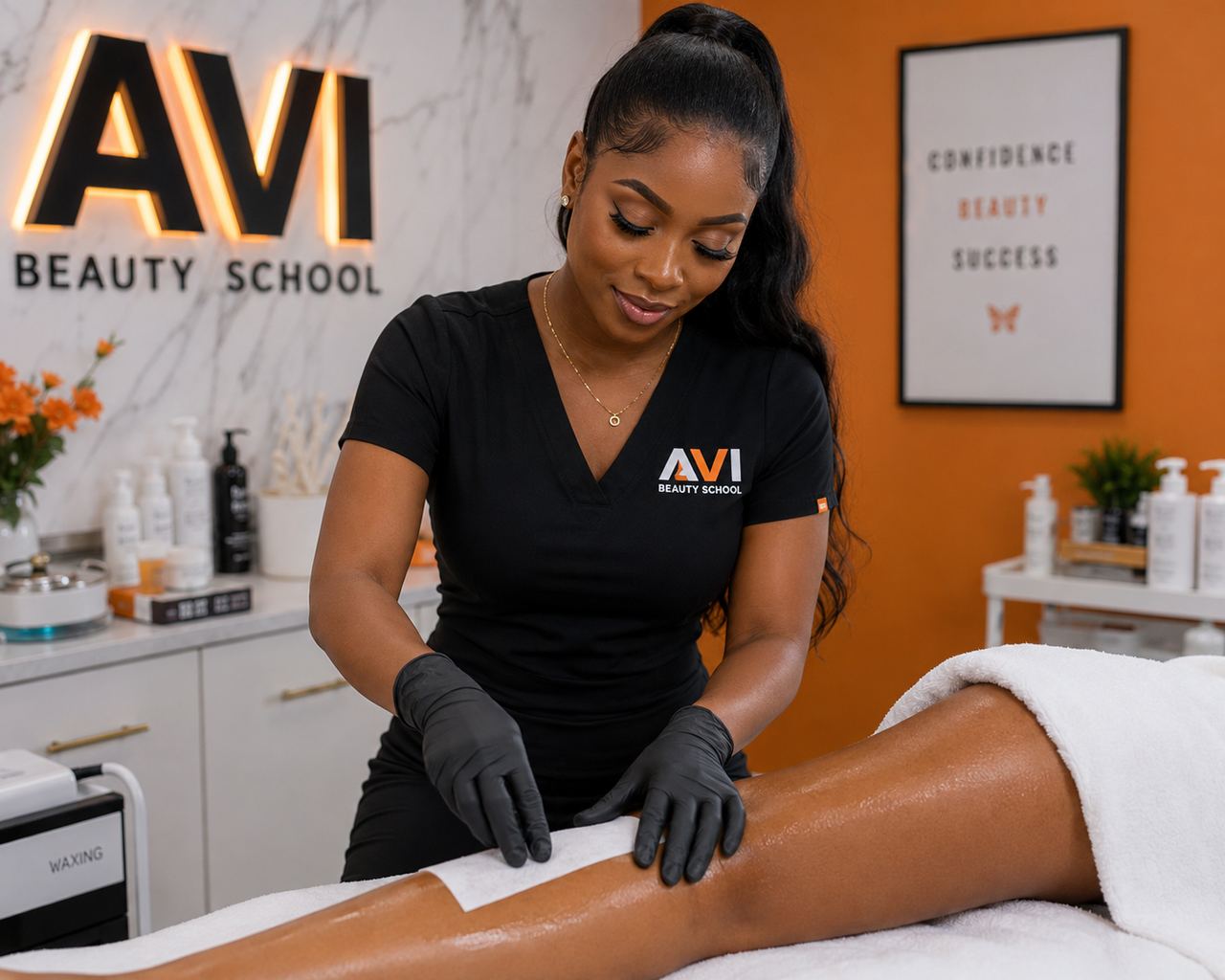
- Waxing, threading, and other hair removal methods
- Makeup application fundamentals
- Sanitation, sterilization, and infection control
- Virginia state laws and cosmetology regulations
- Business and client communication skills
Attendance matters. Virginia tracks your clock hours carefully, and you must complete all required hours before you can sit for the licensing exam. Stay engaged, ask questions, and take advantage of every clinic session you can get.
Step 4: Pass the Virginia Esthetics Licensing Exam
After completing your program hours, you are eligible to take the Virginia esthetician licensing exam, administered by PSI Exams. The exam has two parts:
Written (Theory) Exam
This portion tests your knowledge of skincare science, treatment protocols, sanitation standards, and Virginia state regulations. Your classroom instruction will prepare you well for this section. Many schools, including AVI, incorporate practice tests and review sessions specifically aimed at exam readiness.
Practical (Hands-On) Exam
In the practical portion, you demonstrate your skills before a licensed examiner. You will be evaluated on your technique, safety practices, and professionalism. The hands-on clinic experience you gain during your program is directly applicable here—this is exactly the kind of exam where practical training makes all the difference.
You will register for your exam through the PSI website, pay the required exam fee, and schedule your test at a PSI testing center. Bring valid government-issued ID on exam day, and arrive early so you can settle in calmly.
Step 5: Apply for Your Virginia Esthetician License
Once you have passed both portions of the exam, it is time to make it official. Submit your license application to the Virginia Department of Professional and Occupational Regulation (DPOR) through their online licensing portal. Your application will typically need to include:
- Proof of completed training hours (your school will provide official transcripts or certificates)
- Passing score reports from PSI
- The completed application form
- The applicable licensing fee
Once approved, your license will be issued and you can begin practicing as a licensed esthetician in Virginia. Congratulations—you have earned it!
Financial Aid: Making Your Education Affordable
One of the biggest questions students have is how to pay for their training. At AVI Career Training, we want cost to be as little of a barrier as possible. Federal financial aid (Title IV) is available for eligible students in qualifying programs, which can include grants and loans to help cover the cost of your education.
Our admissions team can walk you through the FAFSA process and help you understand what options may be available to you. We encourage every prospective student to explore financial aid before assuming training is out of reach.
To learn more about financial aid opportunities or to get started on your application, visit our application page or contact us directly.
Career Outlook for Estheticians in Virginia
The esthetics industry continues to grow, driven by increasing consumer demand for skincare services, wellness treatments, and non-invasive cosmetic procedures. Licensed estheticians in Virginia work in a wide range of settings, including:
- Day spas and resort spas
- Medical spas and dermatology offices (especially Master Estheticians)
- Luxury hotels and wellness centers
- Salons offering skincare services
- Film and television production
- Self-employed or suite rental settings
The Northern Virginia and Washington, D.C. metro area—where AVI is located—is one of the most economically vibrant regions in the country, with strong demand for skilled esthetics professionals. Completing your training in this area puts you right in the center of the opportunity.
Frequently Asked Questions
How long does it take to get an esthetician license in Virginia?
The timeline depends on your program schedule and how quickly you can complete your required hours. For the Basic Esthetics license, you need 600 hours of approved training. At AVI Career Training, students can complete the Basic Esthetics program in several months depending on whether they attend full-time or part-time. The Master Esthetics program requires 750 hours. After finishing your program, add a few weeks for exam scheduling and processing your license application, and most students are fully licensed within the same year they start.
Can I get financial aid for esthetics school in Virginia?
Yes, if you are enrolled in a qualifying program at an eligible institution. AVI Career Training is an accredited school that participates in Title IV federal financial aid programs. Eligible students may be able to access federal grants and loans to help cover the cost of their esthetics training. Contact AVI’s admissions team to learn more about your options and to start the FAFSA process.
What is the difference between a Basic Esthetics license and a Master Esthetics license in Virginia?
A Basic Esthetics license qualifies you to perform standard skincare services such as facials, waxing, basic chemical exfoliation, and makeup application. A Master Esthetics license, which requires 750 hours of training rather than 600, allows you to perform more advanced clinical treatments including advanced chemical peels, microdermabrasion, and other procedures commonly offered in medical spa environments. If you have ambitions to work in medical aesthetics or a clinical setting, the Master Esthetics program is worth considering from the start.
Do Virginia esthetician licenses expire?
Yes. Virginia esthetician licenses must be renewed every two years. To renew, you will submit a renewal application and fee to DPOR. Virginia may also require continuing education hours as a condition of renewal, so it is a good idea to stay current on any changes to state renewal requirements as your renewal date approaches.
Why should I choose AVI Career Training for my esthetics education?
AVI Career Training is a COE-accredited beauty and wellness career school with a genuine commitment to student success. Our esthetics programs are designed to meet Virginia’s licensing requirements while giving you practical, hands-on experience that prepares you for the real world of professional skincare. We offer federal financial aid for eligible students, a supportive learning environment, and knowledgeable instructors who bring real industry experience into the classroom. We are conveniently located in Vienna, Virginia, and are proud to serve students throughout Northern Virginia and the greater D.C. metro area. You can reach us at (571) 520-4417 or visit us at 112 Lawyers Rd NW Suite 3, Vienna, VA 22180.
Start Your Esthetics Career at AVI Career Training
Getting your esthetician license in Virginia is absolutely achievable, and you do not have to figure it out alone. From your first day of class to the moment you pass your licensing exam, AVI Career Training is here to support you with quality education, hands-on training, and a team that genuinely wants to see you succeed.
Whether you are starting fresh or looking to advance your skills with a Master Esthetics credential, we have a program designed for where you are and where you want to go.
Apply to AVI Career Training now and take the first step toward a fulfilling career in esthetics. We cannot wait to help you build something great.