
Entering a cosmetology student competition means submitting your technical skills, creative vision, and professional preparation to a judged evaluation process that can define your early career. These contests, formally called cosmetology skills competitions, are open to students enrolled in accredited programs and cover categories from precision cutting to fantasy hair. The benefits go well beyond a trophy. Winning or placing builds your portfolio, earns industry recognition, and signals to future employers that you perform under pressure. This guide covers every step, from cosmetology contest entry requirements to execution tips, so you can walk into your first competition ready to compete.
What are the essential eligibility and entry requirements for cosmetology student competitions?
Eligibility for a cosmetology student competition entry is more specific than most students expect. Getting these details right before you submit saves you from disqualification.
The core requirements for most U.S.-based contests are:
- Enrollment status: You must be actively enrolled in an accredited cosmetology program at the time of entry. Graduated students are not eligible for student divisions.
- Age: U.S.-based student competitions require applicants to be 18 or older. This is a firm cutoff, not a guideline.
- School accreditation: Your program must be recognized by a relevant accrediting body. Enrollment in a non-accredited school disqualifies your entry regardless of skill level.
- Residency or student status: Many national contests restrict entries to students currently studying within the United States.
- Entry components: Depending on the competition format, you may need to submit a video, a photo series, a live demonstration, or a combination of all three.
- Deadlines and fees: Some competitions charge entry fees, while others are completely free. The Intercoiffure Student Contest, for example, is free for students at accredited schools and includes both a video entry and a photo submission phase.
Read the official rules document for every contest you plan to enter. Rules vary significantly between organizations, and missing one requirement costs you the entry.
How do you prepare effectively for a cosmetology student competition entry?
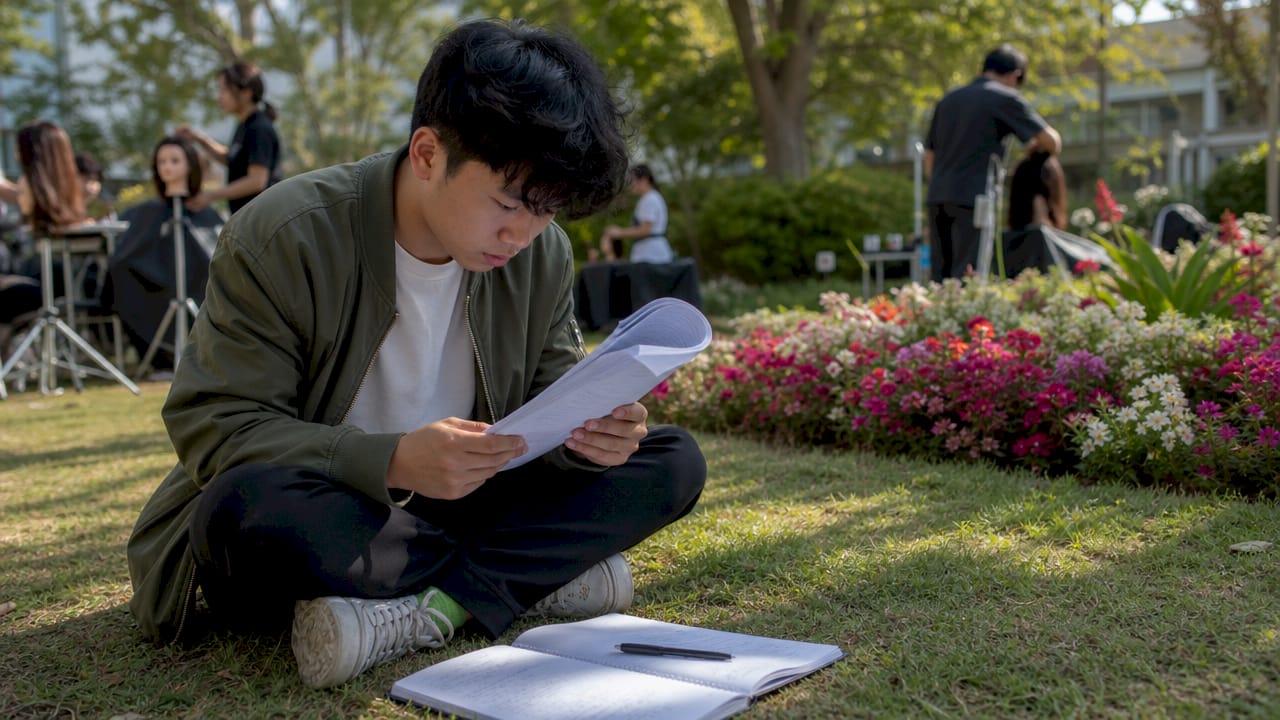
Preparation is the single biggest factor separating placed competitors from those who finish mid-pack. Experienced competitors start with a detailed competition prep scorecard, scheduling tool maintenance early and executing technical drills and choreography for a flawless presentation.
A structured 8-week timeline keeps your preparation on track:
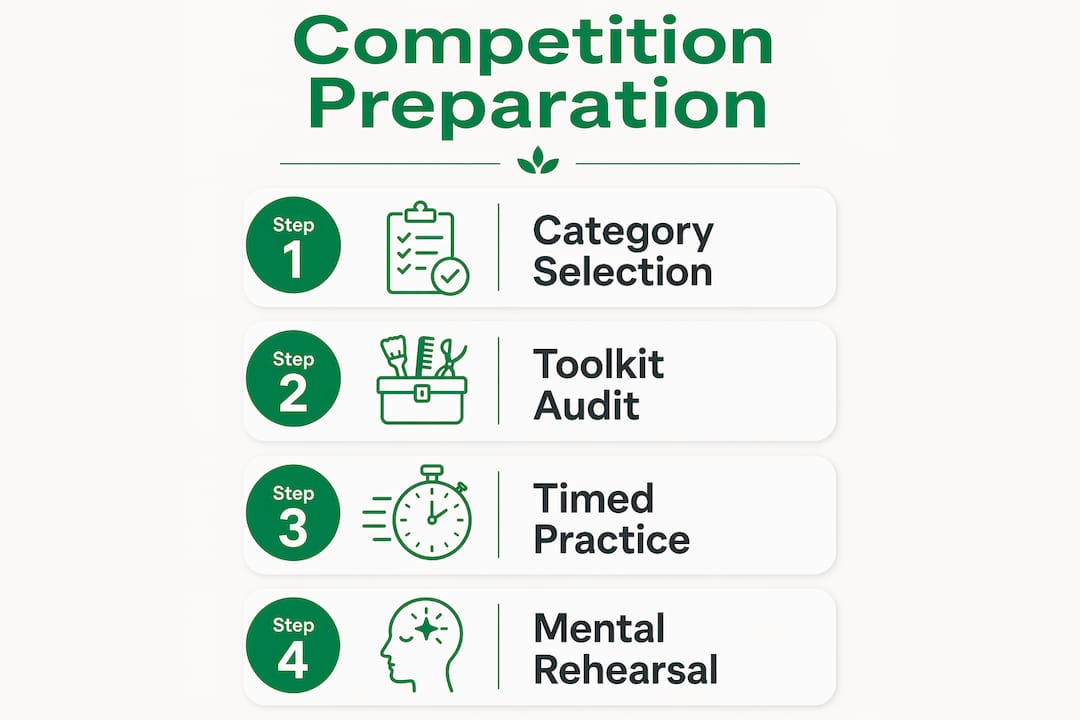
- Weeks 1 and 2: Category selection and tool audit. Choose your competition category based on your strongest technical skills. Inspect and sharpen all shears, check your finishing tools, and replace anything worn.
- Weeks 3 and 4: Concept and mood board development. Research the judging rubric and build a mood board that captures your theme, silhouette, texture, and fashion references. This is not decorative work. A clearly articulated mood board is a strategic document essential to scoring high in competitions.
- Weeks 5 and 6: Technical drills. Practice your core techniques repeatedly. Focus on clean sectioning, balanced weight removal, and consistent execution. Run timed drills on a mannequin before moving to a live model.
- Week 7: Model preparation and full rehearsal. Confirm your model’s availability and hair condition. Run a full timed rehearsal from start to finish. Elite competition categories use timed practice sessions of 45–60 minutes to sharpen technical skills and stage performance.
- Week 8: Polish and documentation. Photograph your rehearsal look with neutral lighting. Review your entry checklist, confirm submission formats, and finalize all paperwork.
| Preparation phase | Primary focus | Key output |
|---|---|---|
| Weeks 1–2 | Category and tools | Audited toolkit, category confirmed |
| Weeks 3–4 | Concept and mood board | Completed mood board, rubric mapped |
| Weeks 5–6 | Technical drills | Timed mannequin runs, technique locked |
| Week 7 | Model rehearsal | Full timed run, live model confirmed |
| Week 8 | Polish and submission | Entry documents, photos, video ready |
Pro Tip: Build your competition toolkit as a dedicated kit separate from your everyday school bag. Include your shears, sectioning clips, finishing spray, a printed copy of the judging rubric, and your mood board. Treating it as a professional kit builds the right mental frame before you even arrive.
What are the critical execution tips and common mistakes when presenting your entry?
Execution is where preparation either pays off or falls apart. The most common cosmetology competition tips from working judges focus on precision, not flair.
The following execution principles apply to both live demonstrations and photo submissions:
- Clean sectioning is non-negotiable. Judges reward balanced weight removal and consistent panel sizes. Sloppy sections signal a lack of technical control regardless of the final look.
- Protect hair integrity. Judges reward clean sectioning, balanced saturation, and healthy shine rather than gimmicky or over-processed appearances. Chasing a dramatic trend at the cost of hair health is a scoring mistake.
- Photograph honestly. For photo submissions, neutral backgrounds and honest lighting reveal true shine and texture for fair evaluation. Heavy filters and dramatic shadows hide the quality of your work from judges.
- Manage your time on stage. Know your time limit and practice finishing two minutes early. Running over time results in point deductions at most competitions.
- Organize your workspace. A cluttered station signals poor professional habits. Lay out your tools in the order you will use them before the clock starts.
Ignoring contest guidelines and judging parameters is the biggest mistake costing students marks or causing disqualification. Judging rubrics are strict. Failure to meet requirements such as mood board usage or minimum length removal leads to direct point deductions, regardless of how impressive the final look appears.
Common mistakes that cost students points include: selecting a model whose hair condition cannot support the planned transformation, skipping the mood board because it feels like extra work, and failing to read the rules document more than once. Matching your concept and technical skills to judging rubrics and strictly following contest rules is the foundation of every winning entry.
Pro Tip: Do a mental rehearsal the night before. Walk through every step of your routine in your head, from setting up your station to the final photograph. Athletes use this technique before major events, and it works equally well for competition hair.
How to choose the right competition category and build your concept for success
Category selection is a strategic decision, not a creative one. Choosing the wrong category because it looks exciting is one of the fastest ways to underperform.
Common competition categories include:
- Precision cutting: Technical haircuts judged on sectioning, weight distribution, and finish.
- Styling: Blowouts, sets, and finished looks judged on texture, smoothness, and product use.
- Fantasy hair: Avant-garde or editorial looks judged on creativity, execution, and concept cohesion.
- Barbering: Clipper and razor work judged on fade quality, line precision, and overall shape.
- Color: Judged on saturation, blending, and hair condition post-service.
Some competitions, including the Sebastian Student Competition, allow multiple and dual-category submissions. That flexibility rewards students who have strong skills in more than one area.
Once you select your category, build your concept around the official scoring rubric. A mood board provides judges a clear vision and helps ensure look consistency with the category theme. Your mood board should include a defined silhouette, texture references, color palette, and at least one fashion or editorial image that anchors the overall direction.
Plan your transformation with the model’s natural features in mind. A look that flatters the model and fits the category rules scores higher than a technically impressive look that ignores both. Judges employ strict score sheets with minimum length requirements and mark down failure to use mood boards or improper timing. Creativity earns points only when it operates within the rules.
The table below shows how to align category choice with your current skill set:
| Your strongest skill | Best-fit category | Key scoring factor |
|---|---|---|
| Precision cutting technique | Precision cutting | Sectioning and weight balance |
| Blowout and finishing work | Styling | Texture, smoothness, product control |
| Creative and editorial vision | Fantasy hair | Concept cohesion and execution |
| Clipper and fade work | Barbering | Line precision and shape |
Key Takeaways
Entering a cosmetology skills competition requires meeting strict eligibility criteria, following an 8-week preparation timeline, and executing your look with technical precision aligned to the official judging rubric.
| Point | Details |
|---|---|
| Eligibility comes first | You must be 18 or older and actively enrolled in an accredited cosmetology program to qualify. |
| Mood boards are scored | Judges use strict rubrics that award points for mood board submission and penalize omissions. |
| Preparation needs structure | An 8-week timeline covering tool audit, drills, model prep, and documentation produces consistent results. |
| Category choice is strategic | Select the category that matches your strongest technique, not the one that looks most impressive. |
| Photo honesty matters | Neutral lighting and no heavy filters give judges an accurate view of your technical work. |
What actually separates winners from the rest
I have watched students with genuinely impressive technical skills walk out of competitions without placing, and I have seen less polished students finish in the top three. The difference is almost never talent. It is preparation discipline and rule compliance.
The students who place consistently do one thing that others skip: they read the judging rubric before they design their look, not after. They build the concept around what scores points, then bring their creativity into that framework. That is not a compromise. That is professional thinking.
Competition preparation builds confidence through repeated, timed practice, turning stressful performance execution into second nature. The students who do 10 timed rehearsals are calmer on competition day than those who do two. That calm shows in their work.
The other factor most articles skip is mentorship. Having an instructor or working stylist review your mood board and watch a rehearsal run gives you feedback you cannot generate yourself. You are too close to your own work to see what a judge sees. Build that support system early, and treat their feedback as data, not criticism.
Competitions are not just about winning. They are the fastest way to build a professional portfolio and get your name in front of industry contacts before you graduate. Even a strong showing without a placement tells future employers that you compete, prepare, and perform. That is a signal most new graduates cannot offer.
— krishna
Avi’s cosmetology program and your path to competition-ready skills
Avi Career Training in Fairfax County, VA, builds students toward exactly this kind of professional readiness. The cosmetology program at Avi combines accredited, hands-on training with personalized mentorship, giving you the technical foundation and professional habits that competitions reward.

Students at Avi benefit from structured curriculum, business education, and access to externship placements with leading spas and salons across Northern Virginia. The program is designed to take you from foundational skills to career-ready confidence, with instructors who understand what the industry actually expects. Financial aid options are available, making enrollment accessible regardless of your starting point. If you are serious about competing and building a career in beauty, explore what Avi offers and take the first step toward your professional future.
FAQ
What age do you need to be to enter a cosmetology student competition?
Most U.S.-based student hair competitions require applicants to be at least 18 years old and currently enrolled in a cosmetology program. Always confirm the age requirement in the official rules for each specific contest.
Are cosmetology student competitions free to enter?
Some competitions charge entry fees, while others are completely free. The Intercoiffure Student Contest, for example, is free for students at accredited schools and includes both video and photo submission phases.
How far in advance should you start preparing for a competition?
A structured 8-week preparation timeline is the standard for serious competitors. This covers category selection, tool audit, mood board development, technical drills, model rehearsal, and final documentation.
Can you enter more than one category in a cosmetology skills competition?
Some competitions allow multiple and dual-category submissions. The Sebastian Student Competition, for instance, permits students to enter both cutting and styling categories for greater creative flexibility.
What is the most common reason students get disqualified or lose points?
Ignoring the judging rubric is the leading cause of point deductions and disqualification. Specific failures include skipping the mood board, not meeting minimum length removal requirements, and exceeding the time limit.